
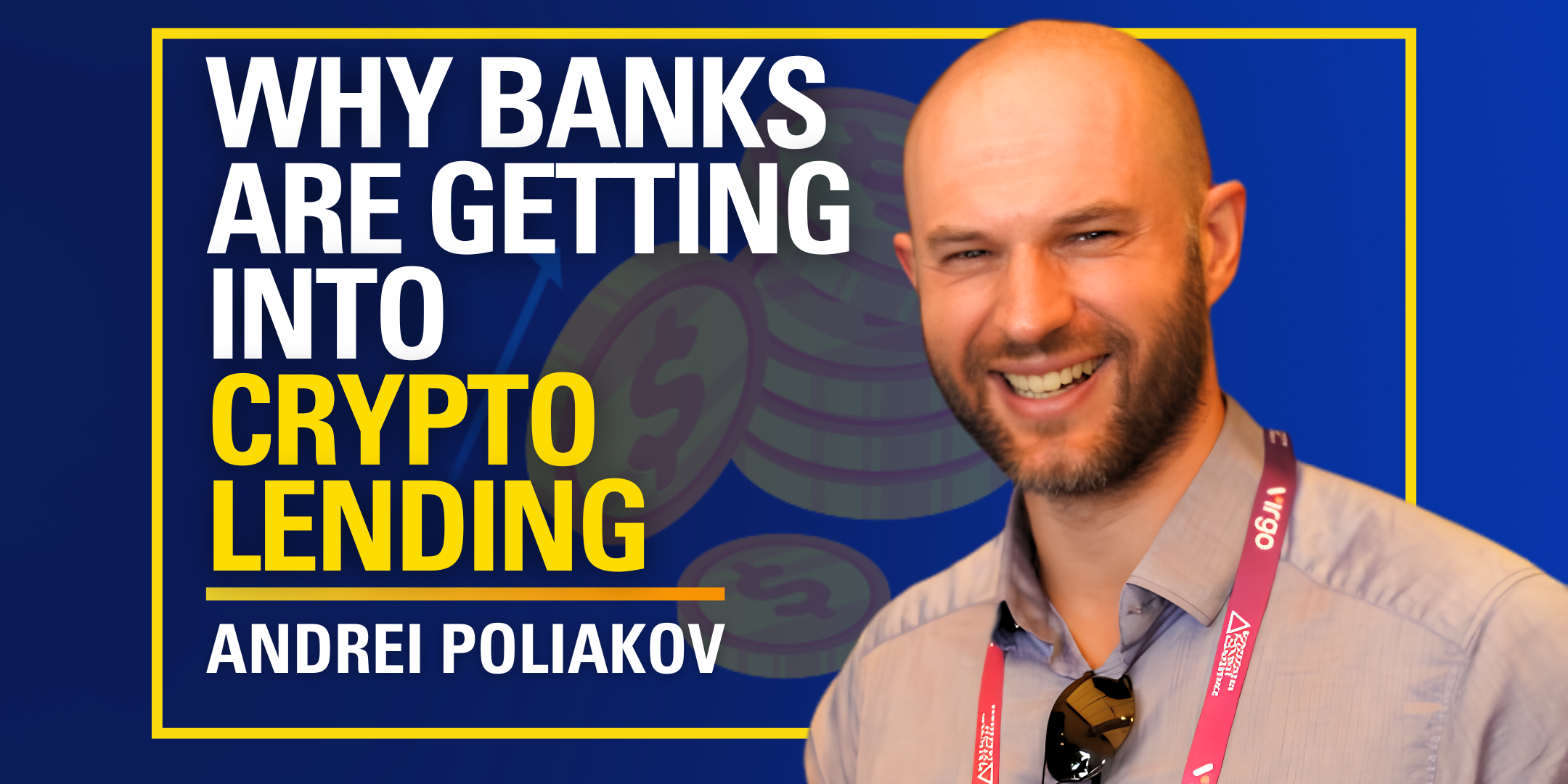
Why Banks Are Getting Into Crypto Lending - Andrei Poliakov | ATC #626
Live from Futurist, host Stephen Sargeant interviews Andrei Poliakov, founder and CEO of APX Lending. He is a Canadian blockchain entrepreneur and in 2022 was named as one of the "50 Most Influential Canadians in Crypto and Blockchain". In 2017 Andrei co-founded Coinberry – which he grew to be one of the largest regulated crypto exchanges in Canada. In 2022, Coinberry was acquired by Wonderfi Technologies (TSX: WNDR). With an MBA from the Schulich School of Business and an Engineering degree from the University of Toronto, Andrei helps others understand trends, gain technical insights, and overcome common misunderstandings about the blockchain industry. Andrei believes in pushing the boundaries of the status quo and is passionate about fueling blockchain adoption through education.
Host: Stephen Sargeant
Guest: Andrei Poliakov
We are also available via:
Buzzsprout • YouTube • Quora • Medium • X • Facebook • LinkedIn • Soundcloud • Apple Podcast • Spotify • Player FM
Episode Transcript
Stephen: This is Around The Coin live from Futurist. The first time we're here. We are here with a pillar of the Canadian crypto scene. Thanks for joining us. I don't think you need an introduction- No, I'm fine ... but give an introduction for anyone that's not been aware of what's happening in Canada and crypto over the last decade.
Andrei: Over the last decade. It's been a while. So my name's Andrei Poliakov. I, uh- I launched a, uh, a little, uh, known crypto exchange in 2017 called Coinberry, which grew to be into one of the largest and the first regulated crypto exchange in Canada. We got acquired by WonderFi Technologies in '22, and they recently got acquired by Robinhood, so that's pretty cool.
Um- So
Stephen: you can say you exited to
Andrei: Robinhood Yeah, I exited to Robinhood. And then in '23, as I sold Coinberry, I joined the board of WonderFi for a little bit, but I was bored of the board politics. Yeah. And I love building.
Stephen: Yeah.
Andrei: I'm an engineer by, you know, by trade. I saw there was this massive opportunity to build a, you know, highly regulated crypto-backed lending business, because I was watching what was happening with, you know, with Celsius, with BlockFi, um, you know, to a le- lesser extent with Voyager as well, and FTX back then.
And I realized that there was a, a fundamental need in the market for a regulated, well-ran, safe and secure, and compliant crypto-backed lending business. So I, so I launched APX. And so APX grew to be a regulated digital, um, digital asset credit infrastructure, uh, company. And we have two businesses now, we have two verticals.
One is our direct lending business. So we lend in Canada and the US, uh, against Bitcoin and Ethereum, up to 60% loan-to-value. So if you have, you know, 60... uh, $100,000 worth of Bitcoin, we'll lend you up to $60,000, um, uh, three, three months to five years in length, highly regulated framework, um, no rehypothecation, segregated wallets, insured custody.
Like, we probably have the most... the, the safest, most insured product out there. Uh, but then what's really exciting for me is the second vertical to the business, which is our lending-as-a-service solution. So we offer our entire tech stack that we built out, and, you know, and the team that I brought, uh, to APX, you know, built out my previous business, uh, Coinberry, in terms of the technology, so almost a decade of experience of the team.
And all of this technology,
all this knowledge and, and the laws of compliance, of tech- as, you know, of, of blockchain, of security, was packaged together into our lending-as-a-service product, which allows other crypto exchanges- Right ... banks, credit unions, fintechs to offer crypto-backed lending to their end clients without building out all this tech and all of the compliance and operational.
So it's like a plug... It's... We basically did what the pay button, the payment infrastructure players did- Right ... to online retail. It's a plug-and-play button that, um, you know, 60 days and less of integration, and, and if you're running a crypto exchange, you'll have a fully functional lending business where we provide all the credit, we do all the compliance work, we do all underwriting, all the servicing, and you just have a new revenue stream.
Stephen: And, you know, a lot of companies talk about regulation and compliance, but I remember sitting you... with you in your office back in 2018, and you were so laser-focused on the regulation and what was happening. Is that how you took the knowledge from Coinberry and said, "Hey, we have to focus on compliance first or nothing else will work"?
Andrei: Absolutely. Listen, I mean, nobody's gonna take this industry seriously fundamentally, you know, without the regulatory approval and, and what comes with that. I mean, you always have the, you know, the early adopters and people that love tech or techies, you know, they'll always... They don't care about that. But the masses, if you want mass adoption of, of, of this technology, if you want mass adoption of crypto, like, you need the regulatory approval, you need the compliance frameworks, because at the end of the day, that's what brings the safety and the security, uh, to the whole thing.
So for me, you know, when we launched Coinberry, I was like, "A, a crypto exchange needs to be regulated in Canada." Right. So we were one of the, probably the first- group in to talk with the OSC, with the Ontario Securities Commission back in like 2017.
Stephen: Right.
Andrei: And so, you know, when I launched APX, it was actually the same team that I, that I approached and I said, "It's me again.
I'm back." Uh, you know, I have this new novel idea. Uh, nobody got, you know, nobody went through this process in Canada yet. Any, any of the crypto lenders that did exist got kicked out by the, by the commission. Uh, we chose to stay here, and we chose to actually work with the Securities Commission to build out, you know, what does a regulated, safe and secure and compliant crypto-backed lending business looks like?
What are the, you know, what are the, the, the protocols, the, uh, the requirements, the no rehypothecation, segregated collateral, uh, you know, that's visible to the borrower. So when, when somebody- Yeah ... borrows with us, their collateral sits in its own, uh, cold storage wallet that's insured with a qualified custodian.
So we work with a number of custodians- Right ... including BitGo is one of the largest ones. So as a borrower, you can see your collateral on-chain- Right ... for the duration of the loan, so that we, we bring that level of transparency to our borrowers. So there's no need to wait for, you know, biannual audits or whatnot.
You always see your collateral on chain with us. All of that came out from discussions with the regulators. So it's not the easiest. Sometimes it's a pain, it's slow, but it does result in us bringing to market the most flexible and yet at the same time, the most secure product that we now can package as a lending as a service solution.
And today we'll be making an announcement of our first Canadian client- Right ... uh, going live with this solution. We already have clients in Europe and in the US utilizing our software- Right ... in the backend. And today we'll be making a really exciting announcement in a couple hours about, uh, about our Canadian partner.
Stephen: I'm excited. I'm excited to be there. We're gonna have our team and we'll definitely record some of that. Amazing. Amazing. Uh, it's exciting to see you always take the long-term play. Uh, I think a lot of people take the short-term play. And to your point, it's a long, arduous process, and if you're trying to get short-term traction, it's just not the way to go.
Andrei: Man, I could tell you so many stories. Uh, remember when Voyager, uh, they like came out of nowhere and we, we, we had initial discussions with them when they were starting out and then like, I don't know, a year later, they're like a $4 billion company. And I remember we're sitting scratching our heads just being like, "What's like, how are we so slow?"
Stephen: Yeah.
Andrei: And then they inflated and we're like- Yeah ... "Oh, okay, well that's the stop." And then they went to zero- Yeah ... and we're like, you know, we got acquired.
Stephen: I'm sure you're an entrepreneur, you're a builder. What other areas, what other niches were you looking at before you decide on lending?
Andrei: Oh, that's interesting, man.
That, I mean, completely different niches altogether. So I, I love flying. I'm a, I'm a, I'm a pilot as well, and so I always have this dream, and maybe my next business is to launch an airline.
Stephen: Yeah.
Andrei: So that's something that I, uh, that I, that I was looking at, uh, uh, but fundamentally you need a little more, you know- Capital
capital for that, yeah. A tiny bit more capital to launch an airline. Um, no, but I was looking at, I was, I was, I was seriously looking at LA custody, lending. Those, those were the main things I was looking at at the time because my whole thesis is, okay, you have... You know, the first thing you do is you offer people the opportunity to buy Bitcoin.
I mean, otherwise they have to have exposure to it. But then after that- How do you give people an opportunity to actually utilize their investment, right? And then it's like, okay, you, you know, either custody in terms of, like, a safe ne- you know, a safe way to keep it, or it's staking or lending, right, borrowing.
And so for me it was, like, a natural this is what's gonna happen with the industry, and we see that now. Like, lending is the next big thing. Yeah. And then at the same time, I, I, I keep thinking to myself, the industry's advancing, the regulatory frameworks are becoming more robust, more clear. Yeah. So it's only a matter of time before banks start, start getting into the space in one fashion or another.
Right. We see this happening as well. So that's why from day one we always view, and we were always building our technology with a vision to have this lending as a service white label functionality within it that any... You know, we, and we're talking with a number of credit unions even in Canada right now- Right, wow
that are looking to offer these services, because everybody's always looking for, like, the next thing.
Stephen: Yeah.
Andrei: How do you make your service more, you know, more sticky? How
Stephen: do you give more- How do you get more customers? ... customers wherever at you. The customer demand, right? And- Exactly ... crypto only stays low for z- a certain amount of time.
Exactly. You kind of have to beat it to the next wave.
Andrei: Exactly.
Stephen: If you try and wait to the wave, you're already too late. What are some of the use cases that you're seeing, especially, like, lending is huge, and you're dealing with large volume amounts. Are people using it to buy planes?
Andrei: Well, no, but so, so the...
It's really interesting. You know, uh, my, my original thesis was people will just borrow money to buy more Bitcoin. Yeah. Like, and that's what I thought was gonna happen. Right. It's completely the opposite. Most people borrow to either buy real estate, buy property, buy, invest in their businesses, grow their businesses, start a charity.
Like, these are real use cases. Right. Yeah. We had somebody start a charity with, you know, borrowing against their crypto. Um, you know, buy land. We have farmers up north that randomly have a lot of Bitcoin, buying up land- Right ... um, you know, f- to expand their farming operations. So these are real life u- can...
People put their kids through college. Right. Um, you know, buying, you know, for, for, for educational, but not buying, uh, borrowing for educational purposes. Borrowing for educational. The necessity is obvious. People don't wanna lose the upside- Right ... and people don't wanna sell and pay taxes, and this is what wealth preservation looks like.
I mean, this is what wealthy people do. They never sell, they never sell their assets. They borrow against them. Um, and so we see that happening with, you know, with crypto, so it's amazing. It's, uh, like, we have everybody from, like, entrepreneurs to big businesses to, uh, people that do, uh, renovations-
Stephen: Right ...
Andrei: uh, borrow against, uh, their crypto.
And obviously there's a certain segment that borrows to, you know, leverage it, buy more, but that's, like, a distant fourth. Yeah.
Stephen: What are some trends that you've seen? You've been in, you know, crypto for a long time. We're seeing this institutional trend where everyone's going to institution. Nobody's worrying about the crypto native market anymore.
What are your thoughts on that?
Andrei: You know what? The trend I see in every bull run is every bull run has their FTX story, right? Like, every bull run. And, and I don't wanna, I don't wanna speak, uh, poorly of anybody, but, uh- Yeah ... the strategy thing giving me, gives me, gives me a bit of a pause and concern. Yeah.
Uh, I hope, I hope that's not gonna be our implosion story in this bull cycle. Not to repeat the, the general thesis that institutional adoption is, is, is key. I, I think what we're gonna start seeing is actually more retail adoption- Yeah ... that's gonna follow this institutional adoption- Yeah ... because, uh, because of regulatory, uh, clarity that's coming out.
Uh, at the end of the day, people would rather buy, and, and hold, and borrow against their crypto with, with the financial institution they bank with already.
Stephen: Right.
Andrei: That's, that's a given. Than open a new account with, you know, an unknown entity. Um, and so for banks, as soon as they get, like, the clarity that they need, this is a no-brainer.
And like I said, we are already working with, with credit unions in Canada. Credit unions, they're usually a little bit more nimble, they're a little faster. They need to be more creative, uh, in terms of revenue generation than, than big banks. Um, and so they're, you know, they're trailblazing this. And so I think that's what's gonna happen more, and that's gonna give more opportunity for retail investors to, you know, yeah, back into this.
Stephen: Talk to me about being an entrepreneur. You're already exited one company. You're saying you're getting four or five hours of sleep right now. What is it like being an entrepreneur for a second time, and probably even more- Yeah ... before that?
Andrei: You know, it's, uh, it's interesting. So-
Stephen: Especially in Canada, right?
In Canada. I know. All the places. Where everyone's like, "Oh, you have to sell to the US, and that's where all the money is."
Andrei: I know. I know. I mean, so here's the thing. It's, I thought it was gonna be easier the second time around. It's not. It's, it's a little bit like people are like, "Oh, yeah, like you have, you previously exited, so we'll talk to you."
But it's not like people are like, "Oh my God," you know, here, here's like, uh, uh, on the red carpet. Yeah. That's, that's not it. The reality is it's, it's just as hard. Um, you just have a little bit more experience, so, you know, you have a little bit thicker skin from the get-go.
Stephen: Yeah.
Andrei: Um, I mean, look, I, after I sold Coinberry, I, I think I took like two months off, and then I, I was just, uh, "I'm, I'm bored out of my mind.
I need to do something." I remember my mom telling me, like, "You're insane. You need to take off like half a year-" Yeah ... "of doing nothing. You're gonna go, you know, you're gonna go crazy." So I took half the year off, and I was like, by the end of that I was, I was completely bored. There's only so much you can do, right?
And that's actually when I started taking, uh, flying, uh, lessons.
Stephen: Oh, that's
Andrei: awesome. Which, uh, resulted in me, uh, getting my license. But yeah, man, no, it's, I mean, it's exciting. I love building stuff, and it's a challenge. It's nerve-wracking. But then when you see the whole machine come together and start like working, and you sit back and, and you have these like amazing reviews online and people thanking you- Yeah
uh, you know, for like this great service that you provide, and you have partners that are coming on and supporting you. And people can, you know, smell success sort of thing. Right. Like, people can see when something is getting traction. So we see that now with us, where, you know, all of our partners that have supported us are, I, you know, supporting us even more.
Our legal team at DLA has been amazing. I've been working with them for like 10 years now. They've been really supportive in, in all my businesses and, and really just helping me push forward the whole like regulatory discussion.
Stephen: I've never had anyone thank their legal team before. Yeah, man. This is the first time I've ever heard anyone- I know, I know.
They- ... thank their legal team. No,
Andrei: I, I'm, I would
Stephen: like- Usually- These are- Usually they don't, they don't mention the legal team. No, man,
Andrei: I gotta give these guys credit. They, you know, they, they've been by our side and supporting us and, and helping us in, in, in bad times and helping us in good times. So, you know, but it's also our, you know, our banking partners.
Um, a- and it's just like everybody coming together. It's like it takes a village to raise a child. Right. You know what I mean? So with a new company, um, especially one that's trailblazing, um, you need support. Like, you need people to, to come, you know, to, to back you. You're already facing like headwinds with everything.
Um, even with the regulators, you know, being on our- Right ... on our side- Got it. Yeah ... quote unquote, it's still like, you know, two years worth of-
Stephen: Yeah ...
Andrei: work with
Stephen: them. Them on your side is just- Yeah ... changing the regulation. It's not helping you.
Andrei: Yeah, exactly. That's what I'm saying. But, you know, at least they, they were open- Yeah
'cause they knew the Coinberry story. Right. Exactly. There's a level of trust that's built out. And, you know, so we worked with them tirelessly over, you know, that period of two years to build out this framework. I think this year, um, we had a, you know, following company in, in Canada, the second one, and, you know, copy and paste everything that we did, which we're happy with.
Right. The more competition, the better. But it just goes to show how good and robust the framework we'd built- Right ... was. Uh, and it really is. I mean, like of all the... I've, honestly speaking, of all the products out there, like we have the most- The most compliant by far, because- Yeah ... we are overseen and approved by, by the CSA.
Right Which is one of the sh- most stringent regulatory regimes in the world. Um-
Stephen: And I'm sure a lot of crypto exchanges can-
Andrei: Exactly. Exactly ... can talk to
Stephen: that,
Andrei: right? So we're not, you know, we're not offshore somewhere random.
Stephen: Yeah.
Andrei: Um, and we have this level... And we have this level of transparency with the collateral, um, that is, is, you know, second to none, and very, very competitive rates, and a product that's, like, insanely flexible.
And I'll break the news to you here, rolling out credit lines very soon.
Stephen: That's awesome. Yeah. Talk to me about the Canadian ecosystem. We've seen a couple people on LinkedIn talk about everyone's for Canada, but then they go onboard US partners and onboard US infrastructure. But what happened to, you know, stand with crypto in Canada?
Yeah. Tell me about the ecosystem. Do you feel that Canadians support other Canadians, or is it kind of like a crabs in the bucket, we're all trying to make it?
Andrei: I mean, here's the thing. Here's the thing. I mean, there might be like, there is definitely supporting goodwill. Right. But at the end of the day, there's the amount of, of money in Canada- Yeah
is peanuts compared to the US. The money of venture capital in Canada is peanuts. Uh, the amount of appetite for risk is nonexistent compared- Right ... to the US. All of our investors in Canada, I- I... in Canada at Aphex, I think it's except, like, two out of, like, I don't know, 15, are US-based- Right ... or overseas-based.
Stephen: Right.
Andrei: Uh, I think we have, like, two in Canada, which is sad. Right. Which is really sad. So, you know, the bad part is small, relatively small market. We're small country with extremely high barrier of compliance requirements. Right. I mean, you know, you, you come from this, from a compliance background. It's very costly, very time-consuming, and very rigorous.
Not very flexible, not very, like, nimble. So you combine that with a market that's not very large in an industry that, you know, even now has about 20% adoption rate. So, like, you're talking about- Small numbers. Like- Yeah ... the whole Canadian is probably, like, market is probably like, I don't know, five million at best Canadians that everybody's serving.
Stephen: Right. Right.
Andrei: So, you know, so from that perspective, it's very hard to do business in Canada, especially with a lack of, you know, government support for nascent industries and for blockchain and crypto. Like, uh, it, it became a very politicized topic. Um, and so we see very little fundamental, very little support from the current government except in that, you know, they saw what's happening in the US with the clarity, with moving forward.
And so they, you know, there, there's some movement now in Canada on the legislative level. But really, nobody really cares in Canada. There's not much support. There's not much financing. However, the good part is there's amazing community here. Right. There's amazing support. Yeah. And it's a great jurisdiction, A, from a reputation perspective.
Right. We're able to go out and sell our software globally because we have this regulatory stamp of approval-
Stephen: It's just,
Andrei: uh, yeah, exactly ... which is very highly regarded and valued. Sure. Like, second only to the SEC in the States. Right. So we're able to do that. And B, it's a great trial market. Right. So you can...
You know, we, we battle test our, our software here. We, we, you know, we have a great and, and growing loan book in Canada and in the US, and then we take that technology and we say, "Hey, partner XYZ, bank XYZ in Europe," that, you know, we have a, we have, uh, lending clients in Europe- Right ... that use our technology.
"Check this out. This isn't some theoretical, you know, infrastructure play with no, you know, with, with no real testing run to it." Right. "This is, like, a live product that's actively deploying, that's, that's been approved, that's, you know, that, that encompasses all the compliance pieces, the onboarding." I mean, it's a whole suite, um, you know, the, the, the collateral management, the, the lo- life cycle management, underwriting, like, everything that a financial institution would need to offer the service.
And so we're able to do that. I don't think we'd be able to do that if we were, you know, based in, I don't know, like, the Cayman Islands.
Stephen: Shots fired. Lastly, with some of the use cases that you're seeing, if I'm a fintech, if I'm a credit union here in Canada, what should they be thinking about? Why should they be onboarding your technology?
And, you know, what's the biggest... What market will that open up for them?
Andrei: That's a great question. So I'm gonna talk to you why they should look into this. I mean, I just mentioned there's 20%- Yeah ... adoption in Canada. That means one in five Canadians hold crypto. If you as a financial institution don't realize that yet, I, I mean, I hope you do now- Yeah, yeah
because this is a reality. This is-
Stephen: Especially for younger customers, right? Exactly, exactly. They're trying to bring in the younger generation
Andrei: now. Exactly, so this is... And these people are going to all these crypto exchanges. Right. They're going to all these platforms because there is a need. And so as a financial entity, as a bank in Canada, if you're thinking, "How can I offer this service, any crypto-related service, to my client base?"
Lending is a very, very safe place to start. Yeah. Trading is a little bit risky, it's a little bit more complex. Right, right. I mean, lending is what a financial institution does. So, so we've built our product to be in full compliance with what they would need. So they get access To a whole new user base that they might not be able to have tapped into originally to make their existing- Right
platform stickier. Uh, you know, generate new revenue lines, um, and, and really just jump ahead of their competition. And they're able to do that with us because instead of taking years to build the in-house knowledge- Okay ... needed to build out the technology- Right ... and to go through the regulatory process, that also takes years, they're able to take our solution, plug and play it, in 60 days they're able to offer the service with us providing all of that background, infrastructure, operations, underwriting, credit, everything.
And so it's a no-brainer really when you,
Stephen: when you think about it. It's a one-stop shop for them. It's- And that's what they need. They can't-
Andrei: Exactly ...
Stephen: they don't have the personnel or the expertise- And it makes no sense for them to build ... to try and plug into,
Andrei: yeah. Exactly. And so, I mean, and, and we, I mean, we were, you know, we've been approved by the, uh, by the, we, we have exempt of relief- Right
uh, from the OSC and the CSA. I mean, that's the, the highest level of regulatory sort of, uh, oversight that you could have in Canada. Um, and that's what's opened up so many doors for us and, uh, you know, allowed us to have all these conversations and, you know, making all these announcements we're making- Right
and all these partners. We have a, you know, that we'll be launching later this year. So new user base, new client base, uh, stickier user experience that keeps them coming back for more, and you can sell them other products and services as a financial institution. Right. And you can do all that without building the in-house knowledge, without taking on any of the risk, any of the balance sheet risk, and just taking a solution, plug and play it.
Um, you know, whether it's, uh, embedded white label or through API integrations, and have it running in, in less than, uh, you know, less than two months.
Stephen: Talk to me about AI. If you're building, you're probably dabbling in AI. Maybe some of your, you know, engineers are as well. How are you using AI? How does that help you or hurt you maybe in the market where someone could create an AI version of what you're doing?
Andrei: I mean, look, I, I think like most companies we, you know, we're very highly integrated with AI in terms of our processes and our operational procedures- Yeah ... and, you know, our code development, all those things. Um, in terms of the actual human support level, we are still very human-focused. Yeah. So we don't have a, you know, AI, uh, chat bots 'cause I'll be honest with you, man, I think everybody, everybody knows the anguish by now.
Stephen: We're, we're, and we're sick of it. Like,
Andrei: it's like-
Stephen: Can I speak to a human? Yeah. Sure. What human do you want to speak to? Yeah.
Andrei: And it's like, you know, so we don't, we don't use that. Y- all our material that we publish is, is, you know, human generated because, again, everybody's very sensitive to this. Yeah. So nobody likes to read AI, you know, generated content.
Now, there is a, a, a phenomenal use case- Right ... for AI behind the scenes. Um, and then that's what we're doing. That's what we're using it for. But, uh, in terms of the human servicing level, it's still very much human to human.
Stephen: Talk to me. You have one exit under your belt. And it seems like you've done a great job of creating a regulatory moat, going through the hard process, which makes you attractive to other investors and bigger organizations that wanna technically buy that regulation and that, obviously, infrastructure.
What are your thoughts about that as you're building?
Andrei: Yeah, I mean, look, we've had offers to buy us already come through. Yeah. Like, we're, we're, we're, we love, we love building. Um, we- we're just not there yet. Yeah. We're not ready. We, you know, our vision is to build out this really global, uh, you know, infrastructure, uh, behemoth that powers, you know, the, the vast majority of the financial institutions looking to really jump into this space.
So, you know, we're just getting started at APX. I
Stephen: lo- I love
Andrei: hearing it. We're getting started. And, uh, again, we have the Canadian, uh, you know, banner behind us, and so we, we're just gonna, gonna go and conquer the world.
Stephen: I remember, you know, almost eight years ago, you offered me a job- That's right ... as a potential ca- That's right
I'd like to take that job. Yeah. And the equity that c- And you're doing, you're doing great ... and the, and the equity that comes with it. I'd like to, I'd like to not pay the equity. Hey,
Andrei: you, you've done well for yourself, man. You've done well for yourself.
Stephen: I love it. Thanks so much, man. Thanks so much, brother.
Appreciate it.
Andrei: All right.
.png)