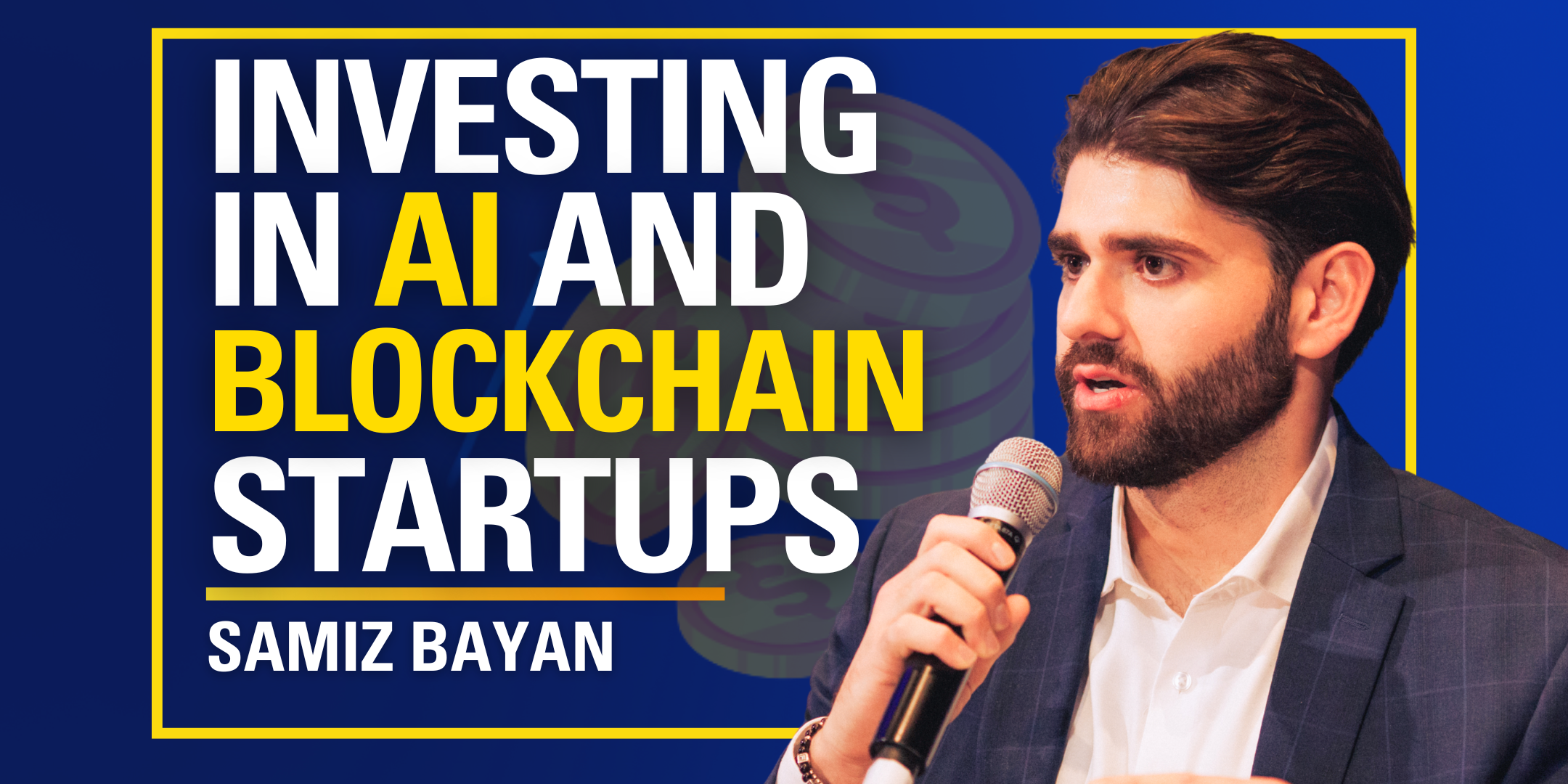
Investing in AI and Blockchain Startups - Samiz Bayan | ATC #623
Host Stephen Sargeant interviews Samiz Bayan, partner at Draper Dragon, the leading early-stage venture fund connecting Silicon Valley and Asia. He leads sourcing, diligence, and evaluation across the firm's investments in Web3, blockchain, and emerging technology, with portfolio investments that include Coinbase, Ledger, Gemini, CoinDCX, Coinflow, and Ether.fi. Samiz also leads Draper Dragon's partnership with the Cardano Ecosystem on the $80M Orion Fund, the firm's 2026 ecosystem fund focused on Real World Asset tokenization and institutional DeFi.
Before joining Draper Dragon, Samiz co-founded an RWA platform designed to enhance peer-to-peer economies and bring diversified assets on-chain. He previously held roles at Bank of America and the Estée Lauder Companies, and holds a Bachelor of Business Administration in Finance from the USC Marshall School of Business.
Host: Stephen Sargeant
Guest: Samiz Bayan
We are also available via:
Buzzsprout • YouTube • Quora • Medium • X • Facebook • LinkedIn • Soundcloud • Apple Podcast • Spotify • Player FM
Episode Transcript
Stephen: This is your host, Stephen Sargeant, the Around The Coin podcast. We kind of have an investor theme through the next few episodes. We wanna bring in Samiz Bayan from partner at Draper Dragon VC firm, one of the few firms like really hardcore focused on infrastructure. You have some big names on your portfolio.
Maybe just give a high level of who you are, how you got into investing, and then we're gonna go back a little and talk about your early days working in TradFi.
Samiz: Awesome. No, I appreciate you having me. Um, so m one of the partners at, uh, Draper Dragon. Um, so I was started off in traditional finance, um, at one of the larger banks and kind of shifted over into the venture landscape. Been in the founder seat for a little bit as well, so I'm excited to dive into that. Um, at a high level though, Draper Dragon's an early-stage venture fund. Um, been around since 2006. We connected Silicon Valley to Asia through the broader Draper Network. Um, so the-- we're the sole, uh, emerging tech and, uh, uh, blockchain-focused fund within the Draper Network. Um, so we invest in technical founders building across blockchain, AI, fintech, digital assets, and, and broader. Um, so I'm excited to, to be here and dive into everything.
Stephen: It's funny, I was just talking to Henry Arcelanian, who's a big fintech, I guess, influencer and content creator. He was talking about how he lived in China tw- you know, 20 years ago, and how was... Where did you see the gap there or the emergence of Asia at that time? 'Cause, you know, looking back 20 years ago, you wouldn't see the, you know, the same powerhouses that we're seeing today.
How did you know to kind of fill in that gap, or what was the methodology of, like, bridging that gap between Silicon Valley and the APAC region?
Samiz: Yeah, definitely. So, uh, this was before I, I joined, but one of the, um, investments that, uh, Tim, Tim Draper did was Baidu, and that sparked that focus of, look, there's a lot of movement in Asia and there's a lot of movement to the US and it is bridging over. And we're still seeing it today. I mean, with AI, there's always this competition of Asia and US, you know, who's gonna be the winner?
Who's always gonna do this? So that creates obviously some sort of innovation and healthy competition. So it's, it's always good to get both kind of deal flow, deal sourcing, and also working with both Asia as a broad economy and also the US. So it's good to have this constant bridge and, and working together.
But, you know, we're very agnostic. You know, we, we made a lot of great investments in the US and also in, in Asia as well. So it's a, it's a good bridge.
Stephen: Do you see anything, like any trends of things that were big in the US that hadn't quite reached Asia yet, and vice versa? Things that were big in Asia, you're like, "Hey, this is already working." I think recently live shopping is one of them, where it's like been booming in Asia for almost a decade, and it's now hitting the Western countries and more people are getting involved.
Is there any themes or trends or investments that you saw happening in Asia that didn't hit Silicon Valley yet, and vice versa?
Samiz: Definitely. Um, I, I think so one of the interesting ones, uh, during I think last year was AI with DeepSeek came, coming out. You know, you see how the US were on top of it. We have these AI models that are doing great, and then all of a sudden DeepSeek comes out and, you know, you don't realize what's being built behind the scenes. Um, I think that's one of them, and, and another one is Asia getting access to US markets, and that's where tokenization comes into play that US doing great at, where we can tokenize US assets so people across borders can be able to invest and get it without going through the whole friction of, of ACHs or wires or Swift and things like that. So it's, it's a lot of things they're trying to make it easier to do, and a lot of it's, you know, a trade. You do... US gets it one time, Asia gets it the other time, and it's kind of back and forth to each other. And behind the scenes it's, it's all working in a very similar lane, I feel like
Stephen: Is it helpful, do you think, because you have, like, such great communities in both regions that, hey, you invest in a founder in the US and now you kind of open up the Asia market for them, as well as growing them in their local market? Do you think that's an advantage where a lot of VCs, they're based in one country and that's their main focus, so they don't have exposure to other regions or exposure to capital in other regions?
Samiz: Definitely. I think the-- one of the great ones in, in the crypto landscape is, um, uh, exchanges and other institutions that can. So obviously there's a lot of great exchanges in Asia. Um, so when it comes to listings, you know, it's great to have that network to be able to plug in our founders with exchanges in Asia, add liquidity providers, invest or in-introduce to different funds and such.
So it's, it's good to have that network, and there's a lot of capital movement in Asia always, especially in crypto and in Web3. So it's, it's good to plug in the founder, and a lot of founders are looking for, for Asia opportunities to get in, whether it's lending or whether it's collateral, LPs, things like that.
So it's definitely very helpful.
Stephen: Can you tell me a little bit about your background? You were in TradFi for l- about four years working at a large banking institution, and then you get in and build your own, you know, co-founded a company that focused on digital assets fairly early, right? Like, uh, we're talking years ago. What was kind of that, that moment where you're like, "Hey, you know, I see something coming.
Not 100% sure, but let me fiddle, let me build in this space first, and that's how I'm gonna get my feet wet"?
Samiz: Definitely. So I, I mean, started off in traditional finance. I saw firsthand how financial products are being distributed and learning why trust, regulation, control, things like that are actually very, uh, impactful. Um, so 2019, roughly, I entered into crypto. One of my buddies introduced me to the UTXO infrastructure, as Cardano was actually my first e-ecosystem that I got into. Um, so at the time, crypto's long-term durability was still, you know, it didn't make too much sense. You don't really know what's going on, so you have to look into what's sustainable, what's sophisticated, what has educational backing, you know, things like that. Um, so one of the early experiments, and, and that's how I got into the whole space as a builder, was connecting physical goods like T-shirts and such into an authentication platform like for NFTs. Um, so the NFT product was very, very interesting to me. I mean, it's one of one. You can authenticate. There's a lot of scams going on with different, say, streetwear companies, sneakers,
Stephen: Sure.
Samiz: like that, where you want to authenticate it. And even before this, like way, way back, I, I was a reseller, so I always sold sneakers, I always sold streetwear, I always did...
You know, and I had digital goods like in Counter-Strike and Dota and all these other things. So I've always known that, that collectible world and also knew about the authenticity world. Um, so I was like, "NFTs are a perfect fit for sneakers. Like, why don't we authenticate them using blockchain, and we can, you know, look back on it?"
So that, that was my first kind of dip into the crypto landscape. Um, but the idea at that time was early, but it did teach me a pretty good lesson, was tech alone doesn't create this utility, and users do need some sort of benefit in the long run, and the product itself does need some distribution platform. Um, so once we focused on that and when I, I hopped into my startup around this digital assets, we focused a lot more on peer-to-peer commerce and, and how we can expand and distribute and let, you know, ease of access to crypto be, be as easy as possible. Um, so then that-- what that really did teach me after all of that was liquidity, security, compliance, go-to-market, those are the key aspects. Um, so putting that lens in, I got into venture, and that let me combine this financial lens of the regulatory landscape, how big money movement's going on, and then also from a founder's lens of on an operator side, how does that work and what the conviction I have with financial infrastructure and that's moving on chain. So a lot of, lot of really interesting stuff to pay attention to, but it's definitely-- it, it all blends together at the end of the day.
Stephen: I'm curious, what are your thoughts on driving the collectible market? It feels like, you know, I got Gary Vee stickers behind me, V- Vee Friends. It seems like the market is huge. Is it this area where, you know, kids and their parents... Like, we're in the generation where I collected cards as a kid, now I can, you know, sit and go to trading shops with my son and trade FIFA stickers.
Why do you think the collectible market's so hot right now?
Samiz: I think the scarcity is the biggest part. I mean, there's always a supply and demand with, with collectibles. Um, and trading cards right now have been absolutely booming. I mean, a lot of people-- It's, it's just going back to the previous generation of those OG baseball players that you hold those cards and it keeps going. Those are the value that will never leave. And even now, there's much more deals getting signed, IPs getting shared, things like that, that are making it even more of a scarce and unique, where you have a one-of-one card, and you can never get it from anyone else, and it's signed by the player or things like that.
So people want what they can't have directly, and that, I think, just drives the momentum into people wanting to buy more. Um, so I, I'm loving the trading card, um, whole world. It, it's been really interesting.
Stephen: Yeah, it's crazy seeing people open like 40-year-old Topps packs and Flair packs and looking for the NBA Jordan card. Uh, and it's like a community around it, right? And it's kind of mixed this online, in real life aspect, which obviously like Comic-Con and those other places have built, uh, such a huge domain on.
You mentioned Cardano. I think you're the first person I've ever heard that said they got into crypto because of Cardano. I see the partnership and relationships you have with Cardano, uh, around, you know, Draper University. Can you talk to me about that relationship? We had Charles on the podcast, great guy, very unique thinker, but I'm curious of like, you know, why did you get in via Cardano?
Like, why would that be your entrance point?
Samiz: Yeah, no. I mean, so early on, one of my friends just introduced me to Cardano and was like: "Look, look at this chain. This is why I'm investing in it." And I said, "Hey," I was like, "All right, I'll, I'll pick a little bit up." Then I did some research on it, and you look at, oh, it's peer-reviewed, it's sustainable, it has all these fu- you know, it gives you those green lights early on in 2019 where you would have signals of, I don't know if I should get into this space fully. Um, long story short, uh, the, the Orion Fund, which is our, uh, initiative that is backed by the Cardano treasury, um, is, is actually one of the first, I think, approaches of using a decentralized treasury and essentially giving it eyes and ears to sign an LPA and become an LP. Um, and what we try to do here is, is really make the diversity or the treasury hub diverse instead of just sitting assets. Um, and w- with that, what we did is have ecosystem initiatives with Draper University being an acceleration partner. So they run accelerators, cohorts, and bringing new people in. And then we have the venture studio side that incubates and builds and mentors companies. And of course, broader, you have the fund, which focuses on both Cardano ecosystem companies, but broader into integrative and help introduce and, and put goodness in the capital of a broad mandate.
So we, we kind of mix all of these together to build the Orion Fund, and it's a great way to build, uh, A, a treasury that's more diverse and has an asset ri- you know, a, a, a focus into different ecosystems, while also, you know, making sure we have ecosystem initiatives. So that, that was a great initiative last year that, that we wrapped up
Stephen: I'm curious, when you're thinking about like the accelerators, I don't know how close you are to it, you're also investing in a lot of these companies. What's one key thing or one key challenge that you see some of the founders go through this process that, you know, once they get to the other side, they're like, "Oh, now I've figured it out."
And what you're seeing when you're investing in these companies like, you know, we-- I think you can tell us what are the main ingredients and then what's that like secret sauce that you think that the founders are really, you know, crushing it after the accelerator and incubator have that maybe other founders may not have yet?
Samiz: Definitely. I think the good thing with the accelerators is more of a de-risking mechanism because we spent four weeks with them in Draper University. So they're at the dormitory. It, it was a previous hotel that was bought and now it's Draper University, um, in Silicon Valley. So we spend a lot of time with them.
We work with mentorship calls with them. We-- they have speakers come in. I mean, they've had David Sacks, Elon Musk, a bunch of other pretty big speakers that ended up coming. Um, and I think spending time with them and understanding how they operate and h- what they're able to do and execute, what the problems are early on, and we work with them solve it, we really see the responsiveness and if they're able to adapt and be receptive of feedback.
Um, and that's a really good signal of being receptive is if we have feedback and, and we think one way, the founder isn't just gonna ignore it and go do whatever he wants to do, and it ends up not working if we've, you know, seen these trends. So receptiveness is one big one, and also having an understanding of, you know, not al- it's not always bad getting into an accelerator.
Some of the founders think, "Oh, I'm too late stage for this. I don't need to get into this accelerator." At the end of the day, I think it's great to be in one of these because it lets you get, expand your network, be in Silicon Valley, work with other founders and partner. I think last year they had an accelerator and every single company almost worked with each other, partnered with each other.
So you have 15 cohort companies that ended up doing partnerships, and then you have all these announcements that come out. So it's a great way to work with each other and really build and also have this curated environment, and also pitch on demo day with Tim and the rest of the partners and invite other funds and such.
So it's a great way to get injected into the Silicon Valley ecosystem.
Stephen: And are you, how are you able to leverage the Cardano ecosystem in this? Are they a part of this? Are they kinda like supporting it in the background, or is it just the Orion fund that they're working with?
Samiz: Definitely. So Draper University runs two programs for Cardano a year now. So one of them's in very early stage, more of a pre-accelerator with 15 companies, and then they have a later stage accelerator for 10 companies. Um, so they run this and bring in 25 new companies into the ecosystem. Um, so they're really focusing on growth of first integrating them in a technical landscape, but mainly there's a lot of great technical builders, and I think this applies to Cardano but broader as well, where if you have a developer, they're great at building, but they can't execute on the business side. Um, so you need to help them with the revenue model. How do you make revenue? How do you build a good business model? You know, what do you need to do with the domicile of the entity? Things like that, that a lot of the builders sometimes don't entirely know 'cause they're very technical focused, but you need to put that business hat on, and that's where I think is a great value add that Draper U brings.
Stephen: I'm curious, let's jump into VC, shall we? In the world of VC, where are we? Like, give me the state of VC. If you had to go on stage right now at the biggest conference and give me the state of VC. 'Cause what's interesting is, like, companies stayed private longer. We're seeing now open up with the new administration, new mergers and acquisitions, now trillion-dollar valuations and companies IPO-ing, like, and which is great for investors.
We saw Securitize, I think, go public, and that seemed to work. And, you know, obviously everything that's happening with xAI and, uh, SpaceX. So where are we? Like, as a VC, where are we? But we also hear about the s- the SaaSpocalypse and, you know, all these, you know, vendors that have been selling enterprise software are about to not be able to coexist because of CoWork and Claude.
Samiz: Right. No, it's a, it's honestly a great time in VC, I think just seeing all the innovation. I think we've never had this level of productivity and innovation ever, um, given with the AI every new day. I mean, we could remember two years ago, GPT-3 or less, that you would, you would struggle to even get something edited for grammar, but now it's doing your work, going through your inbox, going through, you know, running agents that pay each other now.
It's, it's expanding very quick. Um, so I, I think in the current VC landscape and, um, this is kind of both the crypto VC landscape and also the broader, but, um, AI has been obviously the biggest driver in both crypto and a broader VC, where I think around 65% of venture investments have an AI, which is very interesting.
Majority of that is, is kicking in and, and they're taking over. Um, so capital's still there, but it's becoming much more concentrated into this smaller number of companies and funds and things like that, and fund lives are com- are getting much longer. Um, I think series A to IPO is going from 10 to 12 years and onwards. Um, so you're seeing the fund life where previously in crypto VC it was five-year fund lives where you do a TGE, you have liquidity, it's, it's wrapped up. But now you're looking at more equity focus instead of a token focus, and that's much more of a fundamental focus in general. So you're much more quantitative and more focused on, on what KPIs, what metrics.
I think overall it's getting much more mature in the crypto landscape and broader it's just getting lengthier, and I think exit conditions are improving. Um, but one thing is b- liquidity is still fairly uneven. So, um, you know, that means like founders still need to have some sort of valuation discipline and a credible path to, to continue to exit. Um, and I think investors in general should be kind of wary of, of what valuations we're looking at because things are, are skyrocketing obviously. So it's, you know, good to still have a good discipline, um, in, within the fund.
Stephen: What would you consider? Is it like a buyer's market or a seller's market? Like, can you just put AI on everything and, you know, decide who you want on your cap table? Or is it, like, hard to get a term sheet worked out? Like, w- where would you consider a buyer or seller's market for VCs?
Samiz: I think it's, it's, it's a bifurcated market right now 'cause there's exceptional AI founders or builders in general that can get very good founder-friendly terms and, and, you know, they're, they're getting a lot of funds to jump in. But I think everyone else is getting more of an investor discipline where, you know, the, the best builders are still, you know, um, uh, dealing with working with different funds and trying to get other funds on the cap table while investors are being much more disciplined and making sure they're not deploying and having the right valuation.
So I think that, that big jump of valuations have been getting a little bit better. Um, but there has been a lot of deployment right now in VC. A lot of investors are constantly deploying and a lot of things are moving, which is great, just much more disciplined approach. So I think it's a bit of a mix and depending on what it is, but I think of the-- in general, a lot of the funds are much more, um, uh, focused on, on these metrics and KPIs rather than, you know, let's get a white paper out and then, you know, get, get some funding. Um, so it's much more, uh, disciplined in that sense.
Stephen: You know, JPerDragon, you know, the website says how much it focuses on founder. What's your investment thesis, whether it's, you know, the jockey, which is the founder, or the horse, which is the product or solution? And does AI change that now that, you know, all the founders have, you know, capable solutions and agents that can work for them?
Does your thesis change now with AI reaching the heights that it has?
Samiz: No, great, great question. So, I mean, how we typically invest is, you know, obviously in the early stage and much more founder first. So we try to operate with a founder's mindset, and it's great that I, I was a previous founder, some of the other teammates were previous founders and builders and entrepreneurs.
So when we do provide, uh, uh, capital, it's much more than that 'cause capital alone's commoditized. Um, so we look at, you know, what product can we support? What strategic support can we bring? What technical resources do we have? Um, and overall, we fill the gaps without replacing the founder or taking any ownership away as much.
You know, so we try to work with them more as a BD and putting our investor hat on. Um, and as far as broader, uh, thesis and focus, I think the, the world is, is becoming much more of an innovative and productive place with AI. So you wanna be right, right where the distribution moats are, what moats of data they have, what areas that we can really focus on that will last forever that's not-- it's agnostic to what cycles we're in. Um, and as far as the jockey, horse or, or both, I think at the earliest stage, I weigh definitely the jockey more because it's, it's the product's gonna change, right? But, you know, you, you don't invest in a founder in, in the abstract, right? You still need a non-obvious insight, a painful customer problem, a credible market, and evidence that the founder can actually learn and adapt faster than everyone else. Um, and what I typically look for is that, like, founder-market fit, right? The ability to recruit and build strong people. And that's the most important is recruiting and having a great team behind you. Um, because I felt this when I was a founder, recruiting was difficult to get, you know, the right people that had your same mindset and were able to continuously lead until you found one or two others, and then these two others will just stick with you and, and constantly keep going.
So some of the great companies we invested in ended up having that ability to recruit some great people, um, and also have good quality and speed in decision-making. Um, so I-- overall I think, you know, the-- you could s- to sum it up, more resilience without stubbornness and building the right team around the jockey, I think would be, uh, how to, how to look at it.
Stephen: And I'm curious, you know, I think you've even written a LinkedIn post about this I was reading, and we talked about this even before we started recording. How do you not follow the shiny ball but still keep your pulse on, especially 'cause you're investing so early, still keep your pulse on something that can have maybe an unknown TAM, right?
At the time, you might think the TAM of something AI comes and the- you're reaching people or new jobs are created where you don't even think they'll be using these products or solutions. But how do we not get caught up in like NFTs for everything or, you know, digital asset treasuries for everything, uh, and you're kind of left hanging out there like, "Hey, we followed a little too far down that trend rabbit hole."
Samiz: No, definitely. I think the, the filter I'm-- I try to put in, in my lens is, you know, separate the technology shift from a narrative shift. Narratives come and go always, but there's a technology shift that ends up happening. For example, NFTs, the technology of NFTs are great, right? The one of one, you can authenticate, the, the tech makes a lot of sense, but the narrative of NFTs started falling apart, and that's where it kind of has shifted over to, to the whole market.
So I, I really try to ask myself, who has this problem today? Who will have this problem in 10 years? Will this tech still help this, this problem? Can it adapt and it keep going? And then you also ask whether, are users actually spending more time or money to solve it? Um, and then you kind of find that repeated use.
Is there integrations, retention? What's the willingness to pay? How, how much broader can it get? And understand exactly where the value accrues to. And kind of decoupling all of these, you, you kind of make a sense of, you know, does the im- business improve itself as things become cheaper, or is this just a narrative that can end up, you know, keep come and go? Um, so investing in AI I think is a great one, where the tech is there and it's great, but the narrative's also, you know, it's part of a narrative that people bring like chat to payments and things like that, which has a lot of great use cases. Um, so you have to really back what proprietary workflows are, what data distribution trust, and avoid all these thin different model wrappers and things like that.
So you wanna really treat most of the model performances and cost moving variables as such, um, 'cause narrative can create a financing window, but it can't create more of a customer retention in the long run.
Stephen: And I'm curious, you know, I was at a crypto conference in Canada for the last two days, and you hear some conversations about tokenization and, you know, pools on everything, and we're gonna hold back this amount and collab. And you're like, "Oh, that doesn't sound like..." When they have to tell you to read the white paper and they can't explain it to you.
But I also realize some of the best entrepreneurs, you know, struggle to communicate to others. Like, is there an assessment or a filter that you kind of see as like, hey, if this person on the spectrum and they're just a genius or, you know, they're trying to hustle me into investing into something that's not gonna exist by the time we sign the term sheet?
Samiz: Definitely. Um, so I think the, the few things we filter and, and ingredients essentially for an investable industry is the founder, the market, product, business quality, um, and more of the crypto specific side. So, you know, a great demo can get in front of the pitch and do great, but then you have the retention, distribution, and the founder that actually earns the investment. So you want to decouple all of these where is, is the founder earned insight into that problem? You know, is he integral? Is he, uh, intellectual and honest and actually ability to, like I mentioned, um, adapt and, and be receptive to feedback? Um, because again, you want to work with the founders, and if they're not receptive and they're doing their own thing, it's, it's kind of difficult to end up working with them in the long run when things really get, get noisy and, and busy. Um, and then also there's the market, which is the most important, where you obviously need this wedge and this clear initial wedge, but also you need the product and the users to pull into the whole market abroad and expand more. So timing plays a big role in this obviously, but also how big the market is and how big the market can get. I think we, we saw the market grow super fast with AI agents where you wouldn't think how big that market is and then slowly it expands more and more. So you want to think, can this market really expand broader than, than, you know, what the current TAM is? And then from that you can... You know, I, I, I try to decouple like what the business quality is, how's their distribution.
A lot of this stuff comes back to the distribution. You know, that, that's a lot of the big moat of, of how can this get to other people and will people actually end up using it, um, and where the value ends up accruing. So decoupling all of these and really looking for these cues is what I try to, um... But overall I think it, it, it really, you know, it's, it's easier said than done of course for, for a lot of different, different ones.
Stephen: How do you get the sentiment of a product or a solution, right? You live in an ecosystem of tech people, uh, at the cutting edge of technology. Everyone knows exactly what you're talking about. You don't have to explain yourself. But how do we understand, like, what are the common users gonna be using, and how long and sustainable?
Like, I saw Threads, and everyone was jumping on Threads, and there are Threads influencers 'cause all these people signed up in, you know, one week, and then I don't hear too many people talking about Threads anymore. Uh, and they've moved on to the something else. How do you figure out, like, what people are actually using versus something they just, you know, downloaded once 'cause it's the hype cycle, and they can make content about it and get some views for a couple of weeks?
Samiz: I think a lot of it is I, I put on my consumer hat because I, I love testing products. I demo product, I use them myself and things like that. Threads is a great example. I never got into Threads really because I used it once and I was like, why, you know, X is here. It, it's the same thing. So when you question yourself, you know, why this, why that, how would you see this?
You can really put yourself in the product's shoes or the customer's shoes and say, "Would I keep using this or would I not? Does the-- Is it too expensive, too little?" Things like that. Um, so I try to put myself in, in the customer's shoes based on what the product is. And then from that I kinda guide, you know, will I use this?
And I also get receptive feedback from some of the other teammates or, or even friends and family of, "Hey, would you use something like this?" If it's something to ease, ease of onboarding, for example. Um, so I, I think it's just putting myself in the shoes and, and testing it and seeing kind of where that guides me.
Stephen: Is there anything that you've used recently that-- or, you know, invested in that you weren't 100% sold on based on maybe the deck, but you touched, you fiddled with it, other people talked to you, like it really made sense, especially when we get into some of the DePin and infrastructure things that you've invested in that seem to be working out for you?
Samiz: Definitely. I think one, one great one, which I, I wouldn't-- We, so we didn't invest in it, um, uh, quite yet, but there's a really great model called Osaris, which is a, a local AI platform. Um, so one thing with AI is I'm, I'm personally as well not the most technical person, so I can't really run local models well and integrate it with my cloud and do all these different things. Um, but when I-- This was from the Alliance, um, uh, Alliance Now Demo Day when, when we listened. These guys are making it easy in a box essentially to build a local AI model and use it. Um, so I was like, okay, well I've seen, you know, many of these before, but let me give it a shot. I started using it, integrating my cloud and cloud, and it's been amazing. Um, so the, the product side of that is, is really important that, uh, with, with, uh, tools I try to use as much as possible. Like what, how can I just increase 1% of productivity with myself, and how can I also keep it safer with private data and such? Um, so using them was the easiest plug and play, and that was where I was skeptical at first.
I've seen a lot, but then I actually use it and I was like, "This is, this is amazing."
Stephen: It's hard. You hear a lot. Everyone's saying that their, you know, new thing is the best and it's cheaper and it's, you know, 50 cents for tokens versus $56 for the tokens. Uh, what is, you know, obviously Draper Dragon comes with a lot of brand recognition. What do you think differentiates you from other VCs that are very blockchain and infrastructure heavy?
Samiz: I think the big one is having that cross-border edge where we have this connection with Silicon Valley and Asia, but also access to the broader Draper network. This gives us exchange networks, stablecoin funds, financial institutions, technical ecosystems. So like I, I think our job is not simply just to pick the companies, it's more of helping the technical founders and, and having them become a globally scaled business. Um, and with that is great working with the Draper ecosystem as a whole. I mean, Tim invested in a lot of great unicorns that are out there right now. I mean, you have Tesla, SpaceX, Robinhood, a lot of these, these big, big models. So being in this ecosystem is always great, and also building Silicon Valley. I mean, if you go to San Mateo, you have big Draper University building and you have Hero City where there's a lot of great founders. And if one founder is more of the outlier, not in this ecosystem, we bring them in, they start working from the office, meet a bunch of founders, they get tapped in right away. So being able to give a distribution moat to them and also being able to access both the U- Asia markets, but also the Silicon Valley markets is really important. Um, and overall, I think just putting a founder's hat on with them is, is really important of, of being a founder before and, and sitting down with them and actually hitting the whiteboard and going through ideas and say, "Does this make sense or does that make sense?" And, you know, spending good amount of time with them that, that we invest and help them kind of get to the next stages as they go, more purely because A, we love it and it's something we actually truly enjoy, but B, it's really helping them get to the next step and next stage and continue to grow from there.
Stephen: I'm curious, do you have the same, like, physical infrastructure there in Asia where it's like an old hotel building and it's like people can bounce from one side of the world to the other and have that same kind of unison and feeling?
Samiz: I, I wish we had another, uh, Draper University hotel there, but we have an office in Shanghai that we also do have a lot of founders come up there when we have events and such. Um, and we have a satellite office in South Korea too. Um, so we have both of these that, that we use for that Asia distribution.
Also recently Japan, we've been very focused in that ecosystem given obviously Cardano has big distribution in Japan. Um, but also we've been going there quite a bit and, and working with the curated of, of tech growth there too. So, you know, as much as we can, we try to get injected in those
Stephen: Talk to me about China, because obviously it's great competition, but it also leads to like, "This is our enemy. We have to beat China at AI or, you know, they're gonna take over the world." How do you marry the competition with, you know, strong business relationships? Especially 'cause China is very hard to do business in for a lot of entrepreneurs that are scared they're gonna, you know, steal their IP and, you know, there's all these horror stories that have happened out of China, but it's not the whole story, but they still have that negative stigma, I believe, from things that have happened 20 years ago.
Samiz: Definitely. I, I think the bridge with Asia and Silicon Valley is not really the geography, but it's more so the translation of how customers, regulation, capital, and culture ends up emerging with each other. Um, 'cause we could think about, for example, how what Asia taught US at a high level, right? The mobile first finance, digital wallets and QR code payments, um, a super app distribution
Stephen: apps, yeah.
Samiz: app, um, you know, fast experiment in, in gaming and digital assets, and then hardware and supply chain execution.
But then on the Silicon Valley side, where the export was really good is the enterprise go-to-market, the developer platforms, the, uh, uh, capital formation, global product storytelling, things like that. So I think that is where, um, it-- what fails at the end of the day, I think, is treating Asia as just one market and copy-pasting a US playbook and assuming just this partnership is one region.
But more so, I think it's more important to just expand and use that as a distribution and what leadership is local to Asia that can bridge into the US and have this more synergetic avenue of just adding that as a distribution layer rather than a comp- competitor directly. Um, because there's a lot of users in, in Asia that can use this, and there's a lot of users in Silicon Valley. Um, so keeping that kind of bridge and what makes sense there and what makes sense here. Obviously, this is all at a very high level. There's a lot more geographic and geopolitical things that end up coming about. Um, but mainly just giving access to one another and then working with them, and that helps both the US companies and also the Asian companies.
Stephen: Is in the kind of, you know, way you're looking at it, like I think of like social media and live shopping where it's like, you know, we kind of brought li- like I remember, and it's still here, the Shopping Network and Facebook, like was kind of our, like we led the industry and now everyone's following the TikTok model.
Everyone's, you know, seeing what's happening with live shopping coming out of Asia and a number of other things. Are we kind of like the starters in the US and North America? And are they adapting and then finding a way to kind of leapfrog and to becoming the industry standard? Or do you think they're growing in parallel, we just don't know everything that's happening in Asia and we're not focused on it until it reaches some kind of critical mass?
Samiz: I think it's a mix of both, but I think what US-- what we've been doing great at is making a user experience usable and, and, and great. Um, I, I mean, I, I'm sure a lot of people have used a lot of the As-- like WeChat is, is, is great, you know, product in, in Asia, but U- UX-wise, not the best, right? You have a lot of the US, um, companies like Watsa- WhatsApp and things like that, that have just much better user experience than, than the ones in Asia.
So I think the idea and philosophy of building these products in Asia are there, but then the actual getting users to use it for, uh, the long run is, is not there, and that's where US is great at. So I think it's just trading of, of one's doing the other, one's doing the same thing at the same time, then all of a sudden it comes out exactly like that DeepSeek example where you don't realize what's being worked on behind the scenes until it's done. But we've seen a lot of great, you know, Asia builders that end up coming in. They wanna come to the US and, and plant in San Francisco. Um, and then there's a lot of vice versa that are in San Francisco but need distribution to Asia. So we, you know, help that bridge. So it's, it's really trade-off of both. Um, but user experience I think is the biggest one that I've personally felt and, and seen with a lot of the companies and seeing how it goes.
Stephen: Talk to me, you mentioned regulation in our conversation. We're seeing a lot of regulations around stablecoins, crypto all around the world, but specifically we're seeing some great acts coming out of the USA. But we also see, you know, in places like Asia and China where the, you know, government kinda picks a few winners and the rest of them are-- they compete, but then the government picks a few winners.
I don't know what happens to the non-winners, but maybe you have any insights. How much does regulation play into your investment strategy?
Samiz: I, I think as of right now, huge because you have-- there's so much of a gray area with a lot of the different things that are going on that we see a path to get regulation and, and path to clarity. I mean, look, it's much better than before, right? When you launch a token, no one really knew exactly what would happen to you.
Do you have to be in Cayman, BVI? People just did tokens. They started second-guessing, and then you, you're worried about the Gensler era of them coming after you. But I think in the Atkins era, there's much more of a regulate-- regulatory, um, execution that's made much better and actually bringing clarity.
And I think at the end of the day, this all just brings clarity to the founders of are they stepping in the wrong direction? Are they stepping in a gray area or not? And I think just having that clarity lets them execute in the way they should. So the fact that things are moving is really, really good.
And with some of the companies that we, we speak with are very early on but have this very interesting model. Like, for example, um, AI agentic payments with AI and stablecoins. Does the AI need to form an LLC themselves and start generating revenue? Who does that really go to? And these questions always tap into the regulatory landscape of what jurisdiction do they have to be? Does my agent need to become a business and start paying taxes itself? Does it need to start filing stuff, or do I need to? Things-- These small questions like that start coming up. So regulation always plays a, a, a role, but I think in this era right now with under Atkins and under the administration, we're, you know, much more of a, of a good direction I think we're, we're headed.
Stephen: Talk to me about the Orion Fund. It seems like you're betting huge on real-world assets and institutional DeFi tokenization of everything. Uh, how do you d- like look on that? And you probably see the trend of like we see some of the most crypto native companies, companies like 1inch and Hypernative are now trying to, you know, change their and rebrand to attract these institutions.
Kinda give us the through line that you see with this move f- to institutional DeFi.
Samiz: Definitely. Um, I mean, tokenization, uh, is quote-unquote easy, right? But making the, the actual token or, or that item, uh, legally usable at liquidity, make it a distributable business, that's the key part that's, I think, missing, and that's what we try to look for. There's these phases of, of adoption of tokenization where you can tokenize a stock and everyone's tokenizing it, but what do you do after that?
Like, what's the real purpose of it? Can't you just go on Robinhood or buy it? Or, you know, the 24/7 markets when that ends up coming into play, what can you do with it? So the composability factor and, and actual productivity of the tokenized asset is really important. Um, and I think this goes back to banking, where if you want to wire something, it takes three to five days.
You have to go within these hours. You have a cutoff time at 2:00 PM, or else you can't wire anything. ACHs, you have to wait so long, things like that, where stablecoins are playing a big role in fixing this, and also the blockchain rails are. So institutional DeFi overall is just gonna make the pro- the whole, uh, economy much more productive, um, especially in Wall Street, right?
Like when it comes to transfer agents, like the prime example is digital asset treasuries that you briefly brought up. When a lot of crypto funds and, and funds in general started getting into it, they didn't realize the world of, of traditional finance dealing with transfer agents, dealing with the bankers, dealing with these relationships that Citadel and these other guys already have that are really well established.
Where you're trying to bridge into it, it's like, "Oh, I- my shares are locked in a book entry. I have to do XYZ to get them," where blockchain could actually make that much easier. So I think that, that the institutional adoption as it's coming is validating that the market's there and it will bring some scale.
And I think that's where we start looking at how crypto native users still matter. You know, how do, how can we test these market structures, and what can institutions really bring? So I, I'm personally extremely bullish on tokenization institutional adoption. I think that's definitely the next realm that we're headed in.
And it's not really DeFi or TradFi and things like that. It's gonna be just finance
Stephen: finance it. I'm curious, you know, when founders are coming to you, are s- are they thinking compliance first because they are trying to get into these institutional markets and, you know, get access to some of this institutional capital that's now being invested in DeFi? 'Cause some of these DeFi protocols could care less about, you know, pr- let's say four years ago, could care less about compliance or regulation.
You know, the Financial Action Task Force is starting to mention DeFi in their guidance a little bit more. I think it's only a matter of time as when, it's no longer if, regulation's gonna come more into play as more institutions get into DeFi. What are your thoughts on that? What are founders saying to you, or what are their concerns of getting into these markets?
Samiz: What's interesting is I think a mix and a lot of time based on jurisdiction of the founder. There's a lot of founders in Europe that are not gonna do anything until they get the right compliance, the right licenses, the right things like that. Then there's some of the founders that just go and break things and make it work and then end up figuring out as it goes. And I think speed is the quickest and most important part of it because how fast can you get to market and make it sustainable and grow while also having your eye on the ball for, uh, regulatory side and make sure you're not stepping in on, on the SEC's feet when you're, when you're going through it. So having that mix of being wary is important that we've seen in some founders, but also some of the founders that just with the beauty of startups, you're nimble, you can go break things and fix it and keep working on it is really important. So I think a good mix of both is, is extremely important and I think what founders are slowly starting to realize we can't spend all our money and time in just regulatory licenses. We have to actually build the product that's useful and then take it from there.
Stephen: You know, you have some of the most compliant exchanges on your platform and service providers. What's the biggest challenge for you and, you know, Draper Dragon? And what is the biggest challenge when it comes to investing in crypto that s- the cycles seem to get shorter and shorter, right? It's like usually it was every four years, it feels now like 18 months we can go from, "Woo-hoo, Trump's in power," and, you know, blockchain for everything to, "Ooh, we're in a down market," and, you know, no longer the big exchanges are sponsoring some of those events anymore.
Samiz: Definitely. I think the-- one of the biggest one is, and one of our venture partners, um, tells us always like remove emotion out of it, where you're gonna be in the cycle, things are gonna go up, things are gonna go down constantly. But being emotional about it or always watching the chart, seeing that candles are freaking out is never gonna do you any good. Um, but there's I think four challenges or more risks, but the core challenge of this is more separating the, the product adoption from the financial speculation, and that comes with token price, TVL, and incentive-driven volume. The, the-- all of these could create some sort of false validation. Um, but the core, I, I'd say four, four or five major risks is value accrual. Um, you know, where's the value accrual going? Was it the token? Is it the equity? Is it either? That's why obviously there's the token warrant and, and safe equity models. Um, security, I think is the absolute and most important one right now, where what can happen in, in the whole landscape of so many things are getting hacked and with AI getting even stronger, y- uh, can AI keep just hacking everything?
And the next thing you know, a lot of these protocols are getting hit, like LayerZero and Kelp and these other platforms. Um, and then obviously the regulation, which we touched on, and overall cycles and, and emotion I think is, is the few. So I think overall, you know, doing still continuing the diligence more on the fundamentals and being disciplined on the fundamentals is important, and not getting blindsided by these different propped up metrics that might cause you to think different, um, into getting into it.
Stephen: Is due diligence hard, especially in blockchain? 'Cause it seems so transparent, but, like, I think in the situation of FTX, on the outside FTX looked fine, but they had so many underlying issues that it would be hard for any investor to see, especially when, you know, they're on the-- they're on Areta stadiums and all over the world and, you know, they're in the best boxes and they have the best, you know, you know, presidents talking about them.
How has due diligence changed for you that you feel, especially from your traditional lens a- and now working in blockchain?
Samiz: I think the beauty of it, which is how AI has helped diligence in investing is a big one. But before that, I think the biggest one is, is pattern recognition and, and working with the founders very closely, 'cause at the end of the day, the heart of the company is the founder. Um, can you trust them? Do they trust you, or do you work well?
Things like that, where you, you could really spend time to understand the direction they're headed. That doesn't validate all the product side, but that gives you a direction where the company is headed. If they're a good leader and they're building a good team under them, can they head that, that side? And also that pattern recognition of, of previous founders that we've invested in that did absolutely amazing, and you have that gut feeling right away where you're like, "This guy's a great executor. These guys are awesome." And I, I brought up this example a few times, but Ether.fi was one of them where when we met them right away, the whole-- all of us were like, "These guys are awesome."
Like, they, they are crushing it in liquid restaking. But they're also great executors, and that's where they bridged from liquid restaking where that still is there to now more of the neobank model and more of a banking ecosystem model that they were able to. And that's the way of being adaptable and, and nimble as a startup and continuously delivering while keeping an open lens where you have public quarterly investor updates and a lot of these things that are in Dune that you can just always look at and, and dig in.
So applying what we've seen there in other, other companies to other founders. Um, but I think overall what the diligence process has helped a ton, which, uh, I've noticed, I mean, even from some of the interns that we've worked with, AI has been much more just productive in general than they kind of say, "Well, we need some more work," so we're using AI as well to, to figure it out. Um, I think the AI has helped, you know, mar- map the, the whole market. You're, you're able to do some security review and product review instead of having a technical guy dig through the cold code as a whole. And you're able to anal-analyze on-chain data, but also synthesize a lot more of the references and competitors of that company.
And, uh, at the end of the day too, that pattern recognition of portfolio monitoring and seeing how they're doing in a, in a long-term round without taking t- your eyes off the ball, um, and, and to see how they're doing. So adding all of these, you know, different ingredients together, working with the founder and seeing who did great and, and applying that, I think is a big one. Um, so there's a lot new diligence questions that do come up though as, as the market changes for sure.
Stephen: I'm curious, you know, when you're investing in blockchain companies, does it have to have an AI component to it or, you know, some way that AI is gonna improve their day-to-day work? Do you take that into account? Is there an AI factor, even if it's not an AI company, that it has to converge or leverage AI in some way, and the fact that they left AI, AI out of the deck for anything operational or execution-wise kind of makes it a no-go from your side?
Samiz: No, that great question. I think that's a problem we've, we have seen from last year, right? Everyone just slaps AI or a couple years slaps AI on if it's nowhere related or near, it's just using a ChatGPT model behind the scenes. I think what I look for, it doesn't need to have AI obviously, you know, not everything does need it, but is the founder utilizing AI in a productive way to lower costs and their burn? Because you have this employee per revenue model that, for example, Tether, Hyperliquid does great at. They have such little employees with such high revenue, and they're very productive, and I'm sure they're all using AI as a whole. At the fund level, we're using AI full force. We're, we're have-- we have fund dashboards, we have portfolio monitoring with AI. We have agents that are keeping us in touch of what the market news are and things like that, keeping up with what the founders are doing, all these different things that applying it to make a our life more, a little bit easier of not looking at these individually and having a good broad overview. But also when it comes to onboarding and bringing new people in, they could see it and, and work with it, and you don't need as big of a team anymore.
You still do need a team of course, but I think it's much more productive and you save your overhead and runway by doing that. So how's the founder using AI is a big one, and I always ask that. That's a new question I always ask the founders is, "How are you using AI and what do you think of it?" Um, and if they're like, "Oh, you know, we don't really use AI," that's totally fine, don't get me wrong, but it's great to see them use AI to be able to lower the cost, or else they're just gonna build a big team out.
You don't need a 20-dev team anymore. I think you could have three really skilled guys, obviously depending on the scale, to just execute and work with these different AI models to get something going.
Stephen: You mentioned Tether. As someone that worked at Bitfinex, I can't speak for Tether, although they're sister companies. What I found they did a really good job of is always finding top talent, uh, without having to overpay them, so they're growing into the role in a great way, and they're also contributing to the mission.
So they didn't need a lot of people. They just had, you know, a lot of talented people, which kept the headcount fairly low, in my opinion
Samiz: 100%, exactly. And, and you see the employee per revenue. I mean, I, I forget the number now, but it's around 110 million, um, or so, or that might be Hyperliquid. But that shows you, you're great at finding talent, you're great at keeping them embedded in a family-like culture, and they build and grow 'cause they wanna see it grow.
So that's a, that's a key point.
Stephen: Where are you seeing the opportunities at the convergence of AI and blockchain as a whole? Is there like, "Hey, these are some use cases where I see..." You know, not just buzzwords, mesh them together like in some conferences. Where do you see the real opportunity bucket with converging these two technologies?
Samiz: I think AI, and this is actually I think Haseeb from Dragonfly mentioned this too, but AI is actually the true core use case of blockchain. And, and I felt this when, when it was mentioned was, you know, you go to MetaMask, you type someone else's wallet, you're reading through the numbers. It feels alien-like, you know?
It doesn't feel, feel proper that you're writing all this down. Instead, if you go to Zelle or Venmo, you write someone's username or phone number, easily done. All these different numbers that you put in, you have to double-check the last four, the first four, you don't even read the whole thing anymore, and then if it's one q- one's wrong, then it's over.
Versus AI, the rate of failure making those mistakes is much low because it's straight, you know, what numbers are these? Are these the correct numbers? Yes, yes, sent. So, uh, I think a core one, a big one's agentic payments, where stablecoin micropayments for different APIs, for data, compute, and different services are having your AI agent end up actually doing work for you.
And I've seen some startups end up doing-- having AI agents that are just building for them and making more revenue for them, and it comes back to the company itself, which is, I mean, mind-blowing to even think about. You have an AI agent that's going out there and making money, whether it's through, you know, there's clip farming, there's all these different avenues that can generate some money and micro-transactions that bring value back. Um, and then identity, which, which is under the DID, the decentralized identity infrastructure, is how do these agents represent themselves? And that's where identity can get plugged in. Um, so you have all these different, uh, use cases of blockchain that have always been there, that were always applied to the broader world, but I think now are really easily combined with AI and it, it's a natural fit to make it work.
Stephen: I'm curious, what do you think, Kurt, with AI, you know, being able to pull all this data and training from all around the world from all of us, where do you think the moat still exists? I know there's this big debate on whether moats still exist. Does it become the earned secrets, the experiences of individuals that you can't summarize because it happened to the person, it's in their mind versus written down in some blog?
Is it data moats where you have these unique data that nobody else has that's proprietary that they're not selling to Sam Altman? Like, where do you think these moats exist, and is there such thing? Or is eventually, you know, AI just like they're coming after cybersecurity companies with Fable, is there an instance where there are no more moats and it's just purely on execution?
Samiz: I think this, this also does blend a little bit to the SaaS apocalypse too, um, where everyone's worried about the whole SaaS. So I don't think, uh, for, for the SaaS apocalypse, I'll, I'll touch on right after. But I think the biggest mo-- and there's a handful of mos, but one of the main ones I think is the proprietary data and what trusted workflows, and also how vertically integratable is the AI company as a whole.
Because there's a lot of different things that are being built, and there's a lot of things that can work with each other and get plugged in directly versus being more horizontal. You can't be that nimble, and you can't really plug a lot of things in. But if you do have that proprietary data, that's, I think, the most important part because then you can really scale it and bring a true value to the user. Um, we see this with real estate models or with, with financial, um, AI models where they have this one section of data that no one else has or they get licensed to them, where that makes them the main different. That's where you want to use them. Um, and then on the SaaS side, um, I, I think like software's not really dying and it's more of a undifferentiated seat-based SaaS is being repriced, and that applies to AI because AI makes the software cheaper and faster to build.
Um, but the same applies, you know, the proprietary data and mission critical systems of, of, uh, record are, are what, what's actually winning still.
Stephen: I'm curious, you know, when I think of things like earned secrets, I think you said s-something on the same lines earlier in the conversation. You know, when you have a founder that has these earned secrets, you know, only he, this is, or her has been studying this. This is what they ingest all day, every day.
They're excited. I think of, uh, David Senra and The Founders podcast. He's just obsessed with reading biographies and, you know, you know, pulling out the key insights and sharing it with the world. What makes-- what do you go from, like, just really earned secrets into an actual business? What would founders need to add on or to equip themselves with to come to you with, like, an investable business?
Samiz: Definitely. I think biggest one, and I think we can learn it from, uh, uh, Fable, for example, right? Like the, the earned secrets and, and these guys building and what the proprietary that they have, um, can they apply it to the actual core business and bring in distribution? So with, with Fable, for example, that has, you know, no one really knew that what was happening behind the scenes that they end up coming.
That was pulled from everyone because of security and, and safety concerns, and that shows those were later redeployed. It has safeguards, things like that. So I'd wanna see, you know, fallback models of, of the founder to have a fallback system where if one doesn't work and they don't rely fully on this, this proprietary either data or phone integration that they have. And if they do, you know, what's the internal evaluations and of security and focus and things like that. Um, so I, I think overall the, the founders can always be or, or model depends what, what, uh, industry they're in. They could be the supplier, but it can't be the entire moat or a single point of failure or else it's gonna be difficult to, to expand.
Stephen: Yeah, it's gonna be hard to explain to customers that you're offline for two and a half weeks because you don't have access to your leading LLM. You know, as you've, you see it more than me do, I do with, you know, these tokenized assets revolution, what do you think about every asset being on-chain? And is there any assets you're like, "It could be on-chain," similar to like, you know, Uber for everything, Uber for scooters.
Is there certain things that we don't need, that you're convinced or not convinced that should be on-chain yet?
Samiz: I-- That's an interesting one 'cause, I mean, you see a lot of things tokenized at this point. Um, I think tokenization ends up becoming the asset leg because when you have this financial infrastructure that moves 24/7 on, on these blockchain rails, you do need them to be tokenized. So tokenized deposits within financial world, um, or stablecoins, you know, AI agents needing to be tokenized. I think a lot of the, the core part, like tokenizing real estate is great, but, you know, there's the, the whole thing of putting the metadata on chain. You would want to ask yourself why for a lot of the questions, you know, like do we really need this? And if you do, like what, what's the second option? And if the second option is just like the first option just now it's tokenized, doesn't really bring any value.
A lot of people are tokenizing things just to prop up TVL or prop up, you know, different metrics to make it look more attractive when in reality it's not needed as a whole. So I think tokenizing what the financial infrastructure already has right now, will it make it more productive? And if so, can this tokenized asset plug into different assets or different use cases?
And if so, totally makes sense to do it. If not, if it's just one and done, you tokenize it, what, you know, you really second guess and think again, like does it, does it really make sense?
Stephen: What's the biggest challenge in the VC world today? And you can speak to yourself or, you know, just overall in the industry. Is it, you know, getting assets under management so you can create these new funds? Is it getting on cap tables 'cause there is so much competition these days to get money invested into anything that's blockchain or AI?
Is it hiring people and, you know, retaining top talent and researchers and people that are keeping their ear to the pulse of what's happening in the industry?
Samiz: I think there's a talent gap that is slowly being filled, but I think talent is a big, big missing factor in the whole crypto venture landscape of finding the founders. Um, I think there's a lot of great talented developer founders or, or tech-focused founders, but having one-- And there is, um, don't get me wrong, there's a ton out there, but there are, uh, there is a gap of when you look into the fintech world or the AI world or traditional, you know, uh, venture investments in frontier tech, the founder profiles are very different than what we see sometimes in crypto, and it has dramatically gotten better from previous. Uh, you have technical founders just launching tokens to now more revenue-generating founders that look for the underlying KPIs. So I think talent's a big one, that finding the right founder, finding the right builder that you can work with and grow, I think that part's a tricky part, but very, very solvable. And also working with the right, you know, partners, right funds, things like that is, is helps this, this problem get solved because, you know, warm introductions to the right founders and things like that. So I think that's this talent gap that's slowly being filled, but I think that's one of the problems that a lot of people might see.
Stephen: On this founder thread, you know, with, it was just Cannes Lions in France and, you know, all about content creation and the emergence of instead of influencers, you're having like CEO influencers, and these are the new influencers and, you know, they're more dynamic. They're putting out more content. They're spending millions of dollars on content creators for themselves.
What are your thoughts? Like how, like how much promotion do you want your, you know, founders getting into to obviously that drives revenue, but also puts themselves out there for reputational risk when you're putting out too much content? How do you approach it for your founders, and then how do you approach it for you as, you know, Draper's Dragon?
'Cause we're seeing like a16z went very heavy on content, and it's what crafted, you know, a meaningful VC these days.
Samiz: Definitely. And I think that is how you can get your eyes or other users' eyes broader from just this world of venture, where you have this content that anyone, my, my friend in a different sector can look at on, on TikTok or Instagram and say, "Oh, what is this?" They look into it, they understand what VC is, and they'll, you know, get that entry point.
I think for the founders, th- this is a mix, but all publicity is good publicity to a degree. Um, I think, uh, obviously having that publicity does make someone think and click into the website, which adds one click to the website. That adds to the analytics and adds to the SEO and things like that. Now, if the founder's a little too public and there's a lot of, you know, uh, not the best things that you'd wanna see in a founder, that comes out, that's gonna be a little bit difficult.
But I think a good example of it and a great person who executes and does great, and I, I might have mentioned this in another podcast, was, um, Palmer Luckey, where he, at a young age, 14, I think he did Oculus, and then he went over to Meta. Meta bought them. He worked at Meta, then got fired because of the publicity of-- I think he donated to a campaign that, you know, the political campaign, that got tied with him. But he still was able to execute and build and get past that and still deliver now with Anduril and Arabor and, and things like that. So I think it's really where's the founder's focus? Is he still building and delivering and executing, or is he always behind the camera and, and, you know, going on PR without actually delivering what he says he would? Um, so that, I think that's a big differentiation to, to look at.
Stephen: It's a balance of too much sizzle and not enough steak or too much steak and you gotta put some sizzle there to attract some people to come buy the steak
Samiz: Exactly. Exactly. And, and with funds too, I think the same thing is, you know, having that balance and, and being able to get out there and speak is, is awesome and I think important to get the lens of each venture fund because you have LPs listening, you have communities listening, you have all these people that are, are listening and watching, and I think giving them that, uh, insight of what we see and also as much as you can, obviously, 'cause with venture funds it's different being regulated there, you can't just fully say everything and anything. Um, but giving an idea of what we're seeing in the landscape, what our thoughts are, and applying that, like how Andreessen does it with the, the data that they get and wh- who they wanna see build. People get ideas and start building that. Same with Y Combinator. These are the companies we wanna see. I think that multiplayer AI agents and all these other interesting ones.
So having those is, is always super helpful and might give that idea to that one founder and say, "Oh, let me go build this and come back to this guy."
Stephen: How many people are coming to you, founders, whether you invest in them or not, do you feel-- You mentioned Palmer. He al- almost had a chip on his shoulder, too, you know, building Andre. How many founders are coming to you with a little bit of a chip on their shoulder, and is that a good thing where you see that they're driven?
Maybe a little bit dark energy, but you know that, you know, once they start, you know, coming up with revenue and everything, they can kinda let that go. How many founders have that chip on your shoulder?
Samiz: I think, I mean, definitely a handful I've seen that it was either they, they ended up getting, uh, let go from a company or they worked with another founder that ended up building a competing company and now they're building something similar. And I, I always like first understand that and say, "Okay, great."
Like that's a good motivation factor, but that's not execution factor is, you know, motivates you to do it, but in the long run, what problem is it really solving and do you really need this? Or is that purely just for that, you know, whatever reason it might be. So, uh, again, having a balance or understanding what the core motivation or core problem they're solving, and if that, the problem they're solving makes a ton of sense, that chip on the shoulder is just more of a motivation boost and that's great.
You know, go, go, uh, all power to them. Um, so I think it's that mix, but seeing if they're able to A, execute and B, actually solve what they want to solve.
Stephen: And I'm curious, you know, for the f- what is the future of blockchain, AI tokenization, and investing, in your opinion? Are we gonna see, like, really AI native investment companies that are using AI algorithms and maybe, you know, AI agents to go out and reach out to founders versus that human touch? What are you seeing here in the next, I have to say, three years?
'Cause that seems like we couldn't imagine what happened three years ago is happening now in AI, so we gotta at least put three years as the, the threshold.
Samiz: Definitely. I think AI will become the interface for a lot of things and without realizing it or not. And I think AI, and it has been around obviously for the longest time of, you know, uh, filtering or, or plugging different data points and things like that, but becoming the interface of whatever you do.
And I think people will stop thinking about technology separately, it'll all end up com- combining together, whether it's, uh, fintech and, and agentic payments that's just embedded in your day-to-day. Um, and we, we kind of see this with Claude and ChatGPT where you have these connectors that there's so many different verticals or different focuses that it's being done in the back end, but at the interface of it just one output to you. So you can really see that and it becomes simple. And, um, on crypto side, I think stablecoins have become the money leg and I, I mentioned this with tokenizing will become the assets leg. So you have the assets that are tokenized that can plug into these different distribution mechanisms into financial infrastructure.
Then you have the stablecoins, which is how money movement will end up being and, and you know what then the question is who's gonna be the best distributor of this? And that's real, the real moat. Um, so I think we're, we're definitely gonna see the financial infrastructure change and move to a much broader programmable rail while stablecoins and AI agents becoming more of an economic output.
But at the end of it, I'm hoping, and this will be really interesting, just AI becomes the full infrastructure or interface of, of all of this.
Stephen: And where do you keep, how do you keep your ear to the street on everything? You know, like I listen to it all on podcasts or like mentioning random, you know, blog posts, videos from 10 years ago with Sam Altman. Like how do you keep pulse into this industry?
Samiz: I, I'm always watching videos, listening to podcasts or, you know, doing above. And, and thankfully with AI too, they have, uh, in my, uh, agent gives me every morning, afternoon, and night a brief snippet of what's been going on. Obviously Sub Stack newsletters and things like that. But the, the big thing is I think just when I have that downtime, and for me and for a lot of other people building or invention, things like that, they actually love it and enjoy it.
So it's not really like I'm, "Oh, I have to go
Stephen: Yeah
Samiz: what's going on." It's, it's always interesting. I'm, I'm listening to a podcast, I'm like, "Wow," like I, I would not have, you know, thought of this or, you know, this, this is really interesting. Let me look into this a bit more. Um, so I think overall that, that's what I try to look for and, and really sit with.
Stephen: Is there anything, as we end the podcast, is there anything that you've, your agent has brought to your attention, whether it be in blockchain or, you know, maybe some nerdy stuff that they're doing s- in San Francisco, whether it's, you know, uh, whether it's psychedelics or something new or neuro s- uh, neural things.
Is there anything that's ver- that you haven't heard about, and in the last two weeks you're like, "Oh, I've heard this mentioned a couple times. Uh, maybe I should look into it"?
Samiz: I think one of them, which is not-- is a little bit recent, but maybe a couple months back was GLP-1s and retatory tides. When, when we see the health world and, and I'm a big, like, health data tech person. I, I wear a WHOOP all, all the time, and I've had for maybe like three years now, roughly. Um, so seeing the health tech world expand and get pretty interesting.
I saw a few snippets of, oh, the people using peptides, and that's becoming a little bit of a big thing. I think this was roughly last year. And then all of a sudden, everywhere you look at every ad, GLP-1s, you know, weight loss. It... And then you question, well, is that regulated? Is it not? Is it safe? Is it not?
And then, you know, you see it come full force mainstream versus I had heard it. And this one was just one of my buddies told me about it a year ago. He's like, "Hey, I, I-- my friend introduced me to this, and I haven't heard about it since." And then after that, you know, see that. And then also on the tech world of, of health and fitness, I think, um, seeing the, the expanding growth and how much data they're collecting is interesting, um, and how WHOOP is doing.
I mean, before you wouldn't imagine it can check your blood pressure, but now you have your blood pressure on your wrist. Um, so things like that, I think it's always pretty cool and interesting to see.
Stephen: Yeah, we even like locally to us, like instead of, you know, getting advice from the the biggest guy at the gym, they have like literally testosterone places where you can go and in a healthy and safe way, get exactly what you need. Because I think that was als- also the scariest thing is like you're trusting these huge guys.
You know, they're dying early 'cause they're injecting all these things into them. It's like that might be- not be the best person I trust with my health. I need a certified health professional if I'm gonna do TRT or something similar.
Samiz: Exactly. And that, that's where it's interesting to see these AI models capture this health data, and then you, you're curio- my question always comes up is, well, where is my data really going? Like, do-- am I a little bit worrisome of like how they're using this data? But I think the-- and this one actually, when I visited the doctor, the, just a routine checkup a couple months ago, I asked my doctor a question.
She goes on her phone and types it, and I was like, "Well, is, is this, are you doing on ChatGPT?" She's like, "No, our hospital now has an AI model that trains based off your data and only your data." And, uh, at this point, I eventually, doctors are just not gonna do it. They-- I'm just gonna talk to a robot and the AI agents or AI is just gonna tell me what I need to do or what I not, 'cause right now it's just the human telling me from the AI, which is a little bit worrisome for sure.
I think having that human touch is very important and it always needs to be there. But it's interesting to see how that landscape's gonna pan out of, of, you know, am I-- can I just go to a doctor's office and then talk to a screen that's an AI I tell everything to and it knows everything about me, or is it better to have a, a doctor, a human?
Stephen: And it's like, well, that human has emotions, right? And they have a cultural background. So, you know, maybe circumcision and s- you know, if you're Jewish, maybe you're like, "No, I don't wanna do that anymore. They were forcing that on us before." Maybe it's nice to have, you know, a non-emotional or unbiased decision-making process when it comes to your health
Samiz: Exactly. And I think that's hopefully-- I-- And what's, what's interesting is like, will AI get emotion and will it start,
Stephen: Right
Samiz: go, go rogue? That's a whole other, other world.
Stephen: That's a whole other pod- I think we're going down a whole other podcast filled with aliens and building data centers on the moon. I think that's where we're going down soon. Uh, Samiz, this was amazing. Where's the best place for people to find you? Where are you-- Are you on X more? Are you on Link- You're active on LinkedIn, which I always love to see for VCs 'cause then I can keep a pulse of what's happening in the industry as well.
Samiz: Definitely LinkedIn, um, I'm always there and same with X. Um, and to Draper Dragon, uh, X and LinkedIn and @OrionFund for more Orion Fund, uh, ecosystem specific updates. But, um, I'm always active on all of these
Stephen: With the last minute we have, if you're a founder looking to pitch you, what's, what's enticing you? What, you know, what's got you like, "Hey, I'll take a look at a couple of these every day." What's something that you're really interested, doesn't matter what stage the founder's at, in pitching you?
Samiz: Sector-wise, I mean, we're always looking at anything in real world assets, DeFi, AI, agentic payments, but I would highly encourage everyone to read the, uh, Y Combinator, uh, wishlist of founders. All of those are interesting. I mean, when I-- The, the one that was super interesting to me was the multiplayer AI agents where you can have your AI agent and your buddy's AI agent work together and pay each other and work together. Super-- I mean, that's just mind-blowing to think of. Um, but they have the best list of, of just a wishlist and, and I think would be always very interesting to look at and, and dig in.
Stephen: That's pretty cool. I want my AI agent to follow my wife's spending AI agent, see what they can curtai- see where they can help c- curtail some of the spending. Samiz, amazing. You are the best. This is a great podcast. Thank you so much for joining us
Samiz: Thank you, Stephen. It was a pleasure