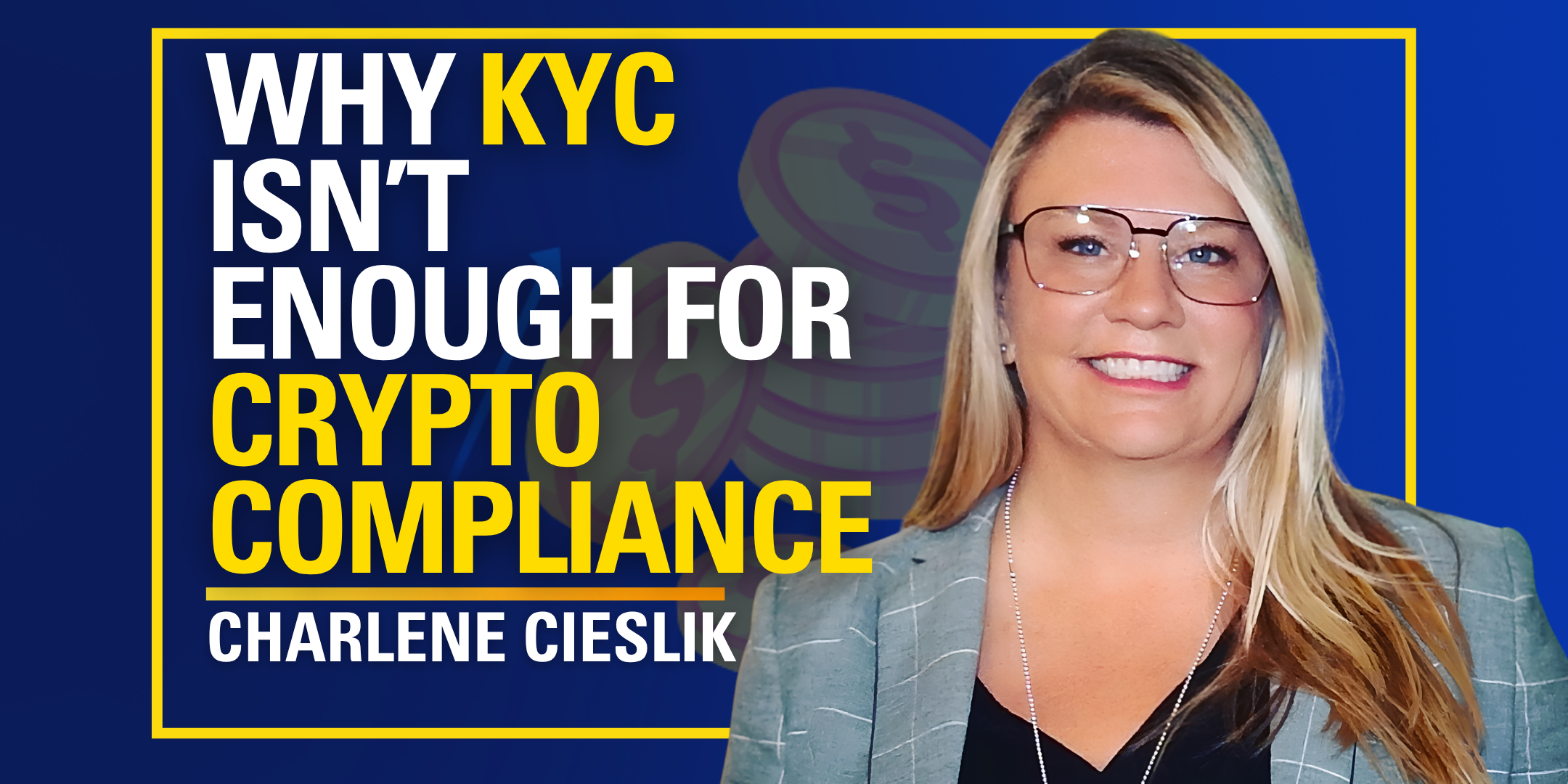
Why KYC Isn’t Enough for Crypto Compliance - Charlene Cieslik | ATC #627
Live from Futurist, host Stephen Sargeant interviews Charlene Cieslik, an independent financial crime compliance consultant with 26 years in compliance (including early FINTRAC) and 10 years in crypto, about Canada’s crypto compliance landscape. Cieslik argues repeated misconduct by industry players has driven regulatory stagnation and poor laws, and says stablecoins should be treated as payments, not securities, while warning Canada is lagging in innovation. She highlights data sovereignty and national security risks from foreign-controlled payments infrastructure, calls for stronger public-private collaboration, and is skeptical FINTRAC’s enforcement push will deliver. Discussing Bitcoin ATMs, she supports data-driven decisions over bans, and stresses many firms mistake AML for KYC, neglecting risk assessments. She also covers “three MSBs in a trench coat” risks, the importance of human communication amid AI governance, and challenges women face in crypto, emphasizing visibility and speaking openly as her legacy.
Host: Stephen Sargeant
Guest: Charlene Cieslik
We are also available via:
Buzzsprout • YouTube • Quora • Medium • X • Facebook • LinkedIn • Soundcloud • Apple Podcast • Spotify • Player FM
Episode Transcript
Stephen: This is Around The Coin live from Futurist. The first time we're here, we're interviewing one of the experts in Canadian financial compliance framework for crypto, and she'll share her experience in crypto for the last 10 years, and what she sees for the future. Thanks for joining us. All right. I don't know if you need any announcement, but- For, you know, my out of towners- Just in case for my, for my widely non-North American audience, maybe give us a brief pr- you know, intro about who you are and what do you do?
Charlene: Yeah, it's hard to sum it all up, but my name is Charlene Cieslik. I run an independent financial crime compliance consultancy right now. I've got 26 years of compliance background, starting at FINTRAC when it first opened, the money laundering regulator in Canada.
Big Four consulting, big Four banking, global international, crypto for 10 years, and in the last few years, payment and stablecoin.
Stephen: Tell me about crypto for 10 years a- and how it's evolved for you, and where we are, do you think? Are we still in the infancy stages, or have you seen real maturation when it comes to compliance?
Charlene: Listen, I got into crypto in the good times. Like, 10 years ago it was exciting and new and you had hope, and we were all working so hard towards that. We're gonna save the
Stephen: world, right? We're
Charlene: gonna bank the underbanked. We were gonna save the world. Yeah, we were gonna- ... you know, give people options outside of the Big Four.
But you know what? I've spoken at this conference almost every year that it's been around. This is my first year not as a speaker, but a couple of years ago, my speech was about there have, there are people and businesses in this industry that have done a lot of bad shit. Yeah. And they screwed it up for the rest of us, 'cause every three steps forward has been another five back.
Yeah. Because you build trust, you build, uh, people wanting your product, you build regulators and partners wanting to be part of it, and then you screw up, and then people start backing out. R- regulators start putting in law that is not great, no matter how much I try to give them- Yeah ... you know, the background.
But I think all of those five step backs has left this industry in a stagnant place. And now with stablecoin, I think there's a way forward.
Stephen: What do you think about the stablecoin regulation? Looks like they might massage it a little to get away from it being a securities and
Charlene: completely kill the use case.
They should absolutely get rid of it being securities. Yeah, yeah. Like, a stablecoin is a form of payment, it is not an investment. Right. And, uh, we need to follow suit of, as, as much as I hate to say this, of the Genius Act, in a way. Um, but, uh- You know, that's what I mean about, you know, you get the regulation you deserve, and if you do bad shit, then you're gonna get bad regulation, and that's how securities regulators step in.
Right. And, uh, but we don't need that for this. Right. And I do a lot of work in sort of public/private sector consultation. I always try to be in those groups and be like, "No, don't do that. Like, you're gonna leave Canada at a disadvantage."
Stephen: Do you think we're already at a disadvantage- Yes ... just from an innovation and from exiting- Yeah
your company, we're seeing a lot of US brands- Yeah ... come into Canada. Yeah. What are your thoughts? You're working with a lot of these companies. What are your thoughts? I
Charlene: mean, it's just not a really, it's not a big enough market here to, to host as many companies as we have, right? But I do think that one thing that is changing that, and this is my passion topic right now, is, um, data sovereignty and threats to national security.
If too much of our payments infrastructure is run outside of this country by powers that may decide at some point they don't like us, they can yank out... You know, they have our data. We can't do payments. So I think that is going to be the thing to swing things home for a Canadian, you know, for a Canadian tech community- Right
for Canadian stablecoins, for Canadian issuers, like, that we have everything here, and we have sovereignty of, of payments and of our data.
Stephen: You mentioned public-private partnerships. What are some of the conversations that you're hearing in some of those meetings? What are regulators' main concerns? What are they pushing back on?
Mm. What are their fear points? Yeah. 'Cause I think they're educated enough to know that- Yeah ... crypto's not inherently bad. Yeah. And as you said, bad things have happened- Yeah ... but m- maybe not to the level that they need to regulate- Yeah ... stablecoins as, you know, as carefully.
Charlene: Well, and I, I wish there were more regulators involved in some of these discussions, and, you know, it-
Stephen: How many more regulators could we have touching Canadians?
Charlene: No, no, not more regulators. I never said more regulators. More involvement of regulators. Um, because this is more led by private sector, public sector groups, uh, and less regulators. I think we- we're in the infancy of bringing that up, and there are people that have been pushing the national security angle for some time that I think are now maybe get some fruition behind it kind of thing.
I don't know if that's the word, but they're getting some movement behind it. I mean, I think their fear is a very real fear that we experience with the latest administration south of the border, is that, you know, if they decide that they don't wanna deal with us, you know, the, the threat of people, Meta holding all of our data- Right
and the payment services that are surrounding the sort of bigger corporations, uh, even things like Coinbase and if all of our Canadians are using- Right ... non-native payment sources, non-crypto even, non-stablecoin. Like for example, the Toronto government implemented a foreign payment service provider for paying city taxes.
It was supposed to save us $8 million- Yeah ... but it cost us $8 million, and they had to- Shocking ... get out of it. Yeah, yeah. So it's like there are perfectly capable payment service providers to do that for Canadians. We have to start protecting our own more. It's so non-Canadian thing to, to say of, like- Yeah
protect your own, but I think we're-
Stephen: Well, we had that minor blip where, you know- ... the stuff was happening, uh, in the US, and we were like, "Stand with Canada."
Charlene: Yeah. And then- Elbows up or whatever.
Stephen: It was a blip, and then all of a sudden, now we're using, as you said- Yeah ... US vendors. And do we really believe- Mm ... in that, like, Stand with Canada, or is it only when things are getting rough for everybody that we kind of flip on
Charlene: narrative?
Well, Canada's always a follower, and that's- Yeah ... what I think the problem is, is that we're never a leader on anything, and we need to lead at least some things at home for ourself. Yeah. Now, there's certainly things we're not gonna be able to do at scale, right? Like, we're not building a new Facebook here in Canada.
Yeah. Nobody needs a new Facebook. You know, in fact, we need to get rid of the Facebook we have, but, you know, when it comes to things like payment services, and with the, you know, the advent of RPAA and o- Right ... like, the really operational risk of it all, I think, I think there's a great angle of national security and data sovereignty that goes along with that, and that should promote- More collaboration with regulators, NGOs, government bodies, PPPs.
Like, we have to start building that infrastructure here. We talked with Outlier and,
Stephen: you know, it feels like we're entering the enforcement era, you know?
Charlene: I hope so. For,
Stephen: for Taylor Swift, it- we're in our enforcement era- Yeah ... when it comes to regulation in Canada. Do you feel that shift, that, you know, FinTrAC is no longer- No ... playing any more games?
Charlene: No, I don't believe it. I'm too old, and I've seen this 1,000 times already.
Stephen: It's like- So what do you think is happening? Is it just like they, they maybe penalize a couple just to send the message?
Charlene: No. Here's what's happening. Canada's a laggard. We fall behind. 9/11 happened, then we got funding for FinTrAC, and it was an intro. And then, you know, four years go by. You get your parliamentary review at five years, I think.
You get your FATF review. We're deficient. Oh, now we gotta catch up. Right. We are always behind. We are always following. We're always playing catch-up. This is another round of that. Like, this is the thing about being old, is you've seen it before. Right. And I think it's a lot... Like, I'm willing to take out some bets on Polymarket as to how- Maybe
Stephen: can w- with our friends Safe bets here.
Charlene: Yeah. You know what? Can you tell me about all the- If, if they're Canadian, then I can be, I can get on, 'cause I can't get on Polymarket yet without a, without a VPN. But, but I, I wanna take out some bets on how long is it gonna take FinTrAC to make good on what they are hullabalooing about. Yeah. Like, they make all these announcements about enforcement.
We're 40 times-ing our fines. Right. We're gonna crack down. I'm like, "Okay, boy who cried wolf." Right. You know? It, it doesn't happen, and it leaves compliance people like me... Like, listen, I don't want people to get fines. Everyone's like, "Oh, Shirlene, you're so mean." Yeah. "You want everybody to get fined." I don't want people to get fined, but trying to do this job when there's no enforcement or penalty for not following the law, this is a pointless job then.
Stephen: It's almost like how police officers must feel, right? Yes. Like,
Charlene: they
Stephen: are arresting
Charlene: people- Like,
Stephen: when they, they're resting eye and then he's out tomorrow ... and then they see, they see him passing by the other way. They're like, "Hold on."
Charlene: I
Stephen: often, yeah. "You're out on bail. You're out on bail."
Charlene: I often ask police officers how they deal with that.
Yes. Like, how, how they deal with that defeat, because 26 years in, I'm living a lot of defeat over the years of trying to do this job right, only to find out there's no reason to do it right at all.
Stephen: You've worked at a Bitcoin ATM. Yeah. Now there's proposals coming out that they should ban all Bitcoin ATMs.
Mm-hmm. I wanna know, is that the right message that we should be sending? Should they be banning certain entities? Overall,
Charlene: banning things doesn't usually work, but it would... I l- I'm a big fan of data-driven decisions. Right. You look at data. You know, if the amount of scams and fraud of any kind of business outweighs the useful benefits of that business, then I think a ban might be appropriate.
Stephen: You don't believe a risk-based approach should be... Or if you're saying, if the data's showing-
Charlene: I think that is a risk-based approach. If, you know, again, I don't wanna focus on Bitcoin ATMs. Right. But, uh, you know, 'cause I've worked for other kinds of businesses. Well,
Stephen: if, if the Bitcoin ATMs, they're gonna start coming after different versions of a Bitcoin exchange at some
Charlene: point.
Yeah. You know, I think that's a bit of, what do they call that? Like, the thinking like- oh, everything's terrible thinking. Yeah, yeah. Like, it's the same kind of argument that people use when, uh, "Oh, if you let gay people get married, next thing you know people wanna marry their chicken." Like, it- that's, you know, that's catastrophic thinking.
Right. And I don't think one is indicative of a, um, an avalanche. But I think, I definitely think the government needs to do better at who they're giving licenses and registrations to.
Stephen: But they don't really give license to when it comes to FINTRAC. You register, and then they let you know- Yeah, that's a
Charlene: register, yeah
six,
Stephen: 12,
Charlene: 18
Stephen: months later- Uh, years ... that, "Hey, you're not supposed to be registered." Yeah. Which is really tough for- Well,
Charlene: that's what I mean, is that it's hard to build an enforcement-minded, uh, regulatory environment. Right. When you're handing out... Like, for a driver's license, you gotta learn how to drive a car, you gotta take a test, someone sees that you can drive, and then you get your driver's license.
Right. You know, right now they're just giving out driver's licenses. There's people behind a car like, "Wah." Uh-huh. You know? And I think that's an unfortunate negative side effect of what happened in this industry. Too many bad players ruined it for the rest of us who are trying to make this thing a go.
Yeah. Trying to, like, give it a go.
Stephen: When we think about financial crime, you're working with a lot of entities. What are some of the concerns they're worried about? What are some of the typologies that you're seeing? Mm-hmm. Is it gambling, illegal gambling? Is it- Yes ... foreign MSBs? What's the biggest sanction that you- I
Charlene: like to call...
My favorite model right now is, I, I, I've termed it three MSBs in a trench coat. None of these people have a bank behind them, and they're just m- moving b- money, money, MSB to MSB to MSB. And one of the risk, uh, you know, d- differentiators was if at least there was a financial entity behind you that was a bank that was highly regulated, where if FINTRAC failed to do its job, your bank would keep you in line.
If you have three MSBs in a trench coat pretending to be a bank- Interesting ... it's just layering on top of each other more risk, more risk. And not even just from a financial crime angle. Yeah. What if one of those MSBs decides to do a rug pull on you and they've got all your money? Right. There's multiple risk angles to doing the three MSBs in a trench coat model, and I think we'll probably...
We're gonna see it more in business failure before we see it in regulatory. We're gonna see it more in business failure even before we see it in financial crime.
Stephen: That's super interesting.
Charlene: And that's gonna leave people, like, without companies, you know, no jobs, their business, like- You know, I already know a few people that this has happened to, and you know, that's how people lose money, and then we're gonna get another shitty crackdown of shitty regulations because of it.
Stephen: What is the number one thing you... You know, you start as a MLRO or as a chief compliance officer or fractional, what's the first thing that you have to notify these companies that they don't, that they don't know about, and you have to remind- They say, "Hey, I'm a crypto company. I just have to get Chainalysis or TRM.
I just need blockchain analytics." Well, yeah. But you know there's so much more to that. Mm. What's the one thing that you really have to educate them on?
Charlene: I don't even think they know what you just said. AML is KYC to them, and that is it. Right. It's like AML is KYC. The whole risk angle of it is the part that they don't seem to know.
But everybody knows you need... Maybe everybody knows you need a Chainalysis. Right. But they don't know how to use it. First of all, they're using it only for one-time screening blocking- ... not for case investigation. Yeah. You still have to monitor fiat even if you're crypto because you're doing both. But I think the risk angle is the biggest one because, um, because it's not strictly defined in the law.
Right. And then we all have to argue about what risk means- Yeah ... because FINTRAC's guidance is terrible. But I think the thing that's gonna turn that around, if my poly market bet- ... or safe bet comes true, if FINTRAC has now added risk assessment as a serious offense under the AMPS penalties regime, if your risk assessment doesn't exist, it doesn't address your actual risks, it doesn't differentiate between your low, mediums, and highs- Yeah
and it doesn't have different shading, enhanced due diligence measures, and a line that you gotta draw in the sand and say, "That's too much risk." When they lay those first fines, if, if they lay those first fines, then we might see a differentiator there.
Stephen: We've wor- both worked at crypto exchanges. How hard is it to do a risk assessment with dormant accounts, barely able to get proper data from inside the company?
Yeah. How difficult is it to do in a risk assessment- Yeah ... do you think, for a new crypto exchange or even an existing one that's large?
Charlene: Yeah. I don't think it's difficult at all- Yeah ... because I've just been doing it for so long. Right. I have my formulas and my templates. It'd be nice if someone actually paid for me to have software one day.
Um, and
Stephen: it-
Charlene: Software compliance? There... Yeah, no. You
Stephen: gotta use the ticket.
Charlene: I don't have any
Stephen: software budget. You gotta use the customer support ticketing system- Pops,
Charlene: yeah ... like everybody else. Exactly. HubSpot, HubSpot. You know, but, like, listen, I can put- Yeah ... I can put a risk assessment together. You're, like,
Stephen: doing the email marketing and- Popsicle sticks and glue
email marketing and investigating cases at the same time.
Charlene: Oh, absolutely. That's why I often end up running the customer support department on top of compliance. It's the same thing. But no, I think, um, I don't think it's difficult, but I, I have 26 years of doing this. Yeah. And it took me the first 10, 12 years of my career just to figure out how to do a risk assessment.
Right. So if you have some guy rolling in with two, three years of experience saying he knows how to do a risk assessment, he's lying. But they love that. They love that. A guy who doesn't know what he's doing,
Stephen: right? Yeah, exactly, so they can't say no.
Charlene: Yeah, yeah. So it's, it's, it's, it's bad on purpose, and they wait for the fine and the slap on the wrist and, "Do better next time."
You know, if Fintrac could get off of this do better next time shit, then maybe we can, maybe we can make some progress here. I don't know.
Stephen: You've been, you said, worked with crypto for 10 years. Yeah. How do you become a business enabler without being a business disabler, right? Like-
Charlene: Yeah. I have the
Stephen: answer for that
what's your product line? I do. 'Cause it seems like you, you know what both sides look like. Yeah. People that will take your advice- Yeah ... and, you know, integrate it into their product. Yeah. And people that just say, "Yeah, we spoke to her, and we're gonna continue doing what we said
Charlene: we were gonna do." Yeah, and that's how I leave it now because, listen, I like to get paid, too.
Right. You have to remember, you could comply yourself right out of a job.
Stephen: Right.
Charlene: And there is no law that says you can't do business with high-risk companies. Right. But you have to do things to mitigate the risk of those companies. I think the key for any compliance person is to find out immediately, as early as you can, what the risk appetite is of your company and who makes those decisions, and make sure it's not you.
Don't, do not be the person that decides your risk tolerance
Stephen: Essentially, business units make the decision or final decision- Yeah ... on whether to exit a- Yeah ... suspicious customer. Yeah. But it's just the business com- the com-
Charlene: Well, and I've, I've worked in different- Yeah ... setups, you know, where there's, where there is a committee.
And, um, I prefer not to be adversarial with the business, but where, where I find it to be challenging is when there's something that is so obvious, like, like it looks like a duck and it walks like a duck, and taking this duck would probably be bad for us overall, if not even with regulators, then our business partners.
Right. And the risk it would bring with our liquidity providers, with our banking provider. And the look of complete blankness on their face, like, "I don't know why dealing with the Russian mafia would be a bad thing." And like, you know. And I've, and I've worked under various models in crypto and otherwise where, you know, the CEO would never override me because they entrusted me with that call that, to make, because I would make a business-minded call.
Yeah. Like, I'm not afraid of risk. You can't be working in this space and be afraid of risk. Yeah. But there are some very obvious things that are immediate no-gos. But that's the part I can't believe I still have to get people, like, to understand. Yeah. Like, we're reading the same thing. How you cannot see it that way...
Like, listen, I wanna make money too. I want the business to be successful too. Exactly. That's how you- And this will be a short-term grab of money and a long-term pain of the business.
Stephen: I'm sure they remind you every day that, like, "If we don't make money, you don't have a
Charlene: job." Yeah. Right? Yeah. And I, and believe me, I know what it's like to not have a job.
And, and I like to get paid too, but you do have to think about that as a compliance officer. That you could comply yourself out of a job. I don't know when this job became I'm scared of everything. Right. I try not to be scared of everything, but we do have our reputations. Like, what, what are you if you're not a person who can stand behind their professional reputation?
Stephen: Now, understanding compliance. Yeah. There's training for that, there's certifications for that. Yeah. But there's so many soft skills, and I think you have a lot of them, including being a commercially minded compliance officer. Thank you, Stephen. What are some other things that you ha- Is it communication, the way you say things to pe- to people upwards?
Yeah. What are some of the soft skills that people have to think of? I
Charlene: don't, I don't like, I don't like when people... I know often the way you say something- Yeah ... is something often used against women, and I resent that.
Stephen: Interesting.
Charlene: Yeah. And, uh, 'cause a man could say the same thing.
Stephen: Yeah.
Charlene: And he could say
Stephen: it- Or say it with a smile on our face.
He could say it even worse. Like, you could say, "You're an asshole." Yeah. But as long as you're smiling, it's
Charlene: okay. But he could also say, "You're an asshole." Like, but listen, I've always been a fan of calling an asshole an asshole when he deserves it. Yeah. Because I think- I think having the straightforward ability to say what you were- Yeah
thinking and not have to think of all the fluffy words around it. Yeah. And
Stephen: who's gonna be
Charlene: offended? What- Like, this is why I like- What is it? Yeah. This is why I like working with different cultural groups- Different. Yeah ... because the dir- more direct you are, the- Listen.
Stephen: The Europeans tell you like- Yeah.
Charlene: Let's be direct- I
Stephen: was like, "Hey, are
Charlene: we
Stephen: fight- ... and let's get to business ... are we about to fight here?" No. You can't, you can't tell me like that. This is business. It's like, "Hey, that's how we talk."
Charlene: No, exactly. That's why I love working with Eastern Europeans. Yeah. I'm Polish, and I'm very much a- Okay.
Stephen: Straight to the point
Charlene: yeah, straight to the point. Yeah. Because I don't wanna use ChatGPT to write a soft email to explain to you why something is bad.
Stephen: Tell me about AI. Are you using AI? Oh, yeah. AI governance, do you think is gonna be huge? We know compliance- It, yes ... officers are using it.
Charlene: I think AI governance- How far should we go?
is gonna be huge, and it should be huge because right now, all of your employees are downloading your IP into ChatGPT- Yeah. ... or Claude or whatever they're using. Right. But, like, watching that, I think the governance of it, 'cause, like, it's already here, too late, you know? We can't fight it. Right. I'm trying not to adopt it for everything, because I think I have put in the time and effort of learning- Right
26 years of, of industry knowledge. You can't find that on the computer. Like-
Stephen: So you should create your own LL, LLM so people can slurp- My, the AI is up here ... so people can slurp from you.
Charlene: Yep. Sharp AI. SharAI, I could go with that. But, um, I mean, yeah, I use, I do use it to help me wordsmith some things. Yeah.
When I have a more sensitive- Yeah ... person I have to deal with. Uh, but right now what I try to do more is choose people that I can be myself with, because, uh, this life is too short to spend time in ChatGPT writing soft emails to people who need to know how to hear hard things, and that you can quote me on.
I want that at the bottom of what-
Stephen: That's gonna be... Yeah. That's a clip- Life is too short ... that's a clip if I've ever seen one. Yeah.
Charlene: Life is too short to spend your time in AI writing soft emails to people who can't hear hard things. Like, I need to get that on a T-shirt- Yeah. ... a tattoo. No, I mean- We're
Stephen: gonna make that happen for you.
Charlene: Yes, a sticker at least. A sticker at least.
Stephen: What do you think is gonna be important to compliance officers- Mm ... over the next three to five years? Is it gonna be how to integrate ChatGPT? Mm. Is it gonna be how to, like, get in front of people and talk and-
Charlene: I think that. Yeah. Like, I, and like, call me old school, I don't care.
I'm Gen X, not a boomer. Yeah. There's a lot of articles being written about this right now- Yeah ... is that the task work will be done by AI.
Stephen: Yeah.
Charlene: The thing that you'll never be able to replace is the human interaction. Um, and I think you can see it in some of the younger generations. They get l- real nervous when they gotta talk to people.
You ask them
Stephen: a
Charlene: question. But this is still, yeah, this is still a people business. Like, we are still people. Right. Like, until we're all replaced with robots- You have to have that, that soft skill that you can't really teach in a computer. Um- This
Stephen: is our first year not speaking on stage, you said. Yes. Yeah.
Um, mostly 'cause they figured- I'll be back next year ... mostly 'cause they said, you know, you're probably gonna be on your motorcycle. There's a- Yeah ... th- there's been a couple years you haven't- I know ... showed up 'cause you've been, you've been riding your motorcycle. Yeah, I'm,
Charlene: I am
Stephen: usually on a bike. If you were doing like a keynote-
Charlene: Yeah
Stephen: this year, what would be that, like what would be the title of that keynote- Um ... and why?
Charlene: Well, I, the, the last time I spoke a couple years ago, the subject of my speech was how all the screw-ups have left us in a place of regulatory deficit and overreach, like deficit involvement, they don't wanna be involved, overreach- Yeah
in that they're just writing crazy shitty laws. You know, I th- I don't think we've gotten out of that. Yeah. You know, I think the stable coin, the initial stable coin announcement- Yeah ... shows that like they're not listening to you anymore.
Stephen: Right.
Charlene: So I think the keynote now would be like, have you learned your lesson yet?
Yeah. How many of you do I need to slap to get you to hear this? Because there is only one way forward, and that's with them on your side because you are n- we're never gonna make a go of this if you play adversarial with these regulators. At the end of the day, they are, they are the David.
Stephen: Yeah.
Charlene: You know, we're the G- I, which way is it?
I can't remember. Goliath is the big
Stephen: one.
Charlene: The Goliath. Yeah. Where the, yeah. But like, but like the David slays the Goliath. Yeah, yeah, exactly. Like, we're just never gonna win a battle like that against them unless you have multi-millions of dollars to spend in court cases. Right. Because the only people who win on that are lawyers.
Stephen: Why do you think regulators aren't at events like this, like publicly? I know they s- Yeah ... get behind the doors and say- I know ... why aren't they like, "Hey, I wanna learn what you guys are talking about"? And the joke is- I know ... they would see that there's a lot of, and there's been- Yeah ... a lot of actually regulators.
Yeah. Ciro has been at this event before. Yeah. Why do you think they're not a- FinTrAC has kind of pulled away from doing, you know- Yeah ... public appearances? Well, yeah. I- Uh, why do you think they're pulling away from this?
Charlene: I think FinTrAC has bigger problems, and they pu- they've been pulling out of a lot of involvement over the last year for the FATF review.
With the changeover of the CEO. Right. They gotta clean up their own backyard before they start sniffing around in someone else's. And I'll say that to the camera because we, we need... I, I just made a post on LinkedIn about this the other day, where like it feels like the Keystone Cops right now. Everybody just bumping into each other.
And like, when are we going to coordinate for the- Yeah ... betterment of Canadians? Like, it used to be, it's not there anymore, but when I've worked at FinTrAC in the year 2002- ... back in the grand old days. Back in
Stephen: my
Charlene: day. Back in my day when some of you weren't even born yet. I
Stephen: had to walk in four feet of snow to
Charlene: work.
Yeah. Yeah. I had to use a fingerprint to get into my computer 'cause we, you know, biometrics were new then. But, um, there used to be a part of the mandate that was the safety and security soundness of the, of the financial system for Canadians. I don't know when that fell off of their mandate. Because they are very good about not leaving their stuff on the way back machine, but I think we need to come back to that.
What, what are we all doing here as regulators, as the government, if we are not making the system more sound and safe for Canadians? God, I sound like an old person, definitely.
Stephen: Well, no, you t- uh, it go, leads right into my next question. Yeah. We're in the scamdemic.
Charlene: Yes.
Stephen: Everyone's getting scammed. Yeah. You probably haven't picked up your phone in the last- I do not answer the phone, no
five years. We do not answer our phone. Yeah. We do not... We have to, you know, review three or four different people before we even check an email or- Yeah ... click a link.
Charlene: You gotta check around and do you know this guy? Like-
Stephen: Uh, and we've had, we have task forces and we have, you know, new... We have a lot of budget that goes to places, but i- it doesn't look like it's getting better.
No. What do we need to do?
Charlene: That's a hard one. If I had that answer, I would be a millionaire, I think. But, um, I think... I don't, I don't think that's solvable, because I think the criminals will always have more time, more energy, more money- It's like- ... to beat us ...
Stephen: it's like what they do in jail. Like, how are they able to make wine in jail?
Charlene: Yeah, j- listen, I used to be a parole officer. I had no idea. Remember? No, I did not. I started... I got a master's degree in criminology. My first job was as a parole officer in the federal male prison system, two year plus a day. The
Stephen: federal males prison system? Yeah. So people that did-
Charlene: Yeah ... male, male crimes Like men.
No, men. Oh, men. Male. Federal detention for men, two years
Stephen: plus a day. I'm like, I thought there's a specific jail for people that do stuff with the mail.
Charlene: Yeah, no. That's a whole separate... That, America has that. We don't even have that here. But why can't our government, why can't our government and private sector replicate some of that learning?
Learn, get it, right, right, right. Like, if you put a bunch of men in prison together- ... they're gonna come out with a stronger- Right ... better, faster fraud model. Yeah. Why can't we do that? Yeah. Why can't we get... Like, again, I do try to insert myself in a lot, and I do have to force myself in to a lot of these PPPs.
Like, I'm... I think I have all the background and experience- Right ... to feed this machine. But unless
Stephen: you work with a big institution, they're not inviting you. No. And I think that's part of the problem with a lot of these PPPs- It is. It's small.
Charlene: You have to fight
Stephen: your way in ... is that you have to get your way in there.
Yeah. But the companies that are there don't want you in there, right? That's
Charlene: a- No, because the companies
Stephen: in there- That's a competitive edge,
Charlene: too ... yeah, the companies in there are making deals, and they don't want you to be part of it. But, like, I go back to what is gonna benefit Canadians? Yeah. You know? Is it gonna be- benefit Canadians if a big American entity with a Canadian offshoot is running everything?
Yeah. You know, I think some more thought needs to be put into-
Stephen: You're- ...
Charlene: how we're protecting Canadians.
Stephen: I'm a new compliance officer. I get hit with, like, "Hey, I don't like what my company's doing."
Charlene: Yeah.
Stephen: You know, you put your own career on the line sometimes. Yeah, yeah. You've been the most outworking person and accurate person in compliance.
What do you want your legacy to be to, you know, newcomers are gonna probably hit the same situations you do. Yeah. What's a message you can leave to them? Yeah. What do they do? Do they risk the mortgage payments and the car payments for a, you know, compliance that's slightly better than the company next to them?
Charlene: Yeah. That's a really tough one to answer- Yeah ... because I go through that myself, right? You're, it's a constant weighing out of, like, your integrity, your ethics, your bills. You know that there's five other people just waiting to replace you- Right ... and say yes to anything.
Stephen: And the five other possible jobs look very similar to the one you're in.
Charlene: Yeah, and they, and they aren't any different. Yeah. Like, it's... Oh, you know, it's just the recycling of the same thing. Yeah. So I wish I had something more- you know, profound to say about it, but it's something I struggle with and I, what I think my legacy is, what I hope I want my legacy to be is that I was the person who spoke openly about this kind of stuff.
Yeah. Where a lot of people feel this but are too scared- Right ... to say it out loud. Right. And that they know that they're not alone and that there's, you know, we can talk about this. But like, what I hope is that it, you know, I have had some laws passed, so I've got that already. Okay, okay. I'm very much, you know I love my teaching.
I- Yeah ... have taught at all the colleges and universities. I love, I do love training young people, new people, but what I tell them now is a lot different than what I would've told them then.
Stephen: Right.
Charlene: And just be warning them about like, listen, this, the job, I thought the job was so cool when I first started.
Stephen: You thought you were fighting financial crime.
Charlene: Yeah. And then I realized what the job really was. Sometimes you're fighting your own fighting
Stephen: your own company.
Charlene: And, um, and then I would say like, listen, there's rarely is there less regulation. Yeah. Yeah. Rarely do they remove, US aside right now. Yes. There's always gonna be more regulation.
Right. But know what you're getting into and if you go into it, not in the way I did. Yeah. I'm gonna say like, don't, don't give your whole self to your job. Yep. Yeah. You know? Keep a very separate angle of like who you are and what your job is. Yeah. Because nobody wants... They want that passion, but they will- Yeah
they will-
Stephen: They wanna-
Charlene: They will take
Stephen: it- It's like a laser. They wanna point it in a certain direction. Yeah. They just don't want like Cyclops where the laser's going everywhere.
Charlene: Yeah.
Stephen: Tell me, you know, you've been in the industry for 26 years. Yeah. In crypto for 10 years. Yeah.
Zero out of 10 from where you start to where we are now, how is women perceived in the crypto compliance or even in the compliance, uh, industry?
Charlene: I think a lot of women are opting out because, um, because it's not easy. You, you are... I mean, women in finance have been treated differently time immemorial. This is nothing new.
Stephen: Right.
Charlene: I'll answer that with a little tale I was telling- ... someone earlier, I think Susan. I was in Kosovo earlier this year, uh, with an NGO working on, uh, helping their government write, um, write some new law with their central bank on regulating terrorist financing and cryptocurrency. Oh, yeah. And, uh, the first two days were training of public sector, private sector, fintech- Yeah
like a mix of central bank, regular banks, fintech companies, regulators. And, um, I walked into the training room. It wasn't a huge group, but it was, you know, a good 30 people or so, 40 people. Mm. Half of the room was women, and I almost had a heart attack. Like, I went out, uh, to get a, to get some refreshments at break time.
And speaking to the guy, uh, that, who runs the NGO out of Albania, I said, "I can't believe how many women there are in this room. Like, half of this room is women." Yeah. I've never seen a 50% room of women in crypto in my life-
Stephen: That's awesome ...
Charlene: in Canada. Uh, to see it in Kosovo, again, smaller population- Yeah ... but it was shocking that I was in the Balkans before I had to see some level of eq- of equity.
Right. And that was upsetting to me. Now, I have seen an evolution at Futurist. Yeah. From the ear- I'm
Stephen: looking around, there's a lot more
Charlene: women. Yeah, from the early days to the-
Stephen: And, like, active, not just on the art and stuff, like Yeah,
Charlene: exactly, exactly. That's what Miami's Bitcoin conference never achieved. And
Stephen: we haven't seen w- I haven't seen one short skirt or hiked-up tops.
Charlene: I have. I have, but
Stephen: that's okay. Behind the booth, behind the booth, behind the booth.
Charlene: That's okay. Listen, women can wear what they please. Behind, but I mean- I dress for comfort.
Stephen: I meant behind the booth. Like- Yes, the booth, you, you're not- They don't, they don't know anything about the protocol if they're just-
Charlene: No booth babes.
Yeah. Remember the year that Larry King was here with
Stephen: his booth babes? I heard... Yeah, yeah, yeah. The, the- ... they had the Tesla outside and- Yeah,
Charlene: yeah ... all his hits. But Larry King, RIP Larry King, but, like, Larry King brought some booth bitches with him. And, and I thought, "Oh my God, we're gonna-"
Stephen: Digital stumble usually does a number on us here.
Charlene: Yeah. We're never, we're never gonna have equality. We're never gonna have it. Listen, I've, I caution women to go into this space. You gotta have a thick, thick skin.
Stephen: What, what is it? Is it the comments? Is it the not taking your ideas as priority? Is it the, the thought- It's all of- ... or the ability that they can just talk over you and that will be the end of it?
Charlene: It's all of the above. Yeah. I mean, I think the internalized misogyny is just, it runs so deep for all of us. Right. You know? The patriarchy hurts everybody. Yeah. Men included. But- It's nothing new. I worked in traditional finance before. Um, I can't say this is worse. I think it's just all same, same, and I've become immune to it.
What I think has happened though is that the younger generations are aware, and they don't put up with that shit.
Stephen: Right.
Charlene: And I love that for them. Like, when I see the posts on LinkedIn and- Yeah ... my generation had to play a bit of a game.
Stephen: Right. A little bit more quiet. Yeah. Keep
Charlene: quiet. But, yeah. But now it's like- But, and the goalpost kept moving.
Stephen: Right.
Charlene: But I think the younger generation see that and say, "I'm not putting up with that." And I do love that for them, and I want to support that in every way possible, so.
Stephen: That's awesome. Yeah. Is there, do you think there's a solution to this? Like-
Charlene: No ...
Stephen: we've seen the Association for Women in Crypto. I think they've taken- Yeah
a different approach. A lot of women are like, "Fuck the crypto bros." But they're like, "Hey, these males are our allies." Yeah. "Why don't we just have them speak up when they don't see a woman on the
Charlene: panel or- Well, I think in any population where you've got some disenfranchised people, 'cause it's not, you know, it's not just women.
Yeah. It's people of color. Yeah. It's people with disabilities. Like, there is a ruling class, and there are people that kind of have to skirt around them in ways. Yeah. And I think that is ... It only changes by visibility. Like, this is why I'm like, you might try to be running me out of this industry, but I'm not going anywhere because visibility-
Stephen: Right
Charlene: is, is half the battle. Right. And like, listen, I'm gonna be taking a lot of hits for this, but if my hits allow someone else to survive them- Yeah ... then, then maybe that's part of my legacy.
Stephen: And to your point, I think we're, before we record, even when you're recording, when you can show others that you're willing to speak up-
Charlene: Yeah
Stephen: not everyone can support you publicly.
Charlene: Yeah.
Stephen: But eventually w- they, they see enough people starting it. Yeah. You create a safe zone for them to speak their mind. Yeah. Not maybe alienate anyone- Yeah ... but speak their mind. At least say, "Hey, this is a point I agree with." Yeah. Or, "This is my experience-" Yeah "... with exactly what you're talking about.
And I seen your content that you put out. There's a lot of people that agree with you."
Charlene: Yeah. "
Stephen: There are a lot of people that have their own versions of what you're talking about."
Charlene: Yeah. And people do send me private messages- Exactly. Yeah, yeah ... because they're not able to speak out publicly. Right. And trust me, I've paid a fair number of prices for my behavior.
Yeah. For my tone. Hey,
Stephen: now like
Charlene: you- For the way I say things, you know?
Stephen: Hey, we lose a lot of business. Yeah. We lose a lot of deals, but at the end of the day, we also attract.
Charlene: But yeah,
Stephen: exactly. We also attract the certain people- You know what? ... that we don't have to explain ourself. Yeah. They know what they're getting, and they love it.
Charlene: Listen, you, you can see who I am. Yeah. I don't hide it. Yeah. If you want this, here it is. Yeah. But don't hire me and expect me to be someone else. I will get the job done.
Stephen: I don't think anyone's confused by
Charlene: that. Yeah. I'll get the job done. Everybody who knows me knows- Yeah ... I get the job done. No one can say that I don't- Yeah
get the job done. Uh, but they'll say a whole bunch of other- ... unflattering things about me. All
Stephen: others, listen.
Charlene: And most of them I'm proud of. Yeah. So I don't, uh, it, I don't ... I'd like to say, oh, it doesn't bother me. Of course it bothers me some days, but I'm too old to give a shit anymore, so.
Stephen: Charlotte-
Charlene: Anyway
Stephen: thank you so much, buddy.
Charlene: Thank you. Oh.
Stephen: We've been waiting to do this for so long.
Charlene: I know, right?