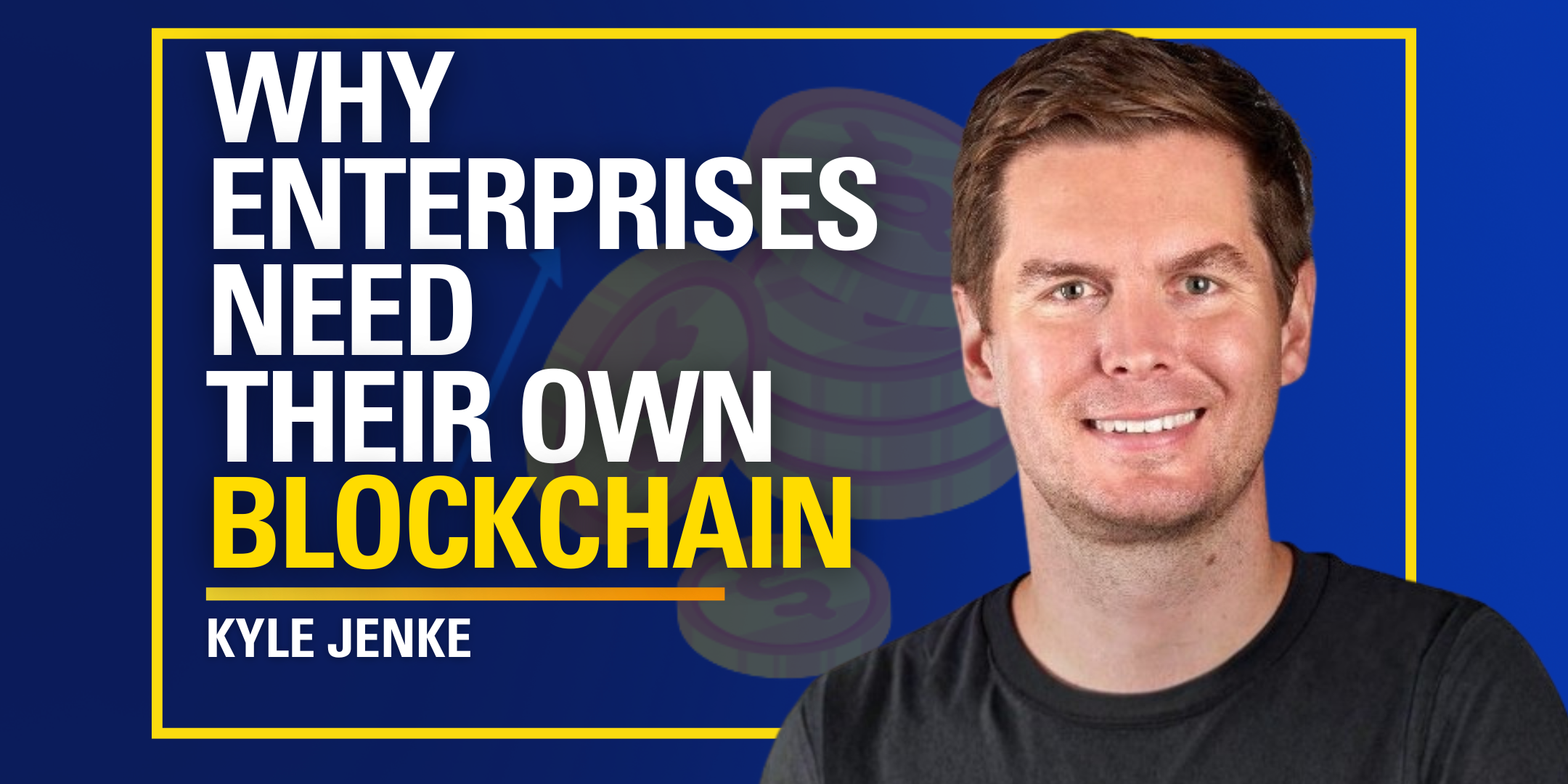
Why Enterprises Need Their Own Blockchain - Kyle Jenke | ATC #614
Recorded live at EthCC in Cannes, Around The Coin with host Stephen Sargeant sits down with Kyle Jenke, Chief Business Officer at Optimism, about how Optimism’s OP Stack and OP Enterprise help large enterprises build and own their own blockchains for customization, revenue economics, and stronger compliance, privacy, and security. Jenke cites over 50 OP Stack chains and major brands building on Optimism, and highlights Bitpanda’s MiCA-compliant Vision Chain as a European example of regulated adoption. He discusses key customer verticals (fintechs, exchanges, payments, and large financial institutions), rising gas-fee costs and urgency to launch owned infrastructure, and how enterprises use blockchains for product differentiation amid converging financial services. The conversation also covers Security Overwatch SLAs, a menu of compliance/security vendors, AI use across Optimism, and compliance needs like OFAC screening amid geopolitics.
Host: Stephen Sargeant
Guest: Kyle Jenke
We are also available via:
Buzzsprout • YouTube • Quora • Medium • X • Facebook • LinkedIn • Soundcloud • Apple Podcast • Spotify • Player FM
Episode Transcript
Stephen: And you guessed it. That's right, the Around The Coin podcast is live here at EthCC. We have Kyle Jenke, who's the chief business officer of Optimism, and we go deep into their ecosystem. They're building blockchains so you can own your blockchain, own your revenue, and still have the enterprise security guarantees.
And Kyle talks about them prioritizing compliance and how they're allowing fintechs, exchanges, and payments to build their own ecosystems on Optimism. Stay tuned for this amazing episode with Kyle.
Kyle: Thanks for having me on in here in beautiful Cannes. Wow. Yeah. I'm Kyle. I'm the chief business officer at Optimism.
And Optimism, quite simply, we build blockchains for enterprises, and we're one of the largest, uh, blockchain builders in crypto. Uh, there are over 50 chains that are live on the OP Stack. Some big names you've heard of like Uni, Kraken, Sony, OKX, Coinbase, UpBit, they've all chosen to build on OP. And we support them through a product we have called OP Enterprise.
Stephen: And why are companies building on blockchain? I think that's a great question to start off with, is what makes it so unique for them to want to build on their own blockchain?
Kyle: Yeah, absolutely. Uh, you know, companies have two options. They can either go rent block space, which is build on someone else's blockchain- Yeah
or they can own their infrastructure and build on their own. For some companies, renting the block space actually makes a lot of sense. And so if you're 1800flowers.com, you don't need your own blockchain. You can go rent that block space. Yeah. But if you're a large enterprise, if you're a large financial institution, there's, you know, a real need to actually own your own infrastructure, and it's usually in, like, three areas.
Yeah. Number one is around product differentiation. You need to be able to customize the block space to meet your product demands and your product differentiation needs. The second is around economics. When you rent block space, you're paying someone else. When you have your own block space, you're generating those economics.
And then the third is around compliance, privacy, and security. And to the largest enterprises in the world, that's really important to them, and it's especially true here in Europe.
Stephen: I think those are my love languages right there when you talk about compliance and security. I've heard those convers- Those are your
Kyle: love languages?
Stephen: Yeah, yeah. I've heard that conversation, along with tokenization, more than I've heard at any other conference. Yep. And I go to crypto compliance-specific conferences, but it's huge here in the developer community. It feels like the industry's finally coming to your sweet spot. Tell us a little bit about what it's like to build and see now the community come to you and need your infrastructure to deploy those things that you talked about.
Kyle: Yeah, absolutely. And with OP Enterprise, that's what we're focused on deploying. Maybe the best way to answer it is through a customer example. Yeah. So, uh, we announced last week Bitpanda. They are, uh, one of the largest exchanges here in Europe, and they're focused on bringing a regulatorily compliant blockchain called Vision Chain to market here, not just for their own seven million customers, but for the 30 million customers they have via partnerships, which is some of the largest banks in Europe and some of the other largest crypto companies and fintechs in Europe.
And in those conversations, especially in the European market, these companies are looking for something that's regulatory compliant. Yeah. Something that they feel safe on, not just from a security standpoint, but from a regulatory standpoint. And so, for example, Vision Chain is MiCA compliant, and that's really important over here in Europe.
Stephen: Talk to me about the regulatory landscape, and even just being, like, European proud. It feels like everyone feels like they have to go appease what's happening in the US, where the builders are like, "Here. Here's where we're building." The regulations are strong, but this actually should be attracting traditional financial institutions to dip their toe into digital assets.
Can you talk a little bit about the regulatory environment and the kind of European pride that we see here during this conference?
Kyle: Yeah, absolutely. And I actually just came from having lunch, uh, with Lucas, who's the CEO of Bitpanda. Right. And he made an interesting observation. He said, um, "Hey, actually, what America can learn from Europe is that Europe's about a year and a half ahead from the regulatory side, so they have a regulatory framework that they're working under."
When that happened, you've actually seen a lot of the financial institutions invest into crypto, make that move into crypto. And so when you look at Europe, they've got the regulation in place that's needed for these large institutions to make the investments and for Bitpanda to make the investment in Vision Chain.
And US, we're close behind, a lot of regulations coming through, but it's nice to see that they have that here in Europe.
Stephen: And I'm curious, do you seeing the uptick in regulated entities looking at blockchain? I know a lot of companies have these projects, but when the market goes down, or even when the market's high, those projects sometimes get put to the wayside, or it's, takes a long time to move the needle.
Are you seeing that institutional adoption now come to you and your organization and what you're building for them?
Kyle: Yeah, absolutely. So there's four main verticals that we focus on. We're focused on fintechs, like a Revolut, um, we're focused on centralized crypto exchanges, like an OKX, uh, payments companies, like Remitly, and large financial institutions, which there are many of here.
And we have 200 companies that we're talking with, and we have been for a while, and we can actually see them, them move through their crypto journey, and we think 2026 is the year that's gonna be really exciting. Just as a example of a catalyst, let's go back to the US. The NYSE, the New York Stock Exchange, the largest exchange in the world, they are making blockchain plans, and when they come out with their formalized plans, when they announce those, it's gonna be a catalyst for the next 20 largest exchanges to have a plan.
If the NYSE is doing 24/7 instant settlement trading, you better bet the CEO of the next 20 exchanges, they're gonna get a call from their board, and they're gonna be, "What's our plan? The NYSE can do it. What are we doing?" And so we see across the board things like that being a catalyst in 2026.
Stephen: How does tokenization fit into y- a customized enterprise blockchain?
Is it s- something that these companies are like, "Hey, we wanna tokenize these assets. We wanna use a specific chain to do it"? Talk to me about where you fit. Is it more, you know, one, you know, the, the wave, the, the tide brings up all the boats? What's, what's your take on where tokenization and what you're building fits in?
Kyle: So it depends a lot on what the longer term roadmap is. And so if all you wanna do is tokenize those assets, there's a lot of places you could put those. But if you start to think about what are the products and what's the differentiation we wanna offer here, maybe you want to allow, um, some borrowing and lending of these tokenized assets.
Now, where do you wanna create those markets? Do you wanna own those markets? Do you wanna gain the economics from those markets? Um, do you wanna create differentiation in how you bring that to market? If so, you wanna own your own block space, you wanna be able to own your own blockchain. And so it's not just thinking about what do I wanna do in the moment, what do I wanna do over time as I build out my product roadmap?
Stephen: And you know some of these entities, they don't wanna, like, build their own layer one blockchain, which is extremely expensive. Are you seeing a lot of these companies come to you and say, "Hey, we wanna build out a blockchain"? You're pretty much a fully managed service, you can do end-to-end, plus you have the uniqueness of knowing how to build out, how different companies are building blockchains.
Does that give you a competitive advantage versus somebody that just wants to spin up their own L1?
Kyle: Yeah, and we've actually seen companies that have built their own L1 get rid of that and come back to OP. Celo is a great example of that, a large payments company. What we see when we're talking to these companies is they say I wanna focus on my core business.
Stephen: Yeah.
Kyle: I wanna focus on building my own core product. I don't wanna become an expert at building and managing blockchains. And when you build and manage a blockchain, you need to hire developers. So maybe you're hiring now 10 new developers. That's a headcount you gotta put in your annual plan. You've gotta manage on average 17 vendors to do this.
And so what we offer our partners is we say, "Hey, let's use the OP engineers, manage one vendor instead of 17. We're responsible for uptime, we're responsible for security, and we'll guarantee SLAs, like we'll put our money where our mouth is, to ensure that for your company so that you can focus on your core product and your core customers."
Stephen: That must be music to their ears, right? 'Cause they don't want, like, to deal with who-- where are they gonna find developers now, especially with the AI race going on, it must be tough. I wanna talk to you about AI because, you know, we're seeing a lot of companies that have sat in the chair that you have talking about AI, agentic AI.
What are your thoughts on where AI, where you can use it within the blockchain and the c- developers, and maybe even where you use it personally?
Kyle: Yeah. So let me start with where we use it personally. Um, we, at Optimism, we run large parts of the company now on AI. And so everything from our developers using Claude Co all the way up to our executives, um, we're using Claude Cowork- Yeah ...um, to automate our daily tasks.
Uh, I'll give an example of one thing that I do that's maybe a little bit more unique, is I run, um, every Monday morning, I ask Claude, "Where can I better support our CEO?" Mm. And Claude comes back to me and gives me a list of the areas where I am doing a poor job supporting her and where I need to be better.
That's something that I maybe wouldn't have thought of on my own. Right. But now by leveraging AI, even in my own daily workflow, I'm able to be so much more effective. So that's on a personal level. Our developers use it. Our support functions across finance, HR, and ops, they use it. It's pretty prevalent across our company.
In terms of, um, on the blockchain- Yeah ...you can think of on one end, there's agentic commerce, and you can think of on the other hand, there's blockchain, which is the underlying settlement layer or infrastructure that's gonna support it. Right. And so while they may be, um, in the limelight right now, we view these things as, you know, two sides of the same coin.
We view them as working very closely together, and this is a trend that we're really excited about over the next couple years.
Stephen: Talk to me about, you know, the challenges of, you know, spinning up a blockchain and helping your customers. I, I know compliance and service providers, you know, blockchain analytics is kind of my background.
Yeah. What compliance, you know, service providers do you have to kind of tap in or integrate with to make sure your clients' funds are safe on the blockchains? And more importantly, there's threats to any blockchain or any, you know, uh, customer. So talk to me about some of the compliance service providers that you're using.
Kyle: Yeah, absolutely. And this is a great example of our partners want us to focus on this- Okay ... so they can focus on their core business. So in OP Enterprise, um, which is our delivery method, uh, for OP Stack, we offer something called Security Overwatch. And that is where Optimism is on the hook for providing these security guarantees to our customers.
These are SLAs on response times. These are SLAs on security patching. So our customers know, like, they are getting the absolute priority in terms of security. And, and we don't do it only on our own. We work with a number of vendors, and over time, where we're building more towards is a menu within OP Enterprise of solutions that our customers want.
And so You can almost think of if you use the Chipotle app. You know, I, I want, I want chicken, I want lettuce, I want queso, I want salsa. Uh, we wanna offer the same thing within OP Enterprise, where it's, "These are the vendors I wanna use. This is the kinda solutions I wanna build." And we wanna make it as easy as just, like, selecting those options and sliding the bar.
Stephen: Yeah, and some of them are like, "No, hold the guac. Can't afford the guac right now." Hold the guac. Hold the guac. What's your job? Like, what's your core responsibility? 'Cause I think, you know, business officers, whether you're a staking provider might be different than whether you're working for a large crypto exchange.
So what is kind of your role, and how do you go either beyond that role and especially in places like this where you're talking to builders all day, you're making partnerships. Give me, give us a lay of the landscape of what you do in the day-to-day.
Kyle: Yeah. So there's probably, uh, two big things that I do.
Uh, number one is I'm very focused on supporting our customers, our partners, and our employees. That's really my number one objective. The second thing that I do is I'm really the last throat to choke when our customers or our partners need something. That's one of the things that we offer to them. You know, instead of having 17 providers that you're getting ping-ponged around between, you know that there's someone at OP that you can pick up the phone any time and call.
And if it comes to that, that's me, and I get on the plane, I get on the phone, and I do whatever our customers need to make them successful. And so those are the two big parts of my job.
Stephen: In 2026, what do those calls look like? Was there, is there a couple calls that you've been getting that are on repeat now and you're like, "Hey, guys, I'm gonna do a webinar and we can all sit there and I can educate everyone at the same time"?
Is there a couple topics, concerns that you're seeing right now in 2026?
Kyle: Yeah, so there's probably two topics that are really coming up, and they're related. The first is around costs. We're finding customers right now who are running on other people's blockchains or renting blockchains. With congestion fees, the costs are getting very high, and so there's one customer, I, I can't share the name, that we're talking to right now.
They're paying $38 million a year- In gas fees. And that g- leads to, like, the second thing I'm getting phone calls about, which is speed and urgency. And so they're saying, "Hey, I'm paying $38 million a year in gas fees. How quickly can we launch our own infrastructure-
Stephen: Right ...
Kyle: so that we're earning the economics instead of paying it out?"
And so the main phone calls are, "How can you save me money?" And then, "How can we do this as quickly as possible?"
Stephen: That sounds like a lot, and I think that's a great use case to where like, "Hey, do we have to be paying somebody else?" And we see this a lot with, like, whi- whether it's white labeling, you know, stablecoins is, is giving away value.
It seems like a lot of your companies have reached that kind of escape velocity, where they have the distribution. Is that why they're coming up with their own blockchains and creating on the OP stack? 'Cause they're like, "Hey, we have the distribution, we have the customers, we have the users." Is that what you see, is that when you reach a certain level, creating your own blockchain makes sense?
Kyle: Yeah, and that's what we're focused on. Yeah. We're focused on enterprises. Yeah. That's why we call it OP Enterprise. And so we're focused on the largest customers in the world. And, you know, look at Bitpanda. They've got 1,000 employees. They got 7 million customers. Through extension of their partners, they have another 30 million customers.
Those are the type of partners that we serve, and so it makes sense for them to own their own infrastructure, as we talked about earlier. You know, they want to be able to customize their product offering. In Bitpanda's case, it was the European compliance angle. Right. They want to own the economics, and then they also want, you know, the security and the privacy of having their own blockchain.
And so those are the things that really matter to the largest companies in the world. That's where we focus. Um, and again, if you're a small startup, if you're 1800flowers.com- Yeah ... you can run on someone else's block space. But for the top companies, they really need to own their own.
Stephen: What's their f- biggest thing that they're focused on?
Is it speed? Is it savings on gas fees? Like, what is one thing that you feel like they constantly are, like, thinking about in the back of their mind? I'm assuming uptime is huge for them, and you-- that having those SLAs must mean that you're focused on me- making sure you meet certain requirements as well.
Kyle: Yeah. So there's, there's the core requirements that they want. Yeah. They want, they want throughput, you know, they want security, and, and those, you know, compliance. Those are, like, the core- Yeah ... aspects. But I'd say what they're really trying to do is they're really trying to figure out, how do we differentiate our product offering?
And let me share a little bit about what we're seeing in the market right now, and you're probably seeing the same thing. We're seeing the different verticals start to collide and compete for the same customer.
Stephen: Yeah.
Kyle: And so we're seeing traditional fintech companies offering crypto products. We see crypto companies offering equities.
We see traditional asset managers offering crypto. And they're all competing for the same user. and the same share of wallet. And so the question is, is how do you win that user? How do you win that share of wallet? And we think there's three ways. Number one is product differentiation. Number two is regulatory or geographic arbitrage, think US equities in Europe.
And the, number three is trust and marketing. And so they're looking at how can owning my own blockchain infrastructure help me better compete in the market? If you even think about the third piece, the, the trust and marketing, there are things they can do at the infrastructure layer to enable that. So for example, in the sequencer, they could program in levered trades execute first.
And in a market meltdown scenario leveraged trades would execute first. That allows them to market and brand themselves as, "We are the safest place for levered trading."
Stephen: Right.
Kyle: That is a differentiated marketing angle. That's a differentiated trust element, and they can do that because they own the infrastructure, and they can customize it in that way.
And so again, there's the base layer that everybody needs, but then above that, they are really trying to win in market and differentiate what they bring to customers.
Stephen: How do you approach marketing? Because if you're doing your job well, I'm sure people don't know about Optimism 'cause they don't see it, right?
They don't see it. It's just working seamlessly in the background. I don't remember the last time anyone's like, "Hey, there, there's a Swift transaction." Only the people building are realizing this, the way of doing this is not that great, and that's when they might bring up Swift. How do you market while still making sure that, you know, your customers are the ones that are being seen at the front end?
Kyle: Yeah. So our, our marketing really is about our customers. They're the best, um, you know, megaphone for us. I mean, maybe you, you're not as focused on Optimism, but you know Sony.
Stephen: Yeah.
Kyle: You know Coinbase. Yeah. You know Kraken, you know OKX, you know Upbit, um, you know EtherFi, you know Bitpanda. And so we really put our customers in the limelight.
That said, to, you know, the 2 to 300 companies that we wanna be working with, we do m- market directly to them. Um, we really try to personally engage them, understand their needs, so that we can bring them, through OP Enterprise, the solution that they're looking for.
Stephen: If you had to write out right now the state of enterprise adoption in 2026, give us your three key takeaways.
If you had to do a report, what would be the three key, key takeaways? I know we're still early in 2026 and a lot can change, um, but what would be the state of the adoption, uh, of enterprise clients getting into digital assets?
Kyle: Yeah. Uh, I would say number one is we're starting to see catalysts. And so, you know, the NASDAQ, uh, news that they did with Kraken, that's a catalyst that should spur activity with others.
So that'd be state number one. I'd say state number two is, uh, compliance and privacy. Yeah. Um, these enterprises are getting very clear on what their compliance and privacy requirements are, which is good because that then allows their product teams to build the products, uh, that they ne- need. And then three is I think we're seeing the whole industry come around to that enterprises are gonna drive the distribution of crypto.
And so there's definitely a recognition and wanting to serve that customer base where maybe it hasn't been the focus as in the past.
Stephen: Not even a question. You've been in digital assets long enough as me. Uh, do you find it funny now, like crypto exchanges are trying to get chartered bank, chartered banks when they could barely get a bank account when they started out, and now we're seeing traditional trying to look, as you said, starting to look more like crypto exchanges.
Is it kind of in a funny period to see this kind of evolve over the last, I'd say, decade?
Kyle: I think it's a really exciting period. If- You know, if, if we think that if you believe, let's take Ethereum, if you believe in the world computer, you're gonna need the largest companies in the world running on the world computer.
Yeah. And so I think it's, like, incredibly encouraging and bullish to see these enterprises really lean into crypto and to see the crypto companies look a lot more enterprise. I think this is a maturing and a really positive step for the industry. We definitely applaud that, support that, and we hope that more and more of our partners do it.
Stephen: We're at ECC. We see the lovely background here in Cannes.
Kyle: Yeah. Let's go.
Stephen: I would love to know what-- like, what are your thoughts about ECC? What are you focused on? You're having a huge event tonight with Bitpanda. Yeah. So ev-anyone, ev-everyone's talking about coming to this villa. Uh, talk to me about being in the ECC, supporting the industry, supporting the Eth community, and how important it is for you to talk to some of these projects, and if you saw any interesting projects where you're like, "Oh, this is an interesting look at the blockchain."
Kyle: Yeah, absolutely. So, um, incredibly important to be here. Yeah. You know, Ethereum is the ultimate settle-settlement layer that these enterprises want. They want the security, they want the trust, and you see that here at ECC. The quality of companies, the quality of executives that are here in Cannes is incredibly high, and I think that's just a reflection of the value of Ethereum.
What we found most interesting is we've actually found really innovative compliance solutions. Yeah. And we found a number of companies that we think we wanna partner with to be able to offer those solutions, you know, to our enterprise customers. So, you know, shameless plug. Uh, if you're a startup and you have a really innovative compliance solution, you know, we'd love to talk to you.
We'd love to learn from you and probably partner with you to offer that to our customers.
Stephen: It's funny, the Scorch Chain team has been here the whole time. This is the one time they're not here, and I'm sure they- I'm sure I'm gonna send this one clip to them because I guess blockchain analytics risks in this space, especially with everything.
What are your thoughts about everything happening with geopolitics and sanctions? I'm sure your customers, that must keep them up as they're building their own blockchains. What are your thoughts on geopolitics and how much it's, you know, moved the industry, especially impacting things like conversations around sanctions?
Kyle: Yeah, absolutely. Um, our customers care about it- Yeah ... and so we care about it. And we want to bring solutions to our customers that are very easy for them to implement and where the burden falls on Optimism to manage that for them. Yeah. And so, for example, take, like, OFAC screening. You know, we wanna be able to pull those lists in, and then we wanna be able to, if they desire, run that from a compliance perspective for their blockchain on their behalf.
And so they're in control of what's happening, but they want us to do the heavy lifting behind the scenes, and that's just gonna become more and more important at these, as these products roll out at scale.
Stephen: Kyle, this has been amazing. I learned a lot today. Thank you so much.
Kyle: Hey, thanks for having me.