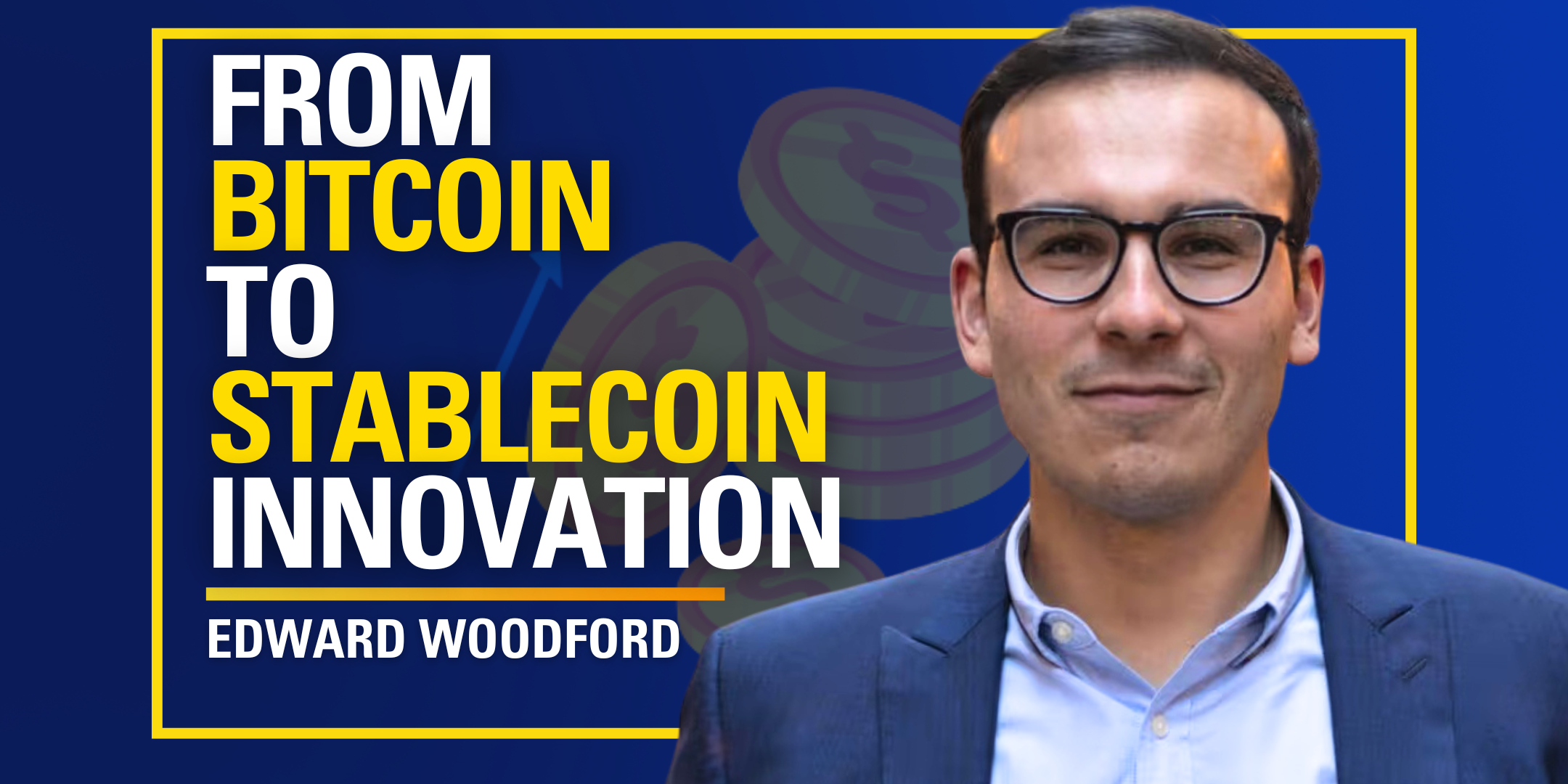
From Bitcoin to Stablecoin Innovation - Edward Woodford | ATC #598
Join host Stephen Sargeant on the Around The Coin podcast as he sits down with Edward Woodford, the CEO of Zerohash, the leading crypto infrastructure platform trusted by industry leaders like Morgan Stanley, Public, Stripe, Franklin Templeton, Shift4, and Interactive Brokers. zerohash recently hit unicorn status with a raise led by Morgan Stanley and SoFi.
Host: Stephen Sargeant
Guests: Edward Woodford
We are also available via:
Buzzsprout • YouTube • Quora • Medium • X • Facebook • LinkedIn • Soundcloud • Apple Podcast • Spotify • Player FM
Episode Transcript
Stephen: This is your host, Stephen Sargeant, the Around The Coin podcast. We speak to legendary CEO of a billion dollar company, Zerohash. Edward Wilford. Edward talks all about what is happening in the digital asset crypto, the stablecoin infrastructure space. He gives us ideas on how he built Zerohash to where it is today, the evolution of the company, the state of the stablecoin market, and where he sees it going in the future.
And he gives us all the use cases from payroll, to stablecoin payments to remittances. To prediction markets. He gives us all the ideas and what his companies, some of the biggest companies that they're partner with around the world, from JP Morgan all the way to companies like Stripe.
This is such an invigorating episode 'cause he shares deep and transparent and candid takes on what it takes to be a CEO of a company, especially off the last huge raise Zerohash hass. This is one of the funnest episodes I think we have where we go deep in the infrastructure, but also talk holistically what it's like being the CEO of a crypto company that's been around since 2017.
Definitely reach out to Edward. He gave you his email address at the end of this episode.
Stephen: We have a special episode today on the Around The Coin podcast.
We have Fresh of a Davos, Edward Woodford, the CEO of Zerohash. Edward, tell a little bit, I'm gonna go deep into your background, but give us your elevator pitch. You're, you know, you're in an elevator or in a chalet at Davos and you're talking to an executive of a bank.
What would you be your, you know, your hero pitch at that time?
Edward: Zerohash provides, um, infrastructure to, um, provide access to effectively crypto stable coins and tokenization. And we've been building since 2017 powering access for some of the largest banks like Morgan Stanley, some of the largest payment groups like Stripe, and some of the largest groups that are innovating in the tokenization space like Franken, Templeton, and, um, BlackRock. So that's what we do in a, in a nutshell.
Stephen: You have such an interesting path. You went to MIT, you mastered in finance, I believe. But you're also a founding member of the FinTech Club, which is always very interesting. And the Robotic Club. Can you share what were your career plans when you were at MIT and did you ever think you were gonna end up running one of the most important infrastructure pieces in crypto?
Edward: I mean, look, I, I think, um, I, I sometimes say this, if you get the opportunity to go to a place like MIT and not really consider what you want to do, you, you've done it wrong. Um, and so, you know, I, I was in a do anything and everything, um, in, in that year, um, and, and really kind of crisscrosses many, um, different specialties and, and lanes and kind of meet interest in people. Um, so that was kind of my, my objective. Um, you know, I wasn't the, the best student, you know, from a GPA perspective, but that wasn't kind of how I regarded my, my, my kind of success or kind of outcome, um, from, from, from that time. So for me it was just kind of experimenting, trying to figure out new things and new passions.
And, you know, that's kind of where I fell in love with, um, alternatives, what I call alternative commodities and kind of FinTech. Um, and actually launched my first business out of MIT actually bought my first Bitcoin, um, at MIT, at the MIT bookstore. So for me it really was an opportunity to what I was looking to do in life.
Um, and, um, you know, I found different passions and, you know, turned it in, fortunately into a career.
Stephen: Can you talk about buying your first Bitcoin? Was this like a very common theme at MIT, especially maybe around the computer science FinTech groups? Like what was that conversation like with the person that was, or you know, the way ev, was it a small group of you that met there every Monday and then you're like, Hey, let's, let's go in on Bitcoin and purchase our first one.
Let's set up a node. Kind of walk me through that time.
Edward: look, MIT was, uh, really early in, um, in crypto actually. They gave every undergraduate student a, a Bitcoin. Um, I think it was like called the MIT Bitcoin Research Project. Um, and the professor, one of the professors who led that project was a gentleman called Christian Catalina, who was one of my professors, uh, for an entrepreneurship class. And I actually worked for a, one of the, the earlier, um, ATM businesses, right? This was, this was very, very early. And so actually at the MIT bookstore. There was a Bitcoin, ATM, um, by a group called Liberty X, um, and they got acquired by NCR, the, the, the very large, um, around, um, you know, money movement globally. Um, and I went to the MIT bookstore with cash and bought my first Bitcoin. Um, that's effectively how, how, how, how I did it. Um, but obviously it was hard to avoid the conversation of Bitcoin when you're there. One, every undergraduate student had a Bitcoin. Um, and two, you had obviously people right at the cutting edge of, um, innovation in that. And, um, yeah, that kind of seeded my, my, my curiosity for, for, for the technology.
Stephen: It is crazy. Even though Bitcoin's evolved and you know, gone up in price over the last 12 years, you still probably couldn't pay off your tuition even if you kept that one Bitcoin. Now what were some of the discussions like? What were some of the use cases, maybe your, you know, your mentor or your professor were talking about, especially you're an entrepreneurship cast.
Bitcoin seems very second nature to a lot of the people there. What were some of the save the world conversations or I business ideas that were coming across the table at those times?
Edward: this entrepreneurship class, um, you know, I think it's got good alumni. Uh, the, the person, the, the year before I did this class, uh, for example, Alex, one of the founders of Deal did the class. Um, and so I do think it was a great, um, opportunity to, um, seed people's curiosity around starting their own businesses.
Also, MIT, you know, you get given this, um, access that's just massive, right? I mean, I, I, I went to university in the uk. And the alumni connectivity just isn't the same. I mean, at MITI would just ping people and say, Hey, I was, I'm at MIT, you were at MIT, can I grab some time? And I remember I got the CEOs of some massive companies to reply. Um, and I suppose that gives you a, a degree of confidence. Um, probably false confidence. Um, you know, I dunno how many people start a company knowing how difficult it's actually going to be. Um, how much you don't know. Um, but just kind of that access and that infrastructure. Um, you know, there was the entrepreneurship center. Um, I remember doing the MIT, um, entrepreneurship, um, competition. We won a thousand dollars. That feels like a lot of money at the time, right? So you can incorporate company, you can get a logo, you can start to professionalize it, you start to look and feel like a company. Um, and just those kind of steps were really, really helpful.
And that's why, you know, those seed investments. Can help, you know, massively expedite and give you that confidence to do something right. Like when you are at graduation, you know, you're saying, I'm not gonna go take a, an inverse comm, a real job, um, high end, you know, a very small group of people are gonna go start something new. Just having an incorporated company, having an incorporated, and especially like as an immigrant, right? You, you need to be able to have a real company. You need to be able to stay. And, you know, that few thousand dollars really was the genesis of starting, you know, the first business that I founded.
And then that obviously gave me the, the, the, the kind of confidence, kind of the knowledge base after selling that to, to, to launch Zerohash in 2017. But, but you know, that, that, that infrastructure, you know, I think MIT handed out probably $200,000. It's probably created, you know, billions of dollars of, of value.
Stephen: Right.
Edward: and they give you the money and they don't expect anything in return, right? But it's paying it back in other ways that I think is important.
Stephen: And did you feel that there was this kind of like VC presence where they're like, Hey, this is a, this is a small Petri dish of really talented, smart people. Let's keep a close eye on this alumni. And you know, a couple thousand dollars I, you said made a huge difference. But for them, they might be trying to grow relationships for when you do come out with something like Zerohash that turns into, you know, hundreds of million dollars worth of investment.
Edward: I think, um, MIT any university gives you a degree of credibility that is probably above and beyond what you, what, at least what I deserved, um, at the time. Um, I, I, I, I went to MIT with a very clear chip on my shoulder. Um, I had been, you know, as, as an 18-year-old, I got rejected from Oxford.
That was kind of like my, my dream. That was like the out, that was the outcome I wanted. I always felt like, Hey, this, that's the echelon and that's what people get those opportunities. It certainly does open doors, right? But right now I don't hire people 'cause they went to MITI don't hire people 'cause they went to Harvard. Um, I think it can definitely be a helpful, um, piece. I mean, our first business, we raised $5 million off the bat with a deck that's kind of, know, a little bit crazy. But there's lots of ways to do that now, hopefully, right? So, um, yeah, look, my, my dad has a saying that both cream and other things rise to the top, um, of these organizations.
Um, and that's, you know, hum. You know, you should have that humility. Um, but it gives, it definitely gives you a, it definitely open doors for sure. Um, it open it, it's a club at the end of the day. That's what you are, Facebook. You're paying for. Hey, you message A-C-E-O-I was part of the club. You're part of the club. Um.
Stephen: Right,
Edward: And you know, I, you know, I, I always very, very thankful and appreciative of that, of that opportunity.
Stephen: and I think there's still a merit base. Like you got into MIT, you've reached a certain level of work ethics and you know, focus that you were able to get there so they know that you're ambitious to a certain point, at least to the same point they were when they started out.
I'm curious, before we dive deep into Zerohash and talk about all the amazing partnerships in the infrastructure you built, can you give us the lay of the lamb, especially with everything that's happened in the US over the last eight months, can you give us the lay of the lamb of like what is the state of stable coins and digital assets where we are right now, especially with the, what seems like the Bitcoin price spiraling.
Edward: So look, I think fundamentally we view crypto cryptography as a technology versus the standalone asset class. Of course, it is also an asset class, and that's where you have Bitcoin, Ethan, and Solana. But you can't fundamentally decouple that from. Um, the underlying tech stack, right? That the, the asset class creates the, um, distributed incentive structure to allow for people to build on these blockchains, right?
So to say, when people say, Hey, I am bullish on stable coins, but not on crypto. I'm like, okay, I kind of get what you're saying, but the two reliant on one another, right? In the sense that if you want the Salona blockchain to exist, you have to create an incentive structure that creates, um, that, that is created.
And the native economic structure that is created is the Solana token. So I like to think of these things as technology stacks with a distributed economic incentive structure, what people may call, call an asset class. look, prices go up and down in, in the crypto space. I think one of the metrics, I think the metrics in this space, people often get wrong. So people focus so much on Bitcoin price, on stable coins. They focus on how many stable coins are there in circulation. I think that is fundamentally the
Stephen: Right.
Edward: uh, number to look at. The number to look at is total processed volume, which is basically how much on chain volume are you actually moving? And same thing with tokenization, right?
Um, how many assets are tokenized? Again, I think that's the wrong metric. This perception that something is tokenized and they're never not tokenized, I think is a f is, is, is, is a false binary construct. My view is that things will be tokenized when it adds value to be tokenized and it'll be un tokenized when it doesn't add value to be tokenized. often if you bring that down to, for example, a stable Coin, stable coins are dollars at the end of the day. And, um, you know, for our clients that we, that we service, stable coins have an amazing value of moving money in and out. when the money is at rest, right when it stops, for a lot of our clients, they wanna hold dollars and the reason they wanna hold dollars is 'cause they get the yield. Um, they, they, their FDIC insured, there's tons of benefits of actually holding the underlying dollar as opposed to tokenized dollars. So I think this construct of. Let's just track how much is tokenized. Let's just track price is the wrong metric. I, I really think it's about utility. And, you know, we released a stable Coin report earlier this year, which we tried to share the, the numbers and metrics that we think that people should be tracking. but in terms of your question around where are we in the US and globally, obviously we've seen massive regulatory clarity being provided over the last, you know, two years in Europe under Mecca. The us, uh, with the Genius Act, um, obviously we've seen a lot of institutional adoption. If you look at just our client base that we've announced in the last year, right?
Groups like Morgan Stanley, a globally, systemically important bank, Gusto one of the largest payroll companies in the world. Uh, you know, BlackRock's bid fund building on Zerohash for stable Coin in and out into tokenized funds. are incredible logos. Those are incredible, um, you know, statements by some of the largest companies to move in.
So I think price is obviously one metric, but really when you look at what is the health of this space, I like to look at what is the innovation? What does the next 5, 10, 20, 30, 40 years look like? And there's other metrics that, you know, like who is entering the space, what is the total on chain volume?
Those are the metrics that I prefer to look at.
Stephen: Interesting. Especially 'cause I think you're right, people look on a lot of what speculators would see as really important KPIs, but as builders would see, that don't make a lot of sense compared to utility that actually are you using the stable coins versus like how many stable coins are out there and what the values assigned to it is that if nobody's using it, then eventually that value goes down because there's no purpose for it.
And we've seen, you know, five, six years, you probably see, you know, a lot of things are called utility tokens, but they have very little utility. And I think right now we're seeing a little bit more utility.
But where do you fit in the, like I love infrastructure because you plug into so many different players and industry stakeholders, but then like people don't know that they're potentially using Zerohash, it just runs.
Just like people don't know they're, they're using the internet but they don't know the underpinnings of the technology that goes on behind it. They just wanna make sure that when they click a button, that website loads in less than a second. Where are you positioned and where do you fit into this crypto ecosystem that from the outside looking in, people can see kind of the workflow of where Zerohash supports its partners.
Edward: mental model that I like to use is if you break down the entire crypto tokenization, stable Coin space, it's always the same kind of, um. Layers. So you have the blockchain layer, which is, you know, Ethereum, Bitcoin, um, you know, Solana. These are the fundamental building blocks. Um, and then you have assets that are built on top of these blockchains.
And that could be the native assets such as e for the Ethereum blockchain. It could be for example, USDC, it could be USDT. Um, and so there's the asset layer, and those assets can be built in many different chains, right? USTC is now on 30 plus chains. you get to the infrastructure layer, which is where Zerohash sits, and then there's the application layer. And so our goal is to enable applications to build seamlessly and easily and abstract away the complexity, both from a regulatory perspective, plus a technical perspective around, um, this technology stack. IE abstracting away assets and chains. So, you know, I'll give you a couple examples that I've mentioned.
We provide the infrastructure, some of the largest, um, trading platforms to offer crypto as an investible asset. So we provide the full stack solution to groups like Morgan Stanley, interactive brokers public.com. Then on the stablecoin side, we work with, you know, large, again, brokerage platforms like cashie, um, interactive Brokers and others where the velocity of money really matters. and then finally is tokenization where we provide access and infrastructure to groups like, uh, Frank and Templeton's, Benji Token, uh, Republic, um, Biddle as well. we provide that infrastructure at the, at the core infrastructure layer for applications. Effectively. Customer interfaces and our thesis are very simple.
There's a convergence of technology. We believe Coinbase in five years time will look no different to, for example, Robin Hood's financials. That is a clear convergence. So what we do on the trade side of our business is we allow groups to offer crypto trading, because guess what? Coinbase and others are building stack. Super app, right? If you wanna use the term that the
Stephen: Right,
Edward: is increasingly using, if you look at payments, we believe that stable coins are a really, really powerful alternative payment mechanism, especially for global transfer. And it competes with, um, other ways of moving value. also believe that it's not just about eating market share.
We actually believe that it can create new markets and new opportunities.
Stephen: new markets.
Edward: I'll give you a real example. Um, payouts with stable coins, we believe that by allowing people to move their money more quickly globally, it can actually increase the value proposition. So what I mean by that is, for example, if you're an employee on Gusto.
And you are in the Philippines, you can be paid in a stable Coin instantly into like your GC account, which is effectively like the large FinTech in, in the Philippines, and you get paid within seconds. What that means for the user is that that user doesn't need to wait four, five days, doesn't need to incur high fees. And for a lot of people, if you get paid more quickly, you can, you, you don't need to, for example, take payday loans, um, which really, really matters. we sit at this infrastructure layer, we abstract away complexity, and ultimately, if you look at the stable Coin space, what I, what our vision is that I can move, for example, Steven stable coins without me needing to even think about what chain am I sending on, what asset am I sending? It is an account to account transfer. And that is ultimately when we see success in the stable Coin space, when it is simply an account to account transfer and the, the complexity downstream is obstructed away. And you kind of alluded to it when you open up a website. Users aren't thinking about what exactly, what exactly is going on behind the scenes there technologically, that is when success happens in this space. But it has to be in terms of account to account transfer. I'm moving, uh, money from my Robinhood account into my cash sheet account. I'm moving money from Gusto into my new bank account. is the experience that we're gonna, that we're already very, very close to. and that's really, really exciting.
Stephen: I think you don't realize, like I did collections for a law firm on payday loans. This is not a Philippines problem. Like you look in North America, I think a good percentage of people need payday loans to exactly your point. They need the money, not like months before they need the money. A couple days before then they're able to cash a check and have it held.
So these are first world problems where having that money in advance. Can keep you out of those spiral loops of going to a payday loan and getting that high interest and this eventually never being able to pay it back until you go bankrupt. These are the reality of what a lot of people are facing, especially as the price of goods go up.
You mentioned complexity.
What's the most underestimated complexity that you're solving for some of these companies? Is it custody, the trading, emerging regulations like the stopping fraud or mitigating risk? What's that one thing that people think is probably like, oh, that should be easy, where you're peddling as fast as you can behind the scenes and making sure everything runs smoothly.
Edward: So I think, um, the biggest thing is interoperability. So what genius is going to do is gonna massively increase distribution, but it's also gonna massively increase fragmentation. And what I mean by that is that you're gonna see a proliferation of stable coins that are issued. Secondly, you are seeing a lot of innovation on the core blockchain side. Um, so for example, you are seeing new blockchains being created. You know, you can see, for example, stripes announcement with paradigm around tempo. You've seen circle introduce arc. So the fragmentation is, is, is, is high. And so the importance is to create interoperability and usability, both at the asset level and the chain level, right?
To the user. It needs to be, I'm moving dollars to Steven. It can't be, Hey, Steven has USDC, I have USDT. How do the two even communicate? Hey, I have USDC on Solana and you have USDC on E again, how do I communicate, how do I create that interoperability? number of permutations that can exist, if you have, for example, um, a hundred stable coins across 40 chains is millions of permutations that can exist when you're trying to send on chain. So the, the, the, the technical complexity and the importance of interoperability, is, is, is highly complex. You have to support each and every chain. You have to support the native network token. You have to be able to pay those fees, and then you have to create interoperability. Such that the customer experience is Edward is moving Steven money needs to be it. And so we are seeing a lot of innovation, a lot of fragmentation, um, and the interoperability is critical. And I often use an example of, um, mobile phone texting. When texting started. SMS, um, you can only send on the same network. Stephen and Edward had to be both on Verizon to send a text to each other. you created the interoperability across AT&T and Verizon, etc the usage of SMS exploded. So I wouldn't say we're at the true point of true interoperability. I think we're very, very close and we, we basically extract that away. But as you see greater and crater interoperability both across the asset level and the chain level usage is going to increase significantly. And that's what's really, really exciting. Um, but that is something that people don't quite fully appreciate and frankly, nor should they, if they use Zerohash, they don't have to think about these nuances.
Stephen: And I think an important thing is by even just being able to do that on your own through Zerohash. Then you reduce the amount of attack vectors. If I have to switch my USDT and now go trade it on, you know, a crypto exchange into US DT, and then get Steven's address on us. Like those are extra steps where hackers and illicit actors are just waiting for you to connect your wallet to some malware or something.
So you're reducing the amount of steps, which should eliminate much of the hacks and scams that we see that are just easily done by human error.
Edward: kind of alluded to it, right? You, you alluded to some of the frictions that exist and, you know, we've done a lot to abstract away the nuances, but it, you know, there's still more that needs to be done. And I don't say this to be flippant, but if you look at the, this is what should really excite people stablecoins have largely been an unusable technology for most people around the world. And yet the usage has exploded. So what does that say? There is real utility to this technology. Imagine once you solve a lot of these usability challenges, right? Some of the things that I've alluded to, just think of the growth opportunity there. So I think if you, there's a massive value proposition, but there's usability, friction, as you've said. Our goal is to continue to reduce that friction both from the enterprise perspective and the end user perspective. And so that will grow the market significantly. Um, but that's what's so awesome about this space is that we're still so early, there's still significant frictions, yet it's grown massively.
And that is the underlying story of every interesting technology that fundamentally becomes mainstream. Um, you know, I remember when you access the internet, that used to be complex and confusing to my, to a lot of people, right? Same thing. Um, and we're getting to that point of usability that will grow.
And so I really think we're at this kind of real inflection point, um, globally.
Stephen: I don't think our listeners, remember when you use the internet, you couldn't use your phone and vice versa. Like, like even with cell phones, you couldn't use your phone after six o'clock. You couldn't afford to. So you don't realize like how many more people you bring into the market now that people can use their phone literally twenty four seven for one low cost, where before you had to wait till after six o'clock to get any kind of communication out to anyone in the ecosystem.
Edward: mean, look, interoperability, technical abstraction, that is, if you look at any technological evolution, those are the key, key pillars and it, it literally is no different here.
Stephen: I'm curious, do you see any emerging trends? You brought up Calci. We know prediction markets are extremely hot right now. Um, we saw pay, you mentioned gusto and payroll. Obviously any payments company is now kind of flipped on to stable Coin neon's, you know, sign, switch. Uh, what are some of the other emerging things, especially with everything that's happening outta the us?
Is there any emerging, you know, trends that you're seeing or things that you're seeing, hey, hey, this is gaining a couple more users, or we're getting a couple more inquiries and we can see this over the next couple of years, being something that's a significant market share in some of the work that we're doing.
Edward: think for, for, for me, it's, um, where ultimately where does velocity of money matter? Um, and so, you know, you mentioned, for example, prediction markets. I would say that's more broadly just trade in, right? You've seen NASDAQ and others move towards 24 7, uh, traded. So you need the velocity of money to, to keep up and it matters, right?
If you wanna put a trade on Sunday, you need to be able to move money seamlessly and easily. and that could extend to gaming, it could extend to trading, it could extend to prediction markets. And frankly, those three things are come in increasingly hard to differentiate the same companies that are doing predictions, also doing effectively gaming sports.
And they're also doing, um, more traditional, um, you know, brokerage like equities products as well. So that's one. I think, know, we're seeing a huge drive in tokenization, and we're still rare very early, but again, tokenization and the ability to create tokenized infrastructure and the ability to have smart money that can interact with tokenized infrastructure is really, really important.
And just the velocity of growth over the last six to 12 months has been extraordinary. On, on, on, on, on, like tokenized capital markets. Um, I think that's incredibly interesting. then I think, right, another big topic that everyone talks a lot about is about agents. I think where people don't quite appreciate the full intersections of agents and stable coins um, one is around control over agents, right? Um, with MPC technology, you can control cryptographically the movement of money, of that agent. but also the ability to move money from agent to agent is, is I think, really important. I'm much more bullish on that kind of application. And there it effectively is if you think about what agents and agents are likely to be doing, or just like one example, an agent for effectively could be the gating factor on top of a website, um, or on top of, you know, you could imagine, for example, CloudFlare, um, sit in an agent or kind of a gate that sits on top. what it's looking to do is transfer pieces of data. an agent and that agent needs to pay for that data, right? Ultimately, if we want to, if we wanted the internet and kind of in and creators to keep building technology stacks and, and information stacks, they have to be compensated in some way. you can imagine that effectively what you're doing is a tokenized data swap into dollars. Um, and if you have millions of agents who's gonna sit in the middle, this concept of somebody who sits in the middle is, is a really abstract, weird concept. So that is exactly where programmable money a ton of sense, The ability to transfer data in line at the same time without an intermediary for money. And that's where stable coins can add a huge amount of value. So, um, if you think about where agentic commerce and just a, agentic training models has to go, it has to be effectively a transfer of information for money and. I think the, literally the best way to design that is in a non-centralized manner with programmability, um, with all these kind of fragmented nodes that is perfect for, for programmable money.
IE blockchains.
Stephen: And I think we, you know, when we talked about like micropayments and to your point, programmable money, especially like the micro size. This is what they were talking about, right? Autonomous cars need to get paid. They need to pay for parking. Like this is where stable coins was supposed to really hit the mark.
And now we have robots itself, you know, combined with AI agents. So you're gonna see a lot of movement of money. Do you trust AI agents to run anything in your home or at your at, at your business?
Edward: we, think any business, and you mentioned Davos. I mean the conversation that came up was, um, ROI on agents. Um, the biggest impediment for, um, is really, it's, uh, right now it's often a top down. Right. It's boardrooms, it's CEOs saying, let's use, let's use ai. Um, I think it's about training and innovation and trying to encourage that, uh, kind of across the organization. So I would say we want to use, like, we use AI quite, quite extensively in, in our technology stack. but those should be the first adopters in many ways. But how do you use that in the compliance stack? How do you use that in the BizOps stack? How do you use that in the finance stack? and so for us it's about constant training and trying to not make this a top down initiative. Use ai, use ai, right? It's like, hey, this is a tool that can, that can be seamlessly used and embedded. Um, that, that's kind of, I think the biggest, um, friction for adoption is how do you actually get, um, people to use it. In a way that they, I mean, they, you know, people should know their jobs better than anybody else.
So a top down decree about using AI is, is, is, is often not going to work. And I think that was the common thread, um, which is, Hey, we've spent a lot of money deploying ai, but what actually has been the tangible outcome? Um, but it is interesting when you talk to people right on the cutting edge you hear some weird things like, Hey, we believe in a world where you're gonna have, you know, I think somebody used the term, um, you know, off the record, um, it was like, we're gonna have blood workers and AI workers and blood workers, meaning humans now.
I think that's a really weird way of thinking about the world. But I, I do think that, again, stable coins, paying agents is really, really important. Um, and trying to embed. into conversations as more of a bottoms up initiative as much as possible has been something that's certainly helped us. But you know, probably like all firms, we're not where we want to be.
Um, from like, uh, from an, from, from embedded in the AI fully across the org.
Stephen: You know what's interesting? You know, even just hearing you talk like that is like, it reminds you, you've probably been through this in 2017 when you started the company. You know, the consultants were shoving blockchain on everybody. Blockchain, blockchain, blockchain. You're like, that's not how adoption happens, right?
You have to show use cases and you know, case studies. And to your point, how have those changes, like those conversations that you must have had in 2017, especially with traditional institutions, must have changed. You know, especially recently, now you're bringing on JP Morgan, Franklin Templeton, Stripe.
How have the conversations changed? Is it, you know, are they more educated? Are there more nuanced use cases that they're talking about versus like, what is blockchain? How have those conversations changed for you and the non crypto native companies?
Edward: we, we, a lot big portion of our business set is enterprise and financial services that aren't what you would call crypto or blockchain or stable Coin native. Um, and so there's always an education,
sales, um, part of our, of our, of our sales motion. Um, look, the, the education cycle has been high. I think that once you can point to a couple of really tangible use cases, that, that always helps. And so our goal is always to be one of the first people to bring in the first player into a space. So, you know, in the first globally, systemically important bank into crypto trading. Um, you know, we hope to bring in another three to five, um, by the end of this year. So for us, we look to land and kind of expand. That's kind of our approach. Um, but yeah, look, the, the, if you look at organizations and how they're trying to repi around it, um, you know, look at Morgan Stanley. They've hired in, you know, they've, they've just promoted someone internally to be kind of the horizontal head of crypto, um, and digital assets.
So Stanley's a huge business. And how do you embed that? Right? Kind of going back to the same AI conversation, right? How do you actually embed crypto across the entire organization? How do you embed blockchain across the entire organization? So those are some of the shifts that we've seen. Um, but you know. Education is, is, is high. People have got smart quickly. and frankly, some, some groups just never stopped educating themselves. Um, sometimes I feel like it's a confessional. and you know, you go meet somebody and they're like, yeah, look, I was doing this in 2017, but I couldn't say this at work and all this kind of stuff. And they'll, you know, sometimes they're super crypto degenerate on some of the stuff that they were doing. Um, and so sometimes it feels like that confessional of like, oh, you can tell me now. You get that off that chest. And, you know, so there are people at these organizations that have been real advocates, real prominent in actually engaging and kind of it.
Now, the, the, the switch has completely flipped.
Stephen: Are there still, you know, you're speaking to a lot of product teams, I'm gonna assume, are there, at traditional institutions, is there still areas where it's a struggle for them because A, there's too much friction, or B, it's like, this is way too frictionless. You know, crypto tends to make things a little too seamless that they're like, Hey, there's not enough guardrails here.
Uh, do you still have any of those conversations And, you know, what do they consider too frictionless or too too much friction for some of the products that are being rolled out?
Edward: look, I, I think ultimately what we try to sell to organizations is that you aren't treating innovation and trust as zero sum, zero sum trade offs. Um, and so really trying to ensure that people understand the degree of that we've been building since 2017, but given them the ability to innovate without kind of trading off trust that, that it really is the key trend.
So you, you definitely touch upon discussion points that have to be, have to be addressed. How do you get the compliance team comfortable? How do you get the technology team comfortable? And that is the complexity of large enterprise, new technology sales, is you do have to have a whole lot of stakeholders coalesce around an opportunity. Um, but you know, we view that as a kind of our, our competitive edge, to be honest.
Stephen: I'm curious, how has Xero hash evolved over the last seven years? Because we have a lot of founders here. They started with a product in mind, and if you either had to adapt to the market, completely pivot or just shift their focus and get more into blockchain versus just having a blockchain element. How has, you know, Zerohash evolved over the last seven years and how have you as the CEO evolved too?
You know, you've gone through a couple bear markets, couple bull markets, you know, different administrations that tends to change the way maybe you, you know, the vision or the way you communicate or direct your team. How have both you and Zerohash evolved over the last seven years?
Edward: some obvious ones, right? Like we, we started as an all in person company and now we're a remote first company. And so. I think still, like all companies, we're trying to figure out how to cons constantly be better. Um, I think the way that we try and address it is that we are very, very intentional, in informational sharing. Um, we actually share with our entire org how much money we made, what did we do well, what didn't we do well? Um, and I think that that's because you have to give people more, almost more information, because you are missing out on those, you know, those what people call water cooler moments. Um, so we are try to be very, very intentional in a remote first organization.
So that's one clear shift, that we've seen. But look, the business started off to be basically B2C business. and um, you know, like a lot of B two B2C businesses, you realize actually if our thesis is that crypto is going to be everywhere, stable coins are gonna be everywhere, let's enable people that have the consumers to, to access our technology stack.
So that's kind of how it shifted in terms of what's changed. Um.
In kind of a leadership perspective, look, you, you in this space, like, you know, startups, one are high pressure. you have the kind of compounding the power effect of what I would call stables and crypto. Um, you really, the thing I've really tried to take away is you've got to try and, um, almost narrow your emotional bounds and, and it's, it that, that, that's really hard, but you've gotta try and process emotion quickly. Um, look, we've seen lots of things happen over the last few years. Lots of challenges, lots of, and it, but what tends to happen is that the successes aren aren't as high as you actually think they're gonna be. And the, you know, the failures aren't either. It's not to say that you don't take these seriously, that you really have to process your emotions about it.
Like, you know, you mentioned the price of Bitcoin. If I track the price of Bitcoin and that affects my emotion every day, that'd be a really negative way to build a company company At the end of the day, we try to take a five to 10 time horizon, um, way of building. We wanna build a multi-generational business. And so every success, every failure is a short period of time. And if you take that approach, I think you, one, make better decisions. Um, but two, frankly, you can actually do this for a long time, right? This is, this, you know, I've been doing this for eight years. I plan on, you know, continuing to build the business. Um, you know, we turned down an acquisition offer, but even if we'd been bought, right, um, we would, I would've to stick with the business, right?
So you, you have to treat this as a sprint, uh, sorry, not as a sprint, as a, as kind of a marathon. so narrowing your emotional bounds such that you don't effectively take the job home with you every single day is so, so important. Otherwise, you know, you, you, you, it's just, you're just not a person that you wanna be around.
And I think early on. You know, to be honest, I'm very fortunate. I've been with my wife for, you know, close to 10 years. I probably am a better partner now than I was seven years ago. and you realize that you have to, if this is a li this is like a life's mission. so don't ruin your whole life over it. Um, and I think that's something that
Stephen: I love that.
Edward: tried to invest in. I'm not perfect, right. But I've figured out strategies for myself to help me process emotion much, much more, much more quickly.
Stephen: I love you being candid like that. 'cause I think it's hard for founders 'cause this is not just you, it's your, you know, your wife, whether you have a family or not. What's interesting, I think you mentioned about being a marathon. I think what I've personally seen, I've been in same space as long as you have, is that companies seem to over invests during this successful times and under invests during, you know, what are the bear markets when they should be investing in building.
They over index. When you know things are going great, they, they buy the stadiums and the promotions and the conferences and they want to get their name out there. But then when things get rough, they spend so much money that they now don't have the time when now it's quiet. They have the opportunity to invest in the infrastructure and the strategy.
Now they're cash strapp. And that's usually what I've seen is where companies have gone wrong and, uh, from my opinion, and it's, it's always hard. 'cause to your point, it's gonna happen. Bull bear markets is gonna happen within the lifetime of the company at some point. I'm curious, let's just say a company's listening to this.
We have a lot of payment crypto tech companies listening to this and they're just like, Hey, we want to jump into stable coins too. Can you walk us through maybe a high level process, things that they should be concerned about? Like, Hey, what is the, the 1 0 1 you give people? It's like, don't just jump into stable coins.
This is what you have to think about first.
Edward: yeah. Look, I, I, I think one is that we believe in a world where there'll be many stable coins across many chains. and so my, my short answer is use an as a service provider like Xero hash, um, to, to access and abstract that away. Um, and so, we, we, I think have done a really good job on productizing different elements and different products.
So we have, for example, pay use case where you can use stable coins to pay for things. We have an account funding use case where you can fund an account, effectively a meet to me transfer. so you can fund anywhere in the world anytime effectively seamlessly into a dollar balance. But through stable coins, uh, we have a payout product which is used by Gusto and others around, for example, um, paying out stable coins globally, um, instantly.
And, um, real time. you know, we have a remittance product, so we have a lot of different products that really kind of, we've really tried to productize on the edge so people can say, come and say, look, I really wanna do X, we have a precise endpoint for X. but I think those are the key. The, the, the, the key pieces is effectively, um, thinking through what is the product use case?
What is the value proposition? does value, where does velocity of money really matter? and, you know, we hope to make it very, very seamless and light touch to allow groups to innovate, um, in stable coins, without needing to effectively go to that level granularity that we've gone to today.
Stephen: Do you usually start them? If they say, Hey, we're kind of thinking of X, Y, Z, and you're like, Hey, let's start with X. Let's get the implementation infrastructure. Let's start to run, and then we can add in Y and Z and build up. Your tech stack or do you tend to, like, how do you approach that when companies are probably like, gimme everything, we wanna do it all, and you're like, Hey, let's focus on X first and then we'll get to Z eventually.
Edward: um, we, we try to make the friction once you use one product to use every other product, very, very minimal. But yeah, I do think just functionally it's better to do one thing really, really well. Then incrementally, um, scale the other pieces. But yeah, look, the, the beauty of using Zerohash, and we've seen this for example, is people use us across different product stacks.
So like interact brokers started with us on crypto trading and then now they use
Stephen: Right.
Edward: stable Coin account funding. And they've been public around potentially their interest in tokenization. you know, as a SaaS business, you do have to try and compress sales timelines. And one of the best ways to compress sales timelines is to sell to your existing customers. And so our view is that we, we want all of our customers to use us for all stacks. And so we've had customers come to us for payments, utilities, and then they are thinking about launching crypto products. So really we just view this as different API edges that we've productized really, really well, but at the core, we're just moving value. That is our business. We move and exchange value on chain. Um. And so we want people to use our APIs to seamlessly embed, and they are called different products, but at the end of the day, if the core engine is, is exactly the same.
Stephen: Your website mentions that you're located over or supported, you know, over 200 jurisdictions. What has been the biggest hurdle in expanding in more jurisdictions in the world? Is it like finding local FinTech or banking partners, regulation of digital assets, demand from users? What's been some of the biggest hurdles and successes in expanding the jurisdictions that you support?
Edward: Look, so one of the big successes recently is obviously getting, um, you know, in the last few months our MICA approval, which gives a lot of access into Europe and just a lot of clarity. Um, and, uh, kind of treating this as one jurisdiction. Um, and, and that's a big win, I think geographical expansion.
Um, our goal is to be the global provider and most of our customers. Operate in more than one jurisdiction. And so we wanna be their global one-stop shop solution. the challenge always with, with geographical expansion, is it, it's, it's, it's always about how do you make the delta to the core as, as, as, as kind of little as possible. You know, we have this discussion internally, um, when the business is on, you know, when the business exploding, the core business, doing other things is always challenging. So how, how do you, how do you prioritize, I think is frankly probably the hardest question around just global expansion. There may be a, you know, and that's kind of the, the, the unknown.
Effectively, you're starting zero to one again, and inherently,
Stephen: Right.
Edward: have some traction velocity, hard to say, well, let's slow that down and try and take another zero to one. But you've gotta try and balance those kind of time horizons, zero to one bets and new geos versus kind of trying to go from one to a hundred in the existing, you know, geos that you operate in.
Stephen: You know, zero Hatch just announced, uh, another series D at $104 million. You know, led by Interactive Brokers, which you talked about is one of the largest and, you know, best known brokerage firms. What do you plan to do with the additional capital? You know, how do you balance, you know, investing in human resources and then also in technology?
How does that all look like considering it's a D two?
Edward: Yeah, look, so we, we did the round at the end of, well, towards the end of last year, um, with participation from Morgan Stanley, Apollo, SoFi, um, so, uh, uh, you know, an incredible, you know, set of strategic partners, um, that, that, that, that are part of the cap table now. Um, look, the, the, the goal is to just continue to expand, you know, the, the number of services and types of customers, um, scale the team, scale our marketing, um, function, and also give ourselves, optional it around potentially inorganic growth. and that gives us optionality. Um, but, you know, we really view money not just as money, it's also strategic partnerships and how to try and kind of create that, that that kind of, um, tie in, um, from partners. And that's why when you look at our cap table, it is a lot strategics, right? It's actually increasing less and less VCs.
And that's just the way that we've seen success, um, in, in, in, in, in kind of those larger strategic conversations.
Stephen: I'm curious, you know, raising at a unicorn evaluation. We've seen many infrastructure companies, NFT companies, you know, after raising such funds, go, you know, either bankrupt or chaotic processes have happened after. How do you ensure, it seems like you're very level headed in the goal and the marathon, but how do you ensure Zerohash continues the upward trajectory and you know, after hitting such a monumental achievement?
Right.
Edward: I think it's a great question, and actually I'll tell you something that I don't think we've ever discussed publicly. So when we, when we raised our round, um, one of the first things that we did was actually let go of about 5% of the company. And the reason that we did that was because typically when you raise, and we've seen this and we've guilty of it, problem is solved by more people. Definitely more people help, but talent density also matters. And I think that if you build on a more solid base with more talent density, talent density, bestows, talent density. So we kind of set a very clear statement to the company. We treated these people exceptionally well, but it was saying, look, these people don't fit with where we're going. what will make us successful in the future maybe hasn't made us successful in the past. And that's true of everyone in the company. so that can sometimes be very jarring, right? Some people view that as jarring. I view it as being very clear. And know, a lot of the team were like, yeah, this is, this is what we should be doing, right?
Like it's a hard decision. You have this success and then you kind of like have this. Hmm, okay. But one is to mellow, is not the goal. Um, that's the first thing. two, if you want to build, you have to continuously think about not just the delta, it's also upleveling, upleveling on what you have. And so it was a very clear statement to the company, to our board, to everyone, which is, we have a very clear goal, which is to scale the company, but it's not just number, it's talent density as well. And so that was something that we did, um, that people may view as radical. Um, view it as making sure that you don't fall into the trap that you kind of allude to, which is let's just hire another a hundred people. Um, and being very, very intentional about what, and that's a true statement. Maybe we will hire another a hundred people. Let's ensure that those a hundred people are building on a really as stronger core base as we possibly can.
Stephen: And I'm not saying I'm an A player, but when I hear something like that, I get a little tingle inside, right? Like I think if you're an A player within Zerohash and you see that happen. Is either two ways you can look at that. Like, ah, they're just trying to bring in as much money as possible and they don't value people.
But to eight players, they're like, Hey, we're we are either gonna expand this thing or we're gonna get slow and bulky, so let's start fresh with new capital. You know, reduce some of the, I don't like to use the word fat, but if we're gonna use blood workers, we might as well use terms like, let's shut a little, the fat of the company and that has the players that are still there, like, hey, they're focused on a certain thing.
I'm here. I'm still a part of it. I wanna work even harder because at least I know they're not gonna just be frivolous with the capital. They're really gonna invest it in my day-to-day and what I need to be successful. So I think if you are the, probably the players that you're looking to keep on the team, you get a little tingle inside and you're not, you know, and I'm sure the people that left are probably realizing like, Hey, either I'm gonna make it with a company like this.
Or they did the right thing where, where neither none of us are gonna be successful if they kept me on. So I might as well take, you know, as you said, you chew them very well. Might as well take my learnings here and go work. And I'm sure with a name like Zerohash on your resume, it doesn't hurt you going into the now how many other startups where you can take your talents to and help build them up to the place where Zerohash is today.
Edward: that, you know, we don't use the word, you know, fat. It, it really is just, it, it, it's
Stephen: Yeah. Yeah.
Edward: Um, and know what, what people have different skill sets for different time periods. Um, that's one big thing. Obviously, of course there's a cultural, there's sometimes a cultural piece, like, are you culturally mismatched for where we wanna take the business as well? Um, and a lot of that is the ability to, um, be adaptable. Flexible, and sometimes rigidity is great in earlier stages of comp, like early stage of company, I like, you know, you're banging your head against the wall. This is effectively an impossible task. But later on, you know, might, the, the skill sets that help make you successful in an earlier stage company may not be the successes that make you in a, in the later stage company.
So I, I think it's more pieces of a puzzle, and trying to get the wills as quickly as possible. Um, versus these aren't great people that, that they're not, you know, that, that certainly of course in any business is always low performers, but I think for us, the way that we viewed that was people, the people that we would hire today for where we're going and, and the people that we hire today may not be the purpose that we hired five years ago, but that is just the reality of scaling a business, um, is that there are different skill sets for different times. And you ask me about being a different leader, you have to change how you are as a leader. You have to continuously adapt. Um, and that, that, that is, that is the critical, critical thing.
Stephen: In your personal opinion, do you feel like there was less backlash because you did it this way versus raising a bunch of money, hiring a bunch of people and then having to do a 10 or 20% layoff, uh, in the future? Which a lot that we see a lot of tech companies doing right now.
Edward: like this layoff, you know, not layoff, but this kind of, I would call it like, um, I like to use the salient analogy. Like, I don't like to be businesses by going on the rudder left and right, left and right. I like to temper sales. You know, a 5% adjustment is relatively small adjustment. Um,
Stephen: Right.
Edward: and, you know, we've hired back and more since, since that change. Um, this had nothing to do with where we were. Right. We just come off a massive fundraise, you know, we already had a lot of money in the bank, so, you know, it, it, it, it's not driven by that. It's driven by a cultural piece, but look, adding people into something that is. People can act, it can be a great help, but can also be a burden. And so if you're pushing like the way Elman's view is when you're adding a lot of people, if the base isn't strong, that's why I use the term base. If the base isn't strong, it makes everything else, it can, it can create a lot more confusion.
It can create a lot more challenge. Also, frankly, when people come into an org, they look to their left and they look to their right. That is what culture is. Um, and so if you bring in another a hundred people with a suboptimal, with, with areas of weakness in culture or areas of weakness, in terms of process or people, you are actually compounding the problem. Um, so, and people can be an accelerant, both positive and negative. So that's why we
Stephen: Yeah.
Edward: a base to be as strong as possible so that all the accelerant was as much net positive, as, as opposed to amplifying some of the things that we actually wanted to change.
Stephen: I'm curious, you're around the industry, you're talking to a lot of CEOs, you're talking, you're interacting with people in the green rooms backstage. Do you think the team member KPI is kind of an ego boost that you can say you have a thousand employees and 1100 employees and 20, do you think, because I use that, I hear that term used almost, you know, conceptually at the same time I hear revenue, right?
We're at 250 million with 2,500 pe. Like do you think that people are using, like they're also hiring because it's a ego thing that they can use that number to facilitate growth or show how strong their their organization is. Do you see that on a personal level or do you not see that correlating to anything to do with the ego of the ceo?
Edward: I, I think, you know, obviously if you look at some of the biggest and most successful companies in this space, such as Tether, per employee revenue is exceptionally high. Now that you have ai. Um, you know, I think people view it slightly differently, I think, I think when people use that number of, the number of people, they're just trying to bestow legitimacy on, on, on themselves, um, in some capacity.
And that's fine. But I don't, I don't, I don't think any anymore is used as kind of a vanity metric, just because of some of the shifts in terms of what people looking at Rev, like this concept of revenue per employee. Um, that is something that now people look at, um, more closely. Um, if you look at agents and those rollouts, right, like I do truly believe that you will see multi-billion dollar businesses with less than 10 people, but lots of AI agents.
Stephen: Right.
Edward: and in some ways it's probably easier to found that today, right? Because, you know, we talked about even smaller, small companies Basically, AI is changing processes and to change processes is hard. So if you're starting from zero, you can implement a process that is optimized for an AI world. So, I, I, I, I. I, I think that you're actually gonna see more and more companies talk about how few people they have, um, not less. And that's kind of going to be like, the way that it's kind of gonna be perceived. Like this is no different to like, um, the mechanical revolution, right? Like you had lots of workers and then you built machines. It, it, it's, it's almost like saying like a factory, oh, I have 10 thou. Like, no, no, no. I have the best technology, I have the best infrastructure, I have the most optimized work process. It's, it's, I think it's gonna, I think it's moving closer to that personally.
Stephen: I think you great. Raise a great point. Like revenue per employee is not a term that I heard four or five years ago in crypto and any other place. And that seems to be a pretty popular term that's being used right now. And you know, as somebody that's worked in, consulted for Bitfinex, I will never speak on behalf of Tether, but what I can say is working in that ecosystem, they've done a very good job on finding people that are so dedicated to the mission that, you know, they can, they'll work those extra hours without feeling forced to, they find really talented people either undervalued or underpaid and they're able to bring them in their ecosystem.
So, you know, those people, I've seen them directly. They work like 10 people, not, not just hard, it is just like the way their work ethic and what they focus on and the constraints that they solve. Um. And it's still hard running that lead is still a very hard thing to do. I'm curious, you know, any excitement, any exciting announcements regarding Zerohash or anything that you're excited about?
We've seen real world asset tokenization. It's not just being used as a buzz word. We're seeing, you know, as you said, the 24 7 trading of crypto seems to be, and tokens and security seems to be the way we're going forward in 2026. But, um, any thoughts going into 2026, whether it's your company or the industry as a whole?
Edward: yeah.
Look, I think, um, we're gonna continue to see, so this is many ways a two-sided network. So in stable coins, the. The app enabling stable coins is a huge net positive for the space, right? So I think they're in beta right now. What that does is you're bringing in tens of millions of people access to stablecoin natively within an application, which again goes to my point about abstracting away complexity.
So I think what you're gonna see is the number of what I would call stable Coin enabled accounts continue to accelerate meaningfully, will include actually banks as well. Banks will enable you to send stable coins as an A PM. So what that does is that you grow in the connective global tissue, the global node infrastructure that will allow stable coins to increasingly be used.
That's fundamentally what shifted in the last few years is the gateway. The access to stable coins has increased nubank in the Brazil, Revolut in Europe, GC in the Philippines. And that that is gonna continue to accelerate and I think that will continue to accelerate the adoption, in kind of, and the acceleration of use. Of stable coins. Um, that is what's fundamentally gonna grow this year is the number of stable Coin enabled accounts.
Stephen: Awesome. That sounds like that's probably the best place for us to, to leave off. I'm curious actually usually ask, you know, founders about what books or podcasts or. Ideas that shaped your thinking. I'm curious now, you know, you're CEO of a billion dollar company. Where do you go for mentorship and support?
Because I feel like, you know, as you said, the company's growing. You're making decisions that you didn't make seven, eight years ago. So where do you find solace in the community that can help you get to that next level, or at least help support you at the level where you're at now?
Edward: Yeah, look, I think it's trying to find connections with people that are different stages of their company journey and trying to form those connections. And, you know, that can be with partner CEOs, right? That they provide a service to you and you know, you can learn a lot. you know, CEOs that I connect with very frequently, you know, for example, Johnny, the founder of Socure, you know, they, they built an incredible sales engine, learned something talking to him. Um, Michael Schoff from fire Blocks. You know, they built a great enterprise motion, you know, always enjoyed talking to him and kind of swapping notes and ideas. And then obviously, you know, certain board members who have built great businesses and, and different times. So really tapping in for different things.
I, I don't think any one person gives you absolutely everything. Um, but it's about having, you know, CEOs that you trust, CEOs that you, that, that, that, that you often, you know, you don't compete with. Um, and, um, where there's a personal connectivity and where it's kind of a, a symbiotic relationship. Um, that's honestly where I spend, um, time learning is from other people just at different stages and, you know, we can provide, I can provide feedback on certain things that we've done well.
And learning about areas where the CEOs have done well. So really just trying to, I think for me, trying to form those CEO relationships, um, founder relationships has been really, really incredibly rewarding.
Stephen: What are your thoughts about merger and acquisition? Obviously you have a huge partnership network, but it looks like everything's pretty much built in-house with you. Where do you. Especially with m and a, uh, you know, thriving in the US after maybe about a good five years of not thriving, for lack of a better word, what are your thoughts on merger and acquisitions, especially 'cause so much is happening in the stablecoin space.
Edward: Yeah.
Look, we, we really, I think, look at m and a as, um, what does it look like to build organically? What does it look like to build inorganically? Um, and, there is, there's always a challenge with m and a, which is, um, just valuations, right? Like, I'm happy to give you a valuation that is higher from a multiple perspective, but it has to be within round of the possibility, right?
So, um. think a lot of it as well as connective tissue around, um, just kind of the cultural elements, right? We talked about bringing in, if you bring in, you know, normally when you hire people, you bring in 1, 1 1, 1 1. Um, you buy a company, there's solidified culture and it's a much more of a step function increase in terms of the team. So we actually haven't done any m and a, uh, we've built everything that we've built in house. Um, it's not to say that we're averse to m and a, I think it's just, um, it is, um, you know, sometimes it, it, are some structural challenges. Um, but you know, we, we are, we are open-minded. Um, but I think talking to other CEOs again who have made m and a, there is an art to it. I think you tend to get better as you do more. Um, so for example, we just
Stephen: Right.
Edward: Of corp dev who's gone through multiple processes so that you're bringing in skill sets that they've learned some tough lessons themselves and hopefully we don't make the, you know, we, we, we can optimize from, from, from their experience.
Stephen: I love it, Edward, you're very levelheaded. You have such a head on your shoulders when you're talking openly and candidly about business and what you're building there, uh, very hard to see that, especially in the crypto space. Very little ego there. But confidence in knowing that you're building on the right path.
Where can people learn more from you? Find you, I'm assuming now crypto Twitter's not officially dead yet, but it, there's, there's death threats on crypto Twitter. Uh, where's the best place for people to find you and connect with you?
Edward: very easy. Uh, you can email me at edward.zerohash.com or follow me on or LinkedIn.
Stephen: I love it. Thank you so much for joining us today. I'm hoping that we can have a conversation at the end of the year, uh, especially with so much going on, uh, that we can come back at the end of this year and see exactly where stable Coin sit in this ecosystem of payments and movements and value. Awesome.
.png)