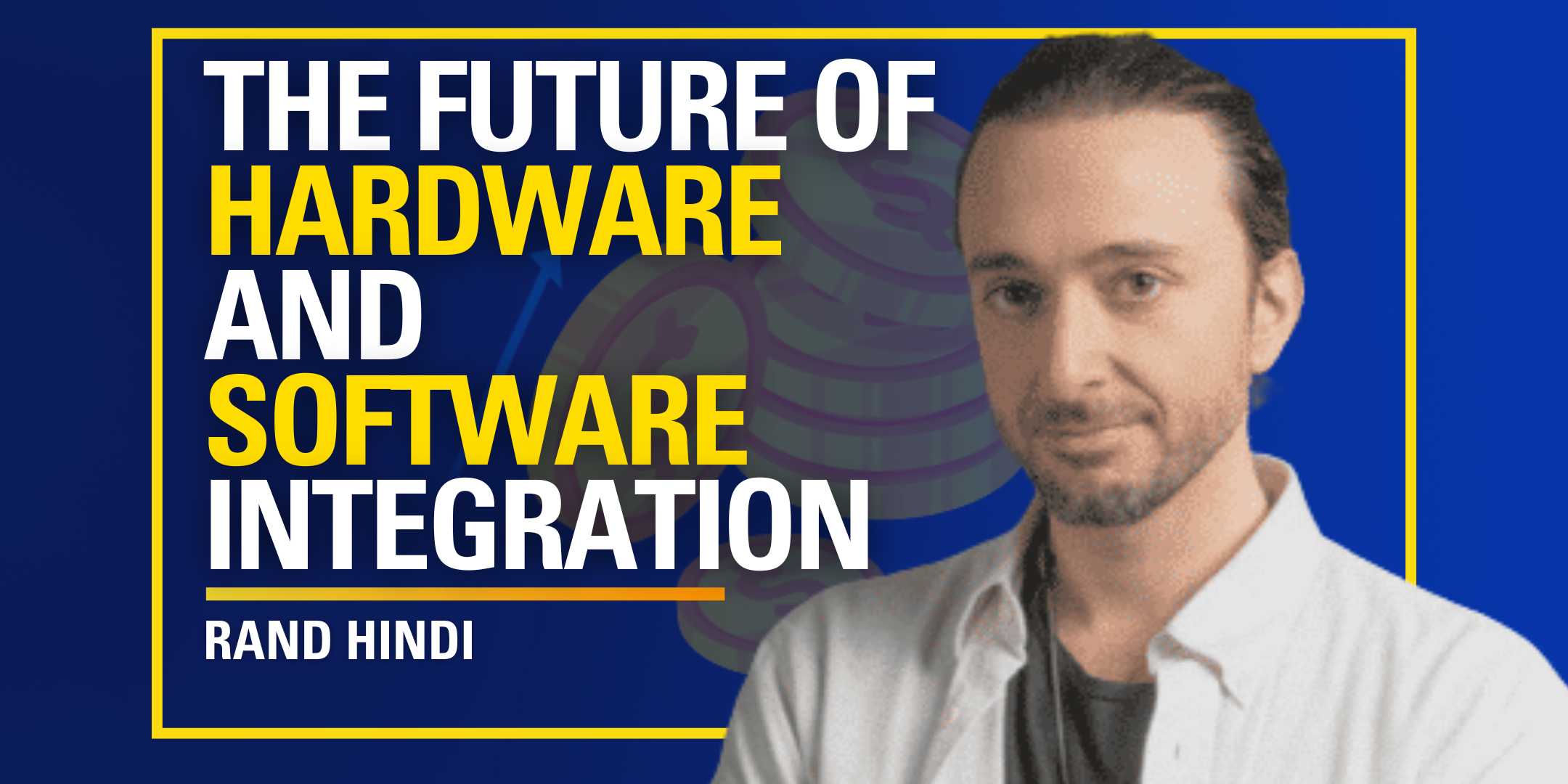
The Future of Hardware and Software Integration - Rand Hindi | ATC #596
In this compelling episode of Around The Coin podcast, host Stephen Sargeant sits down with Rand Hindi, the CEO of Zama and an investor in over 50 companies across privacy, AI, blockchain, and medtech. Rand started coding at the age of 10, founded a Social Network at 14, and started a PhD at 21. He then created Snips, a privacy-centric AI startup that was acquired by Sonos. Rand holds a BSc in Computer Science and a PhD in bioinformatics from UCL.
Host: Stephen Sargeant
Guests: Rand Hindi
We are also available via:
Buzzsprout • YouTube • Quora • Medium • X • Facebook • LinkedIn • Soundcloud • Apple Podcast • Spotify • Player FM
Episode Transcript
Stephen: This This is your host, Stephen Sargeant, the Around The Coin podcast. We probably have what could be the episode of a Century. Zama is such a cool company. They're doing FHE and they are building the next infrastructure for Web3 around. Privacy and Rand Hindi is just an amazing CEO. He's a great listen. He tells us all about how institutions are using this privacy protocol in order to get access to public blockchains.
And a lot of the ideas he's coming up with, he's an investor of over a hundred companies. But you also has been early on a lot of different technology, including biohacking and AI and FHE. So if you wanna know what FHE is, you have to listen to this episode. We really break it down on how it's gonna help institutions and consumers finally get ahold of this privacy issue.
And I can't wait for you to listen to this episode. Probably one of the best ones that we've had in a while, and I know you'll agree. Check it out. Rand, you're an entrepreneur, deep tech investor. Give us a little bit of your elevator pitch. And I'm gonna go in, you've been on the podcast before, before I was the host of the podcast.
Uh, for those of you that haven't listened to that podcast, it was kind of like that pre blockchain era for Zama. Three years ago, we are gonna ask you some things that you thought about then, how they've evolved over the last three years, especially with the advent of ai.
Rand: Thank you for having me, Stephen.
And by the way, you guys were early three years ago, huh? You, you, you had Zama on Depo before. ZMA was a well-known brand, so congrats on being an early, uh, early visionary on that. Uh, I can give you a little bit of intro.
Stephen: Yeah, yeah.
Rand: I've been a developer since I was a kid. Built my first company as a teenager in the nineties, then did a PhD in AI when I was 21.
Uh, after that, I built one of the first AI companies in Europe. That company got acquired in 2019, and since 2020, I've been building Zama with my co-founder, Pascal Paer, who's one of the inventors of this technology called Fully Homomorphic Encryption, FHE. I've also been in crypto since 2013, so I've seen four cycles so far, and I'm an investor in about a hundred companies, mostly early stage deep tech longevity.
Type of, uh, of deals.
Stephen: Do you find it hard, before we even jump into your background, when you say you're invested in a hundred companies, we have a lot of serial entrepreneurs are now co-founders, do you find it tough to balance it? You listen to a lot of these business guru podcasts and it seems very easy.
The founders are able to balance, you know, also investing. How do you balance focusing on, you know, building zma up to a unicorn, but also trying to invest in the next unicorn?
Rand: You know, I, I think my strategy when I invest is. I only invest in things I already know about. I don't need you to convince me about your market or what you're doing because I've already made my mind about what I wanna be investing in.
So the question is, can I find incredible founders to invest in in those sectors I'm currently looking at. So, so I'm, I'm kind of removing a big part of the job of like an investor, which is to figure out whether this is a good opportunity. Like, you know, if you're gonna come to me and you're gonna pitch me, uh, longevity stuff, you don't have to convince me about it.
You just have to convince me that you're the right person to solve that specific problem. So it's more of a human thing in the end, to be honest, which is, you know, like it's not data. It's uh, you and I talking together and I'm like, he gets it. He's gonna be building something meaningful. I want to be part of it.
Stephen: When you're having discussions, especially, you know, we went through a phase where it was so hard to get on a cap table. I would love to know like, what is the company that you say, yeah, I invested in this one. That kind of gets people's eyes to go up and is there a company that you're like, I missed out on it?
I might have gotten in a later round, but I really believed, to your point, I really believed in the tech and knew the tech, but I didn't go all in in that investment.
Rand: I think, you know, some of my most contrarian investments have been in biotech longevity. Uh, I, I've, I've been like a biohacker since for 15 years, right?
So, like for me, it's obvious that healthcare and like medicine is changing radically. Uh, for example, I invested in a company doing psychedelics for mental health back in 2020. Okay. Columbia professors super good guys, uh, came to me. They like, Hey, look, we're gonna build like a psychedelics biotech, first round 10 million investments.
You know, at the time everyone was like, what do you mean biotech like mushrooms, LSD, like, how is that gonna cure mental health? I'm like, well, if you know, you know? Right. And guess what? That company got acquired a few months ago for 1.2 billion.
Stephen: Right.
Rand: So that's the kind of stuff I'm looking. On every deal, but I'm looking to invest in things that I have.
Personal conviction is gonna be super important in the future.
Stephen: It's funny that you mentioned that Mike Towson, who you spoke to in the podcast, that's what his wife's into and that's where kind of Mike has moved into now as well. So it's so interesting reading your bio. I sent Mike a message like, Hey, he's investing in the stuff that you're actually working on, which is kind of cool.
Rand: Your, your friend with Mike Tyson, man.
Stephen: Mike Townsend, the host of the podcast,
was like, what's the, was like, what? What's the relationship here like? I heard Mike Tyson because you know, Mike Tieszen actually did mushrooms and he's been going out and telling everyone that like psychedelics save his life. So, so it, you know, it was actually relevant if you were talking about Mike Tyson as well.
Stephen: I think if I had more connections with Mike Tyson, I would, similar to the, the doctor in front of your name, I would be starting off most conversations like that. What's interesting is when your first companies was Snips, it was acquired by Sonos, but like that was very early to be focused on privacy back in 2013.
What was this huge priority for you and like, especially from a career of entrepreneur that got you looking into privacy and like feeling so strongly that you're building companies around it Over a decade ago?
Rand: It actually started when I was a teenager. So when I was 14, I created one of the first social networks, uh, at the time with a friend in Europe.
It got quite popular with teenagers in France. Um, and at some point I was looking at, it was like. It kind of, it's kind of weird. It feels weird that I can see everybody's data just because I'm the one who built the website. And mind you, you know, this was like in 1999 now, so it was way before anybody was even asking questions about privacy and about these things.
So from that day, it just fell wrong that just because you're providing a service, you should see everybody's data. Then after that I did my PhD in AI applied to biology and specifically looking at DNA. And when you look at DNA, you know, like it is one of the things everybody agrees is privates. Uh, by the way, I would agree.
I would argue it's not that private. But anyways, uh, people do believe it's private. Uh, so for me it became indi indi sociable. Like I realized that if we're gonna be moving in a world where. Gonna get more and more digital, where AI is gonna be in more and more places. We're gonna have to give more and more data to those service providers, and therefore, privacy is only gonna become more and more of a problem.
Uh, so it's, it's not that I decided to be a privacy entrepreneur, it's just that for me, anything I would build had to have some level of privacy built into it.
Stephen: I feel that's been exasperated over COVID, right? I'm showing a 16-year-old teenager my medical records, just so my son can go into an arena and play soccer.
So I think you know it, it sounds so strange to say it now, but when you look back. I'm curious, you mentioned that you were bid in four cycles when you're on the podcast. Last time you talked about being in three cycles. I feel like we in the middle of a cycle right now with stable coins and the convergence of blockchain and ai.
Any thoughts about, is this like, what kind of cycle is this, the four cycle that you're talking about and what do you make of it?
Rand: It's, you know, I mean, this cycle feels very different though. Um, so in 2013. There was nobody in blockchain. Ethereum was not even around. Right. So it was basically a Bitcoin. So all the people that you talked to were either traders that got excited about digital money.
So in fact, I learned about Bitcoin the first time in 2010 from my dad, who was a currency trader. Right. So he sent it to me. It's funny because he sent it to me at the time, Bitcoin was seen as a meme Coin by traders doing like, you know, FX trading. It wasn't called a mem Coin, but like, oh, look at this funny internet money kind of thing.
Like, let's play around with it a little bit, kind of thing. But it was only in 2013 when one of my friends, uh, told me really what Bitcoin was about. I was like, oh my God, this is not about, you know, magic internet money. You know, this is about the future of finance effectively. And from the day I was hooked.
Uh, so first cycle in 2013, you had to be a believer to even hold Bitcoin because. It was hard, man to just hold Bitcoin. Like it was really difficult to even come across like, how do you buy Bitcoin, you know? Uh, then 20 16, 20 17, 20 18, the whole ICO boom, this is a first time entrepreneurs came on board, you know, Ethereum launching, everybody building on top of it, but nobody had any clue what they were doing, quite frankly.
So it was like, you know, all over the place. The first time there was a little bit of like, professionalism was in 2021 with DeFi. So DeFi is the first time that like real serious builders came into the scene. But this cycle is yet different because this cycle, my feeling is the level of sophistication of projects and people and analyst and, you know, podcast host is comparable to Trackify, you know, comparable to Silicon Valley startups.
Like, like blockchain is no longer an outsider thing, like it's mainstream. Technology just like AI is right now. Uh, and that that is very, very, very, very different. This is very new. I'm very bullish because I think that blockchain is gonna have a much better future now. But I also do think the, uh, 1000 x uh, betting on a random Coin are gonna be very difficult to come by now,
Stephen: especially with the progression to, you know, the, the betting sites and now everyone getting into prediction markets.
It's ama, it's like you turn on any football game, any soccer game, and the only thing you're seeing. Fantasy football, you know, betting on, you know, the field gold, which is something I used to be into, but it was never to the point, you know, the fact that Yahoo created a fantasy football site for you to create your team was a huge deal.
And now it's over every single commercial that you can bet literally on every play, every Coin toss, you know, the Gatorade, it's, it's gonna get into that point. I'm curious though, because you know, you talked about the institutions, the building. I remember during the bear market everyone talked about the builders are gonna keep building and now we're seeing acquisitions and mergers, and what do you think were people actually building during that last, uh, bear market, and is that the reason that fueled a lot of bear market?
Rand: Oh, a hundred percent.
Stephen: Including Zama, right?
Rand: Yeah, a hundred percent. I mean, I mean, I mean like, it's always the same thing, right? There is a cycle where people get excited and you know, there is like all kinds of activity. There's always gonna be a bear market, right? Like, you know, whatever goes up goes down at some point and then it goes back up.
If it's good. That that's the universal fruit of every market in the world. You know? I mean, apple lost 40% of the stock at some point. You know that That's a pretty bad bear market. Meta, I think went down 70%. Right? You know, so, so crypto is really not different in that sense. What happens though is during the bear markets, the good founders who raise money during the previous bull markets are building their products.
They were launching it. And what triggers the new bull markets are all of those projects that were funded in a previous cycle, they needed time to build during the bear markets. So that's why you see this kind of like four year cycle repeating over and over is because there's two years of bull markets.
Then there's two years of building before there is even anything to get excited about. Again,
Stephen: and I'm curious as we get into Zama, I remember being very early in crypto around 2016, early for me, not for you, but I remember financial institutions wanted to touch crypto, but they wanted everything to be permission.
I remember ours three was like all these organizations were getting together, but you know, they never wanted to be on a public blockchain. You've described this as zama at being like the blockchain confidentiality dilemma. They wanna do trades, but they don't want everyone to see those trades. And you're talking about large institutions moving millions, if not trillions of dollars, which could have market reactions if it's public in real time.
Talk to me about this dilemma and how you were able to build SAMA to solve this one core problem for financial institutions getting into digital assets.
Rand: If you're a financial institution or a bank, or if you're anyone doing serious finance, you know that confidentiality is a key part to being successful.
Uh, if you're gonna be holding assets of your customers in stable coins, you, you can't have everybody see all your bank accounts, right? If you're a professional asset manager and all of your trades are public, you're not gonna have much of an alpha, and people are not gonna pay you a carried interest to manage money for it.
So, so confidentiality is indistinguishable from finance. What Zaa does is that we add a layer of confidentiality on top of existing public blockchains like Ethereum or Solana, so that people can take any token shield, those tokens, and now confidentially transfer them, swap them, stake them, lend them, and do whatever they wanna do on chain.
So you can take a billion dollars of sdt, you can convert that into a billion dollars of confidential sdt and everything you do from that point, nobody has an idea. You could be buying, you could be selling completely oblivious to the rest of the world.
Stephen: And I guess that approach is differs from like a permission blockchain where only certain participants.
Rand: Yeah.
Stephen: So you can't get access to all of these amazing tokens and blockchains and protocols. You're limited to like where 60 other large organizations are. This opens us up to everybody. But that confidentiality is still there.
Rand: It's on Ethereum, it's on Solana. You got money on Ethereum, you can shield your money on Ethereum.
You're not bridging it outside. You're not like, you know, using a different protocol. You're on Ethereum. And that I think is a fundamental shift. You know, we think of Zama like as HTTPS for blockchain. You know, adding a layer of encryption on top of existing infrastructure and services that people are already using today.
Stephen: And why FFHE, that, you know, there's so much encryption, there's so many things. There's the way Bitcoin does in, uh, encryption. Why did you choose FHE? Is that something that you found very early on? Is it was something that people weren't expanding or companies weren't building on? So you thought there was a market for you to explore?
Rand: I discovered FHE back in 2015, uh, when I was researching confidentiality for AI at the time, and that's when I met my zma co-founder, Pascal Paer, who's one of the inventors of Homomorphic encryption. You know, it's like, it's like if I told you I created, uh, a new blockchain company with Vitalik, like he's that kind of guy in FHE.
Okay. That level of like, famous guy. Um, so Pascal came to me and said, I think we can make FHE work. That's why we started Zama. So why FHE? What is F-H-E-F-H-E is a way for you to compute on encrypted data without decrypting it. So for example, your balance on on chain would be encrypted. You, the transfer amount you wanna make would be encrypted.
It would be a smart contract making the transfer, but nobody would ever have to decrypt the data in the first place. Okay? So it's like end-to-end encryption for smart contracts. Effectively, there are other technology that exists to offer privacy on blockchain. You have, you know what's called te pc zk.
FH E is the only one that is secure, verifiable, and composable. It's secure even against quantum computers. So the data you're encrypting with today cannot be broken by future quantum computers. On the other hand have been completely broken. So much so that Intel came out and said, don't use it for blockchain.
This was never designed to be secure in the environments. Gone. M pc, great technology for key management. We use it for that. Not very good for verifiability. It's very hard to verify an MPC computation, FHE. Anybody can recompute it and verify the state. And zk very popular, very good for scalability, but it doesn't give you composability.
If you're taking shielded Zcash tokens. You can transfer them privately, but you cannot stake them, land them, or do anything else with it. FHE tokens are fully composable, just like regular tokens. You can take USDC, convert it to confidential u sdc, and you can still stake it, transfer it, swap it, and do anything else you want.
Stephen: You mentioned so many other protocols and so many encryption, what would they say about Zama? Like, Hey, yeah, it's perfect. They can do all those things that we can't, but there's one thing that might, like, maybe they're slower, they don't. Do you know? Is there something that would be the rebuttal to what you're saying about, you know, some of the other protocols that they work, but you do something a little differently?
What would the rebuttal from them be?
Rand: It kind of changed over time, you know? Uh, initially it was, oh, FHE can barely do anything. We solved that. Now we can do everything. They're like, okay, can do everything. Then it was, it's too difficult to use. We've made it easy by integrating it in Solidity, for example, for smart contract developers.
So now you don't have to learn anything about cryptography. Now they have to find something else. So now they're saying FHE is too slow. Well, we just launched a Zama on Ethereum. Main net, we can already do more transaction than Ethereum can do. So we're faster than Ethereum. Ethereum has $300 billion of assets on it, so we're fast enough for 300 billion of addressable TVL, which I think is a good starting point.
And we're gonna be at a thousand CPS by the end of 2026. Enough for any L two that you're looking at? Not just that we've been investing in building our cus a custom chip and ASIC to accelerate FHE. Which can give us up to a hundred thousand TPS, which is enough to power global payments, uh, on chain with FHE.
So like to those that believe FHE is too slow, they're actually proven wrong at the moment. FHE is getting better by a factor of 10 x year on year at the moment. So, so it's like, it's like if you're betting against LLMs. Five years ago, right? They're too big, they're too expensive. You know, it's never gonna work.
We should use like those old AI stuff and everything. You were right five years ago. Oh man, you are very wrong today. And this is the same thing with cryptography. Like people have a tendency to underestimate how quickly an exponential improvement.
Stephen: Do you find your inve, you're seeing so many different companies and investing that you're getting a lot more context when it comes to making decisions like that because you're seeing a lot of the surrounding technology and then maybe how fast it's evolved?
Rand: Oh, for sure. Uh, both ways, right? So as a, as a founder. It gives me a lot of visibility on what matters to figure out what to invest in. And as an investor I see a lot of what the other people are doing. I'm like, okay, that's interesting. You know, I should think about that in my own company. So, so the two are actually very, uh, are reinforcing each other.
Stephen: You know, this makes a lot of sense based on the examples we've both given for like traditional financial institutions getting into digital assets, Web3 and even DeFi. What are some of the other common users of Zama? What are some of the other things that, you know, this new entrance into the space, uh, that weren't present maybe in the last cycle that you see coming in today?
Especially around things like stable coins?
Rand: There are a few use cases that I'm personally looking into myself. And of course, you know, there are use cases we didn't think about that people are gonna come up with. Um, so payments is a big use case. Uh, for example, there is a company that's building on the Zama protocol called Ray Cash.
Fantastic company. Uh, one of the founder was the former COO of, uh, a checkout, which is a $40 billion payments company, you know, big competitor to Stripe. Uh, Ray Cash is an on chain neobank, but they're using confidential, stable coins to keep your money private on chain. So, you know, there is like a whole bunch of companies building like on chain revolut type competitors, but if your money is in stable coins in public and everybody sees how much you're spending and making, nobody's gonna use it.
Ray Cash is solving that problem using zaa to keep your stable coins, uh, balances confidential. Everything else is working, you know, you can pay with it. You have an iban, you have a credit card, you have like the whole suite of financial applications, but privates. So that's one. Uh, a second one is, uh, what I call unchained capital formation distribution.
Any crypto company. We'll have to raise money from private investors, do a public sale, distribute tokens to their team and to their investors. Okay? Nobody wants those distributions or private sales to be completely public. Like investors don't want their location to be public. You know, they end up creating 20 different wallets to hide their allocation.
You know, team member get pissed at each other because, oh, you got more money than I did. All of that goes away, man. You just encrypt the tokens before you send them. And now you have confidential token vesting. You have confidential token sales. Like nobody knows how much multi Coin is getting in Zama tokens because nobody can see their balance, right?
So you no longer need 20 wallets to hide that no longer need to worry about archive intelligence tagging you. You no longer have to worry about, you know, social media being like, oh my god, multi Coin sold ZMA tokens. It's going to zero. All that goes away, man. It goes away. Right? That's a huge. Huge use case.
Yeah, we're talking trillions of, of like, uh, you know, crypto being created that can benefit from that. And finally, the third one is, uh, real world asset tokenization.
Okay? You want to tokenize gold. You want to tokenize real estate. You wanna tokenize anything. You need confidentiality. Again, if you're an asset manager and you're gonna manage a portfolio of tokenized assets, you don't want this to be public.
I don't even think you're allowed to make it public, like, like there are rules to what you can do. We're solving that problem too.
Stephen: The reason why I laugh when you men, when you mentioned Arco, is 'cause a, a former blockchain investigator myself, we used all the tools to analysis. So when you, when you mentioned that, yeah, you don't want people being able to trace everything you're doing, and I'm even thinking governments are getting into digital assets and buying digital assets and distributing them.
You do not want people to be able in real time. You wanna know that the distributions are made, but you may not, you know, want that information public about the amounts or to the exact locations it's going.
Rand: That for me was the big, like my big thesis for Zama, right, is what people want with blockchain is not public visibility and transparency.
What they want is public verifiability.
FG gives you that because you can verify the distribution was made correctly, but you cannot see the individual data points and amounts that people got. You get a public verifiability without the public disclosure of the data
Stephen: and because it's verifiable, auditable, and compliant, how does that work for traditional financial institutions that have to meet regulatory compliance requirements?
Is that more helpful? You know, the government's gonna be like, Hey, where did you receive the funds from? Um, how did they, you know, present these findings and reportings to government agencies, especially around things like tax and balance sheets, especially for some of these larger companies.
Rand: You know, I actually think compliance is one of the strong suits of FHE and Zama in this case.
So up until now, blockchain privacy with ZK was all or nothing, okay? Either. The whole thing is anonymous and nobody knows everything, anything, or everybody sees everything, right? There was no kind of middle ground. FHE allows you to program. Compliance into your contracts directly so you can have selective disclosure and programmable compliance.
What does that look like in practice as a token issuer? Let's say for example, I'm Circle and I want people to have confidential USDC payments I can give myself, circle the ability to DECT the transaction of USDC users so I can comply off chain. A L tools and everything, just like a bank does. When you have a bank account, you see your bank account, your bank sees your bank account, but your neighbor doesn't.
And this is what we're enabling here with programmable compliance blockchain. We're telling people, Hey look, maybe this isn't about end to end encryption. Maybe this is about hiding the data from random people on the internet, but maybe it's okay for circle the token issuer. To see the data.
Stephen: Data, and I believe random people on the internet are getting really good at investing, investigating the blockchain.
Right. They're, I feel like that's, you know, solely, they're responsible for FTX and a lot of discoveries in the Web3 industry.
Rand: To be fair. I, I think that goes both ways, right? Like, you know, one side is good because you know, you can surface scams. The other problem is it creates way too much overreacting on things which are just mundane.
Okay. A big, uh, a big treasury company or like a big investor is just literally rebalancing their portfolio. Okay. Maybe they're sending to Binance because they're rotating their wallets. They're not even selling. People are just gonna freak out because of that. So, I, I, I, I'm actually, I'm actually a believer that, that the volatility we see in crypto is in part also due to the fact that people just freak out where they really shouldn't be freaking out because there's no reason to freak out.
And removing this, you know, uh, uh, public visibility by default removes a lot of that as well. I think we're gonna get better market with privacy. We're gonna get better markets, less volatile, you know, more like traditional stocks. Uh, with privacy.
Stephen: If I remember, I didn't, I dive deep into it, but during the ftx, I remember crypto.com sent a large sum to another address and there was this huge overreaction.
To your point about crypto co com is next. They're the next ones to go under and is like, to your point, a lot of these companies are just bouncing their books. They're settling up at a certain time. Uh, you know, with so many financial institutions being built on top of, you know, blockchains now, like financial applications, what were some of the risks that you're seeing now that like your privacy to your point about like, hey, people are able to see everything, they're overreacting, they're able to investigate.
What were some of the, the risks like we've seen in-person kidnappings. We've seen a lot of, you know, wallet drainers and social engineering attacks because of the. You know, public nature of these blockchains, you know, how much is zama contributing to reducing these financial crime risks?
Rand: Oh, that goes away.
That goes away. You know, I, I, I, I'm from France. Okay. Uh, in France we have, I think, the highest rate of violent crypto related crimes in the world. Okay. And for a while we couldn't figure out why this was happening, you know, why France specifically? Well, it turns out for two reasons. First, because a lot of the data was leaked in France, so there's like databases, two, because you know, whenever you own a company, there is a public registry with your home address, you know, on it so people know where you live.
And three, we just found out this week, uh, there was like an IRS, like the equivalent of an IRS agent in France. Working for the government. Those leaking the private detail of large crypto holders to criminals. Okay, so like someone in the government that you're reporting your crypto holdings to because the law forces you was giving this information to criminals.
So man, no wonder this was happening. What is your only way against ads? Encrypt Your wallets. Encrypt your wallets. If you keep your wallets encrypted. Nobody knows how much you own. They can, they can speculate, but they dunno. They dunno. For sure. That makes a huge difference because nobody's gonna take their risk of kidnapping someone unless they know for sure that there is enough money for them to gain out of it.
Like, imagine you kidnap someone, cut their finger off, you're risking jail for life. You know, are you gonna do that for like 50 K? You're not right. You, you wanna make sure there's a little bit more money than that. FG removes. That visibility, it removes the risk.
Stephen: I don't know the exact stats, but we've seen a lot more kidnappings.
You, the one you mentioned, I believe, was in Paris. Um, we've seen in New York kidnappings and requests for money. It's happening, you know, influ o uh, OnlyFans influencers. It's the, the threat is very real. One thing I did see on your website is that you have an opening for a compliance officer to lead the development and execution of compliance frameworks for some of these confidential tokens.
Can you explain maybe some of your regulatory requirements, if any, and which jurisdictions are you able to utilize your protocol to? Its full potential.
Rand: You know, this is very new and we feel that's role is also to spearheading around how do we build confidentiality. For public blockchains. Uh, so we wanna find someone who can come on board, not just help us be compliant, but actually more work on building a compliance framework that every token issuer will be able to adopt when they're using zama.
You know, we wanna give people like a simple get started with compliant privacy on chain kind of framework, uh, because everybody's struggling to answer those questions. Um. So, yeah, so, so if you know anyone or if you are someone listening that wanna work on shaping the future of blockchain privacy and compliance, please do get in touch because we're looking for someone.
Stephen: That's so interesting 'cause you don't really have those requirements now, but you're kind of, you know, building the framework that eventually is gonna touch on. Let's face it, everyone said the same thing about Bitcoin. Like, you know, it's the wild west, they'll never be regulated. And then look at where we are now.
So, you know, it's, it's great to get a head start and it's amazing that you're spearheading it. I'm excited to see who takes on this approach because I think to your point. A lot more D developers are gonna, especially with what's happening with a lot of developers, you know, when it comes to US authorities and others wanna make sure they're on the right side of the law.
At least have a framework to As a blueprint.
Rand: Exactly. And, and you know, I wanna be very clear about something. We are a company and we're building a solution for legitimate financial use cases. Compliance is part of how Fineas works. I don't make the law. The law says you have to have compliance. I'm trying to find a way to make sure that we have the best of both worlds, privacy on chain and compliance.
For finance. I don't care about North Korean hackers. They're not my customers, so I'm not building for them to be clear. I'm building for JP Morgan, for Goldman Sachs. I'm building for these guys. They're the ones that care about,
Stephen: yeah, usually people building to, to lau their elicit, you know, sanctions, invasions, funds from Lazarus group aren't looking for compliance officers.
No. What's funny and interesting though, is that. Much of the hype around today's privacy solutions is that they can bridge tradify and DeFi, but it doesn't seem like we're overall accomplishing that. How are you able to do that? How you to bridge, you know, the.
That Tradify companies get excited about when they're dabbling in the DeFi? Like how were you able to bridge some of that gap?
Rand: I mean, I'm not trying to convince people to get into DeFi or to use blockchain for finance. You know, I think, I think people already sold on the idea. I think at that point now, especially what happened, what had been happening in the us, we can safely assume that finance wants to be watching.
The question is. Are they gonna use public blockchains like Ethereum and Solana, or are they gonna build a custom private chain and maybe using something like, uh, whatever, Canton for heavy interoperability. Okay. I believe that people should be using public blockchains because public blockchains give you composability.
They give you a hub that you can build on top. They give you access to all of the retail participants. It's very hard to rebuild that on a private chain. So if you believe that public blockchains like Ethereum, Solana are gonna win finance, then confidentiality becomes a key enabler for that to happen.
You know, privacy is like, it's like the final boss of blockchain adoption. Effectively, we've solved programmability with smart contracts. We solve scalability with roll-ups in Solana. Now we need to solve, now we solved privacy with Zama.
Stephen: Have we solved the, you know, user experience? Have we solved UX in your opinion?
Or you know, is that D Depending on where you are, the UX is gonna, because it still feels a lot of people that come on here. It still says like, you know. Blockchain still feels clunky, like buying an NFT still feels clunky. Uh, do you think that that will be the next step after privacy is like, okay, now let's make this look like you're just logging into Telegram and sending a message?
Rand: Yeah. I mean, well, I mean, you're still talking about money, right? So like it cannot be. Just open it up, right? Like, you know, when you have a banking app, there is at least some form of authentication, a passkey, uh, whatever, something like that. I think you're always gonna have a little bit of like this financial feel to using blockchain, because let's be honest, blockchain is primarily a great tool for financial transactions.
Okay. Um, so it, it just, it shouldn't be harder to use than like a, a Neobank app like, uh, Revolut. And, and I think you can see wallets are going down that direction actually. You know, wallets are becoming more and more like neobank and less and less like cryptographic signing devices. Uh, so I, I think, I think the UX is gonna be a mix of people learning to use wallets and a mix of wallets becoming more consumer.
Fin FinTech type products,
Stephen: and we've had about six or seven different wallet providers on the podcast. And then recently, just because there's, there's so many, to your point, there's so many interesting developments in the UX and the different ways they're approaching wallet infrastructure. I'm curious because Zuma's live today, you know, you're powering applications like confidential DeFi auctions and to your point payments.
You share what you've learned from like, launching infrastructure and all of these different functions, uh, financial functions and applications in the ecosystem?
Rand: It's hard. You know, I, I, I, I sold a company before my previous company. I thought that was hard, you know, selling a company, 'cause that was, that was like really stressful, man.
Like, you know, going through like an exit is tough. I think this is probably 10 to 20 times easier than launching a blockchain protocol in token. Like, like launching a protocol is hard 'cause you have to think about so many things. First of all, blockchain infra is extremely, Imma immature. If you compare it to like Cloud Web two Infra, it just doesn't work.
Like nothing works in blockchain infra. It's insane. It's insane. 95% of the time we spend at Zama has nothing to do with FHE. It has to do with just making this stuff work in a blockchain environment. That's insane. I can't believe people didn't figure this out yet. Maybe there's a company there. Uh, so that's a first big hurdle, right?
Like the tools are bad. The second one is you're facing like extremely heterogeneous regulatory environments, none of which have a clear. You know, uh, definitive stance on crypto. So like, you're like, oh, I have Mika in Europe, and now we have clarity in the us. And then, you know, there is like this new UK stuff they're pulling up and then China changes your mind every day.
And, and Korea is like whole other ball game. And like, so you, like, you have to juggle so many different things. And that's really, really difficult because, you know, like nobody likes uncertainty. Uh, and then of course there is adoption. This is not 2016 anymore. You know, you cannot just launch a chain and people use it because there's nothing else there.
There, there are millions of opportunities for people. And so you need to, you need to build distribution, you need to build, you know, early adopter, you know, you need to build application just like you do in web two. If you buy an iPhone, you know, there are apps that Apple built on it, because if you buy an iPhone and there is nothing for you to do with it, you're not gonna be very happy about the experience.
That's the same with blockchain today. When you launch a protocol, there needs to be something you can do on the protocol on day one, right? So, so you have to build a full stack, you know, decentralized infrastructure with an application layer, with a financial, you know, logic for your token, all of all of which is wrapped into, you know, legal uncertainty.
Plus we're doing privacy. So as related to that, it's tough, but it's important. It has to be made. It has to be done.
Stephen: And if you weren't challenged enough by launching a protocol, you are coming out with the Zama token as well, which is coming soon. Can you tell us a little bit about that? I think you have an interesting approach to the auction that you're doing.
Um, you know, what's this auction style like? I think I remember a Dutch auction when I was buying, you know, my first Gary V-N-F-T-V Friends. Mm-hmm. Uh, what's this, what's this auction like? How does it differ from a traditional sale? And is this purely a utility token to power the Zama ecosystem, or are you utilizing this token for other things?
Rand: So the Zama token is a utility token. Uh, you use it for two things. One, every time you're encrypting or decrypting data, for example, when you're encrypting the amount you want to transfer or decrypting your balance, you have to pay a small fee to the protocol in Zama tokens. The protocol automatically burns those fees.
So a hundred percent of the fees are burned by a protocol. On the other side, you're using the ZAMA token to stake as an operator of the protocol to earn rewards, and we're minting the rewards for those stakers. So it's like a min and burn type of utility model similar to Canton, similar to Solana, similar to like, you know, we're not reinventing the wheel on that front.
Now the auction, we are gonna be selling 10% of the supply of Zama token through a sealed bid Dutch auction on Ethereum using Zaba to hide the bids of people participating. So this isn't a presale, this is a sale of a token for an existing product in main nets that's already running today. So the way is gonna.
There is a three day bidding period, so you can register today on auction. Uh, auction do zaa.org/register. So during the re, during the bidding period, you need to shield U sdt and you're bidding, which shielded U sdt. Uh, the price that you're bidding at is public, but the quantity you're trying to buy that price is private.
So people don't dunno if you're buying $1 or a million dollars or one token or a million tokens at that price. At the end of the bidding periods, we fill bids from highest price to lowest price. And the lowest price at which someone gets filled is actually the clearing price that you end up paying if you bid above.
So let's say for example, you know, I, I just bid to buy 1 million Zama tokens at a 2 billion FDV and the last bit cleared at 1 billion at dv. I'm still getting my million ZMA tokens plus a refund for the extra money I paid between one and 2 billion at D.
Stephen: Right.
Rand: So, so this type of auction is actually not new.
People have been doing this for actually 2000 years or something like that. More than that. Uh, Google did that for their IPO back in 2004. Uh, so it's a very, very common type of auction in stratify is just, we couldn't do it in blockchain because we need to hide the bids, otherwise it doesn't work right.
By the way, a very cool use case for Za myself.
Stephen: Yeah. Is there anything better when you use your own technology to, you know, to do the actual thing that you're meant to do? You know, I've seen that. I think mesh pay did, you know, when they raised funds, they did it through their own, uh, their own infrastructure.
I think there's, there's nothing cooler than using your own infrastructure. I remember when you were on the podcast last time, you weren't very sympathetic to data brokers and companies, you know, that sell data. Uh, has that changed over time? Because like, FFHE changes the economics of advertising and data a little bit, but it still allows you to do targeting, which is, maybe you can explain that for people that didn't listen to the other episode.
Um, and has your mind changed over the last, you know, four years of seeing the way data has. I think privacy has gone a little bit better with data, with some of the, the iOS application updates, you might differ, you might disagree.
Rand: I think the podcast was before Chat gt, wasn't it?
Stephen: It was 2022. So Yeah.
Before it was like actively being used.
Rand: Yeah. So yeah. So, so pre, pre, pre-chat GPT is a kind of a different world if you think about it. Uh, it seems crazy. It's not even three years. Oh my God. Anyways. Um, so what has changed? Um, first of all, you know, we discovered that for FHE specifically where we had the most product market fit was in blockchain.
So that's why we decided to recenter the company around blockchain use cases and launch app protocols, because we're like, look, people really need that in blockchain, in the clouds, you know, ai, those things, people trust Google already, right? They're like, eh, whatever. I'm fine, fine with Google. You know?
You cannot really trust anybody with blockchain because anybody could be running a note at home, you know? So it's, it's a very different assumption in the first place. That's why FHE is such a good fit for blockchain and why we haven't seen as much of like strong demand from the cloud side. Uh, now it doesn't mean you cannot use it, you can use it for ai.
We have an AI product, you can use it for confidential advertising there. There's just no demand. To be fair, blockchain. Huge demand. Insane, insane demand. Like I cannot tell you how, how big of a problem we're solving with Zaa in the blockchain space. It's, it's, it's probably one of the last huge opportunities that there exists today to build something meaningful in that space.
Stephen: I'm curious because you mentioned hardware and chips, and you have the state of the F-H-F-H-E report that we're actually gonna put in the, in the notes, uh, which was really interesting. Read had some amazing visuals and timelines. Um, but it seemed like for the, in the timeline there was about 10, 20 years where nothing was really happening in between 2006 and 2024 when it came to chips.
Obviously now with Nvidia and everything that's happening. What was happening during that time as an investor? I think, you know, investors and VCs were staying away from hardware, uh, when it came to investments. Can you kind of describe that 20 year gap in your own words?
Rand: Well, I mean, hardware is actually how Silicon Valley started.
If you think about it, you know, initially started with radars and then semiconductors. This is what made Silicon Valley. We lost interest in hardware. Because at some point the internet came about and internet was primarily about software. Okay. So like the opportunity of 1995 to 2020 was mostly around software.
That has changed with AI because AI has gigantic compute requirements and clearly SCP is not enough, and even GPUs are struggling to keep up with the demand for ai. So you see a company like Rock who built. Not the grok from Elon Musk, but Grok like the semiconductor company, they built a competitor to Nvidia, and Nvidia bought them for $20 billion.
I mean, Nvidia is the biggest company in the world, man. Like Nvidia was doing like, you know, video game graphic cards, like that wasn't like a 5 trillion business at the time. AI made a so, so I think at some point, and it's funny because this was always so obvious too. Some of us, right? But at some point people realize that, oh shit, there is actually something computing in the background.
And a lot of those fancy use cases, space exploration, nuclear fusion, ai, blockchain, Bitcoin mining CPUs are not meant for that,
Stephen: right?
Rand: So, uh uh, one of my investment thesis is that we're gonna see more and more application specific hardware being built, and the cost of building this hardware will go down exponentially.
So instead of like hundreds of millions to invest to build a chip, it's gonna take millions. Then eventually it'll just be AI designing it for you and then, you know, a fab in the US or Taiwan or wherever producing it. Uh, so we're getting into an era of like. Hardware, software, co-development by default,
Stephen: do you feel is like very similar to like the 3D printer.
We went from, you know, not being able to build anything. You need a toy manufacturer, you need, you know, products and you would need samples to, all of a sudden people are like creating businesses out of a 3D printing model. Something that's created, you know, overnight. Does that, it feel like we really sped up that, uh, especially when it comes to consumer goods.
Rand: Yeah, I think so. I mean, may maybe less consumer oriented, I would say, but like as a company, if you're really going to squeeze out every, you know, inch of performance, you're gonna need to build hardware at some point. Why is Tesla so good? Because they build a hardware and the software together. Why is the iPhone so much better than your other phones?
Because they build the software and the hardware together. You'll see that every time you look at a product and you're like, oh my God, this is such a delightful experience. It's just, it just works. It's because people build the hardware and the software together and you know, this is what we're doing with FHE as well, you know, we're building the FHE, the protocol, but we're building the hardware to make it faster.
And that's how you end up getting experience like, oh wow, this is super smooth. Yeah. Well, because we build a whole thing to be one thing. Uh, I do believe in this kind of hardware, ver hardware software, vertical integrated thing as, as a major trend in technology.
Stephen: Was that an easy sell to the rest of the Selma?
You know, like the, the C-suite that like, hey, we wanna get into hardware now. 'cause that will release, similar to how it AI was able to release some of the hardware potential.
It, it was part of our thesis from day one. So like, you know, we, we got into FHE knowing that we would need an ASIP at some point.
Uh, so if, if anything. We haven't really questioned the thesis. So the contrarian thinking would be, do we actually need it? Uh, we do if we want.
Stephen: I'm actually wanting to talk to you about privacy. In general, it feels like, you know, the average consumer will give up mo the majority of their privacy to save 10% at Bed, bath and beyond.
What are your thoughts about where we are from a privacy? Is this more an institutional adoption thing and where we are as like from a privacy side when it comes to the average consumer around the world?
Rand: You know, that's a very good point. Clearly today, the biggest demand for privacy comes from institutions in large.
Asset managers. So the more crypto someone holds, the more they care about privacy at the moment. You know, and, and un understandably, because they're the ones being targeted by everyone, effectively. Consumers, I don't think they should care about privacy and the way that we solve the problem is not that they don't have privacy, is that we make.
Privacy is so cheap and seamlessly integrated that they don't even realize it's there. You know, when you connect to a website, there is a small lock in your browser that says, you know, this comm, this, this, uh, connection to the website is encrypted with https. You don't think about it. It is there. You just, ah, it's a small lock.
Okay, good. You know, like it's just a tiny visual clue in your, in your browser, but you don't think about it. We wanna do the same for blockchain. You know, we, we want to be. So deeply integrated into blockchain infrastructure as the core confidentiality layer that people use it without thinking the users don't even know it exists.
Like if Zaa does its job rights, you don't know Zaa exists because we're gonna be woven into the fabric of blockchain.
Stephen: I'm curious, you know, maybe from your perspective, who are some of those people, you know, building on top of Zama and how do you attract those builders? You know, we've interviewed a lot of protocol CEOs on this podcast and it seems that there's a lot of L one, L two.
New protocols popping up every single day in DeFi, and you know, they're giving away token grants and everyone's going there, then they're moving to another, uh, you know, protocol. How do you attract and, you know, maintain and retain top talent building on top of Zama?
Rand: Our strategy is Twofolds. Uh, on one side, we actually builds apps internally.
We hire founders to come and build those apps at Zama and then we spin them out eventually. So, you know, kind of like a startup studio entrepreneur in residence type of strategy. It's been working great so far. We just spinned out our first company, Ray Cash, that I mentioned earlier, doing this confidential, stable Coin, Neo bank on chain.
Uh, so that's one. The second one is as an investor, the good thing is I'm used to finding good founders and, you know, knowing who to invest in. And so I kind of use the same approach. To who we wanna be helping, supporting funding in the community. You know, really trying to work with founders, wanna build great things and offering them a distribution channel, offering them introduction to investors.
I might even invest myself. Uh, look, at the end of the day, an ecosystem is about people. This primarily the thing that you wanna be building. You know, you wanna build a group, a great group of people who are excited about using the technology to build something new and you wanna give them the tools to be successful.
Stephen: We have so many founders, especially across payment tech and crypto, that listen to this podcast. Any advice from, you know, the founders that you have invested, the founders that you've hired to work within Thema ecosystem? Any characteristics that you're seeing, especially now in the advent of AI that you're seeing that, you know, to your, you know, uh, subjective opinion makes them a successful founder?
Rand: I, I think, you know, there is what, what's what I like to call founder market fit. Are you the right person to solve that problem? What you'll find is founder market fit means not just that you're passionate about the problem, but also that you have understanding and knowledge that other people don't like, you know, something most people don't know that is obvious to you, but not someone else.
And this is what I'm looking for. Like, you know, I'm looking to, to work with people where I'm talking to them, I'm like, oh, wow, I just learned something. I had no idea. Like, this is actually how it works, you know? Um, so I, I think, you know, a founder market fit is. The one thing that matters the most in the success of a company.
Uh, and then of course, you know, you have to build something useful and then you have to be good at marketing and you have to be good at distribution. But all of these things, you can hire people to help you do it. Uh, I, I think you know what you cannot hire someone to do is. Be the founder with the vision, with the understanding, with the strategy that's gonna go in and kind of like, you know, bulldozer its way through until it kind of works
Stephen: as we build, you know, in 2026, this is the first month that this episode will be published in January.
What are you excited about in 20 20, 26 for Zama, for the industry as a whole, maybe for FHE? What's exciting you the most?
Rand: Well, we're launching our token. I mean, technically the token exists. It's been already launched, but we're, you know, doing the auction, that's the first thing. Uh, my main focus for 2026 is gonna be integrations.
So having zama and confidential tokens integrated into every exchange wallet, every on and off ramp, every stable Coin, every DeFi protocol so that nobody has to ever not have confidentiality on chain. So my, my number one focus is integration in 2026. Uh, and then, you know, post 2026, we're gonna think about, okay, what else can we do with this protocol?
What else is there out there that we can benefit with this technology? But for now, you know. Look, this is a turning point. You, you know, we know what Zama means. Zama is is the name of a city, of the city where the Romans defeated the cart genius. And the defeat was so big that Cartage never recovered from it.
And this is the Zama moment for privacy. What we're bringing here to the table is so powerful. That we will never get back to a world where things are not private by design.
Stephen: I'm curious, you know, as we go into 2026 and hear, you know, you sound like you've, and when you, when I hear the, the things, you know, when I'm reading your, your background, you know, you were so early on so many different things like ai, like before AI was ai, you're, you know, you know, getting introduced to Bitcoin like.
The month it comes out. Like what are some of the, the thoughts that you have that shaped, or any ideas that shaped your thinking, books, podcasts? Is there anything that really shaped your thinking from now all the way to then?
Rand: It, it is true if, if I look at my track record as a founder and investor, I've been early in a lot of things actually.
Uh, you know, I've been early in ai, I've been early in, you know, uh. Biohacking longevity. I've been early in privacy, FHE I've been early in blockchain. I think it's just that I'm interested in those things. Like I'm curious, I like talking to people and kind of listening to what crazy stuff these guys are.
I'm very rarely the first mover, but I'm very often in the first kind of like, uh, bucket of people who get interested in something, but every single time I got interested in it because. I met someone who told me something that got me interested in wanting to dig further. Right? So, you know, I, I, I don't read that many books, but I do talk to a lot of people and, and, and I want to continue doing that.
I think, you know, the, the true source of inspiration of what's real interesting to look at in the world. They come from human conversation, you know, one-on-one conversation, small dinners, coffees, random encounters. People tell you something, you're like, wow, that's fascinating. And then you go and dig deeper and you're like, oh my God.
This is not just fascinating. This is the future.
Stephen: I think that context matters. And I say, I'm assuming you have so much context just from talking to so many and listening to so many different people, that you're able to put a lot of the puzzle pieces together before anybody else because you just have more pieces.
So your puzzle looks a lot bigger, it looks a lot more complete, uh, when it's done. Where could people find you? Because this has been one of the most fascinating episodes that we've had on the podcast. Just your thought process, you know, what Selma's already created and what's happening and going forward.
What are, you know, what's the places where you actually engage with people? I know you're not reading a lot, so I'm not sure if you're reading your comments. What are some of the things, uh, where people could find you?
Rand: I do read every message I get and I try to reply to everyone if I can. Um, so you can find me on X rand Hindi, very simple.
Uh, and Za just at Zama on X. That's probably the best way to get in touch with me.
Stephen: I love it. I know a lot of founders, you know, their goal is to become, you know, the founder of a unicorn company. I know Zama has raised either valuation north of a billion dollars from some of the leading investors. That's probably not a new situation for you who's also been an investor in the companies I've went, unicorn.
But what does that mean for the team and the morale? Uh, you know, being able to raise and knowing that there's so many companies and VCs. That believe in the mission? How is that when it comes to morale for the team?
Rand: First of all, everybody's happy. Of course. You know, I think what it changed the most is people started taking us much more seriously.
Customers that were not very proactive all of a sudden became super interested, right? Like, like there's a lot momentum. Basically raising such large amount of funding and debt valuation from tier one investors, that's important as wellcoin blockchain. From my perspective, it just raises the bar for what success means, because you know, a billion dollars is great, but you have to actually own it.
You know, you, you have, you have to like, at some point, you know, you gotta build something that's actually worth a billion dollars, and what I'm hoping is not just to build something that's worth a billion dollars. I think if we're successful with what Zama is doing. If things are going the way they seem to be going, I mean, how big can we be if we take some, you know, some fees on every financial transaction in the future, if 95% of blockchain transactions are encrypted using Z, how big of an opportunity that is?
So like, yeah, I mean, can Zama be a hundred billion dollar company? Yeah, I think so. I think if we're successful, there is a path to getting there. We gonna be able to get there, that's gonna be very, very, very difficult. The opportunity exists. It's possible. At least there is a path
Stephen: and the benefit to the community and the industry as a whole is huge, right?
Like, and nobody, you know, the, the real, I think the real reason people don't care that much about privacy is there's never really been a nice convenience solution that we, you know, that we don't have to exert extra effort just to be more private versus privacy almost by default. Um, but still functionality, which has always been the biggest offset with privacy in my opinion.
Rand: Clearly, you know, what we're doing is actually useful. This is not another L one that's a little bit faster. This is actually useful, and you wouldn't believe how many people I talk to that actually tell me. Oh, wow, okay. Yeah. I can see why people need that, right? I'm like, yeah, well, I'm building something useful.
I'm not trying to build something nobody wants. I'm, I'm trying to build like a, a car, not a faster horse. You, you see what I mean? Right. Um. But deep down, you know, this is my own personal objective, is I really want to solve privacy once and for all. You know, I, I've been at this for over a decade, like, like, this is it, man, you know, this is the zama moment.
This is the turning point for privacy. Where we go from, eh, not really there, not really convenient. Too slow and not there to just like done. You know, WhatsApp went from no encryption to encrypting everything by default. Now every messaging app in the world is encrypted. Zaa is gonna do the same for blockchain.
Privacy will be by design. Nobody will have to think about it ever again.
Stephen: To your point about the internet, like when we're logging on, we just log on and go. We're not thinking like, Hmm, is this website secure? When am I gonna, I have to type in a, a magical number and it's gonna send me a, like, you just don't see it.
It works and that's all you need to know.
Rand: Exactly. That's our job. Our job is to do that. Zuma's job is to take care of that for people for you so that you don't have to worry about it.
Stephen: Rand, I love this. This was such an amazing conversation. Thank you for joining us again for Around The Coin and we're definitely gonna keep in touch 'cause I'm really interested in the hardware aspect and where you go with that.
Rand: Thank you for having me. This was great.