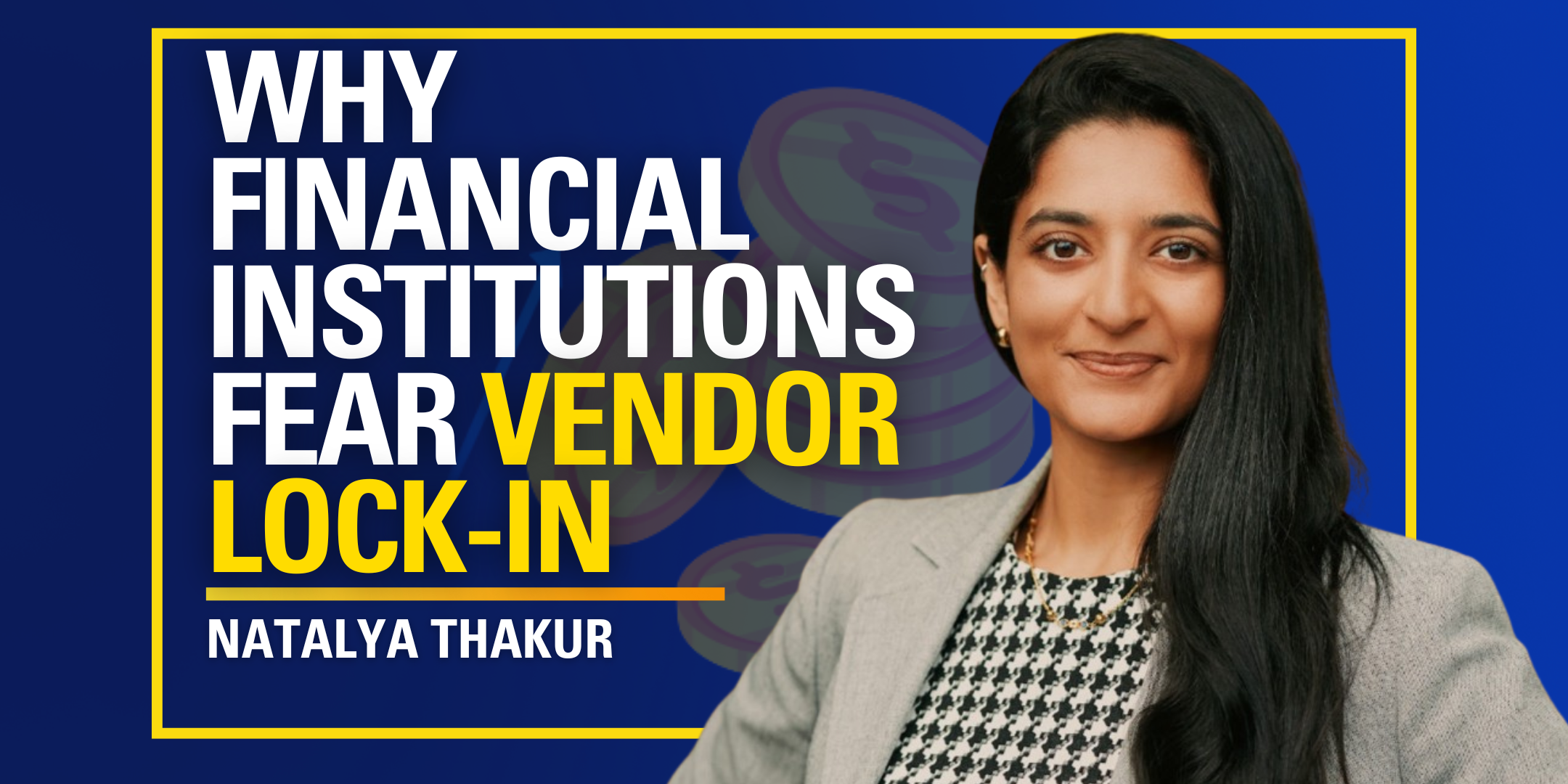
Why Financial Institutions Fear Vendor Lock-In - Natalya Thakur | ATC #601
Join Stephen Sargeant as he interviews Natalya Thakur, CEO and founder of Knova, a B2B platform that unifies traditional and tokenized assets to enable real-time institutional transaction workflows. She previously held roles at BlackRock, Google[X], Celo, IDEO CoLab, Morgan Stanley, and the Hoover Institution.
She also co-founded Stanford’s Future of Digital Currency Initiative with the United Nations and serves in leadership at the Bretton Woods Committee. Her work has been featured in Forbes, The Wall Street Journal, Fast Company, and American Banker.
Host: Stephen Sargeant
Guests: Natalya Thakur
We are also available via:
Buzzsprout • YouTube • Quora • Medium • X • Facebook • LinkedIn • Soundcloud • Apple Podcast • Spotify • Player FM
Episode Transcript
Stephen: This is your host, Stephen Sargeant the Around The Coin podcast. Today we have Natalya Thakur talking all about digital assets and how traditional financial institutions are transitioning into the digital assets space. They've created this patented technology around having digital twins that allows you to play both with the traditional financial products as well as digital asset products, all on one dashboard.
She talks about this concept of digital twins and even this vendor trap that many traditional institutions are finding themselves in and how they can scale without ripping out their existing systems, but using Knova to build on top of their existing systems.
Knova is revolutionary. They have huge integrations with partners like Canton. She talks a lot about privacy. We talk about digital assets and how traditional financial institutions can find their way in 2026 and beyond, and how they can think a little bit more long term versus some of the short term benefits some of the traditional institutions are getting themselves in.
This is a really fun podcast with someone that's deep in San Francisco talking about her experience all the way from BlackRock to building her own company in Knova Stay tuned and reach out to us if you enjoy this pod.
Stephen: We're going deep into the infra layer, the infrastructure, talking to Natalya Thakur from Knova. You're the CEO and founder. Why don't you give a brief introduction of who you are? Then I wanna talk about the ear, your early background, BlackRock, Google X, cello, all the good company names.
Tell me a little bit about yourself.
Natalya: Yeah. So I've been working in the space for about 13 years between traditional finance. And the digital asset ecosystem from the financial services perspective, from the tech perspective. And so, again, like I've always said, like I am not a founder to be a founder. I'm a founder because I'm like deeply dedicated to this space.
And have seen it from a lot of different angles. And also not just like from a operator angle and, but also from a research angle. So like I've done, a ton of work in the research side, publication side, et cetera. And yeah, I'm just like really excited to be here to talk about what I, what I love.
Stephen: I love that. Do you remember what stage of like life or career you were at when you really started to hear a lot about blockchain and their cryptocurrency? Because you've been in. Any places a lot of huge companies that might have been thinking about digital assets way before the average, like BlackRock and Google X you know, blockchain or that type of technology might have crept into conversations.
Do you remember where you were in your stage of career when you started hearing more about this technology?
Natalya: Yeah, I mean, I'll never forget it. I was like early days at BlackRock. I was on the capital markets team and I went to lunch with a mentor of mine. She's in her early sixties at the time, very much was like one of the first, powerful female lawyers in San Francisco. And on total unsolicited advice, which like, I have this deep feeling that like, when you get unsolicited advice like that, like it is a sign.
she was like, have you heard of like blockchain technology? And I was like, no. And she was like, I think it's gonna be huge. And I feel like you should definitely, push your career to do something in that. And we know, went back to my team at the cut markets desk and I was like talking to my boss and a few of my superiors at the time.
And I think like within basically a few weeks of that conversation, blackRock actually started talking, you heard BlackRock talking about digital assets 'cause clients were starting to ask about it. I sat on the ETF and Index investments desk and we were starting to put together like the first original perspectives for the Bitcoin ETF to show that this was a, asset offering or our product offering we had for clients.
And so then I helped support. A lot of the work through like the digital assets, like steering committee that was put together for the firm. Again, very early days, but it was just sort of crazy that like I went to this lunch, she mentioned this thing that I never heard about before and then all of a sudden it was like everywhere.
And then outside my job because, I was really passionate about making sure that. Women were also investing in the space. It was like, again, very early days. This is like 2015 or feels like early days, right? And so I did a lot of kind of events and speaking engagements around San Francisco to raise awareness of digital assets and blockchain technology for female based communities.
To explain to them what it was, how to get involved with it, how to invest, how to think about it, et cetera. And then from there, again, like to your point, worked at a bunch of different companies, startups included, not just big companies. And then worked at to launch this digital currency initiative more on the research side, et cetera.
Stephen: You talked about early days of the Bitcoin ETF, that took a decade in the making to be realized. Was there any thought it would take so long at the time you were bringing it up, or is there any thought that like, this is never gonna happen, but it's fun to be a part of? Like the initial class of like just putting it out there and trying to get it past the SEC and other organization?
Natalya: Honestly, I always felt if you were like investing in close to the product or understood what was happening in the industry, I always felt like it was going to happen. And I think honestly the team, the cap markets team who led the, again, the original work on the Bitcoin ETF, before we had even a team dedicated to digital assets at BlackRock.
They knew it was gonna happen, but it wasn't about creating the product, the creation of the Bitcoin ETF as a product. And a structure is that's less hard. It's really about regulation. And do the senior leadership at BlackRock believe like it's something that they want to expose or be known for.
Right. And so I think a lot of it was people within the firm knew it was gonna be big. It really felt like we were taking very simple basic steps to educate our clients and have something ready to go. But I think a lot of it was like waiting for regulation, waiting for leadership to catch up, waiting for the market to catch up on the financial services side, right?
Like a lot of digital assets fodder at the time was around was very risky, right? It was like a lot of crypto native investing and crypto native companies, it wasn't you. It wasn't as blended at a as it is today where like financial services is really accelerating into the digital assets market and there's sort of like this non crypto native movement.
A lot of it was very crypto native. And so I think that was scary for financial institutions at the time.
Stephen: I am curious, we just had Alex from Nason on the podcast. He talked about the early days of DeFi, NFT, summer when they started to get traction on their platform. You also started in 2021. What was your core mission when you were like, you know, thinking of the company, putting out ideas, starting to build the company?
What was the core mission at that time for what is now known as Knova?
Natalya: Yeah, so I think there was always I talk about it as a set of values, not necessarily a mission. 'cause the mission, I feel like. Inherently describes like a certain type of company, and we all know anyone who's worked in a startup. Is that like the company, the product, the go to market, everything evolves, right?
Because even if you have this amazing idea, it's all about timing. If the market's not ready for it, it's like you're never going to be able to continue to work on that angle because the market's just not ready to adopt it, right? The demand's not there. So I would say like we had a set of values and like one was always the thesis that.
Traditional assets and traditional markets and the digital asset markets are gonna need to coexist for like many years to come. Right? So that's like cash, treasuries, like the whole traditional side of things. And then digital assets, meaning like crypto stables, tokenized funds, whatever. And so one kind of thing was how do we en essentially enable these financial institutions to.
Allow them to engage in this environment without having to rip and replace everything that the financial industry stands for today. Right. It's just not gonna happen. That's not how these firms move quickly. Right. And so that was like one thesis. I think the other kind of set of values that, we were really focused on.
Or to help alleviate some of the maybe negatives of what we saw as a part of the blockchain digital asset technology ecosystem from an implementation standpoint. So things like focusing on better scalability, right? Because scale was always something that got brushed under the rug, or higher privacy, preserving metrics within, using a certain type of ledger or using a certain type of new system.
Or interoperability, right? So like scalability, privacy, and interoperability. Were all a part of some of those initial values. Now, how all of these value sets have changed over time. Like those still exist as a part of our, core thesis. But, the product, the go-to market, some of the more tangible things end up changing because like you shift with the market to where you know they need to go.
Stephen: Was there any big bets you made at this time? Like, this has to happen in order for us to be really successful. Like inter, you had to bet on interoperability. Still gonna be one of the biggest problems to solve but also probably yield the highest reward. If overcome was there any big bets you're like, Hey, this, this regulatory, you know, or you believe that institutional adoption was gonna happen.
It was only a matter of time, but how do you create a nice framework for them to ease into your point, you know, ease into it easily.
Natalya: I think some of the basic be, I mean, I agree, yes, we have to take a bet that interoperability, like interoperability and scale and all these things would be an issues. But I think even more so than that, let's just put those aside for a second, because there's a lot of people who have different opinions on those things and people are working on it.
I think what we had to bet was that financial institution adoption was going to come, which felt like, by the way, not a crazy bet. It felt like a very reasonable bet, but that was just gonna take time. Anyone that has sold into large financial institutions or attempted to work with those types of, clients knows it's just, death by a thousand cuts sometimes.
So I think that was the first bet. I think the second bet was that. They have invested so much into their infrastructure, their current mainframes, their current operational workflows, that there's going to be severe amount of fragmentation between those systems and these new systems that they want to do business in.
Because one person could say, well, maybe they'll leapfrog it, right? Maybe these new systems will come into place and we'll just end up using those. And you're never gonna know there were digital assets. It's just gonna be like. Assets, right? Like we're just gonna all kind of move to that.
But the other bet we took was that, no, that's not really how the world works. There are a ton of mainframe systems that have been put in place, a ton of operational workflows that have been put in place that will require some stitching together, fragmented systems to adopt the digital asset, new workflows and operations into their company.
And then to be able to scale that. And so that's like the other bet we took as we were evolving the product and the company's offering.
Stephen: I almost feel like your background working at these large, traditional institutions gave you an advantage, right? Because I think a lot of builders come up there. Wanna disrupt the, you know, the existing systems that a lot of these traditional financial institutions have, rip them out and bring in their own, which I'm assuming causes a lot of, you know, tension and IT implementation.
Maybe can explain how Knova is different because you're building on top of the existing system, which A seems really hard to do 'cause a lot of these companies are using archaic systems. Tell me how you're able to build on top of the existing system and does that give you an advantage over some other companies that might want to rip out that system and bring in their.
Natalya: Yeah, so at a high level where B2B infrastructure software, our goal is really to unify traditional and tokenized assets into a single operating layer instead of like multiple backend systems with multiple backend workflows. That, again, is just very hard to scale over time and to continue to add to. And so we do this by ensuring that first of all, like we're not a SaaS.
We are an on-prem or cloud agnostic solution. So in production where we're actually running in the client's environment, which mean that they're owning all of their security provisions, privacy, they get to own and operate the tool within their environment. And what's nice about that is that you can think of us as an off the shelf technology toolkit that you can easily implement into.
Your existing systems. So if your existing systems and mainframes are here, right, at the bottom, you have all of these, different providers and people that you wanna work with in the digital asset ecosystem, your custody solutions, your wallet solutions, the new hot L one, L two, whatever it might be, we're a sort of this software layer that sits on top of your existing systems and helps translate all of those other providers, those digital asset providers, into a common.
Language so that like you can manage it with your existing workflows essentially from, again, a single operating layer. So what's nice is that if you're a business that's looking to implement a digital asset strategy, right? And you have again, your strategy picked, you have all your providers and partners that you wanna work with, picked will help you basically get up and running within, a couple months in production to operationalize.
That digital asset strategy with your existing systems, or if you're a company that's been in the space for a while, like a circle or even like a Canton or Ripple, whoever might be, you might have a bunch of new digital asset products and service offerings that you're trying to get people to use, but when Circle or other types of companies create a new offering, you're not worried about.
The inner gut plumbing of your client who's buying the offering, right? You're just like, here's the offering, buy it. You, your goal is to increase a and revenue for your business. And what we're finding is that the usability of all these new products and services becomes tough, especially for more traditional institutions because their workflows aren't ready to ingest these types of products immediately.
So instead of getting up and running within a few days, or within, a few weeks. People are stuck having to figure out how do I ingest this product and match the workflows with my inner systems. And so like we might help those companies who are creating new products or services to actually make the usability of their products and services easier with their end clients.
And so when I think about like immediate ROI for if, whichever side of the story you're on, either of the two examples I mentioned. If I come to you and say, we can get this done in a matter of weeks instead of years from a timeline perspective, with minimal resourcing on your side, you're not gonna have to spend a ton of budget hiring all these people and then investing in a system that honestly is not gonna work very well, and we're able to do it without you having any vendor lock in, like we make it so that it's very easy for you to work with.
This set of vendors today and in five months, 'cause the digital assets world is moving so quickly. If you wanna switch vendors, we'll help you do that super easily. Like that to me is a no brainer, right? In the news, all of these people saying, we're spending 20 billion, 80 million, all of these massive budgets on like digital assets, technology or new technologies for these financial institutions.
And I mean, what do they really have to show for it? If you really look under the hood? I think most people who would tell you, and those who really understand the market is that that money's not actually being distributed and actualized in what they thought it was going to be.
there's just like a lot of like learnings from that.
The one other thing I'll say and just in terms of like how it works,
So when we think about, okay, like how does this work? It sounds like really nice to say we'll help you, like it sounds magical, right? We'll help you go zero to one, very low cost, very quick. There's obviously technology behind it, right? Like we have patents behind that technology.
There is a lot of time and work that's gone into building something that is like production ready for any type of institutional client, not just like specifically banks or asset managers or exchanges. So I think of it in like sort of three steps. So if you have a multi-asset business, again, that's anyone who's working across traditional assets or digital assets.
Our goal is like, first we create these digital twins, which is cryptographic digital representation of any asset. Because usually if you're working with a Bitcoin or a stable Coin or cash, it's like all those assets flow from different types of systems and have different ways of being marked.
You're marked from a data perspective. So this digital twin, again, standardizes the language,across any asset. So every asset is now represented in a standard data format, which allows you to have this unified view and allows you to have, be able to scale your cross asset operations.
So that's like that first step is creating the digital twin. The second step is now operationalizing the digital twins, right? So being able to use our, transaction templates to automate or create easy workflows. That send again, commands to these digital twins that are then executed on all of the external settlement rails that you know your company might be using.
So something that might take, a multi hop transaction or an operation thatahead of product or ahead of operations, maybe 10 steps across, maybe four different systems is now a single API call from our system and you can track. How everything is executed. You can put in compliance checks or business logic checks in that operation so that you can see that things have been like cleared.
And so that's a huge advantage. Now instead of waiting all this time and managing from, for one workflow, five different backend systems, you just call a single API and everything's in a common, in a common dashboard, you can see it, you can control it, you can change that automation.
So that really is allow what allows us to help people scale those operations. 'cause everyone knows how to do a single API call, right? And if you're doing it from our dashboard, it's just a click of a button. And so from our perspective, like that is a super powerful, proactive mechanism for people versus having a lot of like digital asset operations today be more reactive, if that makes sense.
Stephen: Yeah, and it makes sense from a perspective of like, yeah, if you've ever worked at a traditional institution, like to call one money order to get one money order, yeah. You might have to go through five, six different systems. To get that information, which is time consuming and you know, adds the headcount and, you know, allow, you know that headcount now doesn't allow you to invest in things like the technology to make it better.
You worked at BlackRock, you probably have classmates that potentially went on to finance jobs. In 2026, especially with the US regulations favorable to digital assets solutions like yours that make, you know, getting into digital assets less cumbersome. You don't have to rip out the internal guts and internal systems.
Why do you think that more companies aren't diving into digital assets to go along with their Fiat financial product?
Natalya: We're still in the pretty early days. A really good analogy is when the internet had started and like we were in the early days of let's say e-commerce, that's like a pretty easy example to claw into. Early days before Amazon, if you were like thinking through e-commerce options, you might wanna purchase something online.
You'd have to go to five different websites. You'd buy five different things you'd put in your credit card information into a janky portal. Then you'd maybe wait like however long, maybe weeks, months, to receive that item. Right. And technically, e-commerce was supposed to be like a more tech forward, easy way to get access to whatever you needed to buy. In that example, it's actually easier for me to just get in my car, go to one store, get everything I need day of, and then come back, right? Like it's not as sexy to use the internet or the online portals. And I think we forget that digital assets is still pretty early in its days of usability. So what I, where I think we're at is like think of us as we're in a situation where there's a lot of different types of services and offerings and assets within digital assets ecosystem, right?
You have a ton of different wallets. You have a ton of different custody providers. You have a ton of different rails. You have a ton of different L ones, L twos, and so imagine those as all the different websites in the early days of the internet. But the usability of all of those is still quite difficult.
And so until you didn't get like the Amazon of the world where Amazon was not just selling you books, but you could go to Amazon for everything and it was easy, and then you had next day shipping and you had like secure portals to put in your credit card information. What we're trying to do is to be like.
Amazon piece for digital assets usability. If Amazon became the usability unlock for e-commerce, Knova wants to be the usability unlock for digital assets. And I think a lot of people would agree because when you look at these large institutions who have invested into products, like they're just doing one big product, right?
BlackRock has Biddle and they're gonna launch Biddle on a bunch of different chains. And their goal is like to scoop in, a as fast as possible, right? Like we're still playing at the edges of digital assets where how can we get the biggest re like flow of revenue into a specific product?
Everyone's still playing the product game. Which L one, which wallet? Which asset? Which new product or service or like fund should we invest in? What we need to now start thinking about is as regulation opens up to your point, or as more and more. Financial companies and your competitors are gaining market share in this new asset class.
We have to think about what does usability look like and scalability look like for these firms? And I think that is a huge unlock that is still needs to happen. It is happening. I think the other reason why people aren't necessarily jumping in is there's a lot of like fomo, plane in digital assets, like a lot of people's digital assets strategies are just copying what the next person did, which I think is a horrible way to do things because the technology's moving so fast.
If you're making a decision based on someone else, you're already behind.
I think the last thing that comes up for us with our clients a lot is this concept of vendor lock-in. People are so scared If I pick this vendor, is it the right one? Is it the winning horse? And. Everyone in the digital asset space has been playing that game for the last 10 years.
What's the winning horse? Right? Like the game, the biggest kind of example of this was like Hyperledger Bezu when 10 years ago, every bank was like, what's gonna be the private enterprise blockchain? And they, everyone picked bezu and everyone built on Bezo. And people are still building on Bezu.
And by the way, Bezu is not your best option today. And the reason people are worried about vendor lock-in is because once you pick a winning horse. You put all your infrastructure in workflows and you spend all your time building to support that vendor. And God forbid, in five months or two years, or three years, or even less time than that, that you're the vendor actually needs to be switched.
So people have this paralysis. And so that's another thing that we help solve for is that we're saying, wait with Knova, if you pick an L one and then in six months. That's not the L one you wanna work with anymore. You don't have to sit and rebuild all your workflows to support new vendors. All the workflows are already built.
It's making it easy for them to swap so they can jump into it and just be like, yeah, like we're working with a new wallet provider. Actually we're working with a new custodian because regulation now makes it so we can work with this custodian. So that's the type of I would say those are a few of the examples of the hesitancy we're seeing.
Or like still, like the immaturity we're seeing and where I think like we're helping address these concerns to get people to that next level. Is that helpful?
Stephen: It very, and I think you mentioned a very good point. If you're the executive that suggested that vendor and now you realize it's not the right vendor, are you really gonna switch it out and risk, you know, your job, you're just gonna leave it in? And in the recent
Natalya: you're stuck to that. That's your job on the line. Like you don't wanna look stupid, right. But. So I think we're very much aligned on that comment.
Stephen: In the recent blog, you talked heavily on digital assets, strategy issues with many TRA advisor. You're talking about it right now a little bit. What are some of the, you know, some of these strategies that have a difficult time scaling for some of these traditional financial institutions?
Natalya: I think the strategies are really. It's not about the strategy. 'cause the strategy could be quite simple or quite complex, right? Really simple one is like stable Coin payment enablement, right? Everyone's I wanna be in stable coins. I wanna be able to offer it to my clients.
Whether or not their clients actually need it as a separate story, but right? That might be a simple strategy, right? It's whatever their firm is picked. Other firms are looking at, Hey, we want to offer, Bitcoin e, like trading strategies, or we want to issue tokenized deposits against our balance sheet and have it be available for X, Y, Z reason, right?
So there are different strategies, whether they're consumer facing, I wanna offer my consumers X or even wholesale facing, which is more of using the technology to decrease operational costs, increase potential revenue upside, right? So when I say strategy, I mean. What type of way do they wanna interact with digital assets, with digital asset classes?
And which digital asset providers do they wanna work with? And what is it that they wanna start with, right? Because they'll always start with some, something that's very narrow and, you get budget, sign off the, leader, business leaders are like, this sounds great, and then that's passed off to some poor, like head of product, head of operations.
And they're like, great, make this happen. They're like, okay. And usually they're, making it happen for a pilot, which again, doesn't necessarily mean it transfers to production or they're making it happen for production, and they're trying to make it happen again without necessarily having the technical expertise and not having clear requirements of.
What needs to happen because if they build a point solution for that specific strategy, that point solution of like backend workflows or backend operational flows is not necessarily gonna work when the head of BD comes back five months later or six months later and says, okay, now we wanna do this and now we wanna do this.
How silly to keep your internal teams rebuilding different tech workflows and tech stacks and infrastructures to support. Random different things that you wanna do in digital assets, you should be able to operate it from a single operating layer so that any digital asset strategy that you choose today or in two years can be effectuated from that tech stack versus again, having to rebuild new things to support new projects like that.
That's how things are happening today, by the way. And to me that doesn't make any sense. Like, why would you do that? It's like really silly for you to anticipate business growth in that way. But I think the reason it happens is because, to your point, people's jobs are on the line, right? They just need to get the checkbox, they need to show that something has been hacked together and that's how people operate, right?
If I'm at a big company, I'm not thinking about, well, where's the company gonna be in five years? I mean, I might quit in before that, right? Like I'm just trying to get my project delivered. And I think that is the very short term thinking that's happening. At the operations level or engineering or product level, that is probably difficult to think about.
That's why you have people who are thinking about it. They're trying to build stuff in-house to think about that long-term strategy. But again, most banks are coming up with timelines that are like very long, very large budgets, and it's like it doesn't actually need to be that way because. Again, using technology like ours or like thinking through problems in a different way, you can actually build something for that longer term vision that's flexible for whatever you need for across these different strategies.
Stephen: Speaking of long-term vision, do you think this issue with. Interoperability is still gonna be the biggest bottleneck we see in the next two to three years.
Natalya: I think interoperability means a lot of different things to a lot of different people. But I do think it's a massive issue. I feel, and this is my personal perspective, that when people in the industry say interoperability, they're talking about ledger interoperability, right? They're like, does this L one talk to this L one?
Does this L two talk to this system? And that's why you have a lot of people doing chain aggregation, like what with a chain link or something like that, right? Everyone has like their version of the product of like. How to make any chain talk to one another so you don't need to worry about what chain you're on.
And I fundamentally think that basing the interoperability discussion at the ledger level is the wrong way to be thinking about it. We really need to be thinking about how do we talk about interoperability at the asset level because assets are attached to different ledgers. We can agree on that, right?
Certain digital assets run on certain ledgers. Certain financial, traditional assets run on, other certain settlement systems. And even within one type of asset, they could be on multiple different ledgers. Like people forget that USDC on Bitcoin is different than USDC running on E, even though it's USDC, right?
So if we really wanna think about it from an asset level, which is what we do, is it now helps take away this concept of we need to pick the winning horse, or we need to think about stitching ledgers together. Let's talk about how do we make it so that assets can be represented in a standard data format?
Because we can agree that the more that the industry evolves, the more and more assets there are. We have more assets today to invest in, in the digital asset space than we did five years ago or 10 years ago. So if our, again, our bet that we're making is that the asset per proliferation is.
Definitely gonna happen. There's always gonna be more and more assets to work with. How do we get assets to be interoperable within companies so that like they don't need to worry about what they're investing in.
Stephen: And I see your organization is integrated with blockchains like Canton. Do you think, you know, this privacy preserving architecture like this is all the hype right now is around privacy. Obviously this makes, you know, is very suitable for regulated markets. You can't have these large, traditional financial institutions moving around certain amounts of stable coins without crypto Twitter going crazy about where the market is going.
How do you balance like this privacy preserving aspect of it, but also the transparency of, you know, where blockchain is supposed to be.
Natalya: So Canton is great because they have pitched themselves as like the privacy preserving chair chain for financial institutions.
Stephen: Yeah.
Natalya: And with the launch of like tempo for example, they're positioning themselves as like a. The most scalable, cheapest, fastest blockchain for, transactions and now to support AgTech payments as well.
Every L one or L two has their pitch of like, why they're better than the original L one or L two that came before them. Right? When we think about, our particular thing is not just about giving access to Canton, like that's not actually where we play. We play in that if. Someone like hand-on exists, like their goal is to get as many transactions on their network as possible and getting to people using it.
So going back to what I was saying before when I was talking about what Knova was, I said one of the kind of ways that we might engage with someone is they have a new network, product service, they wanna grow engagement with it. But like usability is not always as simple as it seems, right? And Canton is great, has a lot of investment from a lot of top institutions.
And because they're privacy preserving and how they've been built, there's a lot of like different usability features that look very different from the traditional digital assets market. Right? And so what we are really coming in to do is trying to think about how can we make it so that any financial institution that wants to enable Canton within their existing infrastructure do whatever, tokenization strategy or repo strategy or DVP strategy that they want to do on Canton, that they can do that with ease.
That's really our goal is like how do you effectuate usability of multiple different types of products, network services, et cetera, for them on the client side, right? Like 'cause Canton or Tempo, all these other kind of providers are not necessarily gonna go in to figure out like. Hey, were you able to get this figured out and turn in no one wants to be their client's dev shop, right?
That's just not how these blockchains are positioned. The blockchain is positioned to be like, here's how sexy and awesome we are. Use us, here's what you can access on our network. And people are saying, great, I'm subscribed to that. Here's all the media releases that show that I'm subscribed to that.
But then. Let's look at the fun flows. Let's look at like, how are you actually using that system? How painful is it for you to use that system or not? Painful of it is to use that system. Does that answer your question? I think there was like another part of that question that I might have missed.
Stephen: No, it actually is perfect. 'cause I think, you know, with so much focus on privacy, obviously traditional institutions have to be very careful about just jumping in any blockchain. But to your point, it's always hard to get, you know, in this vendor trap where you choose one and then that's not the vendor, that's not the blockchain you want to continue on with.
What are your thoughts now about the future of finance as it relates to digital assets? And where does Knova play in like seeing the success or the vision over the next three to four years, which is hard to do in crypto, but as you said, we want to think more long-term than short-term.
Natalya: So I think the first thing is, I think eventually, like today we talk about traditional and digital assets usually operationally and from a treasury perspective, like both those things are like separate ecosystems within a company. I think we're gonna move to a world where we're not gonna be talking about these two ecosystems anymore.
It's just gonna be assets, right? So I think that's gonna happen. the other thing that's gonna happen is we've seen like an unbundling of products and services and a bunch of fragmentation, and I think like this next thing is gonna be about re-bundling, right? We're already seeing that in the FinTech space, but especially in the digital asset space.
Going back to my Amazon analogy, right now, we just have a bunch of everything, a bunch of wallets, a bunch of assets, a bunch of providers in the space. And again, like to use all those providers and have that flexibility is great, but it's really hard to scale operations when you have so many things that you want to engage with, right?
So like I think that Rebundling is about people figuring out how do I still get access to the full ecosystem without limiting myself, but be able to do it from fewer systems and make it actually easy for me to increase my usability or scale my usability, right? So I think. That's a second theme. And then I think the third theme is to what you mentioned around ai, if AI and agentic payments of sorts are having AI agents like run transactions or do transactions, like all of that is very much going to be a thing that happens.
I think that the difference is that today when we think about ai, we think about it from a content generating content perspective. Which is more reactive. So you might have a, you might have a shop that works across these different assets and they might say generate me a report or show me like, in the last X amount of days what strategies I deployed.
It's a lot of content generation based on the content being fed from the financial institution and their strategies into the ai. Right? I think the next kind of wave of AI. Use for these financial institutions that work across asset classes is helping them be proactive. Something that can flag for them.
Hey, looking at your stable Coin reserves, looking at all of your different, types of transactions or your pricing methodology, here's what we think you should do that you're not already looking at. Here is what we here's a potential missed opportunity or here's a potential risk you're now engaging with more and more maybe risk risky assets.
You, you started with the safe ones. You started with stable coins five years ago, but now you're working with a bunch of different. Types of new digital assets that might be riskier. Here are things or red flags that we think that you should be aware of as you're deploying high revenue yield strategies with these assets.
Right? Because again, at the end of the day, everyone wants to optimize for revenue. So I think that shifting from reactive content generation to proactive advice and guidance will be huge. And then we think, and think about this difference between. Yes, the AI agent at some point might be executing, but I just think in finance, like we're still very far from finance being like, yep, let AI do everything.
No checks, no balances. That's just not gonna happen. As someone who sits with these clients every day, that's just not where their head is at, right? Like their always is gonna be, have to be balances, checks, and controls, and I think for a pretty long time to come because you can't afford to have a massive mistake or have something go wrong when it comes to people's money, if that makes sense.
Stephen: That definitely does, and I think, you know, you have such a great traditional background that I think people trust that you've taken that into account and building out a. Something that sits on top of the existing ecosystem versus trying to rip it out makes a lot of sense. Where's the best place people can find out?
You learn more about Knova, what you're building, what features you have coming out, what new partnerships you've created. Where's the best place to get ahold of everything? Knova and Natalya.
Natalya: Well, I think one is our website, Knova Finance, and, follow me on socials andwe're really excited about bringing more people into our journey and helping people that might need us know that we exist so that, we can potentially service or help them in this like digital asset journey that they're also working on.
Stephen: Which is a tough one, but it's great that they have one of their own that can like walk them through and take them on this journey. Natalya, thank you so much for today's episode, and you're gonna be on, you know, you're gonna be featured on many more podcasts this year, so people should definitely connect with you and put those notifications on
Natalya: Thank you so much for having me. I really appreciate it. It was a great discussion today.
.png)