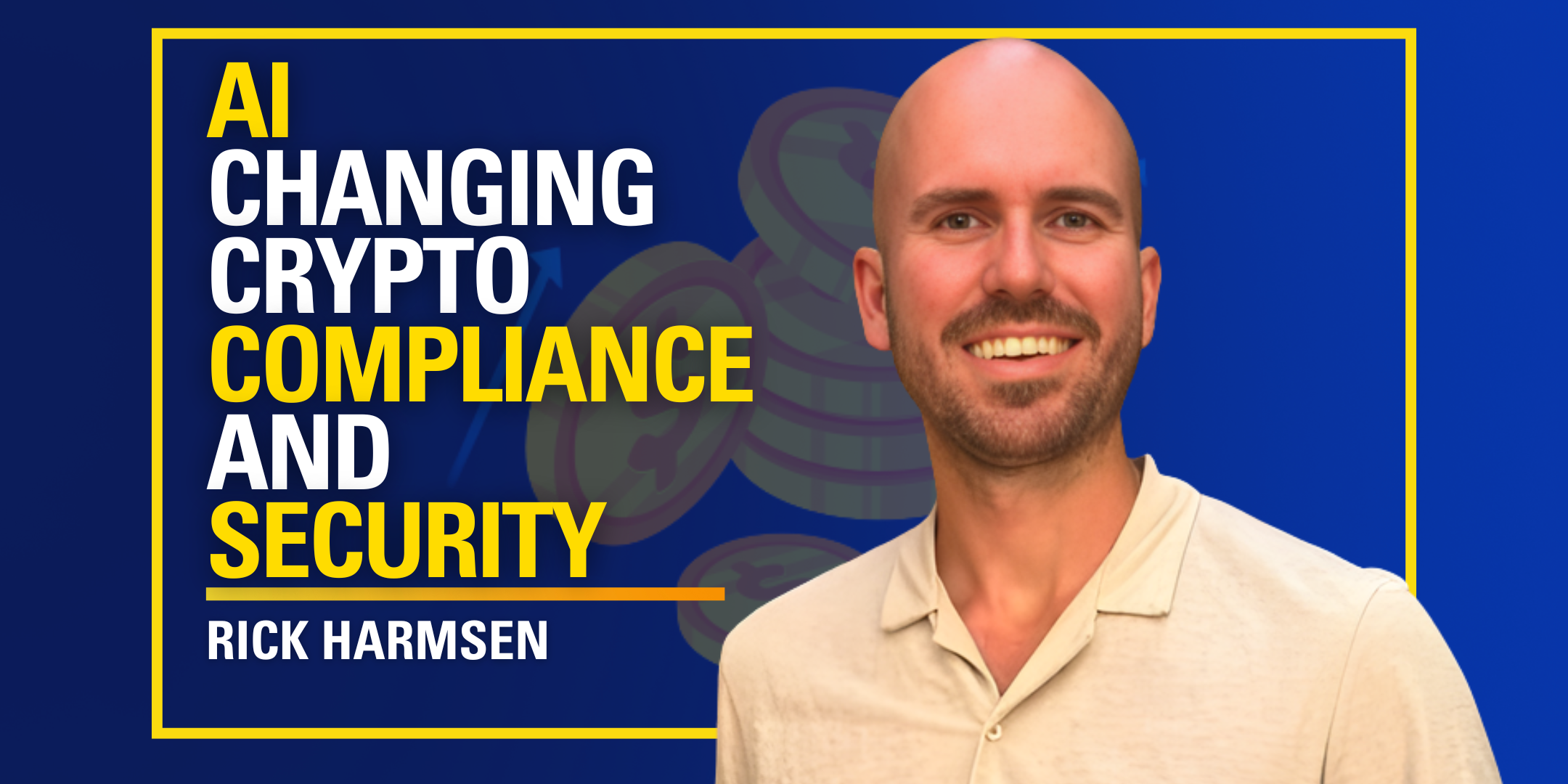
AI Changing Crypto Compliance and Security - Rick Harmsen | ATC #606
In this episode of the Around The Coin Podcast, host Stephen Sargeant is joined by Rick Harmsen, CTO of DataExpert. Rick has been in crypto for over a decade with one mission: make the technical side of blockchain clear and usable for everyone. As CTO at DataExpert, he combines experience from DAOs, law enforcement, and the private sector to build investigators and compliance teams across the world. He partners with organizations like Chainalysis and TRM Labs, and thousands of professionals have followed his sessions, from regulators to front-line investigators. When he’s not tracing crypto crime, he’s building community through guides, content, and his signature phrase: Stay Sharp Legends
Host: Stephen Sargeant
Guests: Rick Harmsen
We are also available via:
Buzzsprout • YouTube • Quora • Medium • X • Facebook • LinkedIn • Soundcloud • Apple Podcast • Spotify • Player FM
Episode Transcript
Stephen: This is your host, Stephen Sargeant Around The Coin Podcast. First where we analyze and summarize two conferences, me and my guests, the CTO of data expert, Rick Harmsen who is in New York at the Chainalysis Links conference, and I just came back from CS France at the ECC conference. We talk all about the nuances of the conferences, some of the topics like AI regulation and compliance, the future of events and conferences and these side events. I had an amazing time at ECC. There's some really interesting developments, I think, in the DeFi world, especially as this has to do with compliance readiness.
And Rick talks a lot about chainalysis. They just released their AI investigation product and he's raving about what could be and what some of the cautions are around using AI and crypto investigations.
And we talk about DataExpert. Their event coming up in Stockholm next week. The digital experience bringing together four to 500 law enforcement, private sector, crypto investigation firms, OSINT firms. Our client Codex will be there, TRM Labs, maybe it's gonna be a party, maybe even Chainalysis is gonna be there.
It's gonna be a party. Check out this podcast. Reach out to Rick. He is phenomenal on LinkedIn. Probably even better than me. So check them out. Check out this podcast and let us know if you are at either of those conferences. Let us know your review of those conferences. We'll talk to you soon.
This is your host, Steven Sargent, the Around The Coin podcast, and this isn't Around The Coin first. I am fresh off the ECC conference and I went to one of my friend's, colleagues, peers, Rick Harmson, and asked him about the chain analysis links conference that was happening at the same time. And I think we found a common thread, whether it's hardcore developer community conferences or blockchain analytics specific conferences that compliance regulation and tokenization and ai.
Is a common thread and throughput all the way from Manhattan, New York to Cannes, France. So I figured why not get Rick on here to tell me about his experience, his background, and what he noticed at the Chainy Links conference. I'll talk about some of the experience I had at the ECC and we can give a holistic view for listeners of this show.
Whether you're payments, crypto compliance, blockchain, investigations, tech, or just straight crypto native companies that listen to this podcast, I think you'll get a lot of value. Rick, why don't you introduce yourself to the podcast, give a little bit of a background, uh, of especially from your police days and where you are today.
Rick: Yeah. Lovely. Thank you for having me. Uh, fresh out of New York. Little bit of a jet lag. A little bit. Little bit. It's, it's, it's almost gone. Um, but yeah. Rick Harma, um, CTO Crypto Technology Officer at, uh, a data expert. Um, we are a company who, uh, who focuses on, uh, a lot of law enforcement compliance. And if you look at the sector that I'm in, uh, as the script division worldwide, we are providing training, uh, licenses for stuff like analysis and TRM, which also means that we train on both fronts, um, together with them making sure that we, uh, scale up everybody in law enforcement, in the compliance sector.
Um, a lot, a lot of fun to do. Um, a lot of initiative that I get to follow on regards to new products. Within the crypto space, we do a lot more, we do everything from analytics, with forensics and so on, but I'm like truly focused on, uh, on crypto in, in that front. And I'm a big fan of just spreading, uh, community awareness also.
Whether it's like on LinkedIn or doing conferences or speaking engagements, just making sure that we are able to scale up everybody constantly because like women also are like still, I would say like way ahead. So now and then on us. And um, and I think one of the things we're going to talk about is AI of course.
And I think there are some great developments going on that makes it way easier for like the community, whether you're law enforcement compliance, or you're skilling up this moment. You just dive into the crypto space more and more and more and just scale up to that extent that we are like catching up on them more and more.
Stephen: If you had to describe data expert, what would be the weight of like training your investigations department and your, like revenue driver, like selling licenses and tools, like, it seems like you have a wealth of training offerings for specific tools like Cellebrite or, you know, uh, Tigo. Talk to me about what would be the pie chart, what would that look like, where, you know, most of your business is done.
Rick: Yeah, I would say, um, so if, if, if you focus on on, on, on crypto and which is. I would say something we built throughout the whole company. Um, we, we've got different pillars of what we're doing. So yes, we got the licenses and whether it's on the forensic analytics or crypto side. So yes, we like multi go or analysis or TRM or an I two, uh, we provide those licenses.
Um, it's something that, that data express has been doing for over 35 years already. Like we're, we're like. One of the sole providers of a lot of those licenses for a lot of agencies and compliance sectors and so on. Um, but, but we take it further than just licenses because we can do the license training and that's good or not.
It teach you about the product. But we take it a step further where we also provide training on all the subjects that matter within the parts where you would use that product in general. So if you look at crypto investigations, we've got experts out of the field, whether it's on law enforcement or the defense sector or the compliance sector, and they will be able to.
Teach what you need to know between your daily day-to-day job, basically and beyond. Of course, I know we got the, we got the basic training, we've got media trainings. We got like high level skills training, how to go through smart contracts and everything else that, let's say agent AI workflows, you know how to set up your MCP and everything that, that it contains.
Um, and then we got next to the fact that we're doing the alliance and we're doing the trainings. We're still running our own investigations also. So that's on Osint, that's on crypto. All kinds of different fronts. Um, making sure that we stay up to date for ourselves. Um, but, but for me, the most important part of is being able to. To pick up cases that, for example, law enforcement can't pick up. And I, we, we got some few great companies within, I would say, the world, you know, that you can trust on that front. And I'm happy just to be a part of one of those where, uh, where we go up with lawyers, where we go up with law enforcement when needed and are able to, uh, to provide some assistance to, uh, to people who, uh, who got scammed after whatsoever.
Stephen: And that's very unique. There's not a lot of companies that offer training that's tool agnostic, and that also does investigations. You very rarely find that in one place, but you are also with law enforcement in the Netherlands for about 10 years. You just kind of quickly talked to me about like. Where is the Netherlands competency when it comes to like crypto investigations?
Based on your trainings with them, your interactions with them, where would you put them, you know, in the rest of the world? Because I think there's a lack of expertise across many different, uh, jurisdictions, but it seems like the Netherlands has always been fairly strong.
Rick: I, I, I do think they're fairly strong, um, on, on, on different fronts within, within crypto, but also on those things and also on the forensic side of things. And, um, like based on my, I I work. Like just over 12 years within, within law enforcement. Uh, the last three years led cyber crime team in, uh, in, in Amsterdam, in one of the parts of Amsterdam.
Um, and, and, and that was back in the day when, when things were still building up. If we look at crypto especially, right. Um, yeah, a special interest in it, but it was still building up, still running those cases, trying. As, as many are still doing nowadays in, in some agencies trying to promote that. It's like something you need to focus your attention on, where you need to scale up on.
Um, and, and I'm just happy to, to have made a transition into data spare and being able to be a part of like the journey of, of. Pivoting into way more knowledge and being able to, to use multiple toolings. It's, it's, it's, I think it's one of the great factors of the company, um, being able to be too agnostic.
So whether it's, uh, analysis, whether it's a TRM or using something like addressable or, or text bit, for example. Like just picking the pieces that you need within each investigation, knowing what your skillset needs, being trained on that, whether it's a analysis, training, tier M or dual agnostic training, and.
And just gradually building up the skill level. And especially in the Netherlands, there's just a lot of teams who, who dedicated a lot of effort, um, some as like their own sole intention of, of becoming a crypto investigator, but also teams in general who are like, you know, we gotta bump it up. We just gotta train, I don't know, 12 people from a team, for example.
And just make sure that a skill set is on point. And, um, and, and being able to follow everything from, uh, from the basic skill level into live. At farms and, and, and way more beyond like things, things I'm seeing and not always can talk about, but it's, uh, yeah, they, they like kicked it up a notch here and there.
Yeah, certainly.
Stephen: I love that. Let's get into the conversations around the conferences. We're gonna go back and forth talking about key takeaways, and feel free to interrupt. I'm gonna start off with ECCI was absolutely shocked as a crypto compliance blockchain investigation specialist. I thought it was gonna be heavy dev track and it was.
But there was this common theme around on chain finance and tokenization, real world assets and the importance of having compliance and regulation. It almost felt like the entire conference was trying to be, you know, although there were builders, they were trying to convey this message to attract institutional capital to attract some of the trillions of dollars locked up on behalf of VCs and customers.
And have that deployed in some of those DeFi protocols. I was actually very shocked by that, but it actually makes sense, and it's kind of enlightening that compliance is obviously a competitive factor and many of the, you know, DeFi type protocols are really looking at compliance. What are your thoughts on that?
Are you noticing that trend as well as we start talking more about tokenization and stable coins?
Rick: I think, um, you know, compliance has always been that, that that factor, which was really unclear. You know, which way was it pivoting to? And like, what will be the guardrails eventually? And, and, and people knew how to, how to navigate it to a certain extent, but it was like a little bit of free for all, right?
Like no one was like having a correct oversight over it and so on. And I think with everything that is being set in place right now, and now that there are. Like guard rails in place and people know like what the areas to navigating. I think that's what gives that booster that, that you experienced. Like, it's almost a shit.
Like I would've loved to be there and see like those developments like from like the old days of ETH to like how, how it's going right now and, and, and what people are promoting over there right now. Um, of course I was at least like, you, you, you can't do both, right? Um, but, but I do think that that's the big difference.
Like there are guardrails. People know what you navigate in and, and if you are compliant and, and, and you step into that space from now on, or you like rebrand yourself, you know, I, I, I think then this is the perfect moment to do so. And because, you know, it, it's, it's like people are trying to figure it out.
You are really most likely being able to, to, to navigate into, into the sector as it is right now. Um, but if you've been around for a long while, you're also well adapted enough to, to like, to carry over that transition.
Stephen: I love it. What's a big takeaway that you saw from Chainalysis Links conference?
Rick: Yeah. Links was great. I, I love links. It's, it's, it's just such a big. It's not just a sessions, right? It's a networking that also comes with it and like all the chats around it. And, um, and I'm quite sure it must also been popping up on, uh, on, on EZH, but it's just ai, AI is everywhere. You know, it's, it's ai.
The other side, I would say is like that, that that black box kind of, um, conception of where data comes from and how reliable is it and so on. There was also a big focus on that, like, and that matters together, right? 'cause if you got ai, ai, your, your data needs to be like 100% spot on. Um, you need to know where the Ai, AI reacts to.
You need to know, um, where pulls its data from and like how it's navigating within the different clusters if they're trying to build it out, for example. So, so I use some heavy focus on, uh, on, on that front. And also really interesting to see, to be honest.
Stephen: You know, I feel like there's this like cost per investigation that nobody talks about. And like these companies are constantly trying to find out automation, use AI to get the cost of an investigation down low. And I know that's probably a conversation for CFOs of some of the biggest, you know, compliance departments.
Uh, but it's this kind of conversation around like, how can we drive down the cost of doing these investigations? And more importantly, how can we leverage someone like yourself who's obviously extremely skilled, so you're not spending half the time on an investigation taking screenshots or graph fo.
Like how can we automate that tedious work and focus more time into what we actually need to do, which is the complex matters, the critical thinking of an investigation that's needed.
Rick: Yeah. And, and I, I, I don't know how you feel this, and I would also your thoughts on that, but, um, you know, there's also a danger in, in the ai ai side of things. Um, I, I, I don't like it when it's being told like that you need a lesser skill to do your investigation. I think it's, it's, it's, it's not the correct way to go about it.
It's like you still need the same skillset because you need to know how to. Address the graph and make sure that there are, you know, that there are no mistakes being made. You know, AI is fine, but like everybody's using JGPT clot or whatsoever, like we all know the fuck ups that, that they are doing right.
It, it, sometimes it's just bananas what is going on. So it can work correctly, but sometimes it's just a shit show. So, and the same thing will probably happen within investigations. You, you can't expect magic from it. Like, it's still, it, it's still something that goes through a certain kind of workflow and does some critical thinking to a certain extent.
And, and I love to see that, whether it's uh, uh, a analysis or, or a TRM, uh, within those workflows you see that like they are explaining the steps that are happening, right? Um, the, the, the only question is, will the investigator on the other side read it? No. Will they get through it? Would they accept it as a yes or a no?
And, and like do critical thinking with the AI together and like cut it off when it's incorrect. Or being able to notify themselves like when it's, when it's incorrect that they see like that little mishap happening once it's building out a graph rather quickly. Um, because it will. Right. That's, that's, that's the beauty of it.
It's a quicker workflow. It's, it's a, it's, it's something that will definitely. So cost driven? Yes, it'll drive the cost down. Um, like I think the most important part is for a law enforcement officer, they will be able to pick up more cases. You know, that's the beauty of it. Like finally people that are able to be helped. Instead of like putting that doche, I wouldn't say through the sharer, but like we all know it's going on a pile and they can only do so much. So I think that's a big change of it. But, but it comes with, it also comes with the cost. You know, it's, um, it's gonna be really interesting to see how, how that pins out eventually.
Um, in bear markets it's hard to, uh, if you would call this bear market at least right then, it's, it's hard to. To see those changes yet because people are getting scammed a little bit lesser now and then with the investing and so on. So I think it will present itself in the next coming two to three years or something.
Stephen: I think AI is kind of the way I view like recruiters or, you know, it's, it's a supplement, right? I, I, I consider it like steroids, like. If you work out and you use steroids, you're gonna be big, you're gonna be muscular. But if you don't work out at all and all you're doing is steroids, it's not gonna have the same effect, uh, that you think it is.
Right? You're gonna get fat, uh, you're gonna be bloated. It's not gonna have the same effect, and I'm worried. I think what you're worried about is like. Maybe like a small team is like, Hey, we don't need compliance officers or investigators. Let's just use our customer support team, and they can just click on this AI investigator for us and be able to do the investigation.
But AI is not gonna be able to help the people that have never done the investigation. It's gonna help the people that know how to do the investigation. And help them speed up their job or help them accelerate their progress or make more connections because now they have more time to do a more complex investigation.
But if you've never done an investigation and you're just popping open this tool for the first time, I think it's gonna be tricky. I do like what you mentioned. If you're a law enforcement, you're like, Hey, somebody's coming to me saying they have a crypto scam. I know nothing about crypto. Let me at least use this tool to make some connection points and get a better understanding, and then escalate that to maybe a crypto investigator versus sending every case to the one person within your department that knows about crypto investigations.
Rick: Yeah, I think it will definitely help on, on those fronts. Also, as you were saying it, it. You know, if you can build out a phrase and, and, and, and there's, there's some data on it, like how many times it's correct when you just bump it in and it's like, give, give me like the end point, right? Let me know if there is an end point at this moment.
Is it worthwhile putting it true to a different officer that can, that can basically proceed with the case then? Um, then that would definitely help. Um. Uh, what is really interesting, at least I think, and like, and you already address compliance to a certain extent. There's so much focus on compliance nowadays.
Um, and like making sure that the investigation, workflow and exposure and everything on it, like works for compliance sometimes. I'm also wondering like, are we. Focusing too much on that and like too little on the investigative side of it. Are we like getting that out of the loop a little bit? Like Oh yeah.
You know, they, they'll figure themselves out, you know, they got the tooling, it's okay. They can go through it. Um, because you see a lot of the innovations also on the ai, ai side of things within different kind of toolings and like heavily focused. On, uh, on the compliance side and, and it, it could use some work definitely if you look at like the, the no transaction kind of workflows that the people are using.
Um, but, but that's an interesting field also, like how that's gonna pan out. What, what's gonna have the biggest focus? Will they like split it evenly or is it like more in compliance nowadays since that's like the hot topic, right? It's a hot topic to address at this moment.
Stephen: I feel compliance keeps the regulators away. So that's why most of these institutions focus on compliance. 'cause that's the one thing that you have to kind of check the box. Investigation is on a spectrum, right? Based on skill level and based on the skill level of the like, it's a lot easier for a regulator to say, Hey, do you have a risk assessment?
Versus like, Hey, trace through this mixer, which they don't even know how to trace through. Like it's a lot easier for them to use the check box method. One thing I was really interested in is that at ECC, this is evolving trend of like protocols that aren't regulated. They're fully DeFi, they're not regulated.
They have no compliance requirements, actually front running the regulations. By building other compliance program, we saw Zama, which is like an encrypted FHE, mostly like encrypted confidentiality layer for transactions and encryption. Actually hired a chief compliance officer to kind of like be the first to build up compliance in a space that's decentralized.
One inch has gone through a complete rebranding, you know, you know, and they were like DeFi swaps and they're more getting involved with like institutional capital and adoption and optimism, which is like a blockchain that people can create their own. Blockchains was even saying, Hey, if you're a compliance vendor, we kind of want to talk to you.
I've never seen too many people like raising their hand and saying, Hey, I know we don't have to, but just because we saw what happened with crypto, we know regulations coming down the line. We wanna front run this. What are your thoughts on that? Have you ever seen this before where this seems to be a heavy focus on being compliant first versus last?
Rick: I think, uh, like one of my, one of my conventions on, on, on those has been a few years already. Um, they were focusing on being compact to a certain extent. Um, you know, there, there was, there, there never really was a need to, right? It was, it, it, it, it was just out, out of, out of the loop. So, um, so I think it also logical, like this space didn't.
Rose to what it was right now, just of like trying to be compliant all the time. There's just no way around it right now. And I think one of the best things, um, like I would do it if I wa if, if, if I was running a protocol whatsoever. You know, it's, it's like one of the best thing that you can do is hire those officers, let them think about what is going on, um, come up with ideas.
Also present them to regulation, to the regulators and, and, and, and do your meetings about it. Do those round tables tell them like, you know, I think we should be doing it like, like it's a smart move. Um, it's also something where I will think as a rec, if I was a regulator at least, you know, and, uh, I then I would say, okay, so like we can talk about it.
You know, you can give your opinions here and there, but like, it's not that we're gonna implement it all. I, everybody's ouching for their own. You know, let's be honest about it. If you're running a protocol whatsoever, you're ouching for what works for you. You know, if you are an exchange, you are ouching for what works for you.
And I think it's, you need just need. People from different kind of areas within the crypto field, just coming up with their experiences, coming up with what's lacking and what's working great. Combine it all together and then, and then, then see what works. You know, and, and at this moment, I, I do feel like regulation here and there is pushed through a little bit quick, um, where you can see some, some, some, some entities struggling with it.
So now and then like, okay, so now we've gotta pick it up and like how we're going to enforce this correctly. Um. But, um, but yeah, you know, still, still lots of ground to gain, I would say. Um, it's really interesting because for compliance officers and all, like, it gives a totally different field to work in totally different perspectives.
Um, and let's be honest, they are bringing an experience, whether they're. Were crypto before or not. You know, if you've been a compliance officer, you should operate like this is your moment to step into crypto. Come up with great ideas like how you can bring both worlds together because. In the end, there's no, there's no way around it.
Like it's not gonna change regulation and everything. Like it's there. It needs to be compliant for everything there is. Um, so I also think like a lot of great opportunities for, for, for some people at least in the space to, uh, to step in and, um, and experience a whole different world, um, and still, uh, be in the compliance sector.
Stephen: Yeah. Especially because they get to leverage their traditional experience, right? It's like, I think that was the worry for a lot of traditional compliance officers is going into crypto and having no experience. Where now they can leverage that experience to create some of the new rules and at least influence some of the new rules happening in crypto.
Any other takeaways you saw from the chain? SSIS links? Any other key key things that you've picked up on with the conversations you had there? I.
Rick: Yeah. I, I love the chats with, uh, with company like Codex. Like, like what they're trying and, well trying, they're already doing it, you know, but how they just keep on growing and, and keep, keep promoting themselves. Um. To be honest, best chats I've had, like outside of all the, outside of all the, the, the, the talks basically that were going on, they did what was really good.
They did some live tracing this year also, where they like put two, two, uh, two people to, to each other and like try to figure out a case and eventually also a coworker a little bit together with them. And, um, but you know, it, it, it is just so interesting to to see how. Many people are, and I might be biased a little bit on it because also something, I'm doing a lot with community, of course, but like trying to navigate into crypto and just putting all the time and effort like into joining these conferences and, and trying to translate what they have as a skillset into what, uh, what works within, within the crypto space.
And, and that's just inspiring. Like, there were always the people who were like hardcore crypto, you know, that that was just a status quo. You know, we, we love, ah, I've been in since 2000 14, 13, 12, I don't know, you know, whatever it is. So long this and this working das and so on. And, and now and now you see like all, you see this more a widespread awareness and that's also means that like a lot of more people are stepping in, um, which brings just.
Whole new conversations instead of just being able to, uh, to talk, to, talk about, I don't know, the tracing side of things. It, it, it just spreads so much wider right now. And, um, and it, it is an interesting shift. I think something that space really needs because, uh, that that's how you grow within the space.
That's how, how different experiences just sharpen each other in the end. And, uh, yeah, I think, I think outside of AI and, and, and, and the data side of things and being able to test those certain kind of things out. I think that's, that's one of the biggest takeaways I got from this time.
Stephen: And I agree. You know, I know you saw the Alexandra's there. There's really people that are just absorbing information, sharing what they learn, and we've always kind of had that in crypto. But I feel like they're more vocal, they're more in there, they're, they're sacrificing. Like these conferences aren't cheap, and if you can't get a free ticket or a complimentary ticket, like it's setting you back and they're, you know, they're not waiting for other people to be, or a company or, I'll wait till I join a crypto company in order for them to sponsor me to go to these conferences.
They're really getting in there. And Codex obviously a client of ours, but they just released two new features and kind of like the features I was always wishing them to to release. Because if you are receiving a law enforcement request, even if you're not using Codex, you should at least know whether or not that law enforcement agent is properly vetted.
I think you know that from your investigation days. How long that process takes from somebody in another country speaking a different language, trying to get, you know, vet you that you're, you are Rick Harmson, you are who you say you are. It's just a lot of wasted time that we should have been able to automate already.
And Codex has done a great job of that, and now they're giving access to anyone that wants to get information or intel on whether or not this law enforcement agent is legitimate. Whether or not, you know, their email domain has been compromised. I think that's a basic level of what all institutions at least can start with and hopefully eventually maneuvering away from like email based law enforcement requests and data responses.
'cause we can see how problemsome that's gonna to be in the long term.
Rick: Yeah. And, and you know, in, in the end, if you, if you want to get your bad actors, you know, you need quick responses, you know that that's all that matters. And I think that's where the AI and, and Codex and, and, and other companies like addressable and so on, who are like doing different kind of, um, I would say like add-ons on the tracing that is possible.
You know, how, how to identify addresses and so on. I, I, I think that all just ties together nicely. Now, you know, where it was like, it was always visualization. You know, you got, you got a tracing tool. Oh, good job. You know, we can trace and so on. But those days are over, you know, you, you need different, certain kind of elements within your whole toolkit, basically.
Whether it's the forensic imaging of something, whether it's, uh, having actual information upon an address, whether it's reaching out to exchanges, you know. That's what matters nowadays. Being able to leverage more intel, being able to act quicker on the intel, and being able to, to stop the scam eventually before they're able to cash out.
Stephen: I am curious, was there any companies, any name tags that you saw that you were like, Hmm, interesting that they would be at this conference? Was there any outliers you're like, oh, that's kind of unique. I wouldn't expect to see them at a conference like this.
Rick: For, for me to be honest. No, no. Uh, I don't know what you experienced on, on, on your conference, but, um, but no, and you know, it, it, it made sense. Um. It's, uh, you know, you have, you have people from PayPal and so, you know, you, you, you, you got, you got you, you got on and off ramps, you, of course you got, you, you got the, uh, you got a CX compliance, for example, you know, was over there.
Um, it, it, it all makes sense. A lot of law enforcement, a lot of departments, just everybody that just wants to learn and, um. And nothing surprised me anymore to balance in crypto because like I've seen so many eager people nowadays trying to navigate into this field from all kinds of different angles.
Like some people from a completely two different angles than compliance or investigations. Just like, you know what, I'm gonna make a switch done. You know, I'm, I'm going for it. I'm, I'm going after it. And I think that that's the beauty of crypto because. Yeah, it's been around for a long time. Um, but we're definitely not there yet.
And, and if you look at the whole ecosystem, um, and some people might agree on this or not, but like we are behind done in that, you know, we are not there yet. We need to do way more than what we're doing at this moment. If it's, whether it's tracing, whether it's compliance, you know, we're making good progress.
Making good progress doesn't mean that we are like on the point and that we're completely, um, on top of everything. And, um, and I think all those different perspectives of people rolling in different kind of companies, leveraging their, whether it's an company making a little maneuver into crypto or, um, whether it's, uh, a, a new tracing, tooling popping up and being able to, to gather different kind of data sets on a whole different level.
You know, we need them all. You know, the, the, the days a row for that. We can be happy with one tooling or whatsoever. Just leverage it all. Take all the APIs that you can, make your data sets, get all the info out there and, and just be able to, to combat crime way, way more effective than, um, than, than, than what we're able to, uh, to do now as a status quo.
Stephen: You know, I, I think you're right. There's nothing that really doesn't surprise me. I think I was a little shocked at ECC to see so many banking institutions. I guess that's now obviously most banking institutions are in digital assets. But the willingness to have conversations, recorded interviews, talking about, I'm hearing, you know, conversations about like banking professionals asking about a topic swaps.
It's like, oh, they're not just in it to play safe with like crypto ETFs. They're in it for like the DeFi of it, which I found interesting. Another thing that I saw at the conference was. You know, it's funny, one of our clients score chain, their VC company, one of the VCs that backed them were there. And it's great to see those VCs still on the ground talking to founders, organizations reaching out, because we've seen a lot of those VCs kind of move towards the AI generation and hardware and chips, um, and data centers.
So it's good to see some people are, like, some of these VC companies are still, you know, foundationally believe in the mission of moving the crypto industry. I think this one thing I see industry-wide is like these cybersecurity companies, although very Web3 in nature, starting to like travel a little bit towards the crypto compliance side, like they're getting into compliance.
They don't view it as like a a siloed cybersecurity compliance fraud. They're covering the whole spectrum. So they'll be doing like blockchain analytics, but also like auditing smart contracts, which is what I find very interesting by some of these Web3 cybersecurity companies.
Rick: Yeah. And. The end, nothing stands on its own. Right. You know, it's, it, I, I, I think that's it. Like one of the, the things we're doing at our conference right now is, is, is one of my all base within a company, Henry. And like, we're like, no, let's, let's just combine ocean and crypto again. We did it a few times on different kind of trainings.
Um, and, and everything goes hand in hand because, like, crypto is, isn't just, whether it's just tracing or just protecting smart contracts or just crypto. It goes way broader. It, it has to do with, with people setting up fake websites, so ins inside of things while also being able to, to, to, to be scouted out to scout basically what, uh, what kind of fake websites are out there.
It's a reporting side of things, just like we had with, had websites in general where you got chain of use for now, for example, or, or whatever kind of, um, kind of deconfliction tool to, um, to make it, uh, to make it happen to, uh, to get out there. What's, what's incorrect, what's scamming, uh, what, trying to set up some wallet, uh, wallet hacks or whatsoever.
So, you know, the, the, the combination of. Everything makes it so interesting. Um, I also think that a lot of more people are getting aware of that also within law enforcement and so on. That is, it's, it's part of your investigation, you know, it's, it's, it's not a silo. It's not just this, that, and, and, and not just only in the crypto space, but like it's just a cyber crime element in general, and that's what you're fighting against.
Stephen: And I feel like in law enforcement you would do a better job of like just considering it's cyber crime and throwing all the expertise at it. But in the private sector, I feel like we've done more of a silo job. Would you agree?
Rick: Yeah. I, I, I, I think, but in, in the end, it's just, let's say like, if you're looking at money laundering, it's just money laundering, you know, it just have a diff they, they're just dressed different. That, that, that, that, that's the whole, that's the whole part of it. And, um. It's, it's probably the exact same kind of activity, exact psych, same kind of thinking as you would encounter normally with basically, and, and I notice it all the time within when we, when we train compliance specialists, they're damn good in following the money because they understand the pattern.
You don't have to explain them what the pattern is. You know, whether, whether it's like different in law enforcement for example, where, where, where it's a lot of like, you know, this, these are the heuristics, this is this, this or that. Because they're not used to the compliance side of things. Compliance specialists, they know damn well what's going on.
Oh, okay. So that is the Oh yeah, of course. That, you know, how we do wifi or whatsoever they, they try, they different at different aspects of what they already know. Just dump it into crypto and they're golden. You know, they're really good at it normally. So, um, just, just feeling it in silos and. It's, it's just something that developed over time and that's it.
You know, it's, it's, it's not magic in general, you know, it's still a little bit of code. That's it. And it's leveraged in a certain kind of way. Like, and I think if, if you view it all like that, then it's not that, that scary if you're trying to dabble in or trying to, to combat it or trying to put a regulation on it, you know, it's, it's, it's still a little bit of technique.
It's just something that people like to use in a certain kind of ways, and there are limits to it. That's it.
Stephen: I've noticed that, you know, I think in the con, especially in the conversation at ECC, where. They're not really trying to do much crypto investigations. They're really trying to protect themselves from the things that are gonna shut their business down, which is like exposure to sanction the entities on chain, uh, things like illicit actors, those type of deals.
I feel like we've gone away from like blockchain analytics when it comes to a lot of these DeFi projects, and it's more of like risk exposure. What are your thoughts on that?
Rick: Um, it ma it makes sense. Um, but I still think it's, it's, it's tied to that same kind of skillset in general, like the crypto investigation side of things. Because like one, one of the issues that you see a lot within, within Toolings is that like when, when it hits something like DeFi and it does like a swap or a bridge or whatsoever, you know, that, then the exposure on the other side will be the bridge or it will be DeFi and um. Kind, you know, kind of depends on the tooling, like how they, uh, how, how, how they basically visualize it. And like on the other end, this could still be, I don't know, a tornado cache of sort of some kind of like hack that had happened or whatsoever. And, and if you just solely rely on, on, on the given. Options that you have and, and, and trust everything as how it is visualized. And so like, there extends to what a tooling does. It's not like, here you go, you got, you got the magic thing. You know, it's still, it, it, it, it provides you information, but you need to leverage it with the knowledge that you have.
And a lot of that knowledge, especially in compliance and high risk and so on, and being able to detect certain things like bus through wallets and so on, you know, it's, it's still. Ties really closely with, with investigations in general. And, and, and, and if you, if you ask me like the, the best compliance teams are like a mix between investigators, compliance, combining knowledge, seeing what different kind of culprits are where you could make mistakes, and how do you combat that.
By what you could write on your own, what you could build on your own. You know, you, you, you got the AI clot and so on. You know, you can, you can do everything that you want to nowadays, you know, if you just need a little bit, little add-ons here and there, like leverage the data that everybody provides.
Use something to visualize the things where you build on your own or use one of the greater toolings that are out there, um, who most likely will have those kind of DPOs for you. And then identify what is really important for, for your own compliance department. Um, what it might miss. You know, nothing will be like standard out of the box.
Perfect. Like, impossible, like whether you work with. tooling that you are buying or you're building on your own. You need to adapt to what is happening in the space constantly and what you are experiencing and making sure that that's how you stay compliant. That's the only way you can lock someone in the eyes and say, you know, we really did our best.
We really tried to figure out how to leverage all the data, all the intel, all the options that we have into something that works. And yeah, things will go wrong. Of course, things will go wrong. It. It is impossible to counter it all, but you can at least try your best to counter it instead of just taking things for granted.
So now and then.
Stephen: You know, one thing I saw that was interesting, and I think this is for any main scale conference, like your money 2020s, your consensuses is the rise of like the side events. And I know it's like part of popular culture, obviously now. The actual main events are actually promoting the side events and having directories for them.
But I also heard a lot of conversations like, oh, there's not as many people here. Like there's always this like nagging conversation that there wasn't as many people in the main conference yet. When I'm walking back to my hotel like Wallet Con or the big whale events, there's like lineups out the door.
What are your thoughts about like, how long can we maintain this? Side events, culture, is it gonna like, what's gonna cannibalize what, because like if these side events are taken away from the main conference. To the point where it makes more sense to, you know, have your own event than sponsor the conference.
Eventually the conference itself is not as valuable, which makes the reason why people are coming to that specific city during that time almost, you know, non-existent, which makes the side events eventually non existence. What are your thoughts about this, kind of like peril of side events?
Rick: It is really interesting because, um. I, I, I, I was at links with, with, with two colleagues who went for the first time and, um, and, and, and they used to like, oh, so there are no like, real side effects over here. Um, so, so there was a parent for, for, for links, um, which in links I would say like, is, is. For me, it makes sense because, you know, there never really was like a drink or whatsoever, of course, but like, not, not like really split off a lot of split of things that you can go to.
Um, and then it provides a lot of networking on the ground. You know, people are going to be there like, or they sneaking out to the hotel for a moment to lay down an hour. But like, oh, you know, normally people will be there all, all around most of the time. So, um, and, and, and, and then of course, um. You got the side effects over there.
And, uh, I, I love the side effects because you can learn a lot from them.
Stephen: Yeah.
Rick: know, there are, there are workshops, there are different kind of, and, and, and as, as the lines, as far as I've seen, at least on, on social media, like they were huge and there, so they, they know they are attracting to, to people and.
And, and, and Yeah. And, and, and, and, and that's an issue of what are you going to do then? Like limit the side offense to a certain extent, but like the culture's already there, wouldn't they pop up anyways? You know, there are a lot of conferences where side offense pop up anyways from competitors and so on, and they're just like, oh, you know, you can also come over here once the event is done, or you're done with the, with the main stage stuff.
So, um, you know, it, it, it's, it's a culture thingy. Um, I, I think it's really interesting because. Apart from everything that gets like a spot on the main stage, people can still choose to go to something else. We doing like two, three hour, like X three event and, and being able to learn a lot from it. And I think it's valuable in, in general what people can learn from it.
Um, you know, why, why not keep it as it is? You know, who cares? You know, it's fun. Right?
It's,
Stephen: Right.
Rick: to do it. If you don't wanna go to,
yeah, go to something that doesn't have a side.
Stephen: I like 150 people in the room. That's my bread and butter. Like being around an event that has 6,000 people in it is not my, I tend to go to the, the stages that have less people too. That's just even in the main event. So, uh, I'm curious, was there any topics that you saw there, like prediction markets or any topics that people were talking about outside of AI that, you know, caught your attention in conversation?
That people were trying to see where the investigative standpoint was or the compliance angle was?
Rick: Uh, as far, so I, I had a different, so I, I, I, I attended some of the talks and, and, and some jets here and there also with, uh, with Jane, obviously, uh, because it's one of our, uh, one of our partners. And, um, you know, you, you're not in New York all the time, so, so you also jet along, uh, over there. Um, what, what, what I did is like people loved, uh, the, the investigative side of angles, like being able to, to tool around a little bit.
And I think that's just really apparent for, um, for, for the space that we're in. You know, people love to get hands on and dirty. A little bit like testing out the. Even though it's like a lot of it was AI also, of course, but um, just being able to tool around to see if it actually works, you know, as, as, as, as it is being sold on the main stage.
For example, um, being able to, to see some hands-on live tracing and, and just feeling the flow because not everybody is used to analysis. You know, some people are doing some basic stuff in it. Some people are just there to get like a hands-on experience, a little bit extra, so. And you see that that works really well.
Um, I think that always works really well. I don't know how it was in, in, in, in, uh, in France, but, um, I. You know, hands-on sessions, being able, whether it's been being done for you by the one presenting it and just going through it live, or whether you can double around in it, your yourself, I think those always work and just spark interest.
Like, I think we have heard Matthew, uh, Hogan also, also just, uh, just raving about how much he loves it. Like he wa he was in every session somewhere all along. Like he was never, he was always like running through it and like, yeah, but this one is so good. Also, this one is so good also. And, um, I think that, that, that's a really interesting part.
The, the people who are, uh. Investigating a lot. They're really interested in the data and like, okay, oh, so I'll go do that one. You know, I'll, I'll see like how they're rest referencing to the data. The ones who wrote the paper about, uh, about, uh, um, the mixers and like the identification of the clusters and so on.
Also presenting over there. So it was massively interesting. Um. Some people are just like, no hands on. Done. That's for me. Uh, let's go. I don't wanna sit it and listen. I wanna, I wanna see stuff. I wanna, I wanna actually see how it works and, and maybe get some thoughts from the panels, for example. You know, those are like heavily visited, always, like completely busy and completely full because people are sharing experiences over there.
And then you got PayPal Codex and so on. Like, like talking about like what they think works and like the, the, the way the space is navigating. So, um, yeah.
Stephen: There's those interactions, you can't beat those interactions when you can actually ask a question, someone can show you the answer. There was quite a few actually, Zama, one of the huge companies there in ECC was doing workshops. It was at a villa about 10 minutes. I was interviewing their CEO and they were doing like live workshops where some people from elliptic were there and they're sharing.
You know, their compliance angle. I was like, oh, that's the juice. That's the stuff that maybe not everyone goes to, but to your point, the Matthew Hogans at like thirst for that. They get their cup filled too on stuff like that. Tell me a little bit about, you know, we've talked about both these conferences, but you know, data expert is hosting a huge, you know, law enforcement heavy.
Digital experience and next week you're back on the road. Uh, this time the Stockholm not, not bad. Uh, choice in jurisdiction selection, I, I'm sure Sweden, this time of year is just absolutely amazing. Talk to me about the digital experience. What is it? Who's attending? Why is it important for the community?
Give us a little digital experience, Nordic breakdown for us.
Rick: Yeah, let's do that. Well, the first thing I hope is that it's not gonna be cold like that, that that's, that's the first part of it. Last time I was there was like February I, it was freezing, like the wind was so cold, but I, I assume it's also like a little bit of spring over there right now. So it should be good.
Um. Yeah, it's, it's like we do two conferences each year. And, and one of them is in, in the, in the Netherlands where the main company is, uh, is, uh, is set. And, um, and one of them we are, uh, we are doing in Nordics, um, up about like four to 500 people normally attend, uh, the conference in the Nordics. It's in, uh, it's in, in the Sison waterfront, uh, where we're hosting it in, uh, in the, in the, in the, in the, in the conference area over there.
And we just bring everybody together, like as I told you and as you know, um, and, and maybe some people already do, but like, uh, we are, we, we are like supplier of many toolings in general. You know, we do all the training, we, we do all the investigations, but like we, we, we wouldn't be able to do it without our partners in general.
Whether it's like Tigo I two analysis whatsoever. You know, if you, if you go to the website, you will see like the list of things that we, uh, that we have and, and we're very proud to, to work with. Um, so we're giving them a stage, whether it's like a booth that they wanna run and like being in contact with the clients, um, or hosting sessions.
So, um, it, it, it's like a mix of, of, of what you use for the conferences. Boots being set up, being able to talk with the products, being able to test things out. But they will also like provide sessions, whether they're hands-on sessions, um, talking about the compliance side of things. Um, of course some regulation will always be there.
Um, we got speakers from different kind of companies. Uh, you got speakers from us. We are hosting pre-sessions, um, on osint and crypto combined. For example, um, if you're on law enforcement. You got the, you got the options now and then to, uh, to jump into a session of wonderful products, releasing things early the day before, being able to get some more hands-on experiences of things that are about to be released so we know like what is coming up to it and like just a great day of. Of networking, being able to attend sessions on knowledge, um, being able to connect with, with, with basically the people who met, right, the people behind the products. And like, they bring in a model, like they bring in the engineers they're bringing, of course, uh, the representatives, like, so you can talk to if you, if you're really interested in the tooling.
Um, yeah, that's, uh, it's, it's a great way to, to connect law enforcement to compliance community. Um, who are, who are the biggest, um, attendees of, um, of, uh, of those, of those conferences both in, in the Nordics as, uh, as in the Netherlands. And, uh, yeah. Uh, you know, guys, there's, uh, there's still some room open.
Um, if not, you can be put on the wait list. If, if I'm just talking nonsense right now, there's already full. Uh, then you can be put on the wait list.
Stephen: yelling as they're listening to this, like keep
Rick: I already
hear it in the back. I hear it in the back of my mind. It is like, no, it's full. No, I have no idea. But I think there's probably some room left.
Um, and if not, you can put on the wait list. Like people always drop out now and then, and, and, and you'll be notified. And that's maybe issue if you, uh, if you are located, uh, quite near. Uh, same goes for a session. We got 30 people in, 30 people with do s and max. Um, and, um. And just looking forward, like going through Osint and crypto and, um, codex will be there, for example, providing, uh, providing a session amongst everything, how their processes work.
Team REM will provide a session if we just keep to the crypto stuff for a moment. And, um, yeah, everything, uh, everything combined on, uh, on one event even, uh, in one day. And, uh, and if you can't attend this one, then just come to the Netherlands, I would say.
Stephen: I love it. I love it. Talk to me. 'cause you talked about some of those partners. You get to see a lot of tools. You get to touch and play with a lot of the tools. Anything catching your attention? Now it doesn't have to be a data expert customer or partner. Is there anything you're like, oh, this is interesting or, I've never seen this before, but I can see, you know, maybe long term, mind you, you've dealt with a lot of companies that have like strong foundation, been in the business for eight years.
They're not just flipping open cloud, a Claude bot and you know, spinning up a blockchain analytics tool. But is there anything that you're like really interested about that you know, has just come to the table recently?
Rick: I would say, uh, so, so, so I'm always massively interested in what, what, what Henry Burrows of Hop trails doing. Um, for, for, for people who don't know, like I, I will look it up. Um, it, it just, it just gave me another thing to test and, um, I can't spell because about everything amongst that, but. Like always interested in like, how's Mike, what, what he is building?
And I think that's, that, that's definitely one to watch. Um, one of, one of one of the others, um, is addressable is like doing crypto, crypto address identification on a whole different level. Like if you're interested into it, I would say like, hop to that page, you wanna see your demo, you just hit me up or hit tomorrow.
And, and like they will be able to provide it or I will be able to provide it. Um, and, and I think. Those, whether it's like the compliance side of things, being able to visualize things in a certain way, really clearly with report building and so on. Um, or different ways of identifying things amongst addresses instead of just the, the inside of things or like what kind of identification there is on a cluster.
I, I like that grasped me like immediately, like if you do something like that and it, and, and it's in and, and it's really interesting and spot on. Um, then, then I think that's exactly what the space needs nowadays. Like they're all, all the tracing toolings already fighting against each other. You know, we've got the big ones, we've got the bunks climbing up the ranks.
People would choose whatever they want to. Um, I would say like you need at least, at least a few, like build, build your way amongst the APIs and so on, and be able to leverage all the data, um, to, to get as much out of it as you want. Um, but, but people know most likely like where to find them, you know, people have that preferences and so on.
And I think like those, those, those little stacks on top, those layers that are just enriching the data in general, that's just massively interesting. And, and you see a lot of those popping up. Um, some better than the other. And, uh, yeah, ju just wondering what else is popping up in, in in the meantime. I'm testing a lot, um, so I, I just can't name them all.
You'll see them popping by on, on, on LinkedIn. So now, and then when, uh, whenever I'm testing them, um, a little bit more also. So now, and then hopefully with some, uh, with some extra demos here and there, just showing the, the community what is possible
whenever, uh,
whenever I
Stephen: announced, Henry just announced for anyone that's, you know, wants to learn more about some of the, you know, crypto human trafficking to do what the World Cup. So it'd be really interesting to see him talk with people like Aaron West and AJ from Codex and Tamia from um, uh, Tamias Cause, and this really put together insights, uh, whether that's a webinar or something that can be recorded and just gather some of this intel, especially get to law enforcement.
And more importantly, the financial institutions are actually gonna be seeing the transactions.
Rick: Yeah, yeah. You know, those are just the ones to, uh, there's so many to watch and, and I think you name them a lot on LinkedIn, and I name them a lot. Um, and, and just teching them here and there to, to spread awareness about it. And, and I think the most important piece is like, we're not teching them just like solely for teching them.
Like those are the guys, like building things that matter and like driving the space forward and making sure that like you get those enrichment layers, which we desperately need. And because there's so much more than tracing. By using the tooling, getting heuristic out of it, being able to subpoena some kind of exchange.
You know, it, it, it's good, like that's way you freeze the funds and so on. But like, once the funds are frozen, and let's say even if you freeze it all, you still want to identify what else is happening in between. You want to try to identify the wallets. You, you, you, uh, you, you want to be able to, to quicker assess.
You know, what the exec exposure of certain es were to see like how many might have gone from money laundering or, or, or whatever you are investigating at that moment, you know? And, and, and, and that's exactly what we need more and more and more in this space. And, uh, and, and luckily guys are focusing on it and, and releasing that.
Uh, so now then, so yeah.
Stephen: I love that. And even Corsa, you say like guys and girls, Corsa has like exactly what you're saying. If you have multiple tools, feed it into a dashboard and get some kind of holistic review of risk. Rick, it is always a pleasure to speak to you about this stuff you have such you're the only person that I know that gets ex as excited to go try demos and talk to different people in the industry.
'cause we just truly love what people are building. And I feel like we attract the people that are also trying to contribute to the industry, not people just trying to shield their product or solution. Uh, so I feel like we get really good intel and insights from the builders in this space. And I think this is a really fun episode comparing some of the conferences.
Seeing what's out there and giving people, especially in the crypto compliance and now even the developer community, kind of some insights on what to expect. Especially we have digital experience coming up. Paris blockchain week is coming up next week, consensus in a, in a few weeks and so on as we go throughout this year.
Rick: So many events, so many events to attend. Like certainly we can't attend them all, but um, we can try as much as we can, right? uh, and, and
see
what, uh,
Stephen: I, I'm trying to, I'm trying to ba I love attending. Uh, maybe next one. There's one in Monaco coming up. I'm like, uh, maybe I could get my whole family out there. I'll, I'll, I'll think about it. Rick. I know that LinkedIn is probably the best place to find you and we will put included in the show.
But thanks for joining the Around The Coin podcast and um, hopefully we get to do more of these kind of, you know, maybe some LinkedIn lives this year. Can just get out information in real time because I think that's really been helpful for the community.
Rick: Lovely. Let's do it. Thanks for having me.
Stephen: Awesome.