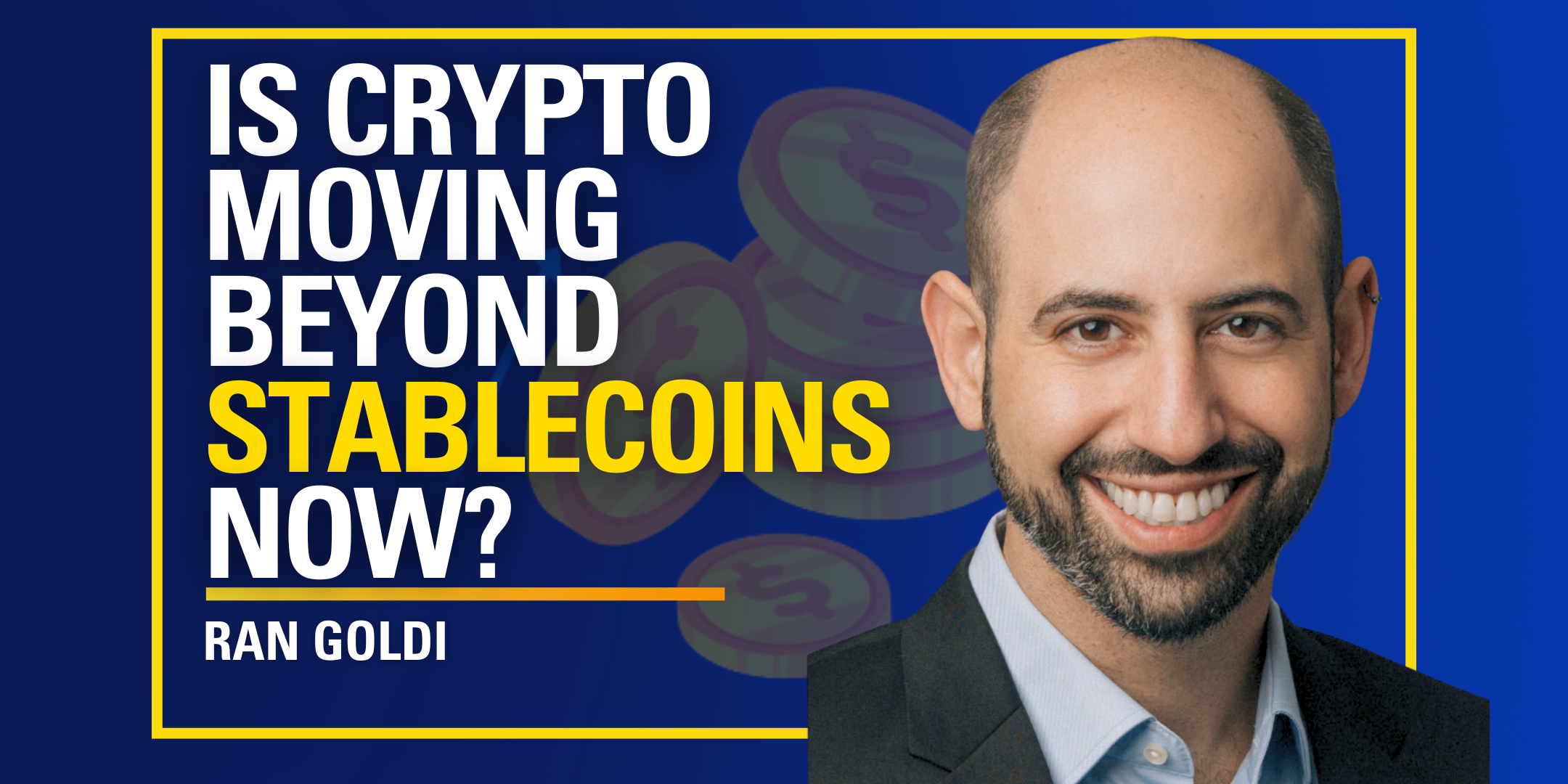
How Tokenized Assets Work in Crypto Markets? - Ran Goldi | ATC #604
Stephen Sargeant interviews Rand Goldi, SVP of Payments & Network at Fireblocks, an award winning provider of secure digital asset infrastructure. Before joining Fireblocks, Goldi was CEO of First Digital, a company focusing on payment acceptance for stablecoins and CBDCs, which was acquired by Fireblocks. Prior to establishing First, Goldi co-founded and managed an algorithmic trading company, acted as VP in a company he took public on the London Stock Exchange, and served as the head of IT investments for a private equity fund. Goldi is a former captain from the Israeli intelligence forces and holds a BA in Business Administration.
Host: Stephen Sargeant
Guests: Rand Goldi
We are also available via:
Buzzsprout • YouTube • Quora • Medium • X • Facebook • LinkedIn • Soundcloud • Apple Podcast • Spotify • Player FM
Episode Transcript
Stephen: Welcome to another edition of the Around The Coin podcast. We are so lucky today.
We have Ran Goldi, he's the SVP of Payments and Network at Fireblocks.
Now you might be like, this guy looks kind of familiar because four years ago we had him on the podcast with Mike Townsend. He was a CEO of First digital, and he was always building in this stablecoin infrastructure space.
We have him coming on to talk about the existing landscape when it comes to stablecoins, payments, and crypto. But more importantly, we look back at some of those predictions he had years ago and see how they've played out over the last four years.
He's made some big bets. He's made some bold predictions, and let's face it. He was right more times than he wasn't, but let's just see what he got, what he missed, and all the fun things he's working on at Fireblocks, which is one of the biggest ecosystems in crypto. Plugging in wallets and blockchain analytics tools. payments, infrastructure, accounting infrastructure. They have everything on Fireblocks. So I'm excited to talk to Ran and see what they're building going into 2026.
This is your host, Stephen Sargeant Around The Coin Podcast. So I think last month I made a funny video about Fireblocks acquiring some of the most coolest CEOs some of our friends that we've had on other podcasts, including EAI Turban including Tal Zack, and now we have, you .Ran Goldi who used to work at First Digital before the acquisition.
This is not your first time on the Around The Coin podcast, but maybe give people a little bit of an intro if they missed you five years ago when you were on fire with your predictions of where the crypto industry was going.
Goldi: Yeah, I know. Thank you obviously Stephen, for, for inviting me. It's great to be here again. You did not mention me the cool CEO announcement, but that's fine because my acquisition by Firebox was five years ago. So, and, and I will say. Paul and from res and dynamic are way cooler. Anyway, I'm, I'm too old now to be cool, but as you said, this is my second time here.
Five years ago, when I was again fortunate to be invited here.
I was still at a company called First Digital. We were betting on, you know, what we thought is blockchain based payments since 2017 and when I was here in the pod, I was, I was talking about, you know, fiat pegged assets as we were calling them back then, or stablecoins as people call them now.
And I was obviously saying that, you know, this will eventually be the form of money that we will be using that will take over hopefully a lot of financial rails. I'm just happy to see that it, it sort of happened, I think.
Stephen: Sort of, this has kinda like been the year of 2025 was kind of the year of the stablecoins. And it's so funny how you make a prediction like that in what seems like impossible terms. I remember when I first listened to the Around The Coin podcast. One of the hosts, Brian Romley, at the time that Bitcoin was $700, said it was gonna go to $10,000.
And I remember people were laughing and, you know, cursing him out on Twitter and this will never happen. And he gets to sit back and relax over the last, you know, five to six years and kind of revel in his, his own brilliance.
But you started in algo trading, which isn't, you know, there's a lot of people in algorithmic training, but you stayed there for four years.
That seems like a long time to be in such a stressful industry. Usually people either make it big and go on vacation for the rest of the time, or they drop out after the first couple months 'cause it's too stressful. Tell me, you know, about algo trading, why you stayed so long in such a stressful industry.
Goldi: Right. So and so, so Algo trading was really the company that we did before First Digital. That was a company that was acquired. It was acquired and we were basically trading futures and, and, and options. That was obviously a very stressful environment. You can, you could say not as stressful as crypto.
By the way, when we started First Digital in 2017. It was very quickly we, we raised too much money, and I don't know if there's entrepreneurs listening here, but we raised, like, back then it was too much. We raised like $21 million as seed because of, you know, maybe a lot of good reasons and good fortune, but it was a big mistake.
We, it was back then, I think Bitcoin was 2,400 and it went, you know, all the way up as we were growing with the company to about, you know, 1920 k back then. And we were like probably 70 people or, or yeah, 70 people within like three, four months. It was like amazing growth. We were making money, we were doing a lot of like on off-ramps back then before maybe we used to call them on off-ramps, I think.
And suddenly obviously, you know, Bitcoin crashed and, and our revenue crashed as well. But we were still big believers in where this will go. I made I think one of the toughest choices in my life back then was like, all right, we're staying, we're doing this, but I'm cutting 90% of the company. So I left seven people out of 70.
Basically brought everyone to the living room and said, like, guy, it was like, sorry, it was like this big whole lobby. And I said, everyone, guys, if, and unfortunately if I didn't talk to you this morning, then you know we're gonna have to say goodbye. And that was like 63 people out of 70. But the remaining seven, we really believed in this goal.
And you know, we had the DM and Novi train back then going up and down. And then obviously the summer of, you know, 2021 DeFi summer of 20 20, 20 21. And I, I, I'm really glad we, we wrote it out and I think what the way, or it made me what made me stay in stressful times, and you might find this funny, is actually listening to podcasts.
That was actually a lot of it. And there's like. I don't wanna you know, do an ad for a different podcast, but there's one called you know, how how I built It Right with I think his name is, guy Ross, maybe. And you know, he talks about founders and, and how they built their startups.
And, and you get to hear about, like, for example, the Slack story or the Airbnb story, and you listen about to these founders and they were like, you know, the Airbnb founders, they were like sleeping in their car, going with a camera, taking photos of sofas, of someone's living room. And I was thinking to myself.
I still have $10 million in the bank and like, you know, I'm sitting in an office, who am I to, you know, to complain. Like just, you know, shut up and heads down and keep on building. And so it was very helpful. All of this, and again, belief.
Stephen: Talk to me about that dichotomy of, you know, you just raised a ton of money. Everyone's laughing and cheering, and they're posting it on LinkedIn and Twitter. And then, you know, months later, you have to fire the majority of the team. Like we just saw the block. Get rid of over 4,000 positions while, you know, hiring people at the same time.
It, it is a, it's not like it's a public relations nightmare, but as a founder and a CEO, like how does that conversation, because I'm sure the conversations you had before the market went down, looked a lot different. You're promising people, the world because you're, you can imagine like, we finally did it.
We bet big, we got in early. Now the prices rising, we're geniuses. Everything we touch turns to gold. How is that as a CEO handling all those emotions within months, you know, versus like a decade of building a business.
Goldi: you know, it's one of the toughest questions like how, how do you handle that dichotomy, as you say? But look, I think that this was for me. My probably my 7, 4 8 startup back then, and I had five great colossal failures that taught me a lot. And what they taught me more than anything is, you know, the things that you could read about in any book that was written ever since, like, out the 19 hundreds is basically, you know, cash is king, so have money to survive basically.
And you know, if, if everyone. Tells you you're an idiot. Which they did when I was talking about stablecoins in 2018, then you're probably onto something. So, and, and again, just surround yourself with more people who are with you in that cause. But it was, it was a very dark time. After you, again, you.
You brought all these people. A lot of them were my friends from other companies I worked with, and I convinced them to leave their job and come work with us on this thing called digital assets. And they, you know, they were telling me before they left their job, are you sure this Bitcoin thing's not a scam?
Are you sure this blockchain thing, it's not just a, you know, a technology looking for a, a problem or something. Right? And I was like, no, this is real. This is real. And then a few months after, as you, as you're saying, I had to let them go. But I think that, you know, everyone was, who were at the company were, you know, you cannot hide the the sentiment in crypto.
It's all over Twitter all the time. It's all over the news if you are in this space all the time. So they knew what's happening in this space. They knew that, you know, the company's probably not doing as well with Bitcoin in 3000 than in Bitcoin in 20,000. And and I think that they, you know, I remember that after doing that talk, we just sat in that lobby for probably like four hours, telling stories, doing shots and I think half of those people today.
Our leaders in other companies and we just, you know, it was like a really great school because being in blockchain in 20 17, 18 it is, is something not a lot of people experienced that crazy times and that growth that happened and all the projects and everything. So still
Stephen: that resilience, you build that resilience. So when people tell you that you're crazy about stablecoins in 2024, which is probably what they were still telling you, like give it up, Ryan. Go some, like, let's just do something else.
But when you came on the podcast five years ago, you talked about this like concept of like stablecoin or payment acceptance when you were talking about stablecoin and cbdc that stablecoins exist because governments are moving too slowly.
Do you think with the recent stablecoin legislation in the US and other places, do you think we've kind of hit the peak? Stablecoin acceptance and payments acceptance when it comes to crypto?
Goldi: So, first of all, I think that the regulation, what it did so far is really acknowledge that the government is moving too slowly. Because what it did, it really created a framework, obviously, for corporates to create corporate money in a way, right? Like circle and, and Paxos and Anchor Anchorage. And, well, right now, everyone, right now, everyone in this space is, is doing issuance of, of, or tokenization, whatever you wanna call it, one way or the other.
I think that. Have we reached a peak? Definitely not. I think that what we're seeing right now and you know, maybe I made that one prediction five years ago. Maybe I'll make another one. I think stablecoins are basically. gonna say stablecoins are dead, but I'm gonna say stablecoins are going to be going to be extinct at some point now that they're accepted.
So the thing is that now that everyone sort of like discovered how money can really move fast and you know, the banks are now coming in, the incumbents are coming in. The banks are obviously going to lean in a lot on this regulation, and we're seeing this with the Clarity Act right now, obviously paddling.
And I think what we'll see over time is that, you know, while stablecoins are amazing and they brought us here. But I'm not sure that what brought us here will get us there. Meaning what? What's there, there is like, you know, better financial systems, faster rails, better economy, et cetera. So I think that what we'll see is yes, more Stablecoin regulation.
It will create more adoption right now amongst incumbents. But I think over time the banks will lean in on on token as deposits more than anything else. And on other types of frameworks. Maybe we don't have a name for them yet. Like, I don't know, bank coins or whatever that will be inoperable.
And I think stablecoins might still be used for cross border, maybe between these closed environments of, of banks and regulated or regulat regulatory frameworks like, I don't know, MTLS or Mika or MAS type of regulations. But I think that stablecoins have, have, have fulfilled most of the role.
Bring us here and now it's really interesting to see what's going to take us there.
Stephen: I think when you say that now everyone's like, well, duh, tokenized the assets. Make sense? But you were talking about this back at that time, that banks need to turn all their assets into digital assets internally. And we're seeing a lot of external now, you know, Tre, we have tokenized treasuries, bonds, funds but I'm curious because.
You had a huge bet on infrastructure that, you know, the many founders know about the picks and shovels when an an emerging industry is, you just wanna be the picks and shovels. You don't wanna necessarily be the person digging for the gold, but you said the winners of this crypto gold rush will be infrastructure and then you get acquired by what might be the ultimate pick and shovel in this industry.
Fireblocks.
Can you tell me a little bit about the acquisition, why it made sense for you at First Digital and you know, as a CEO working within another organization? It seems that all the CEOs that have been acquired by Fireblocks are still have that entrepreneurial spirit. What are your thoughts on that?
Goldi: Wow. It's a, it's a great question because, i'll, I'll say a few things about this. I guess first of all, we were very lucky to still be alive at the end of 21 when you know, there was like a FinTech crazy bubble, if you will, and, and crypto was going up into the right and they converged in a way. Our company, first Digital was really at the Epic center of that in terms of like knowhow.
And we were working with Paxos and Circle and, and Facebook was a good name at the time for doing stablecoins. They still are probably, but and, and we suddenly, you know, from a company that laid off 90% of its people, we suddenly were receiving five different acquisition offers from like interesting names in the industry from Stablecoin issuers to PSBs to whatever.
And. When Fireblocks came in. For me, it was like sort of obvious, I really wanna go work with these guys because A, I've, I know the founders for 25 years, they're my friends. It's really important when, obviously you run a startup or you become part of something that you have full trust in. The people you, you're gonna work with and obviously share the same.
You know, DNA, like two of the three co-founders of Fireblocks were literally side by side with me for five years in intelligence when we were serving together in intelligence. So, that, that's, you know, that's almost irreplaceable in terms of how to know people. And obviously I was, I was back in my mind I was like, yes, this is the ultimate infrastructure.
Like if Fireblocks, you know, you know, pardon my French, but if Fireblocks won't. Fuck it up, then they have a real chance to be the infrastructure of this, of this world. And I'm, I'm very happy that obviously they didn't, and that I, I was part of it and was able to contribute to it.
I think the reason that, you know myself, Tal Itai, the CEO got acquired by Firebox are still very much engaged and entrepreneurial is because.
We came from small companies where, you know, I've, I've been hitting some of the clients that Fireblocks now has, I've been hitting for five years, six years I've been knocking on their door. They tell me to leave. I need to come back through the window. I need to stock people to conferences and pin them in a corner.
And, and now I'm with Fireblocks. I, you know, I call this. This client this prospect or lead or whatever, and they're like, oh, firebox, great. Would love to meet you. Okay, great. So I'm,
Stephen: You are the captain now, right? You got the leverage. Now you got the ecosystem. Now they need to be a part of your ecosystem or they'll get left out.
Goldi: Yeah, so, so again, I, I feel like so fortunate that now I can actually, you know, I'll get invited to these rooms finally. So I'm not gonna go, I'm not gonna go away on the opposite. I'm just gonna work harder because finally I can, I can actually achieve the goal that I've put myself like 10 years ago, literally when I started this, right?
So, so if anything. I'm, I'm just more journalized in, I was just more journalized in 25 and and 26. I can't believe we're in March already. It feels like it's been like a year within those two months only. Yeah, so I think you tie and tell, feel the same.
And it's, again, it's, it's Fireblocks is just not, it's not, it's not a, the, the thing is that five bucks is not just a normal company because.
Fireblocks grew up disrupting someone else. And it wasn't that long ago that we were disrupting, let's say, bit go or others that were big into space. And, and today, Fireblocks again, we moved, we've moved $6 trillion last year. We are doing 60 million transactions a month. You know, $3.2 trillion of stablecoins Last year, half of that was payment companies, 300 payment companies.
It's, it's, it's a big ship. But that said, the, I think the captain of this ship, Michael you know, and obviously the entire, you know, executive team is basically constantly thinking, you know, we might get disrupted tomorrow, so how do we stay on our toes and make sure that we're still leading.
The innovation here, we're, we're still thinking of where the puck's going and we're creating what this world needs. So it, it's just fun to be part of basically.
Stephen: We are the big, like everyone thinks about Fireblocks and you know, I've worked as a consultant, I've done blockchain investigations at different exchanges. Even just creating content. It's like Fireblocks. This plug, every time I, I touch a button, it's a fire block's vault is a part of it.
What is it that Fireblocks does?
Can you gimme like the top three use cases that are like, this is what Fireblocks does. This is where the real disruption has happened and where Fireblocks has really filled that niche.
Goldi: Yeah, no, a hundred percent. I think that number one is, is really wallets and the security around wallets. Number two, I is probably the operations around treasury management and orchestration, everything around that. And I think number three is the network and connectivity to the ecosystem that, again, we were very fortunate to be there.
As it was really being created. So we have a lot of that in our network. So if I like double click into each one of these really quickly, you know, fire Block started back in 20 18, 19 as a company that was. Really securing money and creating secured wallets, which people don't understand this, but like most of the OTC desks and the market makers back in 20 17, 18, if they wanted to sign transactions, they had to call this person who held the discount key on their neck and had to take that off and go to an offline computer and sign.
And literally most crypto markets. We're closed on weekends, people think, yes, Bitcoin was still moving. It was tradable, but no large OTC desk was, was actually active or a market maker because they didn't wanna work on a weekend. So, and then Fireblocks came in, changed the whole paradigm of, of basically how do you sign, how do you manage secure transactions?
How do you create secure wallets? And I think that really actually accelerated a lot of, of, of the space. And then, so that's like the wallet thing, that's, I think that's our bread and butter. That's our, you know, this. That's why we have, I think, such a trusted brand because like we have 45 people just doing security and we have 300 people working on, you know, the infrastructure.
I mean product RD doing the infrastructure and so forth. The second thing around the, you know, the treasury management and ops and orchestration, I think the bet we made very early on. It was a hard bet to make in, in 20, let's say 19, is that this will be an institutional use case. It's not gonna be a speculative use case only, which means it needs an institutional grade platform.
So we, we made investments that only came into fruition three, four years later in terms of like, you know, how do we support policies and governance and how do we support different a ML frameworks and whatnot. And, and, and. Most people did not care about this go early on, but we really believe that that's like where, this is where it's gonna go.
We need to create that platform for that. I think we're, again, we, we we were, I think we were right about this and obviously coming 22, 23, this is where most, a lot of institutions came in and proved that point. And the last thing is the network, right? So very fortunate to have. All of the large OTC does all of their large fintechs, all their large exchanges Stablecoin issuers, all using the Fireblocks platform and being part of that network, the Fireblocks basically powers today 70% of every institution that runs on Fireblocks and 15% of all blockchain transactions.
So we're very fortunate to have that network. And then people actually, you know, when they decide about a platform or infrastructure, obviously they wanna be part of that largest network out there. So they come to us and we help them with everything that we can. Either it's connecting to to all these venues or just even just introducing them to the right people in the right place.
'cause it's also in a way like a social network, not just like a tech network.
Stephen: And I think if you look in the past, right, let's just say you're an institution. You are like, Hey, I wanna get into digital assets. Okay, I have to find a custody provider. I have to find a wallet service provider. I have to find blockchain analytics to like, you're probably going through 70, 80 demos of everyone trying to sell you something.
And then you have to put all those pieces together and figure out how it goes from end to end. Like would you consider Fireblocks kind of that end to end solution? You just come to Fireblocks and we'll do all the work. And at the other end, that's where you're in digital assets and you get to transact in digital assets.
Goldi: I think we do a lot of the work, but there's a lot of functionalities where we do depend on other providers to bring in their tech and plug it in, and I think that's important. And obviously like, you know. Analysis, elliptic TRM of the world obviously all part of that, and you know this better than anyone.
And and basically we do need to make sure that we have all the connectivity to all the different issuers and whatnot. But I will say as, as, as you said it, like usually people come to us first in a way because they also. Want to ask us those questions of who should we work with for this use case?
And we try to be as objective as we can, which is why, by the way, you know, we don't take any incentives from people for, we won't see like a sponsored link in our platform or something. 'Cause we really try like to tell, you know, if it's a bank, okay, here's what you need, here's the tech stack. If it's a PSP, maybe it's a different tech stack.
Stephen: And I'm sure there's a lot of people wanting to give you money to put them on the top of those, those lists. But even as like a content creator, people come to me like, what certification should I take? What crypto investigation tool? But if you go like any blockchain analytics tool, if you come to them first, they're gonna tell you their product and their suite.
And it may not be right for you, but you don't have that objective opinion to be like, Hey. We've dealt with a hundred companies that look like you. This is the majority of what they used and why. And I think that's why, from my experience, why companies come to Fireblocks first is because you have the use cases of very similar businesses.
Whereas I think a lot of the providers that you're going to directly, they only have an isolated amount of use cases based on who's using their tool.
Goldi: Yeah, I think that's spot on.
Stephen: What do you think the future, I know your CFO wrote a blog you know about some, the recent market acquisitions.
Obviously talking you, you know, Paxos and obviously the ones at Fireblocks. Where do you see, you know, where's the path forward that Fireblocks supports? You know, that might be not be common knowledge, so like what's something that Fireblocks does that's not common knowledge to somebody in blockchain investigations or a new, you know, Stablecoin provider that wants to launch a Stablecoin for the first time.
What's a unique part of Fireblocks that people didn't know that you do?
Goldi: Yeah, so I think, you know what we. Added over the last several years. Because again, we really started with secured wallets and secured money movement. And then what we've added over the last several years is, is first of all, this network for off and on-ramps, where if you're a client and you know you're a US based client and you don't want to get regulation and sorry, in licenses you know, in Singapore, you don't wanna get your ME license, maybe in Europe.
You wanna work with a lot of partners but you dunno who to talk to. That's like num problem number one. So you would come to us and we will like, give you this, okay, look, here's our coverage. We have a lot of partners that we've verified and they're good and they're, you know, very well integrated into the platform and you can work with them and work with their licenses.
I think that's part of the things that we've added recently. That's, you know, really sort of like to care for this time because we're, we're in a point in time where. People and, and I, sorry, maybe not. People. Incumbents, I would say wanna come in, but they still to some extent want to be crypto remote, which means they don't wanna bear the compliance burden then don't wanna bear the regulatory burden.
They wanna be crypto remote and maybe, yes, still go into crypto inside later on. And they're actually hold the coins on their balance sheet report, you know, have the right licenses to support that activity. But for now, they just wanna work a lot with partners. So we sort of like. Cater to that in a way.
And I think what we did right now with trusts and dynamic you know, no one was ever excited about reconciliation as we were when we acquired trusts. I think in the history of time, no one was excited about reconciliation. But the thing is, again, this industry. I think you'll agree with me, has crossed a chasm in 20 24, 25.
It really started with ETFs actually on Bitcoin, but then obviously the bridge stripe acquisition and then the change of administration in the US and regulation. We're now in mainstream adoption stage in the adoption curve, which means that the clients that are coming in are clients who do not want to pick and choose different solutions.
They don't want to be your design partner. They just wanna buy something from the shelf. Will enable them to support this new rail that's called, you know, digital assets or, or stablecoins, or tokenized deposits or whatnot. And they want you to plug, plug it into their systems and they want the, the full solution.
So we were facing with that in a way challenge. And we said, okay, look, a big part of this is reconciliation, so let's buy trust. We have to get that. Tech inside.
And also the other thing that's really, I think, talks to regulation, something we've added with this acquisition of dynamic is this non-custodial wallets.
Non-custodial wallets are really, you know, let's call them user owned wallets, where the user. Goes to like, a platform a web, two platform, maybe like, I don't know, Reddit. And they tell him, Hey, we opened a wallet for you. And he doesn't even know anything about private keys or, you know, the 12 words or whatever.
And obviously from a regulatory standpoint right now, the regulation is sort of leaving that. Aside from now for now, which is, I, I'd love to get your take on this, but for now, regulators in, in Europe and the US are sort of like not handling these type of wallets, and I think that's really interesting because.
It allows a lot of companies to grow into other countries and get more user base. Again, it doesn't mean that you, it doesn't mean that you can break the laws, but it means that you can use that tech as a licensed entity to faster grow into new areas. And I think that's something that we've added that's super interesting and it really talks to all of our upper wall environment and ops and treasury management, which is great.
Stephen: The reason why I was laughing is I've spoken to the trust finance team about like content and marketing, speaking to Joe, their marketer, and like reconciliation is by far not the sexiest topic. It's like, I don't know how you're gonna make people wanna talk or engage on LinkedIn about reconciliation. But good luck.
And it's funny that you mentioned, 'cause the Financial Action Task Force just dropped their guidance. On stablecoins and Unhosted Wallet, I actually threw it into Notebook LLM, and was listening to the like podcast version of it this morning. And really what they're gonna focus on. Regulators aren't gonna focus on the, you know, intermediary addresses.
They're really spending a lot of time scrutinizing the on and off ramps, and that's where they're focused the most of the regulatory challenges. And I think chain lysis and other companies have kind of said like, unhosted wallets is not real, really, where the majority of their illicit activity is happening anyway.
And they. But with travel rule and, you know, companies needing to get that beneficiary information, I think we'll see even less illicit activity, in my opinion, from unhosted wallets.
What I found interesting is Fireblocks released 23 products across the platform just last year. Like APIs, salona, tokenization, you have the Fireblocks, security, posture Management.
What were some of your biggest takeaways from 2025 as a company, and what were some of those products that you were like, yes, I'd love to see this one. Get to the, get to the, the light of day.
Goldi: So it's funny you mentioned that security posture thing. I thought this was one of our best products of last year, really, because I think that. As we go more into again, the incumbents that are coming in or the banks or, or more large payment companies asset managers, and so forth. You know, they are not maybe putting banks aside, they're not very minded to security.
Like if you, if you come from crypto, if you've been here for a long time, you know that security is the most important thing because it's a very attackable vector, like your wallet, your, your keys and whatnot. If you, you're a payments company. You don't really think too much about the security. You think about regulation.
Sure, you think about compliance, of course, but you, you sort of like assume that, you know, the banks you're using is secured because they're investing millions in being secured. But what happens now when you are holding, you know, your own funds, right?
What happens when you, when you hold your own funds? That I think that's the real question. And I think that now that they're facing that we need to help them, you know, basically like, be more aware of their security posture, which is why we, we came out with that. The other thing that I was really excited about, I I think last year again, it's really like just more connectivity to those, all these on and off ramps globally, because I think, like you said, the friction.
This is why I think obviously regulators is focused there, there's still friction between fiat and, and obviously in the world of digital assets. Obviously regulators are focusing on that specific place because you know, that's where we really need to know what's the source of funds and when it's coming, where it's going, whatnot.
But I think that as our industry right now is, is growing, there's, there's still like a lot of noise. And it's really important to help people understand which partners they can trust globally to move money with. Because every, every week you. You read about something that's not so great that that happens somewhere in the world with, with a crypto related company.
And I just, I feel, I feel like I don't want the experience of the incumbents that are coming in right now to be the same experience we had like 8 and 10 years ago, which is why we're creating this sort of like vetted network, which I thought was a great add-on last year.
Stephen: I feel like anything that has an acronym is usually the pride and joy internally of a company, and that was one of the few ones, you know, you've always seemed like the an the anti hype, like utility technical. Mechanical first type of operator. We're going through a little bit of a slow start. It feels like in a lot of areas in crypto, including the Bitcoin prices as a builder, that's built through some, some of the most toughest times in the industry.
What do you think the industry should be thinking about, especially those that are playing on onchain finance?
Goldi: Yeah, I, I think, look, I think that first of all with, with, you know, with regards to Bitcoin price, I, I love Bitcoin. I obviously am. I was, I was never bullish on Bitcoin as, as a, as a unit of of economics or, or basically a payment method per se, which is why I was never invited to the cool crypto parties.
But but that's fine. I'm too old. Anyway, but the, the thing is that I think that the builders that are building now you know, what we need to understand is that we won. Now what? Right. So we won the battle for making the point that money can move faster with better technology. But what we haven't won yet, obviously, is the mainstream adoption of this new type of rail.
And, and, you know, you know, we're, we're basically, we live in this ecosystem, so it's sometimes it feels like everyone is using it, but you know, we're just like 1.5% maybe of global trade right now with stablecoins, which is great because we have a lot of upside. Great. And you know, three, four years ago we were probably 10% of that.
Great. So, but to make, if I was a builder, I would focus right now probably first of all on elements of privacy. Which I think are still disregarded in this space. And I, and I feel that, I feel that 27 would start very differently than how 26 started. Meaning that by the end of 26, I really think we'll already have privacy implemented on several chains with several interesting use cases because I feel like that's being really pressured upon us as an industry.
And the second thing is, I think, I think that. If you wanna build something. Now there was a time where everyone wanted to build an on-off ramp. It was before Bridge got acquired and definitely after Bridge got acquired. Now all the on off ramps, I feel are, you know, either diversified in their business model to be also like issuance of tokens and issuance of cars also.
But I feel like the builders that are building now, they should probably be thinking about. More around the tokenized aspect of, of assets. Even if that, even if it sounds like science fiction right now, but you know, tokenizing more funds, tokenizing more securities, tokenizing more even real world assets, that is where the puck is going.
We had, the way we look at this as Fireblocks is there's three, there were three major waves up until now. The first wave was obviously crypto you know, crypto trading and, and speculative trading. As this world started. Second wave was payments. Which we're in, you know, maybe we're at the peak of that wave, maybe already not as cool.
And the third wave is gonna be real world assets. And that already started. And the companies that will build now and will last for two, three years from now, if they've built a good solution for real world assets, they could be real winners of the space.
Stephen: It's funny 'cause it seems like we're back to the speculation with like prediction markets, so it feels like, it feels like we're still feeling some of that first wave coming, coming over. I'm curious, you know, we've been in crypto, both of us long. Enough to know that institutional adoption was the thing that we were hanging our hat on.
Once we had that, the industry was gonna explode, there was no turning back from there. We take over all financial ecosystems. It seems like Bitcoin, ETFs, it seems like, you know, mass investment by companies. We have that institutional adoption. What are we missing now that we're not on that next level that we thought we were gonna be in 8, 10 years ago, once we got this mass adoption by some of the most traditional financial institution?
Goldi: I think where we got it wrong is that we thought that, adoption of a technology would have a direct relation to the price of some underlying assets, whether they are Bitcoin, which is. Somewhere like an index everyone thought of, of sentiment and industry, right? If Bitcoin was a true sentiment of where the industry is, it shouldn't have been right now at 300 k really right?
With, with all the adoption all around or Solana and, and SW and Stellar which are by the way, used massively for payments, but their token price, you know, doesn't feel like it, it's really reflect. That adoption. So I think we were very wrong in thinking that would contribute directly to that.
Because I think that, again, I think it's because we, we all sort of like narrowed down on stablecoins as the killer app and stablecoins are stable. And, and I think also because of the dynamics of competition where. A lot of the companies that have issued stablecoins are now also issuing their own blockchains.
So, so why would, again why would blockchain a PRI token price should go up if now you know, circle is issuing their own blockchain and it's gonna be purposely for stablecoins and it's probably gonna be priced differently, their tokens and whatnot. So I think we were sort of wrong about that correlation.
But, but it doesn't mean that, again, I feel like we're at the best place we ever were in adoption of this technology.
Stephen: You talked previously a little bit about partners and integrating with other service providers. How do you balance that as Fireblocks, right? You're kind of working with partners. Some might look at them as like you're, you know, you're, you're cannibalizing some of their market share by the services you offer you, you offer chain analysis and TRM labs who are kind of competitors.
How do you balance all the competition? But the need to rise the ecosystem by integrating everything to make it seamless for customers to even get to these companies as well.
Goldi: Yeah, I, I guess look, I mean, I'll start with a cliche where you look all the cliches are, are true. That's why there're cliches, which is, you know, there's, there's enough me for everyone here. Right? So that's the way I look at it. And again, I feel like I'm very fortunate to be able to have that perspective.
'cause I, I was here when there were a million people were holding crypto and then 10 million and then maybe a hundred million, you know, I don't know how many people are holding crypto right now. Maybe if you listen to the news, it sounds like 500 million. I don't know. I have no idea. But like I, I can envision how TRM has a great business and analysis is a great business.
And elliptic and, and who, whatever. And I really try, we really try at five blocks just to really stay neutral just because. We don't want to be picking and choosing winners for the space because we think a lot of the people can win. And the way we balance, I guess our own activities versus our client's activities that sometimes are in a way competing.
And that and does happen sometimes, like you, you would see companies running on Fireblocks that offer non-custodial wallets and it's actually our tech be, be beneath and you know. I think the way we're trying to draw the line really is we want to. Sell our products to I guess like, you know, the, the enablers in terms of like the psps, the the financial institutions, the financial market infrastructure.
We don't wanna go all the way to the merchant. We don't want to go all the way to the end user or whatnot. It's, by the way, it's just not our DNA we, we wouldn't know how to do it probably. So that's sort of like the line we try to put where we talk to our clients or partners sometimes. We do find ourselves in the same deals, and then what we usually tell that client or our, sorry, that potential prospect or our client who's not our competitor is like, you know, you know, we probably will win either way.
Either they, you know, choose us or they choose you and it's us underneath, it's fine. So we try to be very supportive about it.
Stephen: Yeah, that's awesome. 'cause then if you open it up to everyone, everyone still pays you. It's like, well we, if you don't choose a side. I'm curious, you know, Trump recently tweeted or sold whatever true social, made a truth about bankers are trying to undermine the Genius Act in the us and, you know, go against the Clarity Act.
What are your thoughts on how much politics and lobbying seem to be playing? On getting clear regulations to work in the US especially, 'cause you're dealing with a lot of the crypto native companies and Stablecoin providers, but you're also dealing with a lot of the traditional banking institutions as well.
Goldi: Right. So I, I was not born and raised in the us nor do I live in the us. So my knowledge of. Obviously like, you know, white House politics and, and Senate and Congress and, and, and it's very, very, very low. But every time I do try to dive into it and Clarity Act is one of those, I'm just shocked by the amount of, of dealings and politics that's going on between the scenes.
And that sort of always tells me, look that's probably not the right place for me. I'll just go back and build something with Claude Code or something. And. The way I look at it, look, obviously the banks, you know, they're not huge fans of stablecoins, most of them. I think that over time, whether it's in Clarity Act or maybe a different administration or after midterms, maybe, I think they will probably get their way. And I'm not sure it's, it's bad because again, and this is why I'm not invited to a lot of parties, I think that if we really want a major financial infrastructure, we need the players who are moving most of the money in the world to adopt it, even if it's in the form of a token as deposit and not a Stablecoin.
I'll take that. And those are the banks and financial institutions. So I'm not sure it's a bad thing.
Stephen: And for everyone listening there are going to these galas and parties that Rand keeps talking about. Add my guy as a plus one. It doesn't hurt. It seems like a little underlying bitterness for my guy here, Rand, that's not been to these biggest parties.
Before we leave off, you mentioned like we're in the scale phase when it comes to, you know, digital assets, stablecoins.
A lot of founders and tech entrepreneurs listen to this podcast. What does that mean in the world of crypto, like the scale phase, and what do we need to do to get to the next phase, past the scale phase?
Goldi: It, it's, it's a question that I, I feel like we're asking ourself almost like every, every day at Fireblocks, because you know us as well, we've been catering to this industry. But when I say catering to this industry, going back to, you know, when I started in 2017, most of the people you cater to were like three people in a garage.
Right now you go onto a meeting with a client and it's probably a financial institution, and then you bring 16 people and two consultants and five lawyers and, and it, it's fine. 'cause that's like, that's the type of client they are. That's what they need to run a meeting. And again, never cliche, you need to meet the clients where they are.
So it, a lot of it is changing a lot. The how we're selling is changing. I think as an industry we shouldn't be. Now more than ever now that people have adopted the tech, we should just keep our focus of our pitches and everything about the problem we're solving. I think, I think that's like a, an easier time to just focus on that and not even even bring up the tech 'cause everyone's sort of like agreed that the tech is fine.
And then the second thing is also client handling on a day-to-day basis, like your, I dunno, your customer success managers or your solution engineers. All of these folks, if maybe like 2, 3, 4 years ago it was the right, if you just had this, you know, crypto, crazy dude who really knows architecture and they would go and work with the client.
Right now you need people who you know, who knows how to handle these large corporates of 10,000 people that has a division of development somewhere maybe in Eastern Europe or India or whatever. And you need to do project management and you need to just treat the clients totally different. And, and I think there's a lot of maturing.
That a lot of the companies in the space need to do. I, I know that, you know, circle has gone through that stage obviously as they had to go through the IPO. I think Coinbase is definitely, you know, is in in that. And I think Fireblocks is also sort of like going through that mature phase right now.
Stephen: With the last minute we have, I want to just throw out a couple words to you and then you gimme like a 32nd response. What are your thoughts on interoperability being the bottleneck still in crypto in 2026?
Goldi: I think it's definitely the bottleneck for the next phase of token as deposits. I think for now we're still at at a stage where we're handling without it.
Stephen: What are your thoughts on AI and where are you using it? In Fireblocks.
Goldi: Wow, so many places. I, I, I, AI changed my life. I'm writing code again, which I love. I start my day with, tell me everything about the meanings I have, get all the, the data about clients, and then I would say 30% of our r and d is probably now code written by ai, and they really changed like the velocity of how we can deliver things.
So we're just really excited about it all around from customer support to r and d.
Stephen: Where can people find you if they wanna hear more of these amazing thoughts that you have? And they should definitely go check out your first episode and we'll do a couple clips of 2021 versus 2026. And your thought.
Goldi: Yeah, I'm, I'm, I'm always available on, on LinkedIn R Goldi or or on x r Goldi as well. Hit me up. I do try to answer almost everyone.
Stephen: When are you, Michael Tao and Ety gonna come up with your own Fireblocks podcast.
Goldi: Yes, it's gonna be we're gonna call it all onchain pod the All onchain Pod. But you know, I think that we're gonna wait until Tal loses his hair as well. 'cause he, ty lost his hair. He's already a hairless Co. Michael definitely lost a lot of his hair over the last decade. Tal has too much hair right now.
We're gonna wait
until he
Stephen: and it's beautiful. Like I met him in person in Toronto and he is just like, it is a beautiful head of hair. I'm like, where do you guys get this hair from?
Goldi: Fireblocks will take it out of him. Don't worry.
Stephen: I love it. Rand, this has been amazing. Always good, and I hope we don't wait another five years to have you on the pod. I'm sure things are gonna change so fast. We'll probably have you back by the end of this year, if not early next year.
Goldi: Same here, Stephen. Appreciate the time. Thank you for having me again.
Stephen: Thank you.
.png)