Why AI Agents Need Blockchain Identity? - Yat Siu | ATC #610
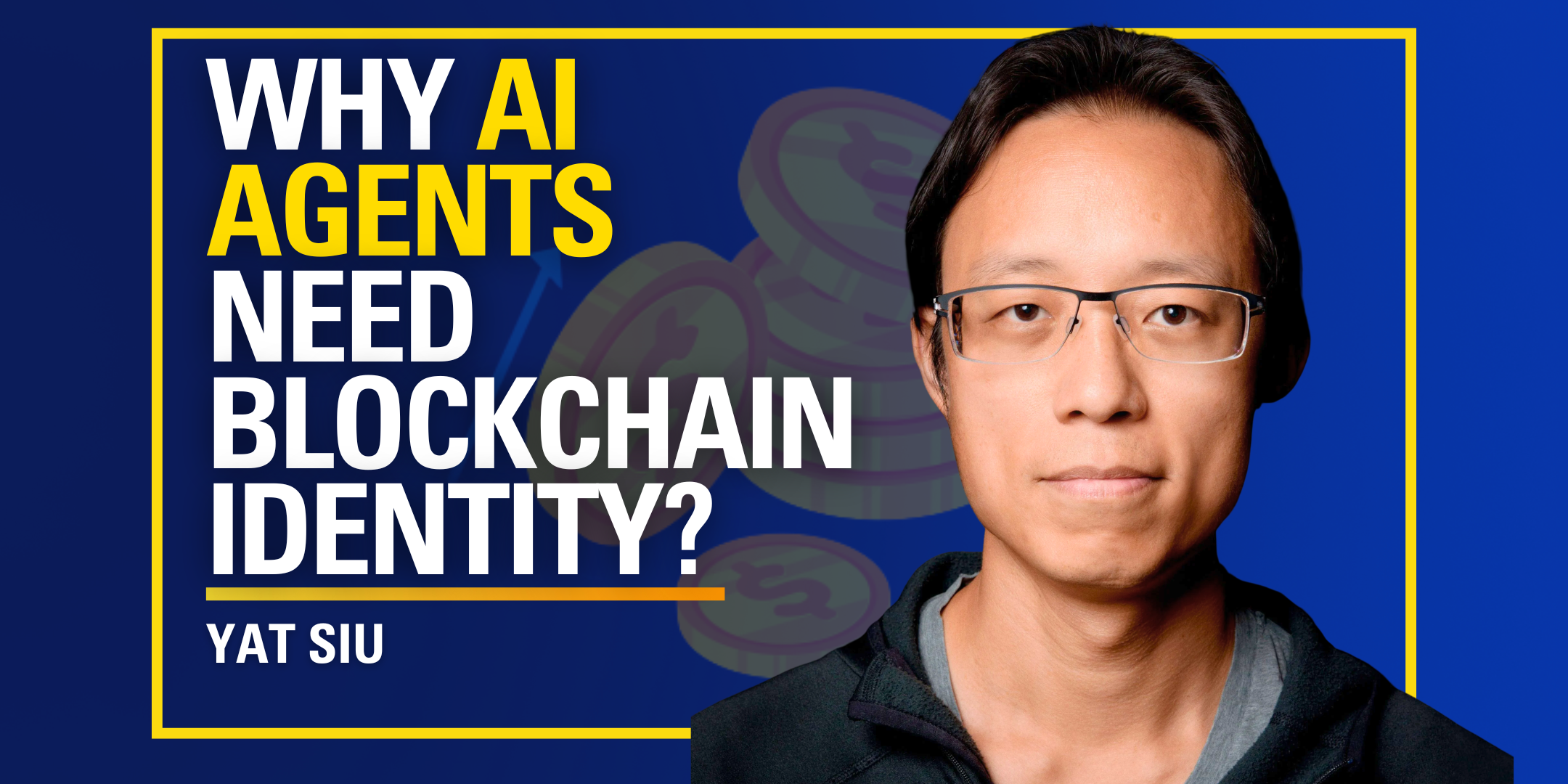
Host Stephen Sargeant interviews Yat Siu, a veteran technology entrepreneur and angel investor based in Hong Kong. Presently, he is the co-founder, executive chairman, and managing director of Animoca Brands, a leading crypto investment firm with a 600+ investment portfolio, including Kraken, Consensys, and OpenSea.
Yat has been recognized as a World Economic Forum Global Leader of Tomorrow, DHL/SCMP Young Entrepreneur of the Year, and one of Cointelegraph’s Top 100 Notable People in Blockchain, and is also an official member of the Task Force on Promoting Web3 Development by HKSAR.
Host: Stephen Sargeant
Guest: Yat Siu
We are also available via:
Buzzsprout • YouTube • Quora • Medium • X • Facebook • LinkedIn • Soundcloud • Apple Podcast • Spotify • Player FM
Episode Transcript
Stephen: Around The Coin, Stephen Sargeant, your host, is sweating from one of the best conversations that I've had on the podcast. We've had
Yat Siu, the co-founder, executive chairman. You guys know of Animoca Brands, but he just took us from education to digital ownership to agentic AI and everything that they're building on Animoca Minds.
We spent lots of time talking about the evolution from gaming to NFTs to where they are today in Web3, or what he calls Web4.
I, I know, I know it's hard for me to pick my favorites, if you know who Naval is, like, this feels like you're talking to the Naval of Web3. Just so many insights, philosophy, history.
It's like this is the best type of podcast because we got to relax and just talk about what we're seeing and how he keeps his vision so long term. And I guarantee if you listen to this podcast, you'll be like,
"Oh, this isn't about Web3 or Web4 or agentic AI. These are just life lessons and digital ownership through and through."
I hope you listen to the podcast, and I hope you get a lot from it. He even gives you some insights. If you wanna reach out to him or Animoca Brands, he gives you the exact blueprint.
Caution, you have to do some work, but he gives you the exact blueprint on how to get his attention, which is immensely important if you're gonna be leading Web4.
Hope you enjoy the podcast.
This is your host, Stephen Sargeant. Around The Coin special of the day. We have Yat Siu, the co-founder, executive chairman, I think everyone knows who you are, of Animoca Brands. Uh, Yat, give us a little bit of your background. I know you've had to do this every conversation that you have. Maybe tell us something that you haven't talked about in a, in a long time when you're introducing yourself or, you know, we've had a little bit of a pre-show conversation around raising children and gaming and intellect.
So maybe give me a little bit of a background of you and, uh, something interesting that you haven't talked about in a while.
Yat: Yeah, I mean, I think, you know, I think most people obviously know, uh, at least on, on your show would probably know, you know, who, who, who we are and what we do. But I would say, you know, as I, as I told a lot of people on my background, I, I grew up in, in Europe. Uh, and, uh, maybe not a lot of people necessarily know that actually German is my mother tongue.
So, so that's probably something that sometimes surprises people a little bit just because, you know, I, I don't look particularly German. Yeah, but that's just 'cause that's what we speak in Austria. Uh, but I think the other thing also is, you know, I've been quite involved in, in building schools, um, you know, supporting sort of the constructions of some of these in, in some of the sort of less fortunate places.
But, you know, I'm on the board of the Dalton School. Uh, you know, we, we started something where we were really trying to sort of develop essentially divergent, uh, and innovative thinking. Uh, and that's also one of the reasons why, you know, when, when we launched Open Campus, which was basically a blockchain education sort of program, you know, with, with EDU, uh, there was a sort of a little bit of that ambition around sort of, you know, let's, let's try to sort of bring sort of the benefits and the power of education to, to sort of everyone.
Uh, so that's kind of probably, uh, something that most people might not know in terms of the background. Uh, and, uh, and maybe the other thing, you know, I have three kids and, you know, two of them are in the US right now, basically have- having, having, interestingly enough, a pretty good time, um, you know, despite all the controversies around, right?
Um, and, uh, and then my youngest is still in Hong Kong, right? And, and I think they're all, you know, uh, you know, I think we're very fortunate to have sort of, you know, a sort of very sort of dedicated and happy kids as it, as it were, sort of, you know. Uh, and, and, uh, one thing I will also say, one of the reasons we started getting into sort of education is because I think the world of learning is changing rapidly, and especially what's happening with AI, which we'll probably get into as well.
You know, the purpose of school, what it was meant to be, has completely shifted, uh, but it's not moving quickly enough. And there is a big question that I certainly have, which is sort of is it really worth getting into that kind of debt, you know, uh, for, for, for an education that's probably not going to give you what you're looking for in comparison to what it was maybe twenty years ago?
I'm not saying you shouldn't go to school, but you need to ask yourself the question why you need to go to school. And maybe the, the one example is my, my oldest was working first before he went to school. He, he, he, you know, it w- it was, it was COVID, so school didn't make sense, that much sense. He was actually at one, one course and he didn't like it.
Uh, he was working for three years and then he went to school, and it's an entirely different reason, 'cause he's not worried about getting a job in the future because he's basically marketable because of his work experience. So he's going to school to really learn, right? And, and one of the interesting insights he shared with me was, uh, he takes really, really hard courses and he doesn't care if he gets a lower grade because he's learning something new and that excites him because he's not worried about him having a certain GPA that will help him get to a job.
Stephen: Right.
Yat: know, while that makes a lot of sense, arguably, it sort of, sort of struck a different light bulb, um, in, in, in sort of the thinking, which is, well, actually that should be true for like, I mean, if you're hiring someone, do you wanna hire the kid that got the perfect GPA or do you wanna hire the kid that challenged himself and took the hardest courses and got an okay grade as opposed to the best grade, right?
Because he really tried something that was difficult, um, and then eventually excelled in it. That's much more valuable because that's how work is, that's how life is, right? Um, as opposed to trying to sort of, let's call it game your way into the perfect score, right? Where you've never really failed because, you know, you never let yourself fail because you wanna have the perfect GPA to get, to do the so-called perfect job.
But I, I would argue that kind of person is less employable, but he has no choice when that's how sort of headhunters or, you know, people, recruiters look at that, right? So
Stephen: how the
Yat: just in...
Stephen: a gaming professional, that's how the game works, so you play
Yat: That's how the game is played. Exactly, right. Exactly. And, and in a, in, in, in a world that was like that, maybe let's call it even just 10 years ago, and certainly sort of, you know, uh, sort of the decades before that where that worked, because the kind of person you hired was not a person who was sort of daring and challenging and experimental, but rather was someone who was predictable, shall we say, and, uh, sort of working more like a, like a machine, um, to do what he was told, as it were, right?
Um, that made sense, but we're, we're not at that stage anymore. And, you know, uh, the, the future's changing rapidly, especially what you see with everything with AI and agentic AI, and of course, everything that happens in the blockchain world, which I'm sure we'll get into. Uh, um, y- that, you know, you can't, you can't expect that.
Um, and so that's, that to me is, I would say, um, sort of something we really have to think about for, for the future of our, for, of our kids.
Stephen: I-I'm curious on, on this conversation. We've had a pre-conversation on it as well. What is
Yat: Yes.
Stephen: Degree. You're gonna, you know, y- you're employable till the cows come home." Now we're like, "Mm, maybe you should get into like welding or electrician or plumbing
Yat: Welding? That's funny. Yeah.
Stephen: Know, I don't know why I said
Yat: no, but no, but, but
Stephen: they're
Yat: it's true. It...
Stephen: centers, right? And you're, you know, now they're flying you in and paying
Yat: Yes.
Stephen: You know, I, I'm in Canada, so I remember when the oil rigs in Alberta, you were making $57 an hour to work at Tim Hortons 'cause they needed people there to,
Yat: Yes.
Stephen: the workers. Where would you--
Yat: Yeah.
Stephen: Long-term, I think, vision in everything you do. Where would be the conversation you're having right
Yat: yeah.
Stephen: Uh, for a child or, you know, someone
Yat: S- yeah.
Stephen: In grade, high school?
Yat: So, so I actually wrote an article about this, um, around sort of, you know, where I thought the future was going in terms of sort of jobs. Uh, but the summary of this really is that in fact, sort of programmers, classic sort of software coders, basically they're not safe from a job. I mean, if you think about all the layoffs that happened recently, actually, it was particularly the software departments that were affected, right?
Um, and, and one of the sort of ironies, of course, is that, um, what programmers are, are the ones who translate. They-- actually, when you think about it, programmers and software engineers, for the most part, were translators for the machine economy, right? They were the ones who were able to sort of translate human ideas into basically computer language that a computer could interpret and do stuff with, and then voila, you had the software and that kind of stuff, right?
But now, basically computers are better at translating it than humans are, right? And so when you look at things like, you know, you know, what's happening with Anthropic or, you know, with, uh, with, you know, with, uh, things like Replit or, or so forth, like all these things are basically just making, making it so much more easier.
And you're getting to the point where, you know, basically a lot of the code that's written by machines is better than the code that humans have written in and of itself, right? So what is it that basically sort of distinguishes ourselves? And you're just stepping back a little bit. People used to say that about the Industrial, uh, Revolution as well.
They're like, "Okay, well, you know, we go from horses to cars, you know, we go from farming to machines," right? And then the machines basically take away all of our jobs. But actually, when you think about it, actually, there's more jobs and there's more abundance, and there's more opportunity because these machines, even back 100 years ago, produced more food, produced more materials, produced more opportunity.
And, you know, um, say what you will, you know, society today, despite all the issues, is significantly better than it was 100 years ago or 150 years ago or 200 years ago, right? If you look at the data, it's very, very clear, right? Uh, and we-we're each reaching a similar type of stage, but now the abundance doesn't come in the sort of physical, sort of mechanical space.
It's now coming essentially in the virtual software space, as it were. And what that means is that you've basically got an entire machine economy that's gonna accelerate, and crypto's gonna play a huge part in this because that's basically where the agentic commerce, uh, sort of will take place. Um, and so what is it that distinguishes us as humans?
It's really, you know, our creativity, and it is basically our ability to connect the dots in a way that a machine cannot. And, and I, I just wanted to sort of, sort of dig into that a little bit because a lot of people are like, "Oh, you know, a machine is like, you know, super intelligent," or whatever. So if you've used things like ChatGPT, for instance- And you go into the context window and you speak to them about 20 different topics, he'll start to hallucinate and he'll get really weird on you, right?
Which is why every time you start a new session with ChatGPT, you start a new session, it seems very good because essentially for that search, he's excellent. But actually, um, what happens is, is that when you get to sort of, you know, deeper context like we see with Claude Cowork, actually what happens is, is you have lots of agents running on the back, and they're specialized agents.
Like if you basically use Claude or Perplexity and you ask a question, um, you know, actually they call many agents on the back, you know, the legal expert, the Canada expert, the whatever expert, right? They're there only for a moment. They answer the question, right? And because they're experts in this area, um, and they don't have this long context window, uh, they don't hallucinate, right?
And that's basically how people sort of har-- sort of, I guess they call it a harness or sort of connect basically these agents, agents together. Um, what I'm, what, what I mean by that is it's essentially orchestration. And then so how to orchestrate well means that you have to know how to connect the dots,
Stephen: Correct.
Yat: and so how do you connect the dots well? Well, that means you need to know about life, about society, um, about really the basically humanities, right? And so the irony, of course, is that, you know, the most important skill I think people need to learn now is, is the humanities more than it is, you know, how to code per se, because a computer can code well.
So you need to understand sort of, you know, how, how it interacts and, and how it sort of, you know, comes together, uh, from a human perspective. So I would say, you know, liberal arts are important, you know, philosophy is important, uh, history is important, right? These are things that you might say are not as practical, but when you come to a point where the actual skill of doing the software isn't that important, then these things matter much more, so the creativity aspect.
And I wanna leave sort of maybe the audience with, with one important sort of, uh, bullet point here, which is in the '60s, um, George Land and Bethany Jarvis basically had a study. Uh, and they were running be-- you know, basically, they were actually running and helping essentially the NASA recruitment program back in the, in the '50s and '60s because, uh, they needed to really hire very divergent and creative thinking people, right?
So these people, you know, you know, NASA scientists, right? I mean, you send someone into space and shit happens, you better be pretty creative because if you don't know what to do, uh, you know, you're, you're out of luck because there's no guidebook or manual that says, "When in space, there's a problem, do this."
Okay, right? So, so you had to find really divergent people. So they created this test, um, and this became a pretty famous study that became the body of work of people like the, the late Sir Ken Robinson, where from this-- basically from, um, you know, the '60s, they basically followed a bunch of kids from the age of five until 15, and they basically gave them a test that is designed, sort of inspired by the NASA test to see how creative they were.
And then they gave that same test to adults who were 21 years. And so, you know, take a guess how, uh, how creatively the kids scored. I mean, I probably let it sort of already kind of quasi gave you the answer, but take a guess as to sort of how creative the kids were that were five years old by the study.
Stephen: assume there are a lot more creative... At 21, that creativity has been beat out of you through the school system, I'm gonna
Yat: Yeah, but give you-- just let's give you the numbers for five-year-old-- for, for the, for the five-year-olds. What do you think it was?
Stephen: out of 100?
Yat: Yeah.
Stephen: I would say 85% creative.
Yat: Uh, yeah, so it was, it was actually, uh, it was actually, uh, 90, uh, 90, 91%. Ninety-one percent, right? Uh, and then, um, by the time they, by the time they, uh, sort of reached 15, right? It will drop to something like 8%, I think.
Stephen: Yeah, that
Yat: a-and, uh, and they, uh, the 21-year-olds basically scored 2%. Right. Now, um, so, so that seems pretty devastating.
But there was another point, which of course was not picked up, but some certain observation that, that I then made, which was that, well, it's interesting that it's 2%, because what is the entrepreneurial index of the world today?
Stephen: Right.
Yat: uh, low single digits, about 2%, right? So the same-- so that creativity, uh, or are basically the people who are the ones who tend to be more entrepreneurial, um, in sort of a disruptive or sort of, you know, incremental kind of way.
Um, and, and the point on this, uh, sort of at least my personal observation on this study is that if we preserve the creativity of our kids at the young age, right? Even if we just preserved it in a way where it goes from 2 to 4%, okay? Which doesn't seem like a big number. We've basically doubled our global creativity GDP, as it were, right?
And so, so, so, so I mean, you know, from, from those numbers. So if you basically get to preserve more of it, actually, you will basically create this entrepreneurial explosion, right? And that's kind of what we think about startup culture, because I-- when I was a, um-- and maybe this is a different sort of insight.
You know, when I started, uh, my startups back in the early '90s, late '80s, which is, you know, obviously a long time ago, it was not cool to be a startup, right? Startups, startups were for people who were unem-unemployed or un-
Stephen: Yeah, unemployed meant entrepreneur,
Yat: Yes, exactly. Exactly. Exactly. Or, uh, or unemployed or not employable, simply to speak, simply speaking, right?
Stephen: Yeah.
Yat: it doesn't work. I mean, the world was not ready for, you know, the Elon Musks. They just would, they just would've been sort of like, "Like you're weird. I can't deal with you," right? And, and one of the reasons why they all went in, sort of started a lot in technology, right? Those disruptive entrepreneurs, is because it was such a new field
Stephen: Hmm.
Yat: There was nobody to work for, so to speak, right? Right. Um, and so, and so that allowed people to basically just sort of, sort of, you know, sort of go unshackled, as it were, right, and sort of attract, you know, as, as, as they call it, the revenge of the nerds, the, like, the weird guys back, back in the day, right?
Um, and now today, you know, being a startup is kinda cool, and there's a lot of, lot of them out there, but it's still a low number compared to the rest of the employment numbers. So, so if you just track the number of entrepreneurs, it's on the way up Right? And it's gonna go even higher up. And so, so you talked to me about the future of jobs.
Well, the future of jobs is very likely that, um, I think the probability, uh, for your child is that the chances that he's gonna be an entrepreneur is significantly higher than it is today. So then what skills does an entrepreneur need, right? And it needs that enterprise and that grit and that entre- sort of, you know, that, that, that creativity and that divergent thinking, which is not what you learn in school, uh, traditionally, because schools don't train you for that, right?
They train you for compliance, they train you for working for someone, they train you for order in society, as it were, right? Which is everything that an entrepreneur is not, right? Um, you know, so, so that's kind of, I would say, uh, sort of a long-winded answer to your question.
Stephen: No, I think that's beautiful. I actually, you know, speaking about when you started your own startup, that you survived the dot-com boom and, you know, I s- it's safe to say you've seen several cycles, especially in crypto, of ups and downs. It kind of felt like I was at ECC, uh, about 10 days ago. It feels like the vibe is a little bit down, even though you're with builders and, you know, creators like you, like you explained, entrepreneurs. What have you learned from going through, like, the dot-com boom all the way to, like, you know, what feels like every four years crypto's, you know, on the, on its deathbed?
Yat: Well, okay. So first of all, um, you know, there's, there's a little bit of this thing, you know, I think they say it in English as well, but there's like the sort of the, the classic German expression of schadenfreude, right? Which is basically taking joy in other people's misery. Um, and so any time when an industry is not doing well or a business or whatever, the people who don't like it are usually the first ones who just come out and say, "Told you so.
This is rubbish. This is crap," right? And, and, and crypto has a lot of them, uh, comparatively speaking, because you think about, um-- and, and think about who- those who don't like crypto, uh, you know, traditional finance people or people disruptive in the space, right? And but, but what's changed now is that the institutions have all started to sort of adopt crypto as well.
So BlackRock and Fidelity, uh, you know, Standard Chartered, like all these groups are all like, you know, basically, you know, um, sort of adopting it, uh, selling products in this area, seeing the opportunity. So that's changed, right? But historically, that's kind of usually been, been, been the case, where, you know, when an industry is growing and it risks, uh, to disrupt a whole bunch of people, um, you know, particularly themselves and their industries, then they tend not to like it, right?
Um, and, and, and we see this cycle through and through. And I mean, it, it was, you know, in the '90s, uh, when, you know, actually when the dot-com sort of bubble burst, as it were, uh, I think this was frankly, it was around 2000, 2001. It was this famous article that went out, the internet was a fad. Okay, right? Um, and, uh, and it was obviously one of the absolutely worst predictions ever made.
Um, but, you know, it became a meme in itself. But that just shows how people are sort of not really sort of, you know, uh, able to sort of see this because it all comes from your own- Sort of biased lens as it were, right? Um, and, and, and if you are generally sort of, you know... It's, it's hard for people to think exponentially, right?
Just broadly speaking. I think it's easier today than it was before because we have many examples, but, you know, back then it was kinda hard, hard to sort of, you know, do that. So, uh, it's not that you would fault them, it's just they just simply didn't have the imagination to do that. A- and then the kind of people who had the kind of imagination to see where the world would come and go, uh, were really frankly a lot of the science fiction writers, right?
Stephen: All right.
Yat: Or even George Orwell, you know, in the, the more sort of doomsday type stuff, whatever. I mean, they were basically writing about the future, um, and they thought deeply about it. And there was a certain element of, of that ability to do so. I mean, even if you look at shows like Star Trek, for instance, like, you know, if you, if you took the number of gadgets and ideas, um, and concepts that basically came true, uh, today in slightly different ways from, you know, sort of, you know, uh, the, the creation of, of Star Trek, you would go, you know, back then you'd go like crazy, and now it's like, uh, instant translator.
Oh, wait, hold on. That kinda works, right? You know, like, uh, like the iPad. You know, like it's so, so, so you, you have, um, you have all of that, right? So, so, so to me, uh, I don't view it really as, you know, like everyone sort of talks about, you know, like this is working backward, but the reality is, um... A- and by the way, it does twist and turn, right?
But the general reality is, you know, is this better for people? Like, and, and, and let's go to the example of the instant translator, which sounds like a sort of crazy idea. But isn't it a cool thing to have? Yeah, of course, right? Wouldn't society be better because of it? Yes, right? So whether it takes 10 years, 20 years, 50 years, or 100 years to get there, it gets there because it's just a better thing, right?
Um, and you have even sort of more sort of philosophical constructs, uh, that became political, like freedom, uh, property rights, um, you know, uh, democracy, right? I mean, these, by the way, in the arc of human history, uh, were very small, right? Uh, you know, this concept of property rights is effectively a 16th century, 17th century sort of, you know, sort of pop, sort of popular thinking.
I mean, it existed older, of course, but only a certain privileged few had it, right? So we have all gotten used to, uh, capitalism and property rights, and we take it for granted, which of course laid the foundation for today's democracies, right? But, you know, thousands and thousands of sort of h- uh, sort of human history pre, let's call it 17th century, effectively it didn't apply for 99% of the world, and they never even knew that.
In fact, most of us didn't even have a last name because we were someone's slave, right? So, so, so, so this is, this is how, this is how sort of short that is. But if people back then, you know, which was an idea, say, "Oh, but you should have civil liberties, and you should have, you know, justice, and you should have your own rights to your property," everyone goes like Oh yeah, actually we should.
And of course it took ma- a, a long time and, uh, uh, unfortunately a lot of blood to get there. Um, but it was inevitable because it was better, right? So, so, so, so therefore you go into things like the internet. You could sort of poo poo the internet all you like, but is more information better for people? Is more sort of, sort of, uh, um, sort of sharing of knowledge better?
Of course, it's better, right? And then we talk about crypto. Is more sort of distribution of wealth better? Is, uh, more ability to have the rights of your digital property yours better, right? Is, is, uh, uh, should money basically be sort of yours and not sort of owned by someone else? Uh, and should it be something that is permissionless and transferable anytime you want?
Yes.
Stephen: Right. Yeah.
Yat: so, and so, so, so, so yes, there will be problems and there will be things that obviously sort of happen in between, and, uh, like with any growth of an industry, there's gonna be unfortunately bad, bad actors as well. But broadly speaking, if it's better for people, it will succeed. And, and, and, and that's, that's, that's definitely the case here.
Stephen: Can you walk me through the digital ownership? You started off in gaming with Animoca. You've built it into, you know, NFTs. It's transitioned to digital ownership. You go to the website, you're talking about RD- RWA. Like, you have this whole institutional look at digital ownership. I think the core theme is gonna be around digital ownership, and I think we saw a lot of that in NFTs, but it's evolved since then kind of walk us through Animoca Brands and the of digital ownership to where you are today.
Yat: Yeah. So I mean, the granddaddy of, I guess, digital ownership really I would say is probably Bitcoin, right? Because it made it possible to actually own your digital property, um, it sort of in a sovereign way. Because you could argue that you had a kind of, sort of, you know, para ownership type of relationship, if you will, with your gaming items in the past, right?
You know, like I bought my very first gaming item, you know, unofficially effectively, 'cause it was a black market in a multi-user dungeon, I think it was in '89 or 1990, I forgot, right? Um, and, and the way that I did that transaction was I basically bought a sword, right? And, uh, the, the player basically sort of...
I had to literally send him a check, like a, like a physical check, right? That had to c- that, uh, so I sent it to him, um, and it had to clear, so that took like two weeks. And then after it cleared, he, uh, he said, "Okay, I, I got the money." So, and so it's just like, yeah, it's also like I didn't e- didn't even meet this guy, right?
Like I just imagined this was the trust concept, right? And then, and then he, um... But by the way, that one, um, but the trust of course comes from the fact that I knew him from, you know, playing the game with him, right? So there was an element of that. And then he had a, there was a social network there as well.
Anyway, so he only went to this, I don't know, like the, the equivalent of some CD bar in, in, in the game, and he would literally drop the sword, you know, so that I could pick it up. That was because there was no mechanism in which you could transfer the sword because the...
and like, and, um, but, but so many people did that, and it just demonstrates also partially the human ingenuity that comes into space.
Like, I want that sword I'll figure out a way to get it, right? And there was a big marketplace around it. Even if the game never designed it for that purpose, people wanted to have the ownership of that. And a lot of people think of ownership first in terms of its utility. That is true. But ultimately, what ownership represents, um, is identity.
So, you know, when you own your house or when you own, you know, y-your title to things or when y- frankly, ownership in your name, uh, these are all part of your identity. I mean, you're Canadian, you know, there's an ownership in that. You are, you are as a Canadian, you stake a claim in the ownership of Canada.
There is a patriotism, a nationalism, um, sort of implied with it that forms part of your identity, right? So it makes, uh-- So the idea of ownership is so critical, uh, and is so tied to freedom because if you can't own anything, then you can't have freedom, right? It's as, it's as simple as that, right? And I think, uh, um, I think George Washington, you know, back, uh, sort of, uh, back in the day said it best, uh, basically.
Um, you know, and, and I think it's, it's, it's the same construct. So let's take it into the digital world. Um, in a digital world, basically, we don't have ownership of anything because ev- you know, the most valuable construct, uh, is really the raw material is data. Data powers AI and Facebook and Google and all, you know, the ad- the whole advertising industry, which is close to a trillion dollars a year, okay?
So it's pretty massive. Uh, and also is basically generating the trillions of dollars of, of, of value. I mean,
Stephen: All right.
Yat: I think Facebook represents their revenues as over ninety percent advertising. And for Google, it's seventy-seven percent. Okay, so just, just, just, just, just sort of-- And we're talking about companies that are worth trillions.
I think it's like, you know, somewhere number three, number five biggest companies in the world are basically just, you know, advertising companies, right? Um, and how do they make advertising? From our data. And we generate this value because we spend time on these networks creating network effects and creating basically data that they use, and we get-- we don't get paid any for it because we don't have any rights to that, right?
Um, and, and the part of the reason is because it sits on their databases. So what is the system that is essentially open and permissionless that allows you to have, you know, ownership of the data or at least the value sort of, uh, sort of sharing of that data? And that's basically blockchain, right? And that's why when we saw blockchain really with CryptoKitties back in the day with NFTs, which was, you know, one of our first projects we got involved in, that's when we realized, wait, hold on a second.
We can actually, um, sort of really own a digital property because prior to that, we lacked a system. 'Cause the enforcer of our physical property rights is the government normally. Um, but, uh, in the digital world, we don't have a government that enforces it. Uh, so we need to have a different form of sort of enforcement or at least verification, um, and that basically became blockchain.
Uh, and while the government may still-- Yeah.
Stephen: The physical trust of governments has eroded over the last, since I've seen over the decades. So digital
Yat: it has.
Stephen: Is even more important than it was maybe a
Yat: It--
Stephen: right?
Yat: Well, it's also more important because we're more digital
Stephen: Yeah.
Yat: Uh, the time that we spend and, and we will spend more time digitally as well. But you still need the government to enforce, right? So what the digital, what the digital property rights do is what the physical property rights do as well, which is your proof of ownership.
And when there's a loss, as in a theft of some sort, you can prove it. And then the physical side of the enforcement can say, "Ah," right? So, you know, at the end of the day, if someone steals your Bitcoin, you're still gonna go to the police and say, "Can you help me?" Right? You know, you, you're not gonna go-- You're, you're not gonna sort of, sort of go sort of and try some kind of online version because that doesn't exist.
There's no online enforcement for that per se. It still has to be sort of a, a physical form for that, right? So, so I think that, that, that still has to sort of exist. Uh, but in terms of the journey of Animoca, so we started off with gaming, uh, because we're a game studio originally. Uh, and we realized that, you know, we could really own our digital items.
But of course, we didn't fully comprehend at the time that, uh, you know, DeFi was so critical for that. So, you know, we made all these investments in OpenSea back in twenty eighteen, twenty nineteen, and acquired Sandbox and Axie Infinity and, and you know, many of these companies became really, really big in '21.
Uh, and that's kind of how Animoca suddenly become really famous as well, because it wasn't just the projects we were building, it was also the fact that our portfolios all suddenly became, you know, basically unicorns and these, these, these billion-dollar enterprises. Um, and so, uh, you know, a lot of people think of it as like overnight success, but obviously we worked on that really for like many, many years before.
Stephen: For that success,
Yat: Exactly. Yeah, we didn't...
Stephen: aI is overnight success, well, the guys that were working on it four years
Yat: Yeah.
Stephen: Are like, "You, you guys didn't wanna talk to us
Yat: Yes, exactly. Same, same thing, right? Same thing. Um, but, but I think, um, you know, as, as we developed that, uh, we, we really came from the thesis point that, you know, people really wanted to own their sort of digital property rights. Uh, and when you think about the sort of number one reason why people play blockchain games, it consistently, year after year, ownership comes out as the number one reason.
Um, not so much the-- you know, obviously things like, you know, play to earn or speculation or whatever, that's one part of it as well. But the number one reason is ownership. Um, and you just have to look at, you know, games like Roblox or Apex Legends or whatever, you know, the, not just the items and the value, but sort of how people crave them and think of them as something that is important to their status, uh, basically sort of illustrates, uh, that example.
So that's how it started. But then came DeFi, and with DeFi, it really exploded because then we realized, of course, how, how the monetary aspect became connected, and we became more of a financial organization because we realized that basically property rights and finances really are very much tied together, right?
And so we became more institutional. Uh, today we have obviously RWAs. Um, our-- and in fact, literally just, uh, a couple of hours ago, our joint venture Anchor Point, which is a joint venture between, um, us, Standard Chartered, and Hong Kong Telecom, just announced essentially, uh, sort of, um, the receipt of the stablecoin license in Hong Kong, right?
So that was basically sort of one, one, one-- thank you. So sort of one such developments as well, right? Uh, and of course, our partnership with Nuva on RWAs, right? Um, so, so that, that development, of course, uh, sort of has taken place as well. And then, of course, there's tokens as well, right? All the token elements are basically these digital representations.
Uh, moving on to the next thing that of course, uh, we think are gonna really drive the blockchain, which is basically sort of, you know, the agentic web, right? Which we, we like to call Web4, which, you know, if you have time, we can talk about that as well. Uh, because the property rights aspect, you know, where we're sort of, uh, where our head is at right now is that the property rights aspect is important for humans, but it's even more important for agents, right?
So agents are the ones who need digital identity more than humans do, because, you know, there's going to be billions of agents swarming on the web. How do I know who's real? How do I know what their reputation is? How do I know who's behind them? Digital identity solved with blockchain, for instance, right?
And how do I know how, how, you know, who's gonna do all the on-chain sort of commer-commerce transactions? Uh, it's probably gonna be an agent, right? Um, and, and so forth. So we really think that sort of, uh, AI agents are going to be basically, uh, sort of the, sort of the, the mass adoption use case, uh, serving humans, to be clear.
Uh, but essentially they're the ones who are gonna be doing all the on-chain stuff because they're not gonna be the ones who have bank accounts. They're not gonna be the ones who basically, uh, sort of, you know, uh, are trading on centralized exchanges per se. I mean, they could, but really the benefits are really, uh, sort of, you know, on-chain and all the things that could sort of leverage from that, uh, because for them it's their native language, right?
If you think about blockchain, just as I had mentioned earlier about programming and code, uh, being essentially the language of the machine, blockchain is effectively a platform that is built for machines.
Stephen: I wanna ask you, how do you-- like, you have such a long ver- like, vision, where like we're right here right now, AI, you're like, "Yeah, but AI agentic is gonna need this, you know, two or three years from now." How do you... And, you know, there's a lot of founders, builders, cryptos, payments listening to, you know, listening to this podcast.
How do you not cash in? Like, NFTs are finally here, you've been grinding for decades, and the opportunity comes. How do you not, like, go all in and try to extract as much value as you can when NFTs come, which we saw a lot of companies do, and now they're no longer here because they just bet the farm, "NFTs are here, we finally get to cash in."
How do you, like, say, "Okay, this is a moment in time, this is great for us, but what are we building for tomorrow?" How do you have that vision? 'Cause I think that's hard for a lot of founders that have been grinding for years and finally see that this is their time to cash in, and they forget, like, what's gonna happen after this when, you know, this fizzles out in 18 months.
Yat: Maybe, uh, maybe the framing of the question is perhaps the problem as well. When people, you know, like, uh-- 'cause I think the best founders don't think about cashing in per se, right? Um, so, so of course, you know, money is part of the success. Um, and there's a reward, of course, if you, if you do a good job.
However, uh, if you're building it for the purposes of cashing in, there are many other ways that you can cash in, frankly speaking, right? And, and, and so-- and, and, and what that means is that, uh, persistence and grit is very low. Uh, and I, I don't mean to say that you can't be persistent trying to make money.
I'm just saying that the, the journey of what you're trying to build, if that's not-- if you're not-- if you don't find purpose in it, if you don't think it's meaningful for you, you're not gonna do it, right? Um, because it's tiring or, you know, you hate going to work because of that, right? Um, and, and, and so it's, it's just not gonna work, right?
Like if when we back, you know, we have over six hundred investments, you know, when we back a founder, we try. I mean, it's not that we always get it right, but we try to find founders who have a long-term vision, um, whose identity is staked on the project and who really believe that what they're building is meaningful and impactful.
And of course, many of them might not be as meaningful and impactful as it is, but they will give their very, very best to make it happen. Whereas if your purpose is, "Hey, I just want to cash in and make, make a quick buck," uh, which unfortunately in crypto world there's quite a few of them, of course, um, then, then you're gonna have the same effect that we've seen in the past, which is lots of short-termism and not building, and people not building for the longer term.
And, um, you know, when we talk about sort of, sort of our vision, our vision is around digital property rights. It's very clear, right? We've always been saying that. You know, how we get there though might meander a little bit, right? Like it, it, it, it changes because the markets change, and we also learn new things, right?
You know, um, I, I give this example often to like... I mean, there's many examples, but this is probably a famous one, which is, you know, most people will remember Amazon was a bookseller, right? Uh, with a very clear vision around serving their customers relentlessly to whatever they wanted. Um, of course, today Amazon is a lot more than a bookseller , okay, right?
They still sell books, by the way, right? Um, but they don't... It's, you don't think of Amazon as a bookseller, right? But the mission is essentially customer-centric and, uh, and basically serving the customers to fulfill whatever they want. Um, and they've just fulfilled delivering the stuff that the customers want, uh, becoming not just Amazon the marketplace, but AWS, you know, Alexa, and whatever it is that they're basically sort of, uh, delivering as a result.
So the North Star, I would argue for Amazon has never really changed. It's just that, you know, the markets adapted, and they adapted towards it to fulfill that vision. Um, and you-- Amazon could certainly be the biggest bookseller in the world and, and nothing else. Uh, but, but it wouldn't be the powerhouse that it is today, and that comes with the vision as well.
And, and that's certainly how we see things with, with Animoca. And if you're building a company that you think it should be here for, you know, basically sort of, you know, decades and decades and decades to come, then you know, uh, what hap- what, what's hot this, this year or next year is something you navigate but isn't necess- it doesn't define you, if you, if you know what I, if, if, if you know what I mean, right?
Uh, and a lot of people would like to sort of frame us and say, "Oh, Animoca, Web3 gaming company." Um, well, it, it's still a part of what we do, just how Amazon still sells books. And, and, and I think the difference is that we don't shy away from it. You know, it's, it's like a, like we don't disavow and say, "Oh, gaming," whatever, because we think it's still very important, right?
But gaming is a much smaller part of our business because we've grown, of course. Um, and we had to sort of navigate the market. I mean, if we didn't, then we wouldn't be around anymore, so
Stephen: And just
Yat: it's...
Stephen: ownership has evolved just from like owning a
Yat: Correct.
Stephen: to owning, you know, your own imagery, and now it's like, well, owning your own finances and your identity. It's like it evolves over time, and those are
Yat: Correct.
Stephen: similar to, hey, Amazon's probably gonna be the biggest buyer of robots 'cause they're already implementing it in their warehouses, but they're not running out there and saying, "Hey, we're the robot company."
It's just they take the innovation and they, they're just using it to further their mission.
Yat: Absolutely. And, and so one of the things that we're pushing heavily now, which is, you know, similar in the same vein of digital ownership is, is, uh, sort of agentic AI with Animoca Minds. It's the same thing. The only difference is that, you know, um, the-- let's call it, you know, if you wanna call it a pivot, right?
But the only difference is that we think basically the ownership of digital property is going to be even more relevant for an AI agent because it has to prove that ownership so that it can basically sort of do agentic commerce with another agent as opposed to humans. A-and that's not to say that humans aren't going to be players in the space as well.
It's just to say that the ratio of agents to humans is going to be significantly more agents than, than humans. Um, and that's the world that we're basically constructing right now, and that's basically to us an inevitability.
Stephen: What do you think people are missing? They're buying all the Mac Studios. They're, you know, creating all their agentic AI. Um, you know, it's probably dusty now 'cause they, you know, they had to solve one problem. They can't do it, and the AI can't help them. What, what does Animoca and Ether Swarm, what do they-- what gap are they filling in?
You, you talked about this vision, like billions of agents.
Yat: Yes. Okay.
Stephen: of identity because I don't want people thinking my agent is your agent, and they're, they're paying your agent with
Yat: Yeah.
Stephen: The payment should've been going to my agent.
Yat: So there's, there's multiple, so there's multiple parts. I think what you're addressing, uh, in terms of identity is super critical and, you know, basically... Uh, but let's just talk about numbers first, right? Uh, because I think that helps then frame the opportunity and, and, and why it's so important.
So if I was to ask you, and the audience can consider thinking of that question as well, like how many agents do you think you'll have in the next three to five years?
Stephen: I think I'll probably have, uh, over 100, an agent for every major task of my life.
Yat: Yeah. Okay. That's actually a pretty progressive answer compared to what most people say. But most people say, "Oh, I'll have three to five agents," right? Some people say 10, 20. I've had someone say a million. It's like, wow, okay, fine. Like that's, that's pret- that's pretty wild. But hey, you know. So, so, so between, let's call it 10 to 100, uh, agents, okay?
Something like that on average, right? Um, and the audience may have a number somewhere between that probably as well, right? Um, how many people are online in the world today?
Stephen: Billions. Almost, almost
Yat: Seven,
Stephen: like I
Yat: sei-
Stephen: 500 to 8 billion are at least
Yat: yeah, s-seven, about sei- about seven billion people, right? So basically, we're, you know, based on what we just talked about, there's gonna be between 70 to 700 billion agents. Where are they gonna live? Right. So just, just, just think about that number first, okay? So now, so now we have-- now we talk-- now we've already established that there's gonna be billions and billions of agents, and hopefully they're not-- they're gonna be on chain and not gonna be sitting on Facebook and Google because, uh...
And, and there's many reasons why that doesn't-- isn't as feasible, which is, of course, good for the purpose of blockchain. So, um, and, and remember how blockchain, when CryptoKitties first came out, could barely handle millions of dollars of trades when it-- and it basically sank Ethereum, right? And now we basically can do trillions of dollars, uh, and it's just fine, right?
Um, and that's why institutions are like, "Hey, blockchain works." And that's why Polymarket works, because it's basically on blockchain as well, right? So all these things work really, really well now. So, so we're ready for this. We're ready, we're ready for this moment.
Stephen: Autonomous
Yat: Yeah.
Stephen: You're not gonna make micropayments using Vis-- like, this is where a lot
Yat: Exactly, right. Exactly. Exactly.
Stephen: in. Yeah.
Yat: and, you know, you're not gonna pay two and a half percent transactions on Visa, that kind of stuff, you know, because, because as a, as a human, you might make one transaction an hour tops, right? Uh, but in, in, in that hour, the agent will have done thousands of transactions, right?
So, so, so, so that, that all starts to add up, right? But the bigger question we need to solve is the infrastructure piece, right? Similar to how in the early days of the internet, everyone talked about the vision. I mean, like Pets.com was, was, was a big joke back in the day. However, where do we buy our pet food?
It's all online, right? So, right.
Stephen: Yeah.
Yat: so, so the v- the vision in itself was actually correct, but what lack-- was lacking was the infrastructure and the preparedness for it, right? And that's what we're solving in many ways with, uh, you know, in a partnership with Eth-EtherSwarm, uh, with Animoca Minds. Um, and, and, and the reason why is, okay, so you talked-- you just talked about Mac Studio and Mac Minis, right?
So we talk about billions of agents. All right. So, um, let's say there's gonna be a billion, uh... well, forget a billion. Let's just say a million OpenClaw agents out there, okay? How many Mac Minis do you have to buy?
Stephen: I'm gonna say at least one for each agent, at least.
Yat: Well, I mean, you know, I mean, you could probably run eight agents pretty well on the Mac Mini, right? If you're really good, twelve to sixteen, right? Uh, and that's because you need at least two to four gigs for the first agent, and then you probably have to sub-agents, uh, and agent, agents like two to four hundred megs, right?
So anyway, um, for, you know, a, a rough number would probably be for every million, uh, OpenClaw agents, you'll probably need a hundred thousand Mac Minis, okay? So, I mean, great for, great for Apple's share price, right? Uh, and, and people might look at the buying BPSs and that kind of stuff, right? Okay, so that's a million.
How about ten million? How about one billion? Okay? So we just established there's gonna be tens of billions of agents or more in the world. There's simply not enough hardware to go around, okay? Just, it's just, just not feasible, right? Um, so, uh, you need to be able to do it in a super efficient, low cost, but still as, uh, you know, as good as, as any other.
And that basically is, uh, that basically is Is Animal Combines. Um, because think about how easy it is to set up the agent. You basically just go online, you send them an email, or you could do it online without the email, and you basically get an agent done, right? And, and so if you wanted to have 100,000 agents or a million agents tomorrow, we could do that.
We can do it just like that because the memory footprint and the cost of deployment is minimal. I mean, you have to pay the LLM cost just the same that you have to do with, with OpenClau, right? That deployment is n- is, is super expensive on OpenClau, right? Um, and, and that's really what Animal Combines has solved here, right?
And of course, on the back end, you know, the system is much the same. You can plug it to calendar, you can do your WhatsApp, you can do Telegram, you know, um, uh... And of course, the, the other thing, of course, is that you still have to sort of harness it in the same way. You have to basically get many agents.
You have to specialize them, right? Uh, and so that's a part that we have to make it a little bit easier, but it is as easy as that to simply just send an email and, and, and, and do that. Uh, and the other thing I tell people as well is that you can't think of it in binary terms as well, which is that you may have a OpenClau set up that you've s- particularly set up in a certain way, and you should keep that if you think it's working well for you.
But you will need tasks for sub-agents, uh, that run for a week or a month or maybe even years that do stuff that you don't have to always set up a new sort of, you know, agent on OpenClau. You need something cheaper and faster, right? Uh, and, and Animal Combines will fulfill that, that task really well, meaning you c- like, we see a future where you will use your Claude Cowork, you might use your Perplexity Computer, and then you'll have your 10 dozen sort of, you know, like Animal Combine stuff that you basically will do data gathering or will do other things for you on the side, um, that basically augment the, the entire sort of, um, sort of infrastructure and ecosystem of what it is, whatever is it is that you're building, right?
Um, and that also means, by the way, that's why when you sign up for the first time for an Animal Combines, uh, sort of, you know, agent, it doesn't cost you anything, right? Um, the only thing is you just go and run with it because it is literally, uh, that, that, that, that sort of low cost to operate, but it's individualized to you.
So there's a s- let's call it a slightly different philosophical context of-- the context being that I'm basically, um, sort of running an agent that is my coworker, and I'm basically sort of giving him a name, right? Uh, and you can see that. V- Some of the very first agents that were sort of launched by people, they call them calendar agent.
Okay, fine. Right? Pretty boring, right? And then next thing you know, they're like, oh, they call them Ingrid or like Max or, or Charlie, right? And then, and then they start to create a connection, right?
Stephen: Yeah.
Yat: kind of parasocial connection that you get in gaming, by the way, right? With, uh, with NPCs and with other people that you play with that you've never met, right?
Basically happens with agents as well. So that's, that's, that's where it's a bit different. And I have 200 agents, right? Of which probably 30 of them are my main agents. Right. And the rest of them, I turn on and use them as I need, right, for different sort of tasks, right? Um, and, and, and I think that's how most of-- how most people are gonna be operating w-with, um, them.
They, they don't-- might not even know. That's the other thing. Some of these, to launch their own subagent, they might not even know that, you know, your agent has 10 subagents to support them. Um, and then maybe that's all that, that, that's, that's good for, for most users. But if you're a power user, this is where it's really beautiful, uh, because you can really fine-tune each individual agent that supports that.
Like for instance, even with something like Claude, um, you know, you can fine-tune elements, but you can't really go down to the subagent level because it's not accessible to you, right? Um, and I'll give you an example, for instance, that is, is, uh, where, where they can work really well together. Like Claude is excellent for like legal work and so on, right?
And we're not gonna pretend and say that the AI agent that you're building yourself, same for OpenClaude, is going to necessarily have all the same legal depth as Claude's legal agent would have because Claude will have indexed a lot of the legal work and other things that are out there. However, what your agent knows is your preferences, what you're looking for in a legal agreement, the things that only you care about, right?
And so when you pair them together, that's where the magic starts to begin. So, uh, a real example. Um, you know, I, I cleaned up my contact list. I had like 25,000 sort of contact lists,
Stephen: to you
Yat: the la-- over the last 20 years, okay? So obviously, you know, like all of the... Well, no, no, no,
Stephen: regular
Yat: no. But I mean, it's just, it's, you know, business cards or whatever.
And these are old contacts when we were nobodies as well. We just put them together, right? Anyway, so, so we have like 25,000 of, of these, um, sort of contact lists, uh, from personal ones. And then I basically, you know, um, used, used Claude, uh, to basically sort of clean it up because actually, um, there was just a lot of, there was just a lot of, uh, sort of duplication and old data and that kind of stuff.
And so reduced down to 15,000 contacts. Okay, good. Right? Um, and by the way, the-- while I was doing that, it kept hitting limits because, you know, as it was processing, it was like, oh my goodness, you know, like where you have to wait for six hours for the next one, right? And I'm on a paid plan, and I still hit these limits.
But anyway, point, point being is I got a beautiful spreadsheet, uh, that basically just had so 15,000 deduplicated contacts. And then I asked Claude, "Okay, fine. Can you help me make sure that these contacts are up to date?" You know, like check the LinkedIn, check the stuff, whatever. It refused, right? You could try this yourself.
It refused.
Stephen: Interesting.
Yat: and then, and then I tried the same-- to try the same thing with Perplexity Computer. Perplexity Computer basically runs a cron job every hour. Like if you plug Perplexity, uh, Computer onto, let's say, a WhatsApp, uh, it, it won't poll it regularly. It will only do it once an hour, right? To save compute, to save cycles or whatever the reasons are.
Those are restrictions. So I basically took that spreadsheet. I had an Animal Combines agent, basically, please do-- please basically go and deduplicate the stuff and not deduplicate, but just find out, you know, if they're up to date, where they're working, that kind of stuff. Just clean up, cle-clean it up for me, right?
And basically- He did it one by one, roughly 500 to 1,000 sort of entries a day, right? You know, and if he couldn't find them, he gave it a flag, and if he was able to find it, he made the correction. And it was crazy because you see the entire log and say, "Oh, he had-- he had moved from, from, from, from, from Dapper Labs to Layerzero," or he had done this or whatever.
And, and next thing you know, uh, you know, I basically now have a totally cleaned data, data list, and more importantly, you know, because it's now plugged into my calendar agent, when I'm going to, uh, uh, sort of when I'm traveling somewhere, uh, my, my, my sort of orchestrator will tell me, "Hey, uh, you're going to Canada.
Um, here are like 30 people maybe you should meet because you're into agentic AI that you already know," right? So, so this,
Stephen: Yeah.
Yat: power comes, right? Now, a, a lot of people don't think of it this way because they've never thought about that possibility, right? Um, but-- and, and that's what I mean is you combine these tools, right?
Now, here's, here's what's so amazing about, about, about sort of the Ethos Swarm and Immovable Minds ecosystem, is they pay each other at the back end with tokens for skills that are built. So, so this-- So, so when you build a skill, right, it's, you know, one way to think of it is it's a little bit like sort of, you know, it's sort of plugging in the matrix into the back of your agent and boom, you've got all this knowledge, right?
That's basically, that's, that's basically how, how, how it works. Um, but if you had to build that skill yourself, even if you had the skill, you had to sort of program everything and, and set it up, um, it, it costs a whole bunch of inference cost. But if you bu- but basically, because you're adopting it straight from, from, you know, the other agent that was built for a significantly lower cost, you're basically just transferring your token spend that you would have normally spent to build it basically to the creator of that, right?
So there's an entire marketplace effect that basically happens within this. And that to me basically is where it becomes really, really powerful. Uh, because as a creator, as you start making money, but not only do you make money, you at least cover, you know,
Stephen: The cost of building.
Yat: this is the point. Once you have many more people using it, that's when you start making more serious money, right? Because, because people are not going to want to spend the money in rebuilding what you built. They're gonna want to basically just save money by just taking what you've already built.
And of course, there might be 10 different versions of the same thing. That's something that we have to sort of... It's like an app store where you have to kind of clean that up a little bit. Um, but that's basically, uh, where it's headed. Um, and I think this is where we can bring creators together and how, um, and create sort of this co-creation economy, uh, which today unfortunately is still very one-sided, right?
People use AI tools. Um, but again, we're giving a lot of value When we're basically sharing these prompts and doing the kind of work that we're doing, you know, on, on, on, on Claude and, and, and Perplexity and, and ChatGPT, uh, where we don't get paid for any of that, right? Uh, whereas, uh, whereas in, in, in our system, you know, uh, you get-- you can get a share of revenue for the contributions you have added to the network.
Stephen: I'm curious, do you feel like you have an advantage in, like, the Web3 arena? You've already built the ecosystem. You have Mocha Network, which is decentralized ID. You just talked about Anchor Point Financial. You've invested in six hundred portfolio companies, so now they're probably excited to contribute and be a part of this.
And then you have what everyone knows is one of the biggest industries in the world, which is gaming, and then even as we talked about, education. Do you feel like you have the digital asset sector? You also do, like, token strategy and research and marketing. Do you feel like you are the perfect, you know, plug-in for AI, agentic AI, when it comes to Web3?
'Cause all these other organizations are just doing very generic and general, and they might zoom in here on, you know, they're gonna replace HubSpot or replace Salesforce, but it's like you already have that intro-- you know, introspection and industry contribution in Web3.
Yat: Uh, so one, yes, I think we, we do have an advantage, uh, because we have an ecosystem we can leverage, and also we're thinking about that part of the sort of, let's call it agentic economy, that others aren't, right? I mean, at the end of the day, a lot of people are thinking more about other things which are also important, but they don't have sort of, I guess, the whole sort of, uh, I guess, uh, sort of, uh, commerce, uh, sort of blockchain backend thinking.
And again, to be clear, this isn't about sort of, you know, necessarily a token in and of itself or like, you know, basically a sort of, you know, um, sort of DeFi play. This is really about the fact that blockchain rails gives you an advantage in basically sort of building an ecosystem like this, in the same way that, you know, Polymarket wouldn't have been possible to be built at the speed and scale if it wasn't for blockchain technology, right?
So, and then of course, we have a portfolio, and we have people in gaming, as you said, and, and, and, and, and, and so forth that, that could also leverage that. But the other big advantage, of course, uh, is the fact that we do have a f- technology framework right now that has a cost advantage and a scale advantage in comparison to, to, to everyone else, right?
Um, and, and, uh, and, and, you know, while we of course, you know, readily admit that this isn't necessarily an advantage we'll have forever, you know, uh, you know, if people say, "Oh, but isn't this like OpenClaw?" Yeah, but you're gonna have to spend 100 times more on OpenClaw. Go ahead if that's what you wanna do, right?
Stephen: to the actual
Yat: and also it's the experimentation of understanding what an AI agent does. You wanna try-- I mean, and, um, you know, a lot of people sort of-- You know, the reason why OpenClaw, uh, and, and hats off to sort of, the moment, so it's absolutely critical. Um, you know, what makes OpenClaw so appealing is the possibility of what it can do, not the fact that it is necessarily OpenClaw itself.
It's the possibility that I could now have a workforce or an AI agent do the things that I want someone to do but I couldn't do before. Like all that kind of stuff, right? It's, it's literally, you know, it's the Jarvis moment where people go, "Oh, I could have that," right? But then when they set it up, actually only a small number of people succeed, and the rest of them are basically it's a graveyard of, of, of failures, uh, because it's still difficult.
I mean, you know, uh, it's, it's like, you know, to me, um, uh, OpenCloud is very reminiscent of, you know, the early days when we built up our own web servers and our own Linux boxes with our Apache sort of, you know, web servers. And then we served people on the web, and we're like, "Oh my goodness, you can now go to my website.
How cool is that?" Right? And then we, uh, we made adaptations with like Perl scripts, and later one was PHP and, you know. Like we just added these little add-ons to make little cool little things and just had fun with it, right? But again, vast majority of the world didn't do that. So how do we get them into this?
And Animoca Minds is a way to do that, we feel, because you can literally just go on a website or you literally just send an email and you've got an agent, right? As opposed to, uh, you having to set up everything. And even when you set up with a VPS and it's so-called easy on a website, it's not that easy, um, because I, I still have to install this plugin and I still have to sort of set that up and, and it's just, it's just too much hassle for, for a lot of users.
They won't understand it. And it's not, it's not cheap because the VPS alone is gonna cost you some money. Uh, not to mention that it's very hungry, um, when it sort of eats the LLM costs, um, on top of that, right? So, so that's kind of where, where is, is we have sort of on top of, you know, the boxing background, uh, the whole sort of, I guess, uh, sort of, uh, sort of first mover advanture, advantage on that.
Uh, and so eventually what will happen to the thing is a lot of people go like, "Oh, I wish I had this capability, but you know, I can't, I can't, I can't set it up." And then they realize that something like Animoca Minds can, can be helpful there.
Stephen: This
Yat: you know, but right now it's still in alpha, right? So we still have, uh, a lot of work to do, but I encourage everyone to just go try it out.
Just go on the web and then just check it out, right? Yeah.
Stephen: is the best time to try things like this out when there's so
Yat: Yes.
Stephen: And to your point, everyone's trying everything else and failing anyway. You might as well focus on something that's already contributed so much, especially in Web3, to the industry that you're working in. Uh, Yat, you're so philosophical, you're so intell- you just have such a wide range of knowledge that you're pulling from.
It's like talking to Naval right now. Um, what are-- what's some books, podcasts, ideas that have shaped your thinking? Like, how does someone get so cultured that they're understanding just not Web3, but the future of, like, digital ownership at your level?
Yat: Uh, so I, I never really thought of it quite in terms of like it's, it's-- I don't really think in terms of, you know, like, uh, like how do I get there per se, right? I just love to learn. Let's put it this way, right? And, and I'm, I'm really into sort of Looking at sort of, um, new things. Um, you know, I, I, I did read a lot of philosophy books as a, as a child out of interest.
Um, but I would say, you know, philosophy being one thing, um, you know, like I think, I think history books to me, uh, history generally, I was a, a, a big fan and student of history, I think taught me a lot about sort of, you know, human nature and society and, and in a way, um, you know, patterns, shall we say, right?
So looking at, um, sort of the fact that, uh, I could see certain human patterns that might actually help us sort of maybe potentially project where the future might go, right? And the pattern, I guess that, you know, one macro pattern, uh, if you will, that I sort of adopted, uh, was, is this gonna be better for society, broadly speaking, right?
Um, which... And if it is, in, in what form will it take? And by the way, it won't necessarily be-- it will never be quite the way that you think it is. But if the north- if it's good for you, or if it's good for human society, then the North Star should generally be going in that right direction, no-- regardless of where that is, right?
Um, you know, uh, uh, you know, as a child, I read a lot of science fiction. I don't have as much time to go to, to do that, right? But that certainly, um, i-is one. Uh, most recently, of course, ton of podcasts, of course, right? Just because it's become the medium. Like, you know, basically when you, you know, like you, you, you know, when you're working out, you listen to a podcast, um, as opposed to music, right?
Uh, and that doesn't mean that I don't enjoy music. It just means that, you know, I have less time during the day, so I try to be efficient.
Stephen: Exactly. You
Yat: w-w-when it w-w...
Stephen: exercise, listen to podcasts, learn something
Yat: Exactly, right. Yeah. Exactly. And, and, and what's nice about podcasts is that they're actually a form of entertainment, but they can also be informative, right?
Um, and, and, and the, and the podcasts, uh, and frankly, I think today, sort of, uh, listening to podcasts around sort of, you know, science as well as, um, you know, like a philosophical construct are actually very helpful because sometimes you don't have time to read the whole book. Uh, if you see something that, that matters, then you can dig deep into it.
But there's so much out there that it's impossible for you to
Stephen: Yeah.
Yat: everything. Um, you just basically kind of literally... Like podcasts are kind of like cliff notes of, of new concepts or ideas, right? And so you, you hear them and you go, "Oh, this is interesting." And then, you know, maybe you don't-- it doesn't resonate.
You don't dig in. But if it resonates, you go, "Oh, okay. I di- I never heard about this. Um, uh, let, let me dig into that and then see how it applies, uh, because it fits something that I care about right now," right? Um, so I think you need that, uh, and then, then, uh, for you to basically build out, build out that construct.
So, you know, like I can give you a list of books, but I don't think it's about the books per se, right?
Stephen: It's about the men-
Yat: you know-
Stephen: to wanna learn more
Yat: And he wants to do one there, right? Exactly. Because I can, I can, I can, I can give you some of my favorite books, you know, like, but, but I don't think those books will, um, you know, like give you, give you the lens of-- 'cause it changes all the time, right?
Stephen: Exactly.
Yat: you know, and, and, uh, and the same, you know, history doesn't change per se, right? Um, however, studying that is something that you can do all the time. And, and also, you know, maybe this is the gaming background. Like, I often like to sort of, sort of, um, imagine. I think imagining is a, is a, is a, is a great exercise, right?
So imagining where things are going, um, based on sort of, you know, where you'd like it to go. Um, I, I guess, uh, in, in, in certain circles they might call it manifesting. Um, but, uh, but I think, I think, I think that is what, uh, entrepreneurs do a lot, which is they sort of, uh, sort of imagine where it can go.
Like, if you can't imagine where a business will go that you're building, then it's kind of hopeless because, you know. Uh, and whatever you imagined, it's a high chance it won't get there. But because you imagined that sort of, let's call it goal as it were, right? You know what you're working towards, and if it doesn't work, something else will have happened that you can then basically sort of, you know, twist and turn from there.
Stephen: And when you're on that wavelength, different opportunities come to you that
Yat: Correct.
Stephen: say like, "Hey, what's the best place? Where, where can people find you on social media?" What's, how-- what's the best thing-- what's the best way for people to approach you? I'm assuming when you're investing in 600 companies, you're as big as Animoca.
Everyone's coming to take something from you, whether it's, you know, you know, uh, pick your brain or pick your pocket or invest in their company. When I think of someone like Mike Ovitz that created CAA, it's like he has this weird... Not weird, but this just love and thirst for art. What is your, like, gateway to, like, get you to want to get a- access to you where you truly believe that like, "Hey, I'd love to communicate with this person on this subject more"?
Yat: So I mean, first of all, uh, always keen to sort of meet people who are building really cool stuff. So, you know, our portfolio, by the way, isn't necessarily specifically on-- 'cause we invest out of our balance sheet, so, so it's not really, um, sort of driven by, uh, sort of the traditional sort of, you know, sort of particular area of thesis.
It is about digital property rights in different ways, but we can, we can afford to be a little bit more experimental. Um, you know, like one of our sort of higher profile investments in the non-crypto world is Colossal, which has been incredibly successful. Colossal Biosciences, you know, the ones who basically recreated the, the dire wolf, uh, as well as Tom Brady's dog, who were trying to bring the woolly-- trying to bring back the woolly mammoth.
Um, and that's a company that when we invested in them was like three hundred million, and last round it, it was ten billion, literally just at the start of the year. So, so that's an example of something that is, you know, really cool, uh, and different. But from this idea of essentially biotech, there's more things that you can think about in terms of your space Uh, sort of, you know, how can-- how could blockchain work here?
How could you tokenize this business? How could other things sort of, you know, emerge from this? How do you make it more democratic, for instance, right? Um, so, so, so that's one, one angle which is like just really cool, interesting stuff that is, that is, uh, that is different. Um, but that does come from a place of knowledge as opposed to just, you know, opportunistic, right?
Um, the other thing I would tell people, and this is probably true for anything really, uh, which is that if you wanna get to someone, um, uh, and this is not just about us, this is like I think anyone in the world. If you wanna get to someone, you have to go to them in a manner that is most relevant to them at this moment in time.
Okay? So what I mean is, um, if, uh, if, you know, if someone comes to us and says, "Hey, you know, I've got a great, I've got a great Web3 gaming project." That's okay. We've got a gaming investment team. You can go talk to those guys, okay? However, um, Web3 gaming is a big part of our portfolio, and we do a lot of stuff there, but we have a lot of Web3 gaming projects already, right?
And so the ability for you to stand out as being a much better Web3 game than another, 'cause everyone says, "I've got the better thing." But the ability to stand out that isn't quite as obvious, right? Right. So, so, so the angle then can't simply be, "I'm doing what everyone else is doing." And again, there's a differentiation to say, "I, I care about like Web3 gaming," 'cause we care about that.
But because we have like 160 investments in Web3 gaming, your ability to stand out against these others, um, has to be fairly compelling, right? Um, and if you don't have that compelling argument against some of our sort of higher profile investments, um, that you think makes sense, right? Because often we get a pitch that says, "I'm better than this guy."
Stephen: Yeah, yeah.
Yat: Okay.
Stephen: Of your port and they're like, "Oh, our game has
Yat: Yeah.
Stephen: Than
Yat: Yeah. Exactly, exactly. But, and,
Stephen: that."
Yat: And while that may be totally fair, we-we're not saying it's not relevant, um, that's not a pitch, okay? Um, because, because they can, they can, they, they, they can, you know, the other company could build that. Maybe they're building it. Maybe you don't know what they're building, right?
Right. And, and, and it comes from a pretty-- uh, I would say it also comes from a fairly unaware place because it's basically making the assumption that I know better, and that's never the case, right? Uh, and I'm not saying that we know better, but it does take away this idea of a sense of humility, right? Um, so I give you, um, so, so that's kind of one.
And so now, now an example. There's a lot of people who now know that we're doing agentic AI, and so I'm getting all sorts of proposals, uh, lots of, uh, you know, to build an AI agent and, and AI agent businesses and, you know, some good ones, right? Of course. I don't want to dismiss it, right? I'm just saying that w- everyone's coming in saying, "Hey, we can do that as well."
Um, and there's quite a few out there who are, um, uh, sort of saying, "Oh, I can, I can do, I can do all this," um, and they haven't even tried Animoca Minds, right?
Stephen: Yeah.
Yat: So,
Stephen: It's like the people that wanna work for the crypto exchange, but they haven't opened up an account at that crypto exchange,
Yat: ahead. Exactly, right. Uh, and, and so, so if you, if you have something and you, and, and you know, like if, you know, and, and by the way, you know, the product is, you know, far from perfect, like OpenCall is far from perfect, right? Right. But if you wanna basically be able to sort of, um, sort of really pique our interest, then you use Animoca Brands as a product.
You see what works, what doesn't work. You make it work in a way, you understand its power and its weakness where it is right now, and you say, "Here's how I can help," as an example. Or here's, you know, as opposed to, you know, like, you know, um, you know, uh, I have a, I have a great idea. We, we all have great ideas, right?
But the context of it sort of, sort of matters. Be- and, and, and the point isn't to say that our product is the best out there. The point is to say that you've done your homework, right? And you've gone in and you've spent the time, as opposed to sending the same pitch to like 30 or 50 or 60, uh, sort of people, right?
I-- Some of the weirdest ones, some of the weirdest pitches we've gotten were in the past were things like, uh, you know, when we, when, when, when we don't sort of, you know, react friendly, it's like, "Oh, I guess you've stopped investing in games." So
Stephen: Yeah. They
Yat: know?
Stephen: Put it on you like, "Oh,
Yat: Yeah, exactly right.
Stephen: Good for that now. I'll, I'll
Yat: Yeah. Oh,
Stephen: OG. I'll go
Yat: yeah, exactly.
Stephen: Sold their soul to
Yat: Yeah.
Or whatever, right? And so,
Stephen: Yeah.
Yat: Founders as well, right? And that doesn't work, right? And, uh, because, because the other thing is that as a founder, you also have to, uh, be able to be someone who can build relationships.
A founder is someone who typically has to build good relationships as well over time, right? Even if it's not a relationship that you can, you know, that works out, how you manage that is a really, really important, um, um, sort of skill. Uh, because you have to manage your investors, and you have to manage your community, and you have to manage all that.
And if you, if you, if you, if you can't handle it or if you're short-tempered or if you, whatever the cases are, then again, you might not be a right fit, right? So it's just all these factors, uh, that, that come into play that, that reveal themselves over the process,
Stephen: Right.
Yat: um, you know, as well. Yeah.
Stephen: Yeah. This is-- I could talk to you all day. Hopefully one day I get to sit down and literally talk to you all day, all about education and chil- you have such interesting insights, and they all have this common thread of, like, being the person, the individual ownership. Uh, this was revolutionary.
Like, even just the first 15 minutes, which we didn't record, has helped me so much, and I really appreciate this conversation. But where can people find you if they wanna approach you? Uh, obviously checking out Animoca Minds, taking it for a wild ride would be amazing. Is it crypto Twitter, LinkedIn? I feel like you do a little bit of
Yat: Yeah. I mean, you know, uh, I think, I think Twitter is probably, and CryptoX as it were these days, right? Is probably one way. Uh, I mean, LinkedIn, I do get inundated, so I just don't have, uh, and, and it's just the way that sort of stuff is sorted there, right? It, it makes it harder, I think. Uh, but I will definitely say right now, because of our focus on Animoca Brands, and by the way- Uh, this is what happened with Web3 gaming in 2018, 2019.
Like, we made a lot of investments. We all stopped because we were big in Web3 gaming. We had a big conviction on this, right? And so, you know, it's not a surprise that we ended up investing in all those companies, um, not because we necessarily sought them out, but because they sought us out because they knew that we were looking at this and they understood what we were trying to do, and we understood what they were doing, and there was essentially a mind meld, if you will.
There was like a, like a match made, right? Right. So if you want to get our attention, right, I mean, we have, of course, a classic investment team, and that's a classic route. But if you want to specifically get my attention, as it were, right? Right? Uh, to, to, to, to be fair, right? Then, then, you know, build something with Animal Minds, get to know it, post the stuff on X, right?
Um, and, and show me what cool stuff you've built with this, and I will pay attention to this because there's so much people can do with it, right? That they don't realize. Uh, and then, you know, uh, what-- Because, because to me, if you were able to do something really cool with it, that showed me that you went deeper in it.
That also showed me that you understood agents, because it's not just about one agent, that's the thing. It's about how you construct the agents together, right? Um, and then you've done your work. Uh, then, then, then, then, then, then we can have a conversation, right? About whatever it is that you wanna do, right?
Uh, by the way, that's true for anyone. It's not true just for...
Stephen: in
Yat: And for anything. Exactly. It's true for anything. Exactly. Exactly. Yeah. I mean, you,
Stephen: so funny
Yat: you want it..
Stephen: People don't mind doing the work 'cause they know they're gonna get that certificate or degree, but when you leave
Yat: Yes.
Stephen: in life, they struggle because that prize is not guaranteed. And people like us probably realize, oh, the prize is gonna be even greater when you don't know what it can be, be-- and you just let your ima- as you said, let your imagination take over.
Yat: Yeah, absolutely. Yeah.
Stephen: yeah. This was such a great conversation. Thank you so much for your time today.
Yat: Well, thank you for having me.
.png)