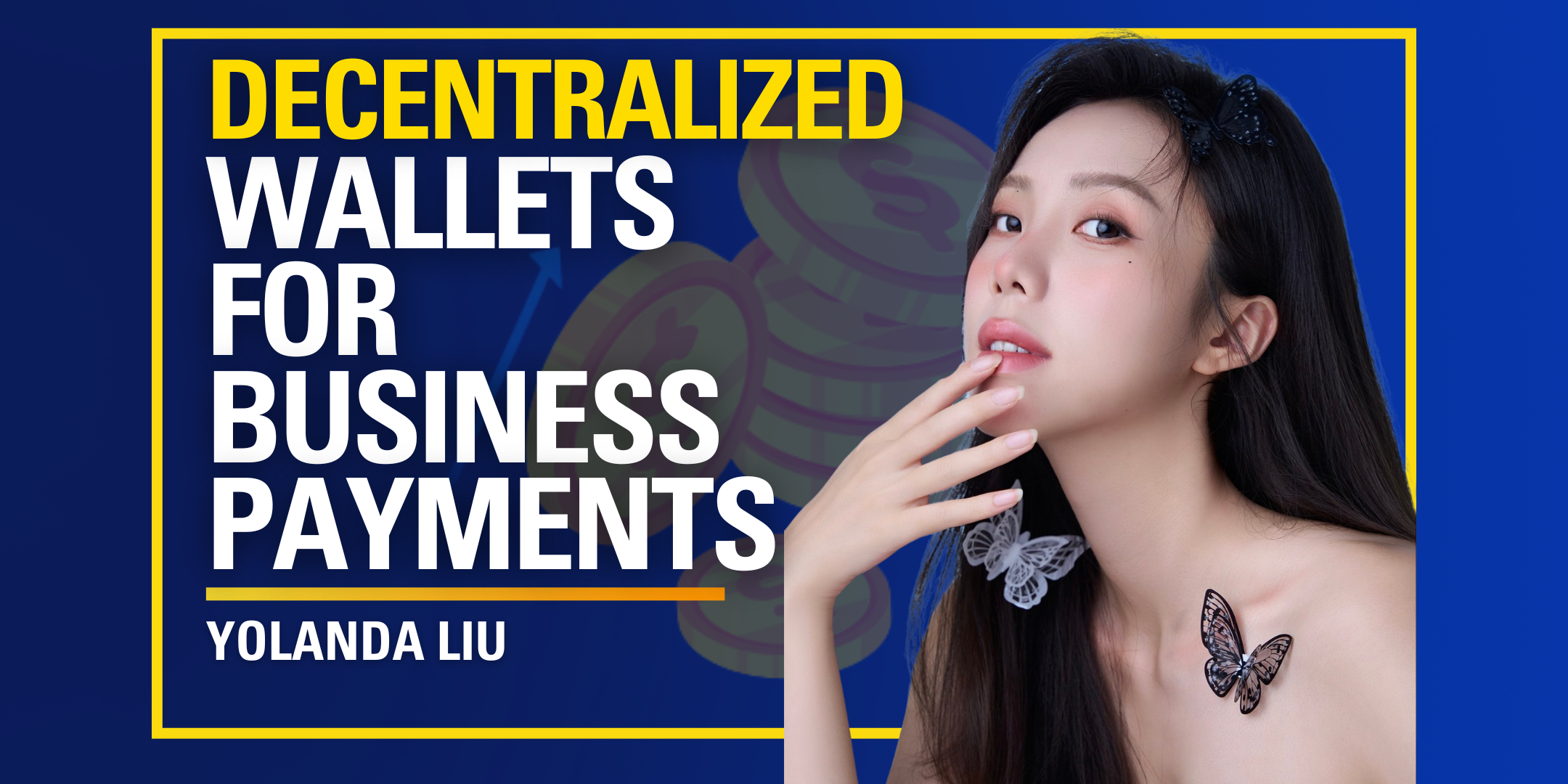
Decentralized Wallets for Business Payments - Yolanda Liu | ATC #594
Join Stephen Sargeant, your host of the Around The Coin podcast, as he dives into crypto wallets used by major merchants worldwide with special guest Yolanda Liu, co-founder of Pay Protocol, a decentralized Wallet-as-a-Service platform designed to give enterprises operational control over their digital assets through smart contract governance. Her career spans deep-tech entrepreneurship and international business development. She previously founded an A.I./holographics company in Shanghai and Melbourne, where she built one of the first interactive holographic A.I. avatars using proprietary software and hardware, attracting clients across China, Japan, Germany, Switzerland, and Austria. Earlier, she served as head of business development for Asia at intraHouse, focusing on data center solutions, mobile applications, and collaboration platforms. Yolanda holds a bachelor’s degree in Computational Science and Engineering from ETH Zürich.
Host: Stephen Sargeant
Guests: Irina Chuchkina
We are also available via:
Buzzsprout • YouTube • Quora • Medium • X • Facebook • LinkedIn • Soundcloud • Apple Podcast • Spotify • Player FM
Episode Transcript
Stephen: This is your host, Stephen Sargeant, the Around The Coin podcast. We have another wallet as a service episode where we go deep into crypto wallets that are being used by some of the biggest merchants around the world. In this episode, we talk to Yolanda Lou. She's the co-founder of Pay. We talk about her early start in AI and Holographics and how she got into the payment ecosystem, but more importantly, how she's servicing Web3 when it comes to merchant payment service provider.
When it comes to merchant payment services, especially when it comes to stable coins. She talks all about stable coins. We touch on regulation, how the. How lower gas fees and quicker transaction speeds make a huge difference in Web3. This is a really fun episode talking to somebody at the forefront of crypto payments in the industry.
Enjoy the episode.
Stephen: This is your host, Stephen Sargeant, the Around The Coin podcast. We have another wallet episode, which we've had a lot on the episode because this has been the biggest infrastructure play, I think, in crypto history is around wallet infrastructure. We have Yolanda, who's the co-founder of Pay Protocol.
Yolanda, tell us a little bit about yourself.
Yolanda: Yeah. Hey guys. I'm Yolanda, co-founder of Pay Protocol. we built the first truly decentralized and self custodian wallet infrastructure for, businesses, all powered by smart contracts. And yeah, I'm very excited to be here and chat with, Stephen. As I'm a big fan of his podcast and, yeah, interestingly, we also, saw that he's, recently, had podcasts with some other, wallets, providers.
and we abso absolutely love the, Insights from his, podcast and, he truly has a deep understanding in our industry. So that's why I'm, very glad to be here. And yeah, looking forward for our
Stephen: appreciate that we appre, we always love fans at first, you know, long time listener, first time caller. And what's interesting, the more I get into, you know, people bucket wallets all in one huge category and every conversation I'm having, it's like, oh. The more you understand the uniqueness and differences is, and this one especially before we jump into wallet infrastructure and crypto, you have a very interesting career path.
You were in AI holographics. I think a lot of people remember the celebrities like Chris Jenner and were in these like holographic boxes. Is that what you were working on in the company? Tell me a little bit about this AI holographics company that you were working with.
Yolanda: Yeah, so initially we actually wanted to build a product that lets individuals create AI adv avatars. exactly what, like what you were talking about. So, ADV avatars, either of, the people themselves or others. And then display those adv avatars in the interactive holographic box, like the hardware.
You can then talk to them and they will respond and it feels very alive. but interestingly, the first people who really wanted to pay for the product, were not individuals. It was businesses. So we ended up selling the product to like McDonald's, furniture shops, bookshops hospitals, places like that.
They use it as a holographic 3D AI assistance that can talk to customers, answer questions, and even help with directions, inside, inside the space. So, yeah, it's, it's much more fun and more engaging than a screen or like a static sign
Stephen: And we're seeing that a lot, right? I, I've seen maybe not even holographics, but like people working around the world and they're, they're the cashier, right? Like a local shop in, you know, in, you know, small town USA. But now we're seeing this holographic. It makes sense now that these other companies are getting into Holographics, for their organization.
Yolanda: Yeah, yeah, absolutely. It's more, eye catching. So, yeah, no wonder, it's, getting really, much more popular now.
Stephen: Is there certain regions, 'cause you know, I know you were frequent in like APAC region. Do you feel like they used it in Asia and other places there versus in, you know, Western culture and North America?
Yolanda: I, I think, it's true that, it's still more, you, you, you see them more, in Publix, in, Asia, like in China, in Japan. yeah, maybe because there are too many shopping malls here, or, yeah, people love, like, also like enemies. and like I, there's like idol culture here. That's probably the, the reason why you see it more often here.
And, like, at companies, they, they are also more, like digital. How do you say? They are more like open-minded towards such a, like new digitalization, ways of, displaying like ads.
Stephen: I am curious. Most people that get into payments like ran some kind of business. They were a construction business and they had trouble sending money to vendors or you know, they were doing cross, cross-border transactions and it was so difficult to send payments. But you don't have that background like that was in, it seems like you just jumped into payments.
how did you get into payments? And then even more importantly, how did you get into payments involving crypto?
Yolanda: So I've actually personally felt the pain points of payments and custodian finance, not just once, but twice. I first got into crypto pretty early back in high school, after I read, after I read the Bitcoin White paper. And then, like when I was at university at ETH Zurich. So, me and my friends, we built a green, Bitcoin mining firm in North Norway.
And later on, with some other friends, we, scaled and, engaged in more mining, projects. And till one day. So everything collapsed because our custodian, PayPal Finance, which was, I believe the biggest, like, Bitcoin custodian in Asia, they had like over a thousand employees. Like, super big team.
Most of the miners I know have Bitcoins, like, at, PayPal Finance. So, Until just one day, they, ended up like, rugging over a billion dollars in assets, including like more than 800 Bitcoin from me and my friends. And this, experience was, like a brutal, and it's, completely, shaped my belief that real decentralized, real decentralized finance has to be a hundred percent self custody.
So, when it truly goes into a payment, then it's, came to my second, experience with the ai, holographic startup. we also wanted to charge in crypto. Then, I got like, surprised that all the crypto payment provider I could, I could find was all like, centralized. And, because of my experience with, like a r and pool, I a hundred percent didn't want to use a third party provider for crypto payment since it's already crypto.
that's why, that's why, I didn't want the, web two, This like a web, two way of a crypto payment. And, it felt obvious that, I should build a truly decentralized self custodian crypto payment infrastructure so that any businesses can accept crypto while staying fully in control of their assets with zero third party risk.
Stephen: Now do, did you ever get any of that crypto back? You know, do you still talk about this with friends? Is it one of those things where you wake up and you check the Bitcoin price and like little tears roll down your eyes? Like tell me about that experience, because that seems like a lot of crypto and that's like not back in 2016 where it didn't mean that much.
It's 2020. Like crypto had legit value back then.
Yolanda: Yeah. so I believe, like me and my friends, we didn't get anything back. and we don't really think people got their Bitcoin back since, yeah, like, it's like, it's like, we. FTX, right. oh, actually even worse, so,
Stephen: I think some of those people will get their FDX now that the price has gone up. I think some people will get their money back and more, if anything.
Yolanda: Yeah. Okay. Yeah. So, PayPal Finance, they claim that, they've, given some money back to some people, but just never happen to, me personally. and yeah, I, I still think about it sometimes. It's a very great lesson, but I. wouldn't say that there's any regret. 'cause for me it's, either a lesson that you learned and a gain for, the future or like, like a success.
So yeah, it's, it's over.
Stephen: Yeah, and I, I love that. I think anyone that's been in crypto for longer than five years has experienced a version of that for some level of money. You know, nobody's been uns. If you're still in crypto between 2018 and now you've lost money. You've made some bad decisions. I have NFTs there that are probably the worth.
The Hawaiian vacations are just sitting there collecting dust at pennies, so. But I'm curious, you talked about it too, we have had so many different wallet providers on the podcast that you gotta chance to listen to with so many payment and wallet providers, especially in the crypto space. What was the main thing that you were trying to solve for?
Like what was the gap Pay Protocol was filling.
Yolanda: it's definitely private key risk and high gas fee, like high gas fees. So on the security side, there are three major risks in today's wallet and payment infrastructure. First is, third party dependency. that's like what we just talked about. So when businesses re rely on custodian providers or external wallet services, they are ultimately, trusting someone else with their assets.
If that third party fails, rocked, or mismanaged funds, like FTX, the businesses, Bear the loss. And second is internal misconduct, which is, actually a huge headache for large companies like exchanges. So, even when they built their own, wallet infrastructure in-house and avoid third parties, the traditional MPC setups still re relies heavily on internal engineers like a single bug back door or, like,
Internal, misconduct can lead to stolen funds and in most cases, it's extremely hard to trace or recover these assets. And the third, risk is external hacking, especially at the sub wallet level. And, so 'cause sub-bullets are often the most exposed, because they handle frequent transactions, making them a common target for, like hackers. And on top of security, there's also a major gas efficiency problem for C two B. Businesses like exchanges, neobank and cut issuers that process massive transactions every day. Gas costs add up fast and can easily result in millions of dollars in gas fees every year. Traditional architectures also, require frequent aggregation, which results in.
Again, additional gas fees, making an already constantly problem, even worse. So when you zoom out, these are really the core pain points in our industry, like security risk on multiple fronts and extremely poor gas fee efficiency at scales. And this is exactly the gap we set out to solve with Pay Protocol.
By building our unique, smart contract based wallets at a protocol design specific, as a protocol designed specifically to eliminate this risk while dramatically improving gas efficiency.
Stephen: Can you tell me the difference between, like, when you say sub wallet, can you kind of create a scenario like what's a sub wallet versus a regular wallet?
Yolanda: so sub wallets are normally used by, like, C two B businesses, like, for example, exchanges, neo banks, card issuers so that, it can, differential the income of the crypto from different. Sources, like different individual. like for example, with your Coinbase account, the money you see on your account is not really on your account, like a meta, meta mask wallet, right?
It's a, on the account, a sub wallet account represents you, managed by the exchange.
Stephen: It's like an IOU account. They're basically saying, this crypto's here, but like you can't really touch it or do anything with it versus like what you can do with like a, if you have it on a meta mask, like that's yours. You can move it in and out. So I get what you mean by sub wallet.
Yolanda: Right, exactly. And it's, it's the same, I mean, similar, scenario for merchants. 'cause like for merchants when they receive, they can receive like multiple payments, at the same time from different people and they need to deliver different, products or service. That's why they can also not just receive the payment with one wallet.
they need like sub-bullets to differential, like the, purpose of the, like payments and, so that they can also easily manage and deliver the, response like, responding, like, product.
Stephen: Right and Pay Protocol. It's decentralized wallet as a service, which I'm getting to know a lot more, was wallet as a service platform. What are some of the existing centralized, I think you touched on it with, you know, your experience obviously, with Babel Finance, but what was your experience with the existing centralized wallet service platforms?
That were already in the market, like what is the advantage of a decentralized wallets infrastructure versus a centralized infrastructure?
Yolanda: So firstly, no offense. I have a lot of respect for NPC based wallets as a service providers like fire Blocks and defense, which you recently, interviewed, like the founder as well. So, they've, like all the NPC wallets, they've played an important role in pushing institutional crypto adoption forward.
That said, we still consider all, MPC wallets solutions, to be central, centralized. the reason is simple. So in an MPC setup, at least one key share is, held by, third party. And MPC relies on offhand services to, perform key sharing, encryption and signing. So no matter how secure or where designed those systems are.
The server system themselves remain centralized infrastructure, and in contrast, Pay Protocols. What architecture is fully smart Contract base and leaves on leaves at the protocol level. So as long as the blockchain exists, the system continues to operate. There's no dependency on centralized services or any third party. And the upside, of the decentralized, wallet as a service model is also pretty clear. So, we provide a stronger, we provide stronger security, true ownership, and full control for the clients.
Stephen: And, you know, I'm assuming that there's gonna be down, you know, there's always gonna be pluses in my, especially when it comes to decentralization. I'm assuming the downside is probably gonna touch on things like institutions need. They wanna know who they're dealing with and you know, they're holding other customers money so they can't just go fully decentralized.
What are some of the downsides maybe of having a decentralized wallet service, system?
Yolanda: Yeah. so firstly, we, we don't hold any of our clients', money. But you are right. There's a downside always. So interestingly, I think our downside is also part of the trade off. So some businesses they simply prefer working with centralized providers. it's not, it's like, it's like not everyone believes in crypto yet, so, yeah.
That's the gap, we saw in the market, centralized what is as a service. its also, we are covered, but like, but a truly decentralized, protocol level, what is as a service, for businesses. It still didn't exist yet. and that's exactly what we set out to build with paperwork.
Stephen: And is it, I'm assuming, is it more expensive to be centralized? Right? When they're centralized, you're paying for certain things, there's more intermediaries. I'm just thinking if I'm a, you know, a merchant and I need to do something, if someone comes build me a centralized wallet service. It's gonna tend to cost more, I'm assuming, than a decentralized service.
What are your thoughts? Is there a trade off in regards to price as well where
Yolanda:
Stephen: may be a little bit more, effective and less expensive?
Yolanda: So all like. I don't think our product is, more expensive than probably any of our competitor, especially regarding gas fee. 'cause our, smart contract is specifically built for, gas saving purpose. So per transaction, on all EVM compatible chains, we can save, over like 81%, for the gas fee.
And, our pricing model is also pretty simple. so, like it's, this, I think it's, the same as, most of the other, providers. Like we charge transaction fee and sometimes we also charge a setup fee. Yeah, so that's it. We don't charge any other additional fees, and there's also no reason for us to, like make our product more expensive for, for the clients.
Stephen: Yeah, I would assume it's a little bit less expensive, how much savings, especially you dealing with merchants that have, you know, hundreds or thousands of transactions. How important is those gas savings? Because I know when I was buying NFTs in 2021, like a good portion was was gas fees, whether or not you even got the NFT, which was funny enough.
How, how expensive are gas fees now? I haven't looked in a while. Is it, is it a huge chunk for a lot of these organizations if they're constantly paying gas fees with all these transactions that I'm assuming they're doing?
Yolanda: Yeah. gas fee is a hundred percent a big, headache for, clients that for like, businesses that handle, like a huge amount of, transactions. So, for example, for like a card issuer client, we have, they, like. Initially they, they, like originally, were processing over a million. they were paying over a million dollars, gas fee only on, like is annually.
but like after they, switched to our wallets, so we helped them to, we, we help them reduce the gas fee lower to, less than a hundred thousand dollars per year.
Stephen: Wow. Do they get like a, when you, when you spend a million dollars on Ethereum, do you get like a plaque, like on YouTube when you get a million subscriber, they send like an Ethereum plaque to let you know how much you spent. I know when you buy a certain amount of tokens on like, chat, GBT and that they give you like a little plaque saying like, Hey, you bought this many tokens.
For open ai, if you had to describe, like, let's just say we're going to a cloud. I'm taking you to my high school. We're gonna explain to teenagers what Pay Protocol does and why they should care. What would be your explanation to the everyday user of like what Pay Protocol is?
Yolanda: Yeah. So, here's a simple example. imagine you run a popular game or app and thousands of players make, small payments every day, buying schemes, passes or subscriptions with traditional systems. All that money goes through banks or centralized, crypto platforms and fees add up. transactions are slow and they can phrase it, delay it, or even loss it.
You just have to trust them. So with Pay Protocol payments, go straight into your smart contract wallets that you control. No middleman, no one can secretly move the money. Everything is transparent and verifiable on chain. You can audit and verify your ownership and the security advantages of paperwork anytime.
So the rules are written in code, not controlled by people.
Stephen: And I am curious, you know, how. Like, can you describe why you decided to go that route? Like smart contract wallet? I haven't heard of these before, maybe in certain examples, but like where did you come up with this concept? And What I found about smart contracts is they're kind of dumb, right? You tell it exactly what to do, but it will only do what you wanted to do, which in the case of a merchant is actually you wanted to follow specific rules.
When I heard about like smart contract landlord agreements and the doors will lock if you don't pay your rent by a certain day. That sounds a little bit like there might be leniency or the banks closed a certain day. Why did you go down the path of smart contract wallets and like how did you guys contrive and build that?
Yolanda: yeah, that's a very good question. So, one of the main reasons is, so like, because, we, we like that one smart contract is fixed, no one can make a change. And this exactly solve the pain point of internal misconduct. and, also like, like, like. What you just described. So smart contract, can, like, automatically, like, so, sets up, rules and, execute.
and that's exactly, how our wallet, management system or is, that's also the reason why like our sub wallets and the code wallet, they don't have private keys because, like the font flow is, written, so it's fixed that, any funds from the sub wallets can only go to the code wallet and the funds from the code wallet can only go to the hot wallet.
So by, designing the, like sub-bullets and the co wa wallets, kis, we also eliminate the risk of external hacking. unlike these levels.
Stephen: And I am curious though, why hasn't anyone thought about this before? I'm sure there's been iterations. Is it. 'cause of the scaling issue, I'm, I'm assuming if you're dealing with a lot of vendors, you're dealing with a lot of transactions and that scale issue, comes up, is that the reason why nobody's tried this before and, you know, why do people do MPC that has private keys versus your keyless system?
Yolanda: So historically, we, we, there was a similar, contract wallet company, safe, which is also decentralized, but yeah, you are right. They were never designed for institutional or, payment use cases like the safe wallet, it's, not optimized for high frequency transaction flow they don't support sub wallet, architecture. there's no native business level management system and gas cost, become. extremely high at scale. that's exactly the reason why, NPC wallets, emerged, for like, institutional adoption. they made it easier to add, to add enterprise controls on top for traditional key base models.
The trade off is that MPC still depends on centralized infrastructure and off-hand services, so it's not truly decentralized. And I think the main reason that nobody else has built a decentralized commercial, wallet, infrastructure, exactly like ours. it's largely a timing thing. So for a long time, crypto payments simply were not, mature enough.
till recently the decentralization mindset in finance has like finally been, vol involving more and more. So this shift has accelerated, significantly right now, especially this year. like following, regulatory, Clarity such as the Genius Act, which helps, legitimate, which helps like, basically, unlock, real world crypto, payment use cases.
So, and finally, regulators started to, truly care about self custody. So yeah, we fully expect more companies to start building in our, decentralized and self custodian direction. And as an infrastructure layer, we actually welcome that, because our goal with, Pay Protocol is to be a fund foundational protocol layer that anyone can deploy on.
Not only for direct clients like merchants or fintechs, but also for companies that want to provide our wallets to their clients with their own brand. Similar to how base, was built on the op stack. this is how, truly scalable financial, especially a decentralized, financial, infrastructure gets built.
Stephen: And what are some of the use cases that you're seeing your customers use your solution for? Maybe some of the main ones. And you talked about the evolution of the regulatory around stable coins and crypto payments. Are there some emerging use cases that you've seen in the last six months? Just because of all the momentum that we've seen in the us.
Yolanda: Yeah, the main use case today is crypto checkout and using crypto, especially stable coins as an orchestration layer for cross-border payments. So this enable a faster, cheaper, and more transparent global settlement. And with the, recent stablecoin momentum, all these use cases are clearly accelerating.
Stephen: And you know, what are some of the things that, when you say, like you name some of the businesses that are utilizing technology today, the main features, what are some of maybe the average tra, like what kind of transaction volume are we talking? What is the average, you know, transaction size. You see like maybe some stats or some thoughts around like.
What are some of the numbers around the things that you're seeing based on your clients?
Yolanda: so we work with a diverse, of set of clients including, for example, a, a global, payment processor like, PV, which, processes over $3 billion in annual, TPE, so total payment volume and, quite live, which is the largest Chinese food delivery platform in the Philippines. and, art.
Which is a New York based, cloud platform that has generated multimillion dollar revenue. And, so what they, constantly value about, Pay Protocol is, our, high security and, ex and like the, ultra low gas fees and
Stephen: Yeah, when you think, when you think about it, right, like a small percentage of gas fees where you're talking about billions or millions, makes a huge difference, right?
Yolanda: Yeah, yeah, absolutely. Like we are the most proud about, the security aspect of our product that I think most of our clients, what they love the most about is still, gas, the gas efficiency, advantage. And, regarding your question about the, like transaction volume, so, it also, vary. like FinTech customers, they can easily, exist, a like $50 million in monthly volume.
while like retail clients, they typically, process under $10 million per month. nowadays, even though we. Do like for our long term vision, like, over five years, we believe that, crypto checkout, is the future and there will be more and more, retail, like accept, crypto payments and, process like, more crypto.
like yeah, as, the, pay as the, even like a main, payment source,
Stephen: You know.
Yolanda: reel.
Stephen: Right, and you're based in the APAC region right now with the emergence of like live shopping, which has been going on for I think decades in Asia, but it's really starting to flow over into the Western culture with like TikTok shop and whatnot. What are some of the trends are you seeing there where crypto payments, to your point, small payments, small purchases, do you see an area now where Pay Protocol can support some of these larger e-commerce or live shopping, channels?
Yolanda: we strongly believe that crypto checkout will be widely adopted in the near future. So especially with the recent signals like YouTube has started allowing creators to receive their earning in PayPal's staple Coin. P-Y-U-S-D, I think this is now only in the states yet, but, for sure like it's a trend.
and this momentum is very. Positive, for like a wallet as a service providers like us because, commercial crypto wallet infrastructure is a fundameta layer, that every businesses need to, securely accept and manage crypto payments.
Stephen: You know, I was on your website and your docs page says that you, you know, you can onboard into Web3 payment infrastructure in like hours versus days or months if you went through a traditional organization. Talk to me at a high level about that process. If someone's listening to this and they're like, Hey, this sounds kind of cool.
You know, crypto's always been kind of hard, or these centralized services charge too much or take too much of a percentage. Talk to me about what it would be like if they needed to sign up for Pay Protocol or wanted to sign up for Pay Protocol.
Yolanda: Yeah. So, it's, absolutely, one of our, targets to make the product as frictionless as possible. And, so for, for our clients, they like, would first sign up. Using their existing, individual wallets. for example, like meta mask or any preferred wallet by them, as the, designated like hot wallet.
And then, configure the required parties for what is design nature control. then they are, guided through the full set of our product features and the integration process, either by our engineers or, by our AI assistant. it's like up to their preference. we also have like a ai, engine.
like, from that you can check, from our, Like doc websites, which I think, has been pretty, helpful as well. So that's the feedback we got. And, so we believe a low friction integration is, critically important. that's also wise drive. like first build is early payments, API to be, simple enough with, just seven lines of codes. so that's a mantra that helped it, spread directly amongst startups and builders. I mean, like we, So we are pretty like, proud that, I, all the feedbacks we got so far from our clients have, have been very positive. They love, how seamless and, frictionless it is. with our, with the, the, the integration experience is with us.
Stephen: You currently mentioned that you're EVM compatible or your solution is EVM compatible works in those type of environments. excuse me. Is there any other, you know, blockchains like salon is obviously hot. Is there any other thoughts on, you know, compatibility with other, virtual machines?
Yolanda: yeah, so we also support Trump and, we've actually been ranking as the number six on Trump based on TVL. For like a long time. So if you go on Defy Lama, you click on Chunk, then you can just see, I think the first ranking you see is, like, like a TBR ranking and we have the number six there.
and regarding soa, it's for sure on our roadmap. but yeah, we, we haven't integrated Solana yet. Because, like right now, we see most of the volume, like from our clients. it's still mainly on strong and even compatible chains.
Stephen: What does tr like, what do people do on Tron? Like what is the main activity on trod? Like, I don't know too much about Tron like. I'm more on the compliance side. I know some blockchain analytics companies, you can like investigate on Tron, but I just don't know like what people are running to Tron for.
What would it be? Is it the Tether on Tron? Like what is tran's number one use case?
Yolanda: that's a good question. I don't know the exact reason, but, most of the, I think most of the crypto payments, happens on Trump. and yeah, and exactly. It's like USDT on Trump. We also, almost all of our volume is in, USDT. I guess trying just somehow, the most like, so widely adapt in emerging markets like, apac.
also I think, Yeah, like, Africa as well. and also in, in Latan.
Stephen: awesome. So, you know, you've been talking about having no private keys, no need for third party servers or services. Which eliminates a lot of the attack vectors we see in crypto, right? Private key exploits. Third, anything to do with third party or web two infrastructure is a huge vulnerability. but there's still things like wallet drainers and clipboard hijackers and access approval schemes that are draining DeFi funds on a daily basis.
How do you protect against those like lucrative, attacks from cyber criminals?
Yolanda: so our wallets are configured with a multisignature management. Unlike some other multisig wallets, our system does not require frequent changes to the Multisig configuration. Doing a normal operation, which makes low frequency, actions in cold environments significantly safer and define and payments have fundamentally, different risk profiles.
Our core contracts are built using, well established, extensively tested based, modules that have been proven over time. In addition, in. Addition, our, payment protocol avoids complex features stacking, which, reduces the attack surface and makes, security audits more straightforward and robust.
Stephen: why is it important that you think, in your opinion, obviously this is your bread and butter and your baby that you've created, but why is it important to merchants to have a self custody solution, and how does that impact their traditional banking? Really, I've been in crypto long enough to realize like it's tough for a lot of these merchants to get traditional bank accounts, much less accept crypto.
So how does your decentralized self custody solution. Impact some of their traditional banking relationships in order for them to keep on operating and not seem as high risk for their banking institution.
Yolanda: Yeah. So at a very basic level, most businesses, if given the choice, wouldn't want anyone else touching their money. That's especially
Stephen: True.
Yolanda: for merchants.
Stephen: percent agree with that.
Yolanda: Yeah. 'cause like, yeah, especially for merchants, like many of them have gone through painful experience with like bank accounts or centralized exchange accounts being frozen, delayed, or registered for reasons that are often unclear and outside their control.
I think almost all of our clients, yeah, they've like, it. They've encountered such, situations and some are even in lawsuits. so yeah, self custody gives merchants direct ownership and control over their funds. it removes like third party risk and allow them to manage their. Capital on their own terms beyond just holding funds safely.
Merchants also want to put idle balances to work. That's also why our code wallet is, integrated directly with protocols like ev. So merchants can earn yield on their treasury, or like idle funds, without, moving funds off platform or giving up. Custody, like self custody. So when it comes to traditional banks, the biggest long-term impact is actually, deficit outflow.
So funds moving from bank accounts into like unchain assets. that's a broader shift driven by, I believe, like public blockchains and, consumer wallets, like, meta mask or Web3 neobank. So, That's why we don't think, we have a, a big like impact or like a negative impact on traditional banking.
Stephen: That's so interesting and. It's funny because you know, I work with the client Marinade Labs and they were doing staking on Solana and like that's exactly like, it would be cool to have your protocol there where they can still get yield from like blockchain activity and supporting the network, but they can also use those funds for transacting and receiving payments.
That's super interesting. Do you think this decentralized approach, I know we've heard it before, I know you've been in crypto long enough to remember everyone was talking about decentralization, but that kind of quieted down when they need to actual build businesses. Do you think your decentralized approach is where the industry will start to head in the future, especially when it comes to payment infrastructure?
Yolanda: yeah, absolutely. since our, since our, protocol is like, really at the, infrastructure layer, so, any businesses that want to, either, Use, like, crypto payment, like, sorry. Either any business that want to integrate, crypto payment as a payment option for themselves or provide crypto payments, as a, like service to other businesses. Like, even any company that one wants to, do exactly the same thing as, we do, we welcome all of them to deploy, Pay Protocol. it can even be like under their brand. So, Yeah, we, we are looking forward to, scale up together with, however, that aligns with our, decentralized, decent, decentralized, spirit and vision.
Stephen: And you know, if, obviously it's a competitive market when it comes to wallet services, even if you have a certain niche. But these larger players can just like purchase like a bridge, like brave infrastructure and start spinning out stable coins or stable Coin infrastructure. What's your moat? If like a large organization's like, oh, I like the way this decentralized, you know, wallet as a service platform is doing, we're gonna just create the exact same thing.
What do you think your moat is?
Yolanda: Yeah. so we see our mode across four key areas. firstly, we have the first mover advantage. So we've already built strong experience and reputation, with our existing clients and partners. Their continuous feedback has helped us, a lot to, Iterate and improve the product by time. As long as we continue scaling in the right direction, maintain strong traction, and keep innovating, we are confident in our ability to lead the decentralized commercial wallets.
Space. And second, we do have the technical advantage. So it's not easy to assemble a team of experienced smart contract engineers and immediately build. So our engineers, they've, all, work in like, they've all been writing smart contract for over five years. It was not easy to, like, find all of them together.
And, yeah, so, basically it's not like, it's not easy for. I, Any business, any, of the big players as well, to find these people and then, build, deploy, and, validate a product exactly like ours, like right away. And our technology, has been also proven throughout live clients, so, which gives us a meaningful.
Head startts that cannot be easily compressed. And thirdly, we do have the ecosystem mode. So as a protocol, Pay Protocol is technically not, competing with anyone. like we, Like talk about, just talk about any business can white label and build on top of, our protocol. and we welcome also the big players to, deploy, our protocol.
again, like how, base from Coinbase, was built on op stack. So, in contrast, if, a large exchange like, Binance offers a similar pro product like ours, I don't think. Like, their competitor, like Coinbase or KX would, just, take it. so our neutral protocol level position is a key advantage.
So the lastly, we do have the token economic mode as well. once issued, our token will be directly tied to real protocol usage. Governance and security. So aligning token, value with unchain payment activity, and long term network growth.
Stephen: That's super interesting and you make a great point if you're like very neutral in there are people who just want to use you versus trying to build a competitor when they can just get access to you and you're not exclusive. I'm curious though. You know, I was reading the other day, like even SEC chair, Paul Atkins was saying like, Hey, you know, Americans have the right to self custody.
It's a foundational American value, which is a far cry away from everything that we're hearing from the SEC over the last, what feels like since crypto started. what are your thoughts about basically Paul Atkins code, SEC co-signing and validating your business model?
Yolanda: Yeah, so I think it's a very meaningful statement, he put there and, it's deeply, aligned with, American history. the right to self custody reflects core American values, around, property rights individual. so sovereignty. Freedom, principles rooted the, in the, constitution from protections against unlawful, seizure to the loan tradition of American Americans directly, holding cash, land and assets.
And this, I. I believe, our, dis decentralization wallet, like infrastructure totally. and, and the, self custodian, aspect, also totally, aligned, with yeah, American value.
Stephen: You know it. As a co-founder, what are some of the metrics I come from like a marketing sites, they're all about KPIs and you know, trans, you know, I'm assuming transaction speed, is it going to be key? What are some of the metrics that you measure in order to feel that you're progressing and you know, what are your hopes for KPIs, especially going into 2026?
Yolanda: Yeah. So, for me, just one word, traction. I believe in real data, like how our investor believes in over 30%. MOM, By the end of 2026, our goal is to surpass $500 million in monthly volume. And once we reach this scale, I think we'll be well positioned to prepare for our, token launch.
Stephen: And I'm curious, like if you had to summarize 2025 and then do some predictions for 2026, whether it's to do with paid protocols specifically or the industry as a whole. Gimme like a couple sentences and wrap up 20, 25 for me and what you're gonna ex looking ahead, what you see in 2026.
Yolanda: Yeah, so 2025 is absolutely the year crypto went mainstream in 2025. Multiple industry
Stephen: in 2017 and 2021
Yolanda: oh. Okay. Then let's say 2025 is a year, for, institutional crypto adoption.
Stephen: right
Yolanda: So, generally, you know, like, multiple, industry reports and market developments show a clear shift away from purely, speculative crypto towards real utility institutional adoption and stable Coin based, financial infrastructure.
And for paper article. 2025 was about traction and validation, since we spent two years before building and, launched the product, this year. And, finally, we, we got like clients and we proof, that decentralized, self, custodian payment infrastructure can operate reliably at scale.
And, looking ahead to, 2026, I believe Han Payments were moved from pilot programs to, default, financial rails with enterprise, bring much larger volume unchain. besides that, I'm also, particularly bullish, unchain prediction markets. So, yeah. for us, the focus is on scaling towards, like the 500 million, monthly volume, and then we can, prepare for the, next phase of growth, including, our token launch.
That's the like, kind of like the short term, plan and vision.
Stephen: How's it been being a founder, like a co-founder? This is a huge step for you. I think you've seen, you've been in crypto early and you've, you know, had some challenges early, like all of us that's been in crypto for a long time. Was there any books, podcasts that you listened to? What, like made you say, Hey, I'm gonna, I'm gonna start build, I'm gonna deal with people because I'm, as you said, it's a people game, hiring talent.
What's been your overall experience and has there been any books, podcasts, or just. Thoughts or concepts that have changed your way of thinking since you become a co-founder of Pay Protocol?
Yolanda: yeah. So one idea that, influenced me a lot is from, Jainism, which is, like ancient Chinese, like philosophy. So, it says, aligning knowledge with execution. It sounds simple, but it's difficult, in practice. 'cause like sometimes we overthink and hesitate and then nothing ever really starts.
like Rumi said, as you start to work on the way. The way appears and other times we are busy acting without enough clarity. this is like what Nietzsche described, as like a came on or the lion. So doing and pushing forward without fully knowing, conscious about, the what or understanding the why.
So results, A conscious, clarity or systematic thinking. it's also difficult to reach the highest level of, efficiency.
Stephen: It reminds me of like the knowing doing gap. A lot of us know what to do, but we don't actually do it. Right, which is what you're saying. It's taking the knowledge and then actually executing it with action. This has been such a great conversation in a lot. I love what you guys are building. I love a lot of the wallet.
'cause although there's a lot of overlap and competition, it's like you're each in your own lane. You each have to kind of collaborate because it's an ecosystem, right? It has to be interoperable and you each have your own niche of like who are the customers that you're serving? And these episodes has really given me an eye-opener, especially now with a stablecoin conversation.
What are your thoughts as we end the podcast? What are your thoughts about stable coins overall? I'm assuming is like a lot of the, you know, transactions have to do with stable coins. Maybe you can correct me.
Yolanda: yeah, we totally believe that, stablecoin payment is the future, especially, for cross-border payments. 'cause, the, traditional, Global payment rails, like a swift is, super expensive and, slow. So, yeah, stablecoin is, it, it like, already, it's already helping a lot of people in the emerging market.
saving like, a lot of, costs and time, for like remittances, or, just like, yeah, other, kind of, cross water payments. So, It's a very, there's already very meaningful, application and, yeah, I don't see a reason why, it wouldn't, scale up, to become, something even bigger.
Stephen: And where's the best place where people can find you? Are you living out on crypto? Twitter, do you, come on, I see you a little bit active on LinkedIn. So where's the best place for people to connect with you after this episode?
Yolanda: Yeah, so, I'm not a big social media person. I think the best way to find me is still on LinkedIn. Could just search Yolanda Liu Pay Protocol and yeah, then
Stephen: out the
Yolanda: my
Stephen: We'll link to the website. 'cause the website actually has some cool, the interesting, the docs are easy to read, very interesting blog posts. So the website's
Yolanda: Thank you.
Stephen: get to learn. I did a lot of learning there. That's where I spend a lot of my time now. I used to say, I'm not the technical person, but now I'm like, Hey, it's just about reading, understanding a little bit of the applications and.
I love docs that really walk you through everything versus like giving you script of like, of the different code that they're using. I'm like, that's not helpful for me at all. so we really appreciate Yolanda and everything that you're building. thanks so much.
Yolanda: Thank you Stephen. And likewise. Thanks for the invitation to your podcast.
Stephen: Awesome.
.png)