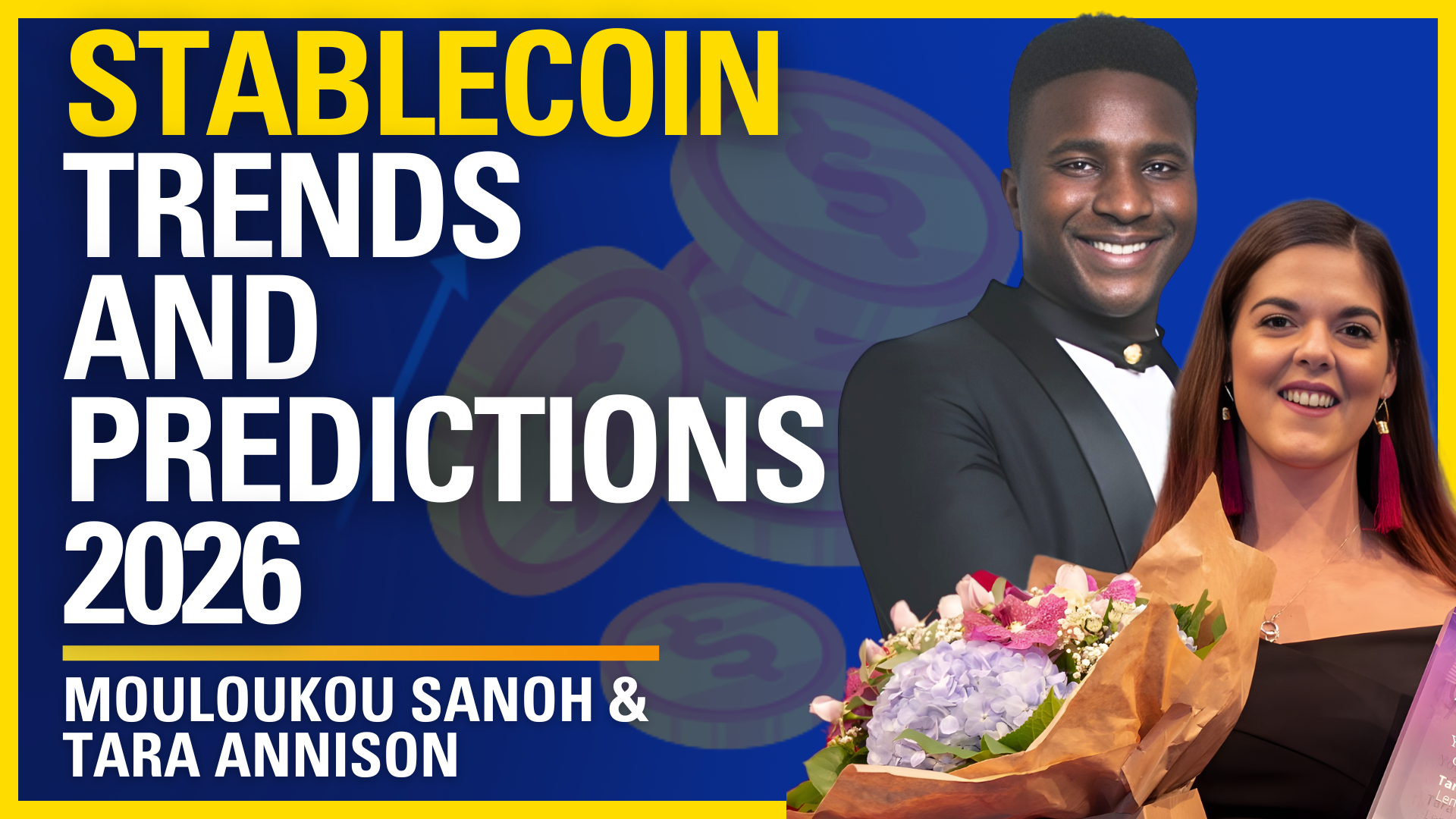
Stablecoin Trends and Predictions 2026 - Mouloukou Sanoh & Tara Annison | ATC #599
Join host Stephen Sargeant on a special edition of the Around The Coin Podcast as he sits down with top industry voices to unpack the biggest crypto trends of 2025 and what’s ahead for 2026. Featuring Mouloukou Sanoh, CEO and co-founder of Mansa, where he focuses on building stablecoin-based settlement rails for real-world cross-border payments. He’s worked across emerging market payment corridors, with a practical, operator’s view on what breaks in production - liquidity, FX, compliance, and reliability - and what it takes to make stablecoins behave like dependable financial infrastructure.
In the second segment, Tara Annison, Chief Product Officer at Rhino.fi, a stablecoin infrastructure company that enables enterprise firms to easily accept, trade and send stablecoins. She is also a security researcher who investigates and writes about emerging threats within the crypto industry. Tara has a Bitcoin ABC book for children, crypto-themed mobile and card games and she's the creator of the world's first crypto advent calendar.
Host: Stephen Sargeant
Guests: Mouloukou Sanoh & Tara Annison
We are also available via:
Buzzsprout • YouTube • Quora • Medium • X • Facebook • LinkedIn • Soundcloud • Apple Podcast • Spotify • Player FM
Episode Transcript
Stephen: This is the Around The Coin podcast. This is the first time we've ever done this. We are doing summaries and trends from 2025 and predictions for 2026. We have three guests on the pod today, multiple interactions and recordings. We're gonna be talking about stablecoins. We're gonna be talking about wallet, drainers and crypto crime.
We might even talk a little bit about travel rule and infrastructure when it comes to global payments. We are locked in. We had Moloka on the podcast for Mansa, and he talked all about the stablecoin infrastructure, how they're processing payments all around the world, the importance of the Genius Act and what's happening in the US and how they're servicing emerging markets from LATAM to APAC.
He even gives some fun, fun predictions about what to expect from Circle in the next few years. So you want to tune into this whole podcast. You will definitely enjoy this mixture of amazing Minds Talk soon.
This is a special edition of Around The Coin Podcast. We're gonna talk a little bit about what's happened in 2025 and the trends and what can we predict. In 2026, we have Mouloukou. You're here to talk about your amazing company, what you saw from the global payments and transfer of wealth space, and what you're expecting, especially now, stable coins and payments companies are getting into digital assets.
So, tell us a little bit about yourself and a little bit about what your company does.
Mouloukou: Thank you so much for, um, the introduction. It's a pleasure to be here, uh, on the show with you at Fi New year, uh, to you and everybody, uh, listening. My name is Mouloukou. I am the CEO and the co-founder of Mansa. We are a global stablecoin settlement network.
Um, we work with global, uh, payment companies that include. Uh, Remingtons, bw B payments, virtual cards, payouts, and we enable them to send money around the world instantly. So instead of waiting t plus three, like, uh, they do currently, like with Swift, we have them settle their transactions globally to emerging markets like Africa, Latin America, Southeast Asia.
We've done over 300, $320 million in stablecoin volume in the past, uh, 13 months. And, uh, we're backed by Teter.
Stephen: I was gonna say, Hey, you've done a lot in the last six months, everything that's happening in the industry. Tell me how significant the change was when the US put out the stablecoin regulation.
They're coming with a Clarity Act. Uh, I think they're making a decision of whether you can earn interest on those stable coins. How big of a change was it to your business to have the Trump administration really support digital assets around the world?
Mouloukou: I think it was everything. I think. Everybody always knew that stable coins were a real use case, and there was always the promise of it, but it was always very murky because for stable coins to really be effective, you need true interoperability between fiat and stable.
And in order to have that fiat. Component, you need clear regulation. So having the Genius Act is, is what's literally made lead bank, like one of the most valuable banks in the whole world because they pump all the volume that bridge and, and all these stable Coin like issuers do as well. But I think like for us personally, um, as well, it was a ripple effect because once, uh, the US came out, like with these rules.
You saw the whole world, um, as well like follows them and, and now like we are seeing clearer regulations um, throughout the world, which benefits everybody.
Stephen: Can you tell me about being backed by Tether? 'cause that might confuse some people. People know Tether, they are a stable Coin issuer. Why would they have to back any kind of settlement layers or anything else?
Tell me a little bit about how that works and how much that's benefited your business model.
Mouloukou: I think it's benefited us tremendously because. Because they've been amazing partners. They understand the space better than anybody, right? Like they are the largest able company in the world that's used by over 400 million people.
So they are like incredible partners to, um, to strategize with. They have introduced us to so many companies, and I think what Tether understands is that, especially now with regulation. Everybody is releasing like the unstable Coin. You have loo, you have JP Morgan, you have X, Y, z like you have circle. So in order to stay relevant, tether like needs to make sure, and I, and not only tether, but all the stable coins like need to make sure that they are being used for payments and they're actually being used in day-to-day.
And, and so teter has been incredibly like, active to like, ensure that it maintains like its place as the, as the, uh, dominant stablecoin. And it has supported companies like myself tremendously.
Stephen: Tell me about what's your competitive advantage? Because now that the stablecoin, you know, now that the stablecoin is out there, everyone's flipping on that neon sign that says Stablecoin processing.
Tell me what makes your company unique, especially in a day and age now where everyone's trying to get in on, you know, the bucket of wealth at stable coins is opening up for a lot of companies.
Mouloukou: Yeah, a hundred percent. I think you need to, and I think it's very important when we speak about stable coins.
To remember that stable coins aren't a magic bullet. They don't make all the issues that we have with fiat or the current financial system disappear, but like just make it easier, right? So one of the biggest benefits for stablecoin is just being as just having like the ability to move cash seamlessly.
But at the end of the day, even if I send you a million USDT or a million like USDC, you still need it. To be in US dollars in your Chase bank or, or like in, or like whatever app, uh, that you use. So they must actually be, be able, like to be used. But then, so how do you on an off-ramp seamlessly at the best possible price, at the best possible friction, even with your Coinbase or like whatever, like when you, on an off-ramp, it can take 24 plus hours, it can take so much hours.
And then if you think about, you know, payment companies that do. Millions of dollars of transactions per hour and thousands of transactions per day globally. How do you make it a technology that actually enables them to scale? Because if you, because if you, if I am for example, like if I'm a revenue, if I'm a Western Union that has 300, 400 stores, like around the world, the staple coins really helped me like that much like my network, I mean, my fees are better than stable coins.
Right? So, so like it's also about being able to like enhance what. Infrastructure these payment companies have and making it much more seamless so they can essentially like reduce fees. So what we, and if you look at payments from, it's from the very first principle basis. You're like, I give you $1 here and you give me $1 there, you must have the other dollar there.
So it's, so it's at the end of the day, it's a capital. And what we have developed and what we're like trying to do is creating an instantaneous settlement network where payment companies don't need to bring their own capital, where we help them fund the transactions and all they have to do is just serve the customers.
So, and like we hope, that's what's, uh, gives us, uh, our edge.
Stephen: What's the biggest challenge? 'cause I'm assuming there's a lot of technical infrastructure. I'm assuming there's still a lot of, you know, interconnection with the traditional banking, you know, correspondent banking that's never been that. Maybe a little bit more lenient to crypto, but they've never been keeping banking relationships was the hardest thing to do for anyone that had crypto or stable coins in their name.
What's been the biggest challenge for you that you've been able to overcome as a company?
Mouloukou: I think it, I think it's multifold. I think the first. The first challenge was like, like I've been working on Manta since 2023. I, I like, like I still vividly, like, remember when I started thinking about this, and this was like Q1, like.
23 stable coins were not cool. Right. And, and like you weren't, you know, going like on Bloomberg or, or like everyone else. And like, you had everybody thinking like stable coins. No. Right. So it was like, number one really proving the like, use case and, and, and like there wasn't as much like infrastructure, right?
So if there was an infrastructure that we had to build like a lot of the novel ways and a lot of the select things, um, that we had to do, um, to scale essentially. So at the beginning we really had to sell. The foundational pieces. And then it's also like a chicken and egg, because you also need to find the really big customers, but the really big customers don't like, wanna work with you until, like, they can make sure that you can settle transactions from them in a hundred plus countries.
Right? So it, it, so, and, and, but you know, just like, I guess through like grit and, and like, um, perseverance essentially, like we were able to like, um, um, overcome that. And then thirdly, as well, as I mentioned, payments. Its most simplest form is just a capital game. So you need money in order to move money.
So we like also like had to develop like relationships with asset managers, quant funds and, and, and like institutional money, um, to be able to deliver an instantaneous experience for our customers.
Stephen: That's interesting. You don't really think about that. You think about the money moving, but it can't be instantaneous unless you have capital in a lot of places around the world.
What are some of the trends? The why we're here is talk about some of the trends of 2025. Obviously regulation opened up a lot, but what were some of the other nuances that you've seen, whether it was new, you know, customer, uh, pro prototypes or new customer profiles that were coming to you that never talked about digital assets before.
What were some of the things that you saw from Mansa, from trends in the industry in 2025?
Mouloukou: I think the biggest trend now is. The essentially willingness from everybody to, to be able to like engage stable coins in, and like these intake is like stable coins, like very serious. So I've had conversations where it's some of the largest OG fintechs.
That have amazing like, um, networks that do billions of dollars like in volume. And I'm now seriously looking at, okay, how can we do stable coins? How can we, you know, move money out of like Nigeria, like easier, like, um, I'm, um, using stable coins and we're speaking to like Neobanks as well. So like that's been really, really great and I expect that to continue.
And I don't think it's, I don't think stable coins is one of those things like cbdc where it was more of a. Top down thing. I think this is more like bottom up, right? Like where you're, especially in these key like emerging markets where you have the customers asking these fintechs that they wanna start like using stable coins, asking them to start like adopting stable coins.
Because from there, because from their perspective it's so much easier, right? So like I think you roll, continue seeing, especially in emerging markets. The other option of stable coins. Um, it's already widely used. Like you see it just like accelerate, like even more. I think like when you look at the US and the like western world, like I think we will see like, we'll go from maybe 20 stable coins now.
To maybe only like a five, like by the end of the year. Right. And like we'll see like a lot of guys that want to do like initiatives either adopt like USDC or choose like one of the many stable coins that, uh, will be out there. I think also just depending on the Clarity Act, we'll also see like what happens because like I think that's a huge decision that could have implications not just for stable coins, but for banks, um, as well.
Stephen: Do you think 'cause of the Clarity Act will open up opportunities to earn interests on stable coins? You'll see more traditional banks getting into the system.
Mouloukou: Yeah, a hundred percent. I mean, if, if you have, if, if, if Coinbase can now legally offer 5%, um, then, then why do you need the banks? So that should be complete, honest, because Coinbase can do everything.
Like, I mean like, like if you think about it, um, they can on ramp for you, they can help you like send money especially, um, to anywhere. Across the world and they can give you interest, which your bank does it. So if you look at, for example, like I think, um, the average FDIC um, interest rate that you earn is 0.73% annually.
And, but the fed rate right now is three point, I think it's like three point, like 82. So you're earning like 2.1% in net interest margin on trillions of dollars of customer like deposits. Right. So like, like I think the big banks alone, I think they make like $4 trillion just in, just in net interest margin alone.
So like if you, and, and that's huge, right? So like, I think if like, like you're gonna have Kraken and you're gonna have Coinbase, you're gonna have all these guys that in Robinhood who has insanely large user base, just start like offering you that. So like, I think you can have insane like, implications for, for like crypto finance and, and beyond.
And that's why the banks are fighting it so hard, right.
Stephen: Yeah, definitely in 2026. One thing I'm already starting to see is this play on geopolitics. We're seeing, you know, every day there's a new country involved in some type of turmoil, whether, you know it's dictatorships or you know, we've seen Venezuela, Iran is in the blackout.
You know, where governments can come in and take everything at the drop of a dime. Have, do you see a lot more of these emerging markets coming from countries that are involved in whether it's war or turmoil or political instability?
Mouloukou: Yeah, a hundred percent at time. I think they're like, that is, I, I think I, I, it's been a while since I looked at the numbers.
I think stablecoin is like 300 billion plus. I would, like, I would estimate that 70% of that is people in, in emerging. Like markets because they deal with inflation. Look at a place like Venezuela that inflation's thousands of percent. Or a place like Zimbabwe that has a $1 trillion note, for example, right?
Or places where it's incredibly difficult to send money in and out. And these have been the largest of adopters and the biggest drivers, uh, the GSDT volume. Um, to be completely honest, I think it will just continue like that.
Stephen: I'm curious your thoughts we've seen in Nigeria where, you know, even in the US the dollar devalue every year, obviously Nigeria and other places, it it's being reduced at an, at its, you know, in a very, uh, expeditious way.
What are your thoughts about, you know, maybe people aren't gonna want stable coins in the future because it's tied to the value of a. You know, a fiat denomination that's losing its value every single year. What your thoughts around that, you know, a, a contributor to dash game and said eventually, you know, people are gonna wanna use tokens or coins that don't, aren't tied to something that's losing their value.
Any thoughts around that?
Mouloukou: No, I think, like, I think people forget that, um. The US dollar is not just a fiat currency. I like, I like, I think the US dollar is basically the, like US economy, it is like basically confidence in, in the like, uh, US economy, right? And like this is why the dollar and, and people can say yes, right?
Like the dollar share in global trade. Is like, like reducing like year on year. But I think that's also fuss like, like I feel that's also one sided statement because global trade is increasing and you have other countries that like that are doing more trade. So is the US solution really decreasing that much?
And also people use like US dollar because of that confidence, right? We, and like we, and like we can't really start using like Chinese one because of how it's traded and what other currency like do you want? If I'm a merchant in Venezuela and you're a merchant, like. In, um, Zimbabwe, how are we gonna like interchange, right?
So like, I think the, like US dollar will keep on being used as, as like the primary like method of trade, right? At least like in our lifetime. Um, I believe that, I think. But people use stable coins primarily, in my opinion, as a hedge against inflation of a debt currency that's still developing. Fi like two to 300% per year, but then also has the ability to send money in and out of the country more seamlessly.
So it's different priorities than I believe us. Right. So I think when we talk about stable coins, we must really talk about a deal of two stable coins in emerge markets versus, right, like in the like developed world, because I think it's two different, completely like use cases.
Stephen: That's interesting. Any other trends you think about seeing?
Do you think there might be countries that ban stable coins or the use of digital assets for transfer? Anything that you're expecting in 2026? Uh, as you said now, Bloomberg wants everyone on the news, everyone's giving predictions. Is there any kind of contrarian or left field things that you think are gonna happen in the industry just based on your experiences that maybe people aren't thinking about now due to all the hype and you know, the investment into this space?
Mouloukou: I think. I like, I think, um, the biggest change like that we're gonna see going forward in, in, in like stable coins is the rise of like local stable coins. Like, I, like, I think. Many countries are rushing to release their own stable coins or are rushing to, to like, like support like stable coins, right? Like being released, uh um, and because they all wanted the entire digital economy to be double rise.
Right. And like that's a risk with like everybody using like u like USD based, like stable coins. 'cause it dollar rises the entire economy, dollar rises it like, um, um, entire country. I think there could be very interesting things that happen once, once we have a wide use Japan stablecoin or why use like Korean stable Coin and, and, and, and any of these like Latins American, um, currency as well.
So I think that would be like really, really like interesting. But I. Also do not think that we will have any radical changes in terms of essentially stable coins, because that's essentially like US treasuries, um, at the end of the day. Right. And, and I think when it involves this much politics, I think it's, uh, like, I think like it's in the uss best interest, right?
As Scott Besson has said, for stable coins to continue growing. So Teer is essentially too big to fill.
Stephen: They've gotten a head start, right? And I think a lot of people talk negatively about Tether, but it's like, well, there was no regulation in the US so why would they be putting in compliance requirements that aren't even there yet?
And now you see why? That made a lot of sense. Now there's regulation. Now they'll put the steps in place and they'll follow the rules. But if there's no rules, there's really no benefit to doing above and beyond when you don't really know what's gonna happen. You know, the country, I think they played it smartly, and I don't think circle did it badly either, right?
They, they wanted to be ahead of the curve, but it's kind like you don't want to be too soon. And it's, it is like, you know, when you have spending a lot of working capital in that area, what's,
Mouloukou: I think I wanna, like, I actually, you know, like, uh, speaking of circle and uh, sorry to cut you off. I actually have one very contrarian take, um, when it comes to like stable coins and like, I believe, like, I would like, like I think over the next.
Five to 10 years, I would short circle. And the reason why I was short circle is because circles. Circle has two really big, what it considered mold. One mold was its regulatory mode. Surco and everywhere went circle, tried to be extremely compliant, did everything, uh, like by the book and everything. So like, so on and so forth.
But then if you look at the banks, banks have a lot more regulation and a lot more, uh, uh, uh, licenses than like circle. So if JP Morgan releases its own stable Coin and I'm already moving tens of million to like JP Morgan. Do I use USEC or do use JPM, you know, so then it have, then I have, or like Goldman Sachs.
Right? Or if, and then now if you're talking consumer, if I'm a consumer, like do I use Chase? So it is like USEC, right? So it's, now you have, and then like the other mode it like it had was the interop. The interoperability with banking systems, right? Circum min, right? You send me like UCC, I'll give you a dollar, but the banks, it's the bank, right?
So can circle really compete against a bank? I would say no. Right? So that is my contrarian.
Stephen: I think that's a really great point. Instead, what we were just discussing about being early, when they came to regulation, that was their moat. They were, you know, enterprise y. Every company that wants to get involved aren't just gonna jump into digital assets or stable coins.
They needed a regulated, compliant way to do it. But now if they're doing their own stable coins, like, and I'm not, you know, I'm not saying like circles are gonna go to zero, but you're right, a lot of that market, they, they may not be able to expand the market. 'cause a lot of the players that they were attracting are now coming up with their own ways of transferring funds via stable coins.
So to your point, it may not grow as much as it did. Um, that's super interesting. Anything cool from Mansa, your company? What are you looking forward to in 2026? You're in Dubai. What give us like, what's the actual good conference to go to in Dubai? Because there's one every single day. So give us some goods on what to actually attend in Dubai.
I'm assuming it's not Token 2049. No, I'm joking.
Mouloukou: I like, like I think, you know, like apart from obviously like token, like I think since that week, like is, I think, I think Abu Dhabi Finance Week is probably like one of the. The best conferences because you have the convergence of finance, government, uh, web free FinTech, just bioscience any, any relevant industry coming together.
And it's just such a magical week here, here, uh, in the UAE and, uh, in the, uh, middle East. Apart from that, for like, for months, we are, uh, doubling down on Latin America. Like we're doubling down on, on like Southeast Asia. We're doubling down in. Enabling stable coins in global trade. So enabling people to send money to China, for example, or being able to more seamlessly, like on and off ramp, right?
And really build that infrastructure that adds value to, to like payment companies. So I'm, uh, really, really excited, uh, for this year.
Stephen: Mouloukou, this was absolutely amazing. Where's the best place for people to find you? Are you only on Twitter now that they're getting over the crypto Twitter? Are you on Twitter?
Are you on LinkedIn? Where's the best place for people to reach you?
Mouloukou: Both, both. Um, on Lincoln, I am Cusano and on Twitter I am Manza. Uh, mk, thank you so much for having me.
Stephen: Awesome. Thank you so much.
Mouloukou: Thank you.
Stephen: Welcome to the second segment of the Special Around The Coin episode. In this one, we have Tara Annison. She's gonna tell us all about the stablecoin infrastructure trends she saw in 2025 and where they're going in 2026. She's gonna talk about institutional adoption and why it seems like it's a bearish type bull market that we're having right now in digital assets.
And she even goes deep into her expertise of crypto crime scam typologies. Everything that's happening at Web3 even. Talk a little bit about staking and their time at Twin Stake. This is a really great segment as part of our 2025 summary and our 2026 predictions for the Around The Coin podcast. Stay tuned.
We have Tara Annison. Tara, you're probably one of the most prolific product. Compliance crypto content creators.
You can jam all of those words to describe what you do, but you're just a creative, you're a builder. You're, you know, you're a creator. I love that about you. I have so much of your card games. We just bought some of your Bitcoin, um, Bitcoin, uh, Merry Christmas cards. So it's really exciting to have you on the episode.
Give us a little quick deep dive into who you are, and then we're gonna talk about what happened in 2025 in your world and what you think is gonna happen in 2026.
Tara: Definitely. Well, it's great to be on. Um, I, as you say, I'm a builder of many things, uh, across a whole range now of, uh, projects across the crypto industry.
So I started in the world of institutional borrowing and lending, moved into cold storage and custody, then went into the compliance side of things have been in staking and now in the stable Coin side of the world. And in any of my free time, which isn't much, I. Build pointless crypto products that no one really needs, but I enjoy creating them.
So whether that's books, card games, um, mobile games, and now as you say, a range of greetings cards, which is an incredibly niche segment of crypto Christmas, Valentine's Day, birthday, et cetera. But I just love building stuff.
Stephen: Can you create a box? You know how Amazon has like those box of like 50 cards and you just buy the box and like anytime you do the card you're like, oh, perfect, I have something to pick from.
Like they're like $30 and it pays for itself. And so they're, you know, scrambling last minute and paying like $7 for a card. If you create a box, I would love a box of just random cards. Thank you cards, everything. I'm in for it 100%. I'll do a pre-order for you.
Tara: That's next week unsorted of what I'm doing.
Stephen: That's amazing. Tell us what you saw, you were in staking in 2025. You're going into stable Coin infrastructure, but you always have your pulse on like crypto crime, you know, scam typologies. Tell us what you saw a lot of in 2025.
Tara: Yeah, so I think there was, um, a lot of very hot narratives. There's always a narrative in crypto, whether it's, you know, ICOs, whether it's meme coins.
There's always these narratives. I think for me. One of the big narratives in 2025 was stablecoins. And so perhaps no surprise, uh, moving into the stable Coin space, but I think actually the narrative was really different from what we've seen previously in the crypto industry, which is hype. We see a lot of hype.
We see these boom on these bus cycles. It's what we saw with meme coins, for instance. Everyone getting really excited and then it just kind of fizzles into nothing because, and maybe I'll get a bit of, hey on this, but meme coins, I don't really have an actual usage, and that's not so much of a flame. You know, it's still great that we have experiments in the space, but I think what stablecoins have done is they've, as a narrative moved from being like, oh, what is this thing?
Oh, it's getting billions of dollars of market value. To, you know, these are actually really useful and what's been really special about the kind of stable Coin progress is that it's not just people in crypto that think they're useful. And that's when you can get a, your bit of a spidey sense as a person in the industry that this thing is gonna stick around when you get the web two kind of part of the world talking about Sables, when you get the banks start talking about something in crypto, you know that it's catching on.
And so for me the, I think the overarching narrative in 2025 was stablecoins have got in a nice way, a bit boring. Like people don't talk about them as crypto. They're just kind of here. They've found their place, they've got product market fit. You're seeing the TVL increasing. We're seeing the use cases increasing.
And so for me, that was what really excited me to move from the world of staking where I've just come from. And maybe we can talk about the staking trends from last year where it's. Going into the stablecoin space. So for me, I'd say that's almost at the number one narrative in 2025, and what I think is gonna continue into 2026, but more around the.
Maybe commercialization, I suppose, of stablecoins. I think we will see a lot of issuance platforms. We will see the classic thing where every company wants to launch their own stable Coin. We see this in crypto in every era. You see this boom of, oh, I must have that thing. Whether it's an NFT project, I must have my own meme Coin.
I must have my own layer. I want. This year will be, I need to have my own stable Coin Spoiler. You don't. And most of them will absolutely tank. But what we will, I think see is U-S-D-C-U-S-D-T continued to get that traction in the market and continue to be this, oh, you're using stablecoins. Obviously I just become part and parcel of not just the crypto industry, but crypto businesses, web two businesses.
Institutions and it will become in a good way, more and more boring because it's just, oh, that's how we do stuff. That's on chain finance.
Stephen: I'm curious 'cause you've always tracked trends, whether it's manosphere, you know, actors using, uh, crypto, whether it's, you know, ransomware, the drainers. Can you give us like a two minute like spiel of what you're seeing?
What are the emerging risks that you're seeing with some of the wallet drainers, the sophistication of some of the scam tactics and typologies.
Tara: Yeah, well one actually is stablecoins. Um, stablecoins now surpass your likes of Bitcoin ether as the assets being used by criminals. And as we saw actually with Bitcoin way back when it was created, some of the first people to start using it were criminals buying stuff on the dark web.
So the criminals starting to use something is quite a good bellwether actually, that it's potentially going to hit, uh, the mainstream. So. We'll continue to see them using stablecoins much more. Uh, it's going to be interesting because we'll start to see how regulators and law enforcement try to tackle this because with many of the stablecoins, they have what's called blacklister functions.
So it does enable you to basically freeze those funds. Now, you cannot do that with Bitcoin. You can't do it with Ether. So potentially it's going to be this interesting situation where law enforcement actually have a couple more tools in their bag to try and stop AIC activity that's in stables. What we're also seeing, um, which is a continued trend, but is criminals becoming.
Better feels the wrong word, but in the like olden days of crime, you get that phishing email and you tell it as a phishing email, oh, it's got spelling mistakes. It's written really poorly. The graphics are really kind of rubbish. Send you to a phishing website. You're like, well, that's not the real HSBC website.
It's the logos in blue rather than red. Now with ai, if you are a criminal, you have no excuse for being. Kind of a bit rubbish because you can use these AI tools to create a very well crafted phishing email. You can use Lovable or V zero to create a phishing page, which looks pretty much pixel perfect from the real website.
So one of the challenges is that it's becoming harder and harder for the everyday person to try and spot what is a phishing scam. And then under the hood of what these, uh, scams are trying to do is of course steal all of your assets, but there's now more and more kits out there that they can buy, which come as full packages to drain all of your funds.
They come with support channels where the criminals will give you tips and tricks of how to use it professionally. They come with templates so that again, you don't have to create anything yourself. And what's really scary is those criminals are collecting information from people deploying these scams in the wild to see what works well and what doesn't in the product sense.
It's like they're doing AB testing and continually improving their product offering, although their product offering is scamming you. So, and then with AI as well, they can just continually say to the chat bot, you know, how can I make this better? So even the low effort criminals can run really sophisticated scams now, and that becomes really challenging for your everyday user when you're trying to spot what's real and what's fake.
Stephen: It's almost impossible. And now they're using this technology to actually try to go after some of the exchanges and sending them fake law enforcement requests to get the customer's data and information and to drain their account, doing account takeovers. So there's so many more attack vectors. And to your point about stablecoins, similar to, you know, everyone jumping online to do commerce when COVID came around, when you're rushing and not putting in the proper cybersecurity and the proper.
Guardrails. Those companies are like, Hey, we can make an extra $50 million in transaction volume if we switch on the stable Coin switch. You have to be careful if you don't have the right infrastructure in place. Do you see a lot of that where it's just companies rushing in and they don't really have the right framework and hackers are just laughing in the background like, yeah, you want to jump into stablecoins?
Sure, we can help you do that.
Tara: So I think that's what we'll see this year actually. Um, in the same way with ai, for instance, one of the, yeah, benefits of people using AI was that can really help you from an efficiency perspective. But if you are an employee and you're putting, you know. Company documentation through chat GPT or you are a asking perplexity something that's highly confidential or putting your own company's code and cord.
There are huge risks there. And so the challenge as always comes down to education for employees. What can I do safely? And for many companies. They will say, we don't use any of that stuff. We don't endorse it. It's too risky. Which actually just pushes the use kind of underground by their employers.
They're not doing it within gated environments, they're just doing it on their own, you know, Gmail account. Similarly, what we'll see with, you know, stable Coin or crypto. Adoption by, um, kinda mainstream web two companies is if they try and rush it or if they say to the internal, get us into crypto the way that they could do that could be an insecure route.
It could be a little bit DIY. So that's going to be really important that we have companies working with real reputable companies in the space rather than trying to do something quick and dirty. And that becomes even more challenging if a company's trying to jump on whatever the latest hype cycle is.
Um, because then they're trying to rush, they've got fomo, which is something that we see a lot of criminals. It's. Absolute classic criminal playbook is to try and make you feel rushed, make you try and click something without thinking or, you know, uh, integrate something without properly considering the ramifications.
So that's gonna be really big for companies if they're looking to issue their own stable Coin. Integrate a stable Coin infrastructure provider, whatever it may be, they've got to make sure they're doing it securely because the criminals are always there waiting to kind of basically steal all your money.
Stephen: I'm curious. You know, we're in this weird spot where we're like begging for institutional adoption for the last decade. We finally have it. We have the regulation in the US that we're begging for and it seems like this is, should be the bull of all bull markets. But there seems to be like these bearish pockets where, you know, some companies are like actually withdrawing, the banks aren't going as deep as we think.
They're in certain scenarios. Can you kind of describe this market as something that's been in multiple markets? Maybe describe it from what you see from like an industry sentiment and what you see as a builder who's been building through all the chaos over the last decade.
Tara: Yeah, so I, I think there's actually two elements to this.
The first is a Bitcoin angle, and the second is, um, and I'll talk about that first. Banks just take way longer than people think to get into anything. Institutions have a much lower risk tolerance than people perhaps even think so. I know you know, when we were at Twin Stake, uh, when I was at Twin Stake, our client base is purely institutions, hedge funds, family offices, ETF providers.
They are definitely really interested in crypto. But you've potentially got a legal and a risk function, which is a little bit more trad, file leaning. They need longer to understand what are the crypto specific risks, how do they navigate them safely? And so even though in crypto we are looking at something and thinking, well, amazing opportunity.
Why aren't you piling in? They exist in a very different world of risk analysis. And so I think with the ETFs, what we saw last year and this year, you know, that has been really the first kind of safe step they can take in, which fits their existing understanding, their templates. So they can say, oh, that thing is an ETF, even though it's crypto, it's an ETF.
And we get that. We know how to model the risks. We know how to deal with liquidity, though there's always like the little angles there, uh, when we think about the Ethereum, uh, entry and execute, but it. Basically is something that they can understand. Now, as soon as you move into the DeFi side of things, and I'm talking, borrowing, lending, getting involved in prediction markets, perp, dexus, that stuff to us in crypto, we're like, oh, well obviously it, it's just this that is so different from their models.
That they need more time to understand it. You know, how does insurance work? Can you get insured? What if there's a Black swan event? What if there's a massive liquidity crunch? What if the regs decide? The regulators decide they want to come out with something fundamentally different, and the US has shown that they can change their views pretty quickly as an organization and as an institution, you need to be ready to handle that.
You cannot just handle that on the fly and go, well, we'll see how it goes. So yes, the institutions are. Closer than they've ever been, but they just generally move a lot slower and they have to be more cautious. You know, you can yolo in when you've got a hundred dollars and hope that it works if you are looking after people's pensions.
If YOLO mandates are in the billions of dollars. We kind of want those people to move a little bit slower and cautiously. We don't want them to just ape into like staking in Catano because they Googled it and thought it was great when the rest of us might look at that and go, Hmm, questionable. So it's good that they're moving with a little bit more.
Kind of lower, uh, slower pace and caution, but they are still moving in. You know, I think if I think back to my days when I was at HSBC, I remember in 2015 pitching to members of the bank to do a Bitcoin ETF, and I mean they should have listened firstly, but it was way too early for them to do it. I was meeting with their legal and reg teams.
Literally doing a Bitcoin 1 0 1 with them. Actually, a lot of banks are still in the place of needing those one one oh ones, um, one oh ones and understanding the fundamentals of it, but they're definitely getting closer. And then on the Bitcoin side of things, I think that's actually been a real recalibration moment for institutions and certainly when we think of staking, because if you hold a big pile of E, the big pile of soul, you can stake it very safely with institutional staking platforms like Twin Stake, you can have it cued with really large firms that are incredibly reputable bit go doing their IPO, Coinbase, you know, every.
Woman, them, their dog, pretty much knows Coinbase now inside and outside of the industry. So you can do that pretty safely. You can get returns of three, 7% depending on the chain and it's, it is low risk. However, Bitcoin is still the big asset, the big daddy asset, where everyone thinks, how do I get my Bitcoin to work for me?
But it's not a proof of stake asset. It doesn't have native yield. And so I think that's been a really big challenge for the institutions is they hold Bitcoin. It's normally the first one they get. Bitcoin is the gateway drug into crypto. You can't really do that much with it. In fact, actually
Stephen: almost the, you have to, you have to hope that the value goes up.
It's like having a, a house, right? You hope that the value goes up, but you, you know, unless you can borrow against it and do some other fun things, you're really not, you're only gonna make that percentage that everybody would make that has a house kind of thing.
Tara: Exactly. Which is a challenge, right?
Because if you think of banks and institutions. They try and do stuff with their assets. They want to make it work for them. But Bitcoin is a very different beast. So now you've got this situation where the institutions bought big piles of Bitcoin. They hope that it would become much more valuable and they become rich.
But people are saying, well, what are we doing with that Bitcoin? Like, well, dunno, maybe we just don't lose it. Maybe we do. Bitcoin staking, which, um, I think 2025 has proved there was a lot of hype in that, and from an institutional perspective at least that didn't match, uh, risk appetite and reality. But that mismatch I think is really tricky for institutions because they have Bitcoin.
They kind of don't know what to do with it. And then when you say, well, have you considered E and Soul? And some of those kind of second tier assets that can work for you, but then they've got to learn. All about something which is fundamentally very different to Bitcoin. It's more similar to some of the other traditional assets, but also crypto.
So very different. So actually it's quite a long learning journey that institutions have to go on to just even get from Bitcoin into Ethan. So, and staking, which is the lowest risk, uh, activity when you go anymore into DeFi. Most of them get a bit glazed, eyes confused and just hear risk, uh, liquidity issues and, and challenges.
Stephen: Rightfully so. 'cause people are also trying to pitch them on AI and hey, you need ai, you're gonna go outta the business. So you know, the consultants are always filling their head. You don't know who to believe. What do you see happening in 2026? You're obviously saying stablecoin is probably gonna expand from last year into this year.
Is there any unique things that you're like people should be keeping their eye on in 2026? Because it's definitely gonna be a fundamental year for that specific thing.
Tara: So I think privacy. Is going to be a really interesting topic. So the, towards the end of last year, we had a huge run on various different privacy assets.
Um, Z Cash or Z cash was an asset that not. A huge number of people really knew about, but they've been building almost kind of in the back room for the last couple of years. Really? Well, really impressive team. But there's been quite a lot of team drama recently. Um, but the tech is, is
Stephen: usually there is when money is involved where nobody's making money, everyone's happy.
As soon as money gets in, they're like, oh man, I should get more money than you. Right,
Tara: exactly. But it's, the tech is really interesting and I think what Z Cash has done versus mine is really interesting. Because they basically have optional privacy, and the shielded set has been increasing dramatically last year.
Um, but it's optional privacy, and that's really clever because the regulators traditionally to date, have got very scared. When we talk about privacy and crypto, I think mainly through a, a misunderstanding, you still do hear people say, oh, Bitcoin is anonymous. It's not synonymous. Um, companies like Elliptic exists to be able to trace through the chain.
It's a transparent ledger. But the anonymity angle or the perceived anonymity angle really worries people in crypto 'cause they think, well, it's just gonna be used by criminals and, and then we get North Korea. Stealing like insane billion dollars, uh, of money. Last year it was $2.2 billion. They managed to steal.
You've got state, other state sponsored actors getting involved in crypto. So the crime concerns are very real. And when you layer on this potential anon, uh, anonymity, obviously that worries regulators. However, what we're seeing much more of now is people trying to think a little bit more creatively about how we balance the absolutely fair, right to privacy.
You know, if I said to you, show me your bank account in the fiat world, you'd probably say no. You're, and you are entitled to it. It's not 'cause you're doing anything dodgy, but financial privacy is very normal and it's something that pretty much all of us in the world have without even thinking about it.
And we shouldn't necessarily have to give that up just because we want to go on chain. So if we start to see more institutional adoption of crypto and institutional adoption of blockchain, if we start to see stablecoins being used by web two, we're going to have to really. Take this head on and say, well, what do we do about privacy?
Because we have that in the web two world. If we want to move more. Activity on chain. If we're gonna do, you know, on chain activity around tokenization of money market funds and if we want to bring stocks and bonds on, and if we want companies to fully live on chain and do payroll, we have to consider privacy.
And whether we use existing assets like Z Cash, I think Minero's probably out, it's a bit tainted by now. Um, and is. I could be two private regulate, do
Stephen: let, do a full rebrand, let's they do a full rebrand and get some functionality. Mean there was, I never used it really, but it was always very clunky for the people that I know that used it very often.
Tara: Yeah. And it's, I think it's, it's largely being kind of, um, blacklisted from exchanges now.
Stephen: Yeah, exactly. But
Tara: there's a lot of talk at the moment around private stablecoins and what. They can potentially do that because if that's going to be the money rail, we need to find some way to, to do it more privately.
So I think this year is going to be a year where we see a heck of a lot of innovation around CK SNAs and around efficiency and scalability of of proofs. I think we're going to see more creativity when it comes to protecting privacy online. Potentially we'll see some new layer ones, 'cause everyone always spins up a new layer one.
Um, but fundamentally what will come out of some good projects, some less good projects, will be an advancement in how we think about more of our lives being on chain and de facto the privacy that we need, want and deserve around that.
Stephen: You know, I spoke to Maricio that was talking to me a little bit about midnight, what they're doing there.
We had Rand Hindi from Zama on the podcast talking about FHE and the benefits of that. So we're seeing a lot of innovation, uh, especially you mentioned the whole, you know, privacy around like. Illicit actors using, we need to be able to peek in and see. But to your point about institutions do not want you to see every transaction or every person you're paying on the payroll.
That's kind of, you know, taboo for you to be able to see what your coworker beside you is making. Tara, this has been amazing. What are you coming up with next? I know you always have, uh, a report, a guide, a something, what's coming, what's dropping in 2026 from you?
Tara: Um, probably more pointless greeting cards, but, uh, and a selection of like 50 you can buy, for instance.
Um, but definitely I do actually have very well time to this. I, uh, a couple of, I'll call it series, but a bunch of posts around some of the big narratives in 2025 and how I think they translate to 2026. So that will be coming out next week, I think across couple days. I definitely need to do another big report at some point, so I'll see what captures my eye on that.
Uh, but other than that, it would be me just baiting scammers constantly looking at whatever the new trends are and trying to warn people about what the scammers are, uh, doing next to try and steal your assets.
Stephen: I love it. Thank you so much for joining us. It's the best place to find you on LinkedIn. Twi like crypto.
Twitter's getting, you know, they're getting rid of the crypto Twitter. So where are you living the, the best place of people to reach out to you? LinkedIn.
Tara: Always LinkedIn.
Stephen: And people should buy your, I like I'm gonna talk to you. We have to definitely set up a call around what you're building. I want a box.
I wanna pre-order a box. Please send the link, send the payment link. I wanna pre-order a box.
Tara: Noted.
Stephen: Thank you so much, Tara and Annison.
.png)