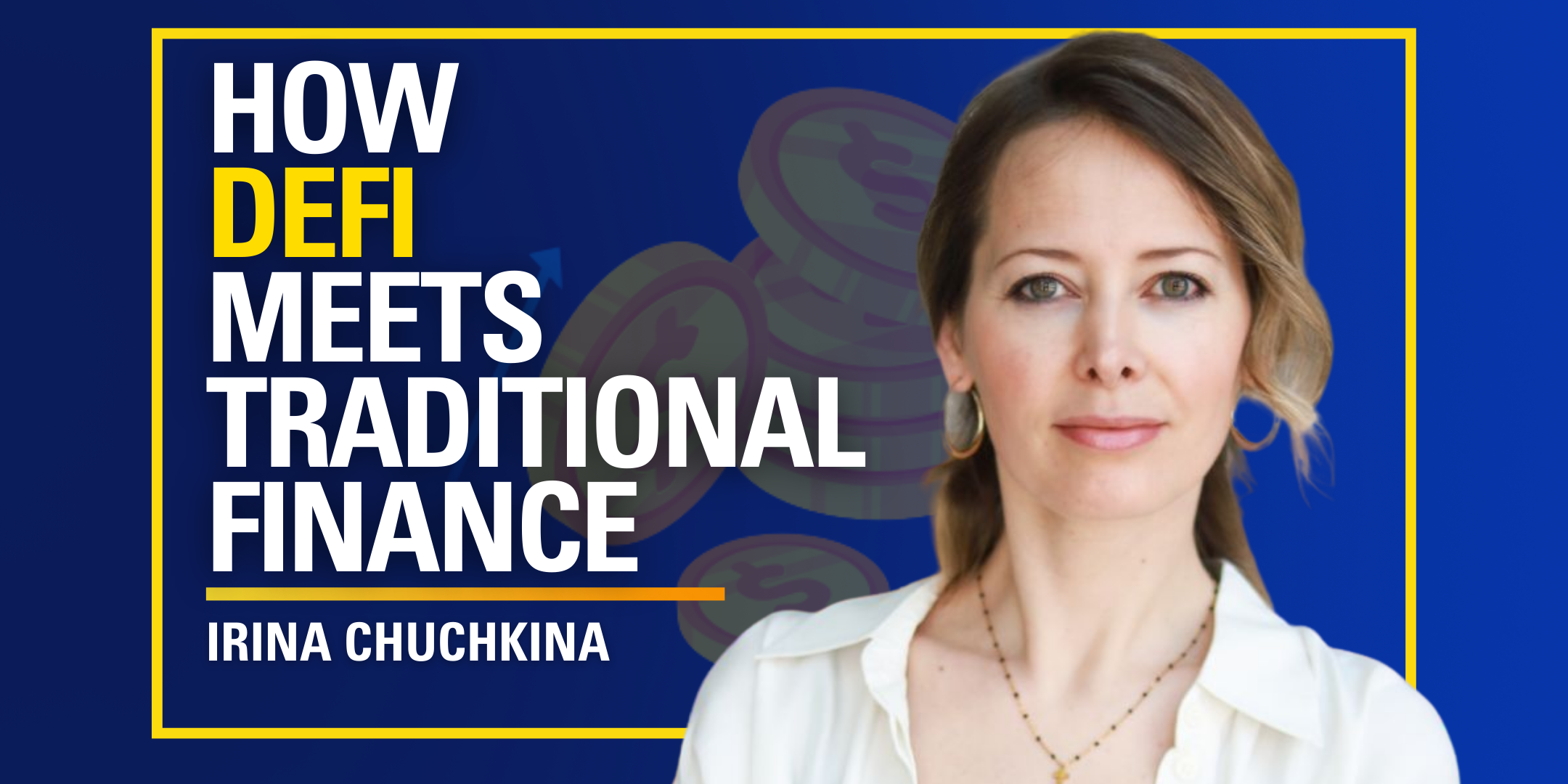
How DeFi Meets Traditional Finance - Irina Chuchkina | ATC #593
In this fascinating episode of the Around The Coin podcast, host Stephen Sargeant interviews Irina Chuchkina, the Chief Growth Officer at Wallet in Telegram. Irina is an accomplished leader in crypto and fintech with over 18 years of experience building world-class brands at the intersection of payments and technology, across Europe and Asia. Currently, Irina is leading Wallet's global expansion strategy with a . target of 15 new countries in the next 2 yearsPreviously, she was CMO at Volt, driving their brand and global marketing strategy. She was also part of Southeast Asia super-app giant, Grab, where she helped to launch GrabPay, Grab’s mobile wallet, and GrabRewards, its loyalty platform across Southeast Asia.
Host: Stephen Sargeant
Guests: Irina Chuchkina
We are also available via:
Buzzsprout • YouTube • Quora • Medium • X • Facebook • LinkedIn • Soundcloud • Apple Podcast • Spotify • Player FM
Episode Transcript
Stephen: This is your host, Stephen Sargent, the Around The Coin podcast. As you've kind of seen, we have a wallet theme going on. We just have so much interest in the wallet infrastructure, so why not speak to the Chief Growth Officer at Wallet In Telegram? Irina Chuchkina, she gives us some interesting insights on what people are doing at Telegram, where they're parachuting in certain regions and providing their wallet service. How many unique users are using while in Telegram?
This is such a huge conversation. We talk stablecoins. We talk about tokenized assets like gold and stocks. We get into the nitty gritty of privacy and regulation. This is such an interesting podcast that covers a lot of what Wallet and Telegram is building, and they talk about the 1 billion active users on Telegram on a regular basis.
This is absolutely crazy. You have to listen to this podcast and Irina even gave us options to reach out to her. If you're looking for a compliance role at Telegram, or if you wanna know more about the use cases baked inside Telegrams, potential for being the next Super app for the Western culture. I hope you enjoyed the episode and reach out to Irina 'cause she told you to talk soon.
Stephen: This is your host, Stephen Sergeant, the Around The Coin podcast. We have Irena, the Chief Growth Officer at Wallet, like probably one of the biggest infrastructure plays on the ton blockchain, working with telegrams, infrastructure and digital assets. Irena, why don't you introduce yourself to the podcast
Irina: Oh, thank you. First of all, uh, hello everyone and thank you for having me. Yes, my name is Irina. I am Chief Growth Officer at Wallet in Telegram based in London. Uh, I have spent the last 20 years across payments and FinTech, uh, building some super apps in, in Asia. And a few months ago I joined Wallet to Lead, uh, user adoption and international expansion.
Stephen: and you worked in some interesting regions, right? You worked in both Russia and Singapore. Can you tell us a little bit about working in those different markets?
Irina: I worked across multiple industries in multiple regions, indeed, across, uh, Russia, Eastern Europe, Semia, uh, Asia, not just Singapore, but broader Asian regions, Southeast Asia. Um, they've, my, I spent about seven years of these indeed, and that was a, I'm, I'm very fond of that time. I learned a lot. Um, I started my visa journey indeed at the Russian office back in 2009.
It was a great time. Everything was like booming. The growth was 50% year over year. It was, there was a lot of experimentation. And I think one thing, um, uh. People don't perhaps know enough is that, uh, FinTech in Russia is actually quite advanced, so that product quality and digital excellence, they, they, they're amazing.
They, there is no legacy and that's why there is a lot of innovation. So I learned from that experience. We tried so many things. We launched contactless back in the days amongst one of the first countries. Uh, I think Singapore was the other one, which actually piloted contactless. That was fun. And then I decided that I wanted to expand my horizon move to Singapore.
Singapore was, uh, an amazing place. Also one of the global hubs and the capitals for FinTech innovation. And I spent eight years there. Uh, loved every second have, uh, made so many amazing friends, but also I'm a very big fan of the Southeast Asian FinTech community. It has taught me a lot. Um, it works nothing like what you would have in Europe.
It's very agile, adaptable. The unit economics are very different. You have to navigate between the fragmented market and I, I think this has probably been the richest part of my sort of professional journey, uh, during this eight years. I spent some time within Visa, then transitioned to grab the Southeast Asian Super app at the time when it was building, its.
Uh, FinTech strategy and, uh, I launched a grab pay, which is the mobile wallet. I, I launched Grab Rewards, which is a loyalty platform. We experimented with something up to 20 different verticals, amazing time. And then I moved to companies, to payments companies such as Rapid Tunes, uh, vaults, and now I'm a part of Wallet.
Stephen: I love that. And you know, when you transitioned into kind of the B2B space, the payment space, the FinTech space, was there any discussions around blockchain or crypto payments, data coins? Was there any like little whispers at that time?
Irina: Uh, probably not as much in the 10th. Like the, my, I think I started blockchain really has started to become a thing, uh, maybe around 20 20, 20 21, especially within the payments community. And I think the conversation began not with crypto, but with stables really as payments companies. They bluntly follow two things really.
They follow the regulation and they follow the money, whether it's investment money or it's, uh, actually client money. I'd say that the, the domino effect started with a few different things. When JP Morgan introduced Onyx back in, um, it must have been probably about 2021 or so, which is a blockchain and sort of digital currency business unit that they have established inside, uh, the bank.
Um, I think another, another really important moment when was when Circle started. I'm not sure if people remember, but I remember noticing that they began, began their sort of gr activation strategy. The higher Dante who is now I think a, you know, a hero in the, in the, the really big person, um, who is leading, continues to be their global policy.
And they started spending a lot more time in, in Washington DC shaping up the sort of the norm really. Um. That was probably about four years ago as well. And then when A 16 Z also launched their crypto fund in 2022, I think that was one of the biggest funds within the A 16 Z community. Uh, so I feel like there, there were, were a few domino pieces, but that probably, that movement started in 20 21, 20 22.
But 2025 has really become the year of stablecoins. This is where I'm, I, I, I think my LinkedIn feed is filled with stables. There's nothing that dominates the, the narrative more than that.
Stephen: LinkedIn's one of those interesting things now that the traditional folks can finally talk about crypto related stuff, they're gonna go, they're gonna go all in on stablecoins. Uh, before we jump into Wallet in Telegram, I want to talk a little bit about, you know, telegram as a whole, over a billion users.
Like, can you gimme some, you know, insights on how many of those users are active? What's going on on Telegram? What's the main use cases evolved? It feels like it's, it's just an app on everybody's phone. What are people using it for these days? Is it still just messaging? Uh, obviously with what you're building it's turned into a lot more, but can you give us the lay of the land of Telegram?
Irina: Sure, of course. So 1 billion is actually monthly active users. So in terms of the number of downloads, it should be a lot higher. I dunno how many exactly, but I'm, I'm sure we, we would like it, it, it's at least double the size. So 1 billion monthly active users and the basically used to the ground for a few different use cases.
The primary ones are obviously the core is the message. It's, it's a Messenger app with, uh, privacy embedded into everything. I think this is what Telegram has been known for. This is the core philosophy. Um, I think besides privacy one, um, some other things that, that the Telegram is very keen on doing is enabling the ecosystem around it so people create.
Channels and communities and group chats. But there are also amazing things and, and I'm not sure if everyone's familiar with them. There are chatbots which could be programmed. It's basically agents that well can fulfill a specific need. And there is probably about 15 million of them last time I checked.
There are many apps as well. So, and a mini app inside Telegram can be anything like a game, I don't know. It can be, it can be a wallet. It can basically be a, uh, an eCommerce store. You can develop, uh, and create pretty much any experience inside, inside Telegram. And then all of this is supported and enabled by, to blockchain.
So I guess different use cases and experiments. Um, they all live within on the same big foundational layer, which is. The blockchain, uh, created originally by the creators of Telegram and then passed on to the community. And there's one more thing. There is a native, uh, Coin. There's a native digital asset called Tom Coin that basically supports every use case that we just, uh, talked about.
Uh, one other cool thing that, um, I just like, I actually do think that this like a tri, almost like a triangle in that architecture there is also a digital id. Um, and basically, um, to connect is the digital idea that helps you to sign transactions, to sign up into, register, into new apps, and also authorize payments.
So, I know it may probably sound complex, but it's actually an ecosystem in itself. I think WeChat is probably the reference point in so many ways in terms of what, what it represents and the possibilities that I can offer.
Stephen: It almost feels like it's turned into like a Facebook, where Facebook was started as a social feed and then entered into messaging. It feels like you guys started in messaging has now entered into like, uh, every, you know, every touch point of a social interaction that you would have, whether it's groups, whether, as you said, it's apps, it feels like every time you touch a button or connect something, it leads back somehow to Telegram, which is kind of cool 'cause you're already using it.
You've, and now that digital ID makes a huge difference. Tell me about Wallet and Telegram though. It's very unique because it offers almost a due dual wallet solution and we've had a lot of wallet conversations on the podcast and a lot more coming up because we're so interested in all the different key players and wallet infrastructure. But this duality between self custody and, you know, noncustodial is very interesting, uh, and custodial wallets that you have. Can you break down the differences between this wall and how can you have, you know, a noncustodial and a custodial wallet in the same product?
Irina: Well, I think, I feel like even just that conversation could take an hour or so, but let me try to give a, an elevator pitch probably. So, Wallace in Telegram is indeed their, uh, crypto wallet embedded into telegram interface. Um, it's, uh, it's, it basically acts as a gateway to telegram. Ecosystem, all of those different things that you can play.
I don't know, the games and the, the apps and the, the communities you can basically use wallet to to pay for those transactions. So I, and ultimately, again, coming to my grab days, I feel like any super rep needs that financial core wallet basically acts as that core, as that gateway. So it enables, uh, transactions, it does have two interfaces, indeed, two different types of experiences I use.
As you mentioned, it's like a dual one. There's a toggle on top and you can switch between the two, which actually gives that optionality to people that are really into Web3. They can go and choose Tone Wallet, which is our decentralized wallet. Um, and those people that want to have a little bit more simplicity, a multi chain experience, they can switch to the crypto wallet.
So I know that, well, we're, we're working towards making it a little bit more clear and easy, but basically both of those experiences have. Um, very, very intuitive interface and, uh, are extremely easy to register. You don't need to download any extra app. You literally just tap, uh, on wallet. You either search it or you can find it in your settings.
By now, we have already surpassed 115 million registered users, so that's, again, not all of them are active, but this is how many people have had some interaction with the wallet, and we have a, you know, a decent amount of those that are actually using their day, day-to-day. The main purpose, what are they doing with the wallets is basically the, well, the use cases, what are the problems that we solve, is.
What do you would expect a crypto wallet to solve? First of all, it helps you to save up, uh, to sort of protect against the infl inflation. Do you hedge, you know, put a little bit of money into stable Coin, for instance, USDT, if especially, which is extremely relevant, especially in an emerging market, which might have, I don't know, we all have been talking about Argentina and Turkey and a few other, other places, or like Zimbabwe.
So there are, uh, places where these, even just that use case alone is a particularly, uh, important one. You can then invest into all of your blue chips into, well, the crypto tokens that are, that you choose, or depending on your risk appetite. Well, Bitcoin, Ethereum, Solana, all of those, uh, key words and key names, uh, familiar probably to any person that has, um, has dealt with any form of, uh, crypto experience you can earn on your balance, which is, uh, again, another use case that is.
Very, very popular. People love to make a little bit more money. They not
Stephen: Especially these days, right? you don't need, you don't need hyperinflation to realize that grapes cost a lot more and your dollars going a little bit, uh, less far than it used to.
Irina: And I, I love that part. And I, quite honestly, because I haven't really been there very much into the, the, the crypto world, uh, when I discovered it, I realized that there are some very, very competitive offers on, on, in that space. So yes, definitely part of the, sort of the, my investment strategy, again, diversification is what we all know is the, is really important, but then there is payments.
The final part is people being able to pay each other. Anyone of those 1 billion people can send money to any other person on Telegram with no fees. So I think this is actually a really important part. So, yeah, that's the reason why wallets is, uh, well, has gained this 150 million users.
Stephen: I am curious when you talk about payments, is that, is there certain thresholds that there, are there certain restrictions or limitations? Can I send $10,000 to a vendor, uh, via, uh, via wallet in telegram?
Irina: Yes, you should be able to do that. Again. There will be different limitations depending on whether you wanna use crypto wallet, custodial wallet, or self custodial. This, uh, the custodial one comes with certain verification levels and they unlock and give you more or less, you know, again, like the capsule a little bit different when we're talking about self custodial.
I think this is, yeah, this is, you know, it's virtually infinite. Um, yeah. But it's, it's easy and instant.
Stephen: I think what people don't realize, everyone thinks about like maybe the, you know, African or emerging market use cases, but a lot of people that I know gone to crypto based on, you know, if you're coming from the UK to Canada, uh, there's no easy way to send money, right? Because you have to have a bank account in Canada, but how can you have a bank account if you can't get your money here to get rent and to have an address in order to open up a bank account?
People don't realize these are regular use cases. Like even for me as a business owner, sending funds to the US becomes very expensive and it's, you know, and it might be just a little amount to a contractor. These are the everyday use cases that people aren't realizing. It's costing a lot more than you would expect.
And I think that being able, the fact that, you know, 90% of the crypto industry is probably on telegram anyway, it's really easy to coordinate some of those transactions.
Irina: And some of those, oh.
Stephen: go ahead. Go ahead.
Irina: And some of those corridors that you were just talking about, some of them are solved really, I think, you know, you know, but then some others, especially amongst them, between the emerging markets, it can be, I don't know, up to five, six, sometimes up to 10% for that remittance transaction.
So yeah, for sure. Telegram is, uh, definitely one of the, you know, one of the spaces where you can find and create value when we can create value for, for our users through
Stephen: What are some of the myths about Wallet and Telegram? Like I'm assuming people are like, oh, this is only for time, blockchain, I can't get any other crypto. Like what are some of the, the myths that you hear or that you have to debunk every day, uh, that people have about wallet and telegram?
Irina: So I, I think we spoke about the duality, the two of those, uh, different services. One of them self custodial. One is indeed built for a ton assets, but the crypto wallet is, the custodial one is a completely multi multi chain. There are 214 assets, if I'm not mistaken, the most popular ones. So, and you can choose whichever option you wanna, you wanna use.
Uh, but even on to blockchain, you actually still have a lot of, uh, other assets such as, for instance, USDT. There is US DT on tons, there is gold on tons. So you can invest in transfer gold within the, the ecosystem. So, and I think there are other new tokenized assets. We will be probably talking about that a little bit more.
So, but that's the primary myth really. So wallet has. All the different options. It's built with time, but not limited to it. The second myth is, uh, some people, um, around us think that you really need to be sort of a crypto native to understand crypto in order to be able to use it. We have actually created wallets in a way that it will be so simple to use.
Just like any other wallet you don. I mean, technically we would, if you skip the word crypto, you should look and feel almost exactly as your digital wallet as, I don't know, uh, a z or like a PayPal, basically very similar familiar experience. Basically, if you can send a message, if you can send a PayPal transfer, you can use wallet.
That's how much experience and how intuitive we made it. We're, we're trying to avoid the sort of complex terminology also in our interface and try to explain things a little bit more. But basically that's a simple, you know, the mom test, right? So like how would you have mom be able to, to, to, to send money or to use it?
Uh, the third thing, and the third myth is some people sort of are cautious to use it because they think that, you know, they wouldn't allow their messenger. They're not comfortable. It's not basically they say it's unsafe, maybe because it's inside a messenger. So, but the reality is that Telegram, as much as it's.
Obviously the, the universe that we live in is just an interface. So we use our dedicated security and we have, and we protect the money, especially, you know, when well will we, when we're responsible for it. Uh, which means that we also have the responsibility for making sure that you get, get access to it.
So if you lose your telegram account, there is, uh, a way for you to recover your funds. We have an excellent support they can answer and take care, uh, of, of, of that sort of recovery process. Um, and whether where you can, um, whether, whether you can or cannot access Telegram actually doesn't define whether you or, uh, you, you, you lose your money or not.
So we can, uh, with guarantee that security and we give you the opportunity to, to kind of, and the, the guarantees to make sure that you can, um, always. Get your money back. So, uh, these are all of the kind of the, some of the myth. I'm sure there's probably a lot more. Um, but I'm happy. I'm happy to, yeah. So flip, if, connect to me and maybe ask your question, I'm gonna be very happy to un um, uh, un bust whatever, like, bust that myth for you or answer
Stephen: that. I love your opening up the audience for, for direct questions and you know, when you think about that, you know, security and that being the focus, like I've been in crypto for eight years, like considering billions of users are using telegram, millions of users are using the wallet. I've never heard of, you know, with so many users, you think you hear about more issues or hacks or exploits.
I personally haven't seen anything in regards to that kind of activity. Um, but I do wanna talk about the tokenized. Like stocks and E ETFs and EFT. Like you have these products that I've never seen in a wallet service provider thinking that you know, you're gonna do some simple buy and sell, maybe trade send to a friend, but you have this unique and sophisticated line of products that people can actually get access to.
Can you talk to me a little bit about the tokenized asset economy that you've built on Wallet and on in Telegram?
Irina: Yes, for sure. So look, I think we see our role as, uh, almost like a tool, uh, for democratizing access to wealth and investment opportunities. Uh, so like there's an irony there. So. Uh, I, We actually think that wealth for investments can be built from as low as $1, right? So you don't actually have to be wealthy to become an investor.
So from that perspective, when with that sort of goal and purpose in mind, mission in mind, we've started adding additional capabilities and, uh, in, uh, just a few months ago, a few weeks ago, in fact, in October, during Token 2049 in Singapore, we've announced a partnership with Kraken and backed, um, on actually bringing, uh, tokenized equities, American, us, uh, basically shares of, uh, tokenized shares of major US companies, as well as, uh, some of the major ATFs to our users.
Uh, we've launched it, uh, at the end of October, just three and a half weeks later in crypto wallet. And. Users in seven markets can now use it. And we are just about to launch it. Anton Wallet, which is now going to be to make that globally available for all of the wallet users all over the world. So what they will be able to do is they will be able to buy and trade to organize shares of major US companies, the Amazons and Netflix and Coca-Colas and Nvidia and Tesla, you name it.
Basically some of the, the really big sort of blue chips, but also some of the really popular ETFs such as s and p 500 and Vanguard and nasdaq. So these are the, these is from my perspective, a game changer. Uh, trading will be available around the clock. Um, uh, I think depending on which experience with which.
Product you're using either five days a week or seven days a week. All shares basically will be available in the form of token. So this is your creep. So, uh, basically your, your equities BA based on build on blockchain and you can start from as low as $1. Indeed. You can buy fractional, well you are basically buying a fraction of a share and you can also send it to your friends.
So not just send USDT, but you can send your friends a little piece of Tesla for Christmas or you can send your girlfriend a tiny piece of, I don't know what she would like, maybe, I dunno, I think the guys are gonna like n video a little bit more. The girls are gonna like the Teslas maybe. Um, I'm gonna see if there will be at some stage, maybe Tiffany share.
So, but it would
Stephen: gonna say this is not investment advice. Guys.
Please be careful sending, sending stock. She might wanna ring of some sort, maybe some jewelry, but, um, to your point, maybe some LVMH stock would be kind of cool to have in their portfolio.
Irina: I love that. That's a great
Stephen: way we're going in society, right? You're seeing a lot more, even the crypto natives that got in due to NFTs and meme coins, they're getting into more diverse areas of traditional financial products.
And then it's funny that the traditional financial institutions are getting more into digital asset products. So we've seen this convergence of, you know, the retail market and the institutional market converging on all sorts of different ways to invest, which is kind of interesting.
Irina: Yes, for sure. And I have to say that, well, again, because you come, your background is regulation and compliance and policy and uh, uh, and similar things I think I just want to also maybe emphasize is that, um, there has been another myth really, or maybe another stereotype about crypto companies being, I don't know, less compliance and I don't know, client trying to fly under the radar.
I think my biggest and best impression after joining Wallet and Telegram, and obviously I can only comment on my own company, is that the level of rigor and sophistication and technologies that are actually put to make sure that while first of all, the regulator compliance is as well as strict as as possible, in fact, uh, as well as the A ML and CFT checks are actually done and every single transaction is going undergoing a very.
Rigorous real time, uh, checks. I think like this is at least on par with, uh, quite a few of the fintechs that I've, uh, uh, seen or experienced or work worked with. Uh, we go through exactly the same processes to ensure and enable, um, um, proper KYC requirements. So we check, uh, on the crypto wallet, the custodial solution checks every single user against all of the, the rights, you know, sanction screening list and everything that we need, that, that is needed to comply with the regulation, but also the transactions themselves are checked in real time.
So, uh, from that perspective, yes, uh, absolutely not an investment in Vice, but generally speaking, I feel like there are new opportunities and perhaps a few of them are indeed. Uh, can some of the sort of the needs, the demand of the global market could be solved via Web3, and if Web two is unable to provide access to tokenized stocks in the market, maybe then Web3 could be the solution.
I think that it's, it's a beauty of the new technologies and in fact, all of the new operator operators that well between web two and Web3, I think users will actually benefit from having a lot more options.
Stephen: and because crypto's still fairly new to the mainstream, I find the media always goes with the most extreme cases. Like yesterday, you know, Quan got 15 years for the Te Terra Luna debacle and you're only gonna hear about the crime and the illicit activity or anything tied to Trump. You don't hear a lot about the technology and the, you know, when, like when the internet was built, all you heard about was the bad things, but eventually the internet was just ubiquitously working in the background.
You don't hear anyone talking about HT TPS or anything that's happening in the background now. So I think, you know, crypto's almost to that point, but I think, yeah, there is still a stigma that crypto, when I, you know, give presentations from a crypto compliance lens to bankers. They're still looking at me like, oh, this is not just used for the Silk Road and illicit activity.
And it's like, oh man. Like did no one talk to you? Did no one have the heart to heart with you guys about crypto yet? They're still very stunned about the traditional use cases, but we're seeing now that more traditional institutions get involved. It's, you know, shedding a lot more light to the people that work in the traditional finance. You mentioned Grab, which is kind of cool. I used Kareem when I was in Dubai and I was like blown away. I'm from Canada, we don't really have a super app, so I'm blown away by the concept of, of a Super app. Do you think there's a chance that Telegram could become a super app? Like you already have the messaging, the payments, the try find and DeFi applications, uh, as a one stop shop for everyday users.
You're a couple applications away from being a Super app. What are your thoughts on that?
Irina: Look, I think to be, in all honesty, this is the reason that brought me to, to join Wallet and Telegram because I actually thought that the Western world still hasn't had its own, you know, WeChat moment and you still have to switch between the different apps. You, I think on average, you Western, uh, um, Canadian or American or British user would probably have anything from.
I don't know, maybe in a good, uh, maybe from three to eight different apps to, for every single financial need, there would be a, a personal finance app, uh, a bank, like probably three different banking apps, because one is for that reason, for the mortgage, for your salary, no. Then there is one that you actually use because it's more convenient.
Then there is a brokerage account, there is something else. So I, I actually think that the western world probably at some stage would benefit from a little bit of that convergence. And at the same time, what we see is that, um, what I think what I continue to believe, um, is that, you know, the whole purpose and principle of embedded finance, which, um, I, I, I know is, is also something that you, you were excited about and that you wanted to talk about is that, uh, the embedded finance is basically adding that financial capability to add that right time at the right place, at the exact moment when the user is.
Uh, expressed an intent or has a need inside, not in inside a non-financial experience. So it is bringing the financial services closer to your day-to-day app. I don't know, like an example of that could be indeed, you know, financial services inside an app, because if you're chatting to someone and you can.
Send them money as quickly and easily as just sending a photo. And that is indeed the experience that you can get. You just tap a touch, you choose wallet, and you send money. That's as simple as that is. I actually think that this is the most powerful way and the most frictionless way for you to add money.
If you're checking out and you're being offered A-B-N-P-L service. If you're, I know on Apple and you're buying yourself in your computer, you, you benefit from having that being buy now, pay later offer right at that moment. If you then have to navigate between the four different apps and they don't talk to each other, they don't, don't recognize the patches, and you need to re refill all of the different forms, uh, I, I don't think that like makes anyone's life easier.
So, coming back to your question, yes, I think that we need a WeChat moment in. I think globally, ideally, I think there are very few apps, uh, that can currently compete with Telegram. In terms of the size of the audience, I hear that X is also working on their super app, uh, strategy and trying to embed financial services.
And they have been focusing on the US as far as I understand, they've received and obtained the licenses across all of the us. But what about the rest of the world? I think the rest of the world, it can e equally benefit and would love to have that experience for themselves. So yes, I still believe that we'll have our Super app and I think Telegram is the right place for it.
Stephen: I agree because you know, even just to send money, like, like it's one thing to send money to somebody in Canada, and you're both in Canada, but if someone's in Canada to the US. Like sometimes there's a huge Powerball lottery in the us. I'm like, Hey, like buy me couple tickets are for like, you can't just send $20. They're like, yeah, Zelle me. I'm like, we don't have Zelle. Do you have email money transfer? We don't have that. Like there's just no easy way to set. I don't think people realize there's no really easy way to send money, but that Apple point is actually interesting too. I just recently got a Mac. I was never a fan of Mac, but now I'm able to tap into my, you know, my, my phone and like everything's integrated.
I can send a picture to my, to my computer that can email my wife automatically. People don't realize when you have everything integrated into an operating system, how easy life becomes. And I think to your point, when the majority of the world, especially in crypto's already using Telegram in some way or fashion, just having all the access to all the other. Applications of their life I think would be easier. So I'm hopeful. How long, you know, maybe not even speaking to Telegram specifically, how long does a Super app tend to take to build out in your opinion, with your experience?
Irina: Um, well, I can only refer to my grab days. I'd say that probably about, uh, a year or to a year and a half to build the wallet. Really, I think once you sort sort of establish and then I think, yeah, so probably. Two years, two to three years to actually have that core structure and have, so super apps don't start with, you know, 50 different things, right?
They start, well, you start to add, you, you add the wallet usually first just to enable every single vertical it's that lives with it. But then you start adding. Say your second, uh, second vertical, second offer, uh, when, if it's a red hailing company, usually goes into the food delivery and then some other deliveries and then some other things.
But I've seen some really amazing stories from Indonesia, for instance, where Go Jack has built a super rep, I think within less than a year or something like that, and they've built so many services into it from, uh, pharmacies and massages and, you know, a, a lot of different things that you can order or like home repair systems that you can order.
I love another example from Columbia, Latin America, if I'm not mistaken, rapid. They have built a mobile ATM. So basically a delivery agent comes to your place and brings you cash. And I thought that I was quite creative as well. I love looking at their experiments actually from that space, but I think there's still not enough, uh, super reps based on the base of social, uh, social media or messenger.
Stephen: How, what's the challenge? You know, 'cause a lot like cream grab, we, they're we, we pay Alipay. They're all in like very specific jurisdictions. What's the challenge with building a global super app? Because I'm assuming that the majority of telegrams users are all over the world. What would be the hugest challenges that regulations?
Is it coordinating? 'cause each region has specific rules, like even for Uber, they have specific rules in the UK versus Canada, like where they could go in the airport, et cetera. Is that coordinating all the different regulations? The biggest challenge.
Irina: Uh, you're right. I think the hardest thing is indeed harmonizing the experience, making sure that you deliver a consistent experience to your users whilst also being compliant with a little of the, the local norms, which in some cases means that we can't promote ourselves. And, you know, there's quite a few limitations on that side, uh, on that end as well.
But broadly speaking, we're trying to, so my team is, we're spending lots of time just trying to look at numbers and data and analyze and prioritize markets where we we're applying for licenses. And basically we follow the, the core, the kind of the. Rule of thumb is to follow the telegram adoption. So we go into the market where telegram is number one or number two, that already delivers that relevance.
And, you know, the, brings the, the potential, um, impact and the adoption. But also that means that we can create more value because of the nature of the network effect, right? So more users mean that they can just get more value immediately, right? Sending those instant transfers to each other. So I, uh, you, I think just coming back, uh, to the regional differences, yes, we go into the emergence markets, which unfortunately happen to be a little bit more fragmented than, say for instance, Europe is much more.
Homogeneous, right? There's a single regulation. Uh, but basically, um, we work market by market and try to establish and comply with the regulation. We have just launched, um, wallet in Telegram in Uzbekistan, which is an absolutely, I am so impressed by this market. I'm a very, very, like a very big fan. I'm not sure how much you know about it, but it's basically, there's about 37 million people that live in the world in, in this.
Part of the world, and about 95% are, uh, um, well, I guess like, depending on how you look, well assume like 90% of the country, of the adult population of the country uses, uh, telegram. Literally every day they wake up with it, and then they go to, they check it before they go to bed. There's no WhatsApp, there's no iMessages.
Nothing else really exists. This is how they learn, use. This is where they have their family chats. This is where they talk about partnerships, product like projects. This is their code, like team chats, everything. You le everyone leaves in Telegram. So we like, this is just an example of a place where we required a license.
Uh, we worked together with a regulator. We found a local partner to provide easy and smooth on, on Ramp North ramps. So, and that's now going to be one of, again, like one of the markets that we are going to replicate again and again in a few other places. But yes, fragmentation is not helpful. There's. Uh, around a hun Well, 200 countries in the world.
And in order to enable all of them, we have to go through certain, you know, obviously certain sequences, but the good news is self custodial solution is still available. So as we are covering, trying to cover these two things, the two layers are just, you know, helping each other and you can still, um, get access to the same services, including tokenized stocks, which is my favorite edition.
So now it's, uh, yeah.
Stephen: I love a case study like that. They're already using your product. They already love it. They, it's like integrated in their life and now you can kind of parachute into that region, work with regulators more important, pour and more capital and resources specific to their needs and build out from there.
Like I don't think there's any better use case than that. And we've seen that in places like Africa where they've tried M-Pesa, but this is really interesting. They're already using your technology on an everyday basis. It must be fun for you to go into those regions where, you know, you don't have to explain yourself.
You know, you are the tam, they are the tam, you are the tam. So, um, how do you think about that when it comes to financial inclusion? Like this seems like one of those use cases. In regions where traditional methods to banking are challenging or impossible, like how do you look at where wallet and Telegram can benefit, um, similar jurisdictions like that, that are struggling from a traditional financial inclusion perspective?
Irina: So I think, well, again, basically you've just pretty much covered, uh, the, the whole recipe or the list of the criteria. We are comparing markets based on indeed the Telegram penetration, our ability to solve the need for them, and the demand and the impact that we'll be making. Again, us potentially, or Canada may not be a perfect market for us, even though in the, well, well, we are, uh, tone Wallet is available in the US and there are 87 million downloads of Telegram, which suggests that there is decent amount of audience, but the market doesn't need wallet as much as, at least domestically for international transfers.
Yes. But in terms of, you know, that financial inclusion, we don't. We can't contribute much value. You pretty much have everything, uh, again, apart from maybe remittances, uh, but in some other places, Pakistan is one of the, you know, the places that I've met, well, a, a whole bunch of people in Latin America, a lot of people in Asia, India has about 250 million Telegram, uh, telegram users.
So I think if you thought, if, if you think about all of those markets, we can create a lot of value. And, um, I think the third aspect that we continue to think about is indeed a bit our ability to work in compliance with the local regulation. So if Telegram is not available in that region, we don't, we can't offer our service.
This is like a, well, the parallel stream, there is no hack around it. Uh, but if there is a way for us to work, uh, jointly and compliantly, that's, that's precisely what we do. We have a very, very good and very strong compliance team. So I have a lot of respect and support. Could be huge kudos to them. Uh, so they help us in navigating all of those things.
Stephen: You know what's interesting that in the US still 5% of people in the US are underbanked or unbanked, which is still, you know, it's very interesting. I know you're like, they probably don't need exactly the infrastructure, but there's still that void there that's not being filled by any of the companies or traditional institutions or fintechs that we've mentioned, which is unfortunate in those scenarios.
Irina: You are absolutely right. In fact, maybe I shouldn't have, should not have done made this sort of blankets assumption or statement in, in reality, you're right, amongst the 330 or 350 million Americans, there's definitely quite a lot of immigrants. It's a country of immigrants, so there's a lot of people that possibly have the, that real need and there are not, don't have the access to the, uh, you know, the sort of more sophisticated financial tools.
So yeah, you maybe we should be a little bit more active there as well.
Stephen: It's easy for me to say as a podcaster, so don't, don't let me influence your business decisions. I'm curious actually, 'cause we talked a little bit about privacy and your work with the regulators. How do you balance the, you know, the privacy that everyone loves a telegram. But you know, obviously still working with regulators to try and explain to them like this privacy is here is more of an importance, not a a, you know, a nest haven or a haven for a list of activity.
This is where people just want to be able to communicate and where we don't have to turn over, you know, information just because an overzealous government or an overzealous company asks us to, how do you balance that privacy and the regulatory requirements? Because I feel like that's a dichotomy that every crypto company is going through, not just while it's telegram.
Irina: So the self in the self custodial wallet, we actually don't have access to the user data, and there is no way how we would be able to sort of, similar to provided actually it all lives on the blockchain. However, with the custodial solution, because we are responsible for the money, we just have to comply.
And again, in some cases that means that our compliance operations teams would have to, uh, run investigations and collaborate with, uh, the local sort of, uh, law enforcement agency. So there's about, I'd say, uh, 25% of the company that is actually, uh, working within the compliance and compliance operations team.
So they run those financial investigations, they check transactions, they do all of the necessary sort of support. Uh, and in case there, you know, there is a, like a police request, that's where we, we, we obviously have to, to to work together. Uh, this, but again, this is our, um, responsibility as a custodial of the money and we can't even the.
Kind of the, um, the privacy, uh, component is something that the users, uh, are adhering to. They accept terms and this is part of the, a part of the service agreement.
Stephen: I love that. And just so you know, a lot of compliance officers wanna work at, well, they always message me every time they see a job. 'cause every time I think it's Olga from your team or somebody else, every time they post a job, they're always messaging you. Do you have a connection there? I'm like, no. But it's pretty cool to work, especially when you get to, you know, see the time blockchain up close.
We have a couple friends that do work there, but a lot of compliance officers are interested in working in your ecosystem, just from the fact that they work in crypto, they understand telegram and they would love to work with the, you know, the wallet infrastructure there. So just so no, you, you don't have a shortage.
You'll never have a shortage of applicants when it comes to your compliance roles.
Irina: Awesome. I think, uh, again, I'm not an expert in this area, but one thing I understand is that compliance in traditional web two is in compliance in Web3 still have slightly different flavors and nuances. So I feel like that is probably the core consideration. So if any of your friends are very familiar and great experts in Web3, uh, blockchain compliance, please, you know, point them our way.
Stephen: We'll tell 'em to reach out. What are your thoughts now? 'cause you have the, you know, self custody, you have the custodial side of it, so you have the, you know, the DeFi and you have a, a lot about like the traditional, what we would call traditional crypto exposure into, you know, any kind of financial product going on chain.
What do you think the evolution is of this Is, this is more of a retail application. I could be wrong, but we're seeing a lot of large financial institutions wanna dabble in the DeFi side and also work on the traditional, you know, crypto ETF side. What are your thoughts about the evolution of this intersection of like DeFi and c.
Irina: So, uh, one thing, one thing I know about about sort of DeFi from my payments community that I have been part of for a very long time is that the really clever CFOs have already sort of onboarded that and made this part of their strategy. Uh, whether it's governments or I don't know, large banks and enterprise companies, everyone now has, I don't know, either a stable Coin strategy or possibly some part of their portfolio in, uh, in crypto.
Uh, you know about like, you know, the Bitcoin portfolios, we all know and hear about, you know, some quotas allocated to those ones as well, but I think CFOs. Are clever and they know what they're doing. So that's one of this kind of the, one of the use cases. And then broadly, bankers and payments companies have in the, maybe in the last 18 months have done gone almost like 180 degrees in terms of adopting stablecoins.
Whether they will go for DeFi and will start using, um, uh, I don't know, like crypto for payments or enabling crypto. I don't know. Although XRP has been very successful for money, money movements globally for, for many years now. Um, but I think there is definitely, actually not an evolution, a revolution happening in that world, in the web through two world now when you're talking about like the intersection of all of these different things and the evolution and how all of them hopefully will be, you know, um, there, I don't think it's gonna be, you know, uh, a, a movement of all of the fiats into.
Web3, it's, I think everything will start to coexist. Uh, it's not gonna be one or the other. It's gonna be, hopefully in the interoperable world where every, you know, uh, every company, every payments company, every FinTech will be able to operate both, uh, languages, almost speaking both languages. And when, without really differentiating, it's not a bi binary thing, it's just a tool when it comes to money or crypto, basically, we all as human beings, ultimately have the same basic needs.
We need to be able to save money. We need to be able to send it, we need to be able to spend it. But basically you care about safety and maybe the user experience and simplicity. You, maybe you don't, you shouldn't be actually. You know, paying as much attention as to whether it's crypto behind it or not, or maybe the company, you're, you're using fiat, but maybe the company is using crypto to make that transaction possible.
If you're sending money across the borders via PayPal, maybe PayPal will be using some, some form of crypto, but it doesn't matter really why we, the, the real question is how can people not even notice if they're using crypto? So I feel like it's, it's a coexisting, maybe I'm optimistic and not sort of idealistic, but I feel like we will be able very soon to start seeing.
Hundreds of stablecoins. If I'm not mistaken, there must be about at least 300 right now. Stable, stablecoins that are issued. Most of them are USD Ps, but I anticipate a huge wave of other currencies. Um, well denominated stables denominated in other currencies in the next year. And not just euro, you know, euros or gs, I'm talking about emerging markets actually wanting to issue, uh, stablecoins.
We're seeing a lot of those use cases. Now the question is how is this now be going to become sort of an interoperable world and how do we connect all of those fiat to kind of, uh, liquidity providers and enable all the, all of those things. So I feel like we're going to see a new reality. Money is going to start looking differently.
Finance is going to start feeling and, uh, enabling different things. And it's, it may pos, it's possible that we'll go through a little bit of a Babylon in the beginning, but ultimately it's gonna, you know, diverge first before it converges. But ultimately we're going to live in a new, uh, financial reality very soon.
Stephen: I think, you know, this started even, I feel like way before crypto main, when mainstream is this kind of like cashless society, right? There were so many countries talking about like, if I see someone pull out cash to pay for coffee, I'm like, like what world are they living in where they don't use their watch, their phone, the card.
So like it's feels like we're only gonna get more digital. And this, as you point out, the natural progression of going into digital assets and virtual assets makes a lot of sense.
Irina: You mentioned the country, I don't wanna butcher by pronouncing it, it's so much better when you say it, but the country, you mentioned your case study. How many of those you know jurisdictions do you think you can. Do the exact same thing where you go into the country that's already heavily using Telegram, you're working with regulators, like how long was that process?
Stephen: Where are other regions you think you can, you know, basically copy and paste that same methodology. Obviously there's gonna be nuances, but where else in the world do you think that you can easily parachute in and support the people that are already using Telegram on a regular basis?
Irina: We have a few applications, license applications in process right now. Uh, so hopefully we'll be able to do the same thing as we did in Uzbekistan now replicated and to bring in, in a few more countries within the Central Asia region and then also Middle East, uh, and potentially beyond that. In fact, I think, uh, even some of the markets, uh, some of the markets in Eastern Europe would also benefit a lot, uh, from the telegram, wallet and telegram experience.
So my hope is to bring and launch about maybe at least 10 markets in the next 18 months. Uh, individual countries, uh, I feel like we're a little bit, if you remember the, you know, Uber, uh, maybe 10 years ago they used to have a launcher team. So I'd like to think that we're trying to get into that stage when we'll have our own, own launcher team, well team of launchers that we'll be actually parachuting.
We will be parachuting them into the market and actually launching them very quickly in, you know, eight to 12 weeks or so. Uh, again, this is very heavily dependent on the licenses and the big difference between Uber and ourselves is that I think Uber was not looking for a license to legitimate way to operate.
Stephen: how can we go in there and then force regulators to adopt us?
Irina: No, it can't
Stephen: regulators any questions at that
Irina: no, sorry. Unfortunately can't happen that way. So that's why we have to prepare for, well, at this stage, we're already looking into 2027, and which markets do we wanna be present in 2027. So our compliance team, regulatory compliance is an extremely important part of that strategy.
Stephen: I am excited When I hear case studies like that, I get excited. 'cause like you hear so much about, you know, the use cases for crypto and to have the use cases for both messaging and crypto and just already embedded finance is kind of cool I think, especially when it's all in a place that we all know and use on a regular basis. I'm curious with maybe you don't see the trends, maybe on the custodial or non-custodial side, you might see it, but are there any trends that you're noticing from a user adoption side, especially with so much like geopolitical hotspots, whether it's in the Middle East, between the Ukraine and Russia, like things that happen in Canada and the us Are you noticing any kind of trends or shifts between the user adoption around the world?
Irina: Um, not between the user adoption, but I think the financial markets go through their cycles as well in circles. And, uh, the general positive trend is indeed the global adoption of stablecoins and much more comfort and familiarity when it comes to actually using those types of new digital assets. So it comes to the institutions, but it also happens with the consumers.
There are much more, I think Tether has also done a fantastic job in educating the users. So that is. A long term trend in terms of the financial sort of cycles and how, you know, there are different sort of climates and weather, uh, in different regions. So perhaps currently it's not the best time for crypto, but it's a fantastic time for gold.
We haven't touched digital gold, but this is another form of tokenized activity that has been, um, not just, it's not a trend really. Gold has been one of the most. Popular investment assets for hundreds, if not thousands of years. Yeah, right. So it has been probably as old as the civilization itself. So now we've tokenized it and it's one of the assets that perhaps is making up one of the, you know, the top, uh, uh, sectors or like parts of our overall assets under management.
It has a particular strong demand in markets with, uh, currency volatility in emerging markets because it's trusted, it's easy to understand, and also it's, uh, when the crypto is down, it typically is up. So again, there is certain you can diversify your investment strategy by investing into commodities in gold is the primary one.
So I feel like by giving that we're kind of different by our strategy is actually not following one trend, but trying to almost hedge or allow our users to also hedge against, uh, the different. Cycles and make sure that they have a, uh, a portfolio that has a little bit of stables, a little bit of gold, a little bit of tokenized equities and a little bit of crypto for them to be able to cover pretty much every aspect and to shape up the, uh, curate their, their investment strategy based on their risk appetite and, and yeah, in terms of, yeah, people more familiar with money, they also have higher expectations.
They now know that they can earn on their balance, and I think we're playing a bit with that, but ultimately. As I said, everyone wants to save. Everyone wants to spend, everyone wants to send. Uh, and sometimes people also like to play. I like seeing and looking at some of the Telegram games that are becoming very popular.
There's one that is happening right now, telegram Gift Fest, and it has 2 million users after 10 days or so since launching. And it's just a fun way for you to, to play or do something within Telegram. And then there is also like different incentives of people. I think this is a, you know, a little, um, experiment that, that, that, that our team is also working, working with.
Stephen: That's super interesting. I don't think people want to sa You're right about the earn and spend and send, I don't know if people wanna save in this society. It's funny when you're watching like TikTok videos and they're melting watches for, you know, 'cause the gold is more, the gold, gold itself is worth more than the actual watch, which is really interesting.
Irina: Oh, let me add this one. Actually, one thing that is very popular on Telegram right now, and that's NFTs and Telegram gifts. If you are on Telegram, then you probably know what it is. But basically people are now wearing digital watches as in a wearable NFT, that a is a Rolex or looks almost like a Rolex.
And, and actually, in fact some, some of them cost as much as a Rolex as a, it's a status symbol. People, well, you can buy something very cheap, I dunno, for a couple of dollars, but some of the, uh, NFTs collectible NFTs are ultra expensive. They can cost, uh, hundreds or thousands of dollars and they can actually become an asset, well, I guess an investment strategy There is marketplace you can buy and sell them.
Uh, typically the summer times their value goes up and quite substantially. So that's a pretty interesting one. I love, I love looking, looking at those ones.
Stephen: That's super interesting. My wife's still wondering why instead of Greece going to Greece on vacation, I have a digital image of a honey badger in my, on my, in my wallet. She's wondering exactly how that matches up as we go through Irina, what's success look like for you in 2026? What needs to happen at Wallet and Telegram to feel like, Hey, we had a good year.
If we had this conversation at the end of 2026,
Irina: So I love to see us successfully obtaining those licenses that are currently in progress and pipeline. I'd love to see those market launches. I'm very excited about bringing wallets to more users and more places. I, I am very much looking forward to expanding our capabilities and bringing new products and, and experiences to users for users and in fact, merchants as well, or people that are trying to make money on Telegram.
So it could be, I don't know, the ability to pay, uh, with wallet and, um. Uh, what else do you wanna think? I, I'd like, I'd like to see even more sort of creative experimentation. So sometimes you have a strategy, but sometimes you have to keep your eyes and ears open. So sometimes your customers are telling you about the use cases that perhaps you haven't really sort of engineered for, uh, the product for.
So I feel like there is actually something we have to leave a little bit of room for that sort of, for the ecosystem to teach you a lesson. So that's gonna be a, actually an exciting, exciting thing for us as well.
Stephen: I love that you have to learn from the users that are using your product, right? At the end of the day, they're the one driving a lot of the demand. Um, we don't see a lot from like a growth and marketing perspective. There's not a lot of like crypto related podcasts or books on how to be better at marketing or go to market strategy. How do you learn and to get better at your job? Is it, is there any podcasts you listen to that you maybe borrow from other industries and there's applicable to the work that you're doing right now in crypto? Or is there any ideas that has kind of reshaped your thinking in growing something like Wallet and Telegram?
Irina: Uh, I learned by spending time with other people and, uh, people that well, again, that I'm trying to look up to. So as much as possible I either try that, try to follow them on LinkedIn, or try to add and engage into a dialogue with them. And when I go to conferences, I actually do try to sort of immerse myself into all of those insights and some, and digest them and form my own sort of opinions.
And in terms of the books, it wouldn't be kind of a book on marketing or FinTech or like GTM or anything else. One book that I particularly love, it's a funny one, it's called Still like an Artist, still Like an Artist, talks about the whole principle is precisely that if you surround yourself with great people and great moments and great art or great content, it doesn't matter, then you are.
Actually learning and becoming the better version, you are able to step up on the sort of the shoulders, well must stand on the shoulders of the giants that, that were ahead of you and then create something new out of it. So I think the poor principle is crapping crap out or the good things in, good things out.
Right. So I basically, I do believe in, um, in that sort of putting yourself and making yourself the average of the, the five people that, that you're, uh, that you're surrounded by. So if you, yeah, I think that's my sort of my strategy or the idea. So I learn a lot. I put like notes and sort of save articles.
I come back to them. I then look for references for some of some of those best practices I try to read and I kind of put the, um, the links into my little folder where I've, um, uh, and then I'm trying to, to reference that and build on the inspiration and make it better.
Stephen: You also have access to what 1 billion people are, are actively doing on a Telegram platform. So it doesn't hurt to have that kinda access to just being in the ecosystem. You don't have like the five best people around you. You have a whole, you know, a good portion of one eighth of the entire population.
So that's gotta be pretty cool as well.
Irina: That is so true indeed. But I do spend a lot of time on Telegram and I do spend a lot of time on LinkedIn. It's very different purposes, but I do, I, for some reason, I'm quite committed to LinkedIn too. Telegram. I probably spent a good 10 hours a day, if not, yeah, probably actually more than that for sure.
Uh, LinkedIn, a little bit less than that, but I learned from it quite a bit.
Stephen: That's all. I probably spent 10 hours on LinkedIn so we can, we can compare notes. We'll have 20 hours of notes every day. Irina, this has been amazing. Obviously, I'm gonna assume the best places to reach out to you on LinkedIn, but is there any other links or places that you maybe have a, a medium or a substack that you're writing unique articles for the future Crypto marketers and crypto growth professionals of the world.
Irina: Let it be LinkedIn. I think that would be the best place for it to, to connect with me.
Stephen: Awesome. Thank you so much for the wallet and telegram is, you know, such an integral part of the crypto ecosystem. It's great to see it behind the scenes and what you're working on, and we really appreciate the transparent case studies where you're active in these markets.
Irina: Thank you so much for having me, Stephen.
Stephen: Awesome.
.png)