How Stablecoins Move Money Across Borders - Wei Zhou | ATC #630
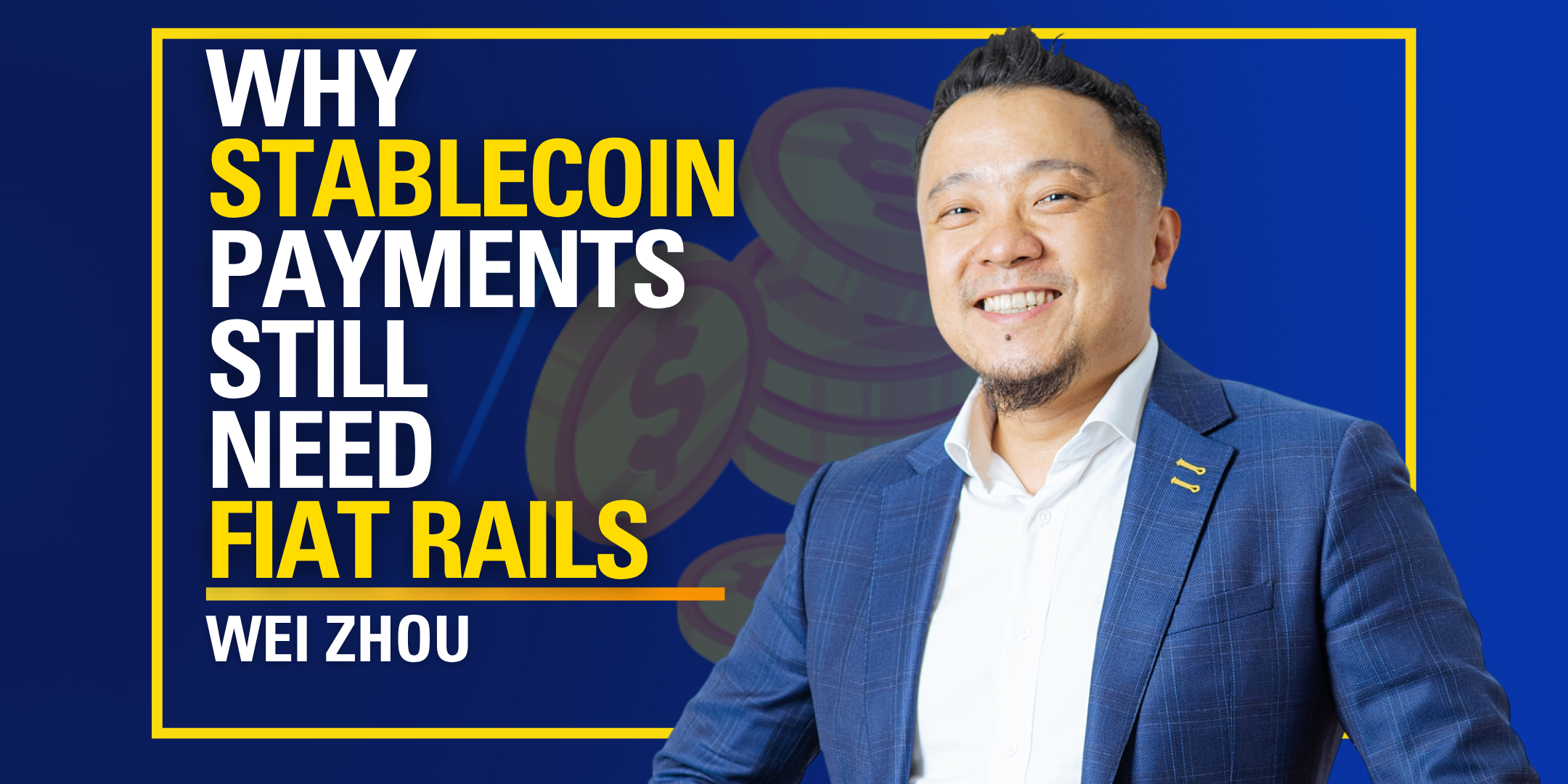
Host Stephen Sargeant welcomes Wei Zhou, CEO at Coins.ph, to discuss grassroots crypto and stablecoin adoption in the Philippines, why the country consistently ranks in Chainalysis’ global top 10, and how regulation since 2016–2017 enabled licensed exchanges and bank connectivity. Zhou explains Coins.ph’s dual licensing (VASP and EMI), its focus on remittances and payments, and how stablecoins can cut remittance costs from 5–10% to 10–20 bps when used properly, emphasizing the importance of deep USDT/USDC-to-peso liquidity and 24/7 rails. He recounts his entry into crypto via ICO-era token distributions, his “Google moment” using Binance, and his time as Binance CFO. The conversation also covers Coins’ PHPC peso-backed stablecoin sandbox, multi-chain stablecoin support, AI-driven productivity inside the company, post-FTX trust, and transparency initiatives like putting government budgets on-chain.
Host: Stephen Sargeant
Guest: Wei Zhou
We are also available via:
Buzzsprout • YouTube • Quora • Medium • X • Facebook • LinkedIn • Soundcloud • Apple Podcast • Spotify • Player FM
Episode Transcript
Stephen: This is your host, Stephen Sargeant, the Around The Coin podcast.
We have the CEO of Coins.ph. We have Wei Zhou, who's coming to break down all the grassroots adoption of cryptocurrencies, stablecoins happening in the Philippines and abroad. We talk about regulations, we talk about the use cases of stablecoin and how the Philippines always ranks as one of the top 10 countries when it comes to adoption of cryptocurrency on the Chainalysis Global Index Report.
We even talk about Coins' PHPC stablecoin, which is their peso-backed stablecoin. This is a fantastic episode from one of the largest crypto exchanges in Philippines and in the APAC region, and I know you're gonna love this.
We, uh, have the CEO of the largest, probably one of the most engaging and trusting crypto exchanges in all the Philippines, Wei Zhou. Why don't you tell us a little bit about your company, a little bit about yourself, and then we're gonna go into your background and how you got to this point of managing one of the largest exchanges in Asia
Wei: Yeah. thanks for having me, Stephen. Uh, Really fun. Been listening to you guys for quite a bit really excited to be on. Everybody, my name is Wei Zhou. I'm currently the CEO for Coins.ph. We're the oldest and the the biggest licensed cryptocurrency exchange, as well as a, a wallet here in the Philippines.
We're licensed by the central bank here as both a VASP, which is Virtual As- Virtual Asset Service Provider, as well as EMI. And then this combination which is basically allows us to-- which is it's called a payment institution or a payment license in most other countries. And then this has really allowed us to expand beyond cryptocurrency trading as part of our business model.
So in addition to become being the first place where Filipinos bought Bitcoin for the first time we're also I would say the first place you know, not anywhere in the world, but probably one of the few places in the world where we've actually put stablecoins on the map for remittance players all over the world.
So whenever you have talking heads on CNBC or talking heads on crypto podcasts talking about how stablecoin can save Filipinos money when they send stablecoins, like we're the guys that actually helping Filipinos send stablecoin, using stablecoins to save money on remittance. Going from historically from 5% or 6%, with the guys like TransferWise, they've actually lowered that down to probably 50 bps to to, to 100 bps.
Like we're lowering that to, to 10 to 20 bps, so if you use it properly with our platform. And I think yeah. Before Coins I was the CFO at Binance. So that was like, I joined when I joined Binance in 2018, that's where I how I started off in the industry here, and then have been, jumping straight in and then been swimming with sharks ever since.
Stephen: That's not a bad job to have. Binance has probably grows year over the last decade. That's probably not a bad job to have to manage the money there. But I've listened to your podcast, and I've seen you as one of the talking heads as well, having amazing conversations, talking about your regional, very regional play in the Philippines.
But you first got into crypto, I think you were working with investing in companies that then had the ICO. Can you share us maybe a quick story about, like, how you were first introduced in crypto and fundraising, and what your thoughts were? Especially now, looking back, a lot of those ICOs probably weren't on the right side of the law, or at least securities regulation.
Wei: Yeah. speaking of ICOs, SEC's making it legal again, right? Anything under $5 million. I've always liked making jokes like, "Make ICOs great again," right? I think, like Binance was probably the most successful ICO in the history of ICOs. Launched at 10 cents in 2018.
Now it's, peaked at like $12,000. Now it's $700, $800, right? And then that was like my one and true love, BNB, right? From my times working there, so the story that I told people is that the first time that I used Binance 'cause I'm old, right?
Asian genes, I look kinda young, but I'm actually in my mid-40s. So I was there when Google launched, right? I was in college during like the search wars, between or before college, like in high school when the search was like, like Excite, like Go.com, like AltaVista, right?
I was there when like the early stage of the search wars,
Stephen: Search wars. You were there with me in internet with like, you had to get a DVD, a CD and the dial hub wars
Wei: so when I first used Google, I was like, "Holy crap, this is so much better than anything I've ever seen before in my life. It's so good," right? And I had that same sort of like Google aha moment when I used Binance for the first time.
And I used Binance because this company that I angel invested in, in, in the mid like 2010s, like sent the CEO sent or the, sent an email. It was like, "Hey, we've we recently did an ICO, and then our token got listed on Binance. If you go Binance, open an account there, give us your wallet address, we'll send you the tokens."
And I was like, "What is this? What does it mean? What did you just say to me?"
Stephen: All I heard was free money and stat drop.
Wei: I had no idea, right? I had no idea. I was like, "Is this a scam?" I was like, "Call the guy." I was like, "Is this a real email?" Like what is... so for me, I opened an account with Binance, no KYC back then, right?
I got, I said I got my address, which was like an Ethereum for this token, and next thing I'm getting like a couple thousand dollars every month in this token. I was like, "This is awesome." And when I got it, I was like, "How do I translate, how do I change this into real money?"
Like this, this is not sold it into USDT. I was like, "What the heck is USDT?" But then I guess it's US dollars, and then whenever I sold it, there's always... 'Cause, when, because like I'm used to buying stock via brokerages. Like back then it was like E-Trade, right?
So I was like, you have to wait a little bit, and when the, if the market's closed, you can't trade. This thing was like, at midnight I was selling some stuff. At 1:00 a.m. I was selling some stuff. In the morning I was selling. I was like, "Oh, this is so easy." It works 24/7, and all of a sudden have all this USDT.
And then obviously, I used that USDT and I went and bought Bitcoin with it. So this was like 20... late 2017, early 2018. And then I was like, "What is this platform?" And then I looked into it and I was like, "Oh my gosh," "I know the founders of the platform." So that's when I like, you guys and I were reached out, right?
Being like a fanboy that I am back then, I was like, "You guys are awesome. Can I, are you guys looking to hire a CFO or something like that?"
Stephen: That's an amazing story. I wanna ask you I wanna really focus on the Philippines because, as a partner, we used to be trainers for Chainalysis. I've seen the global index the resource, and the reports that they have every year, and every year in the top 10 is the Philippines. What do you think drives a lot of this adoption in the region, especially when it comes to digital assets and stablecoins?
Is it remittances? Is it the pay-to-play that we had with NFT games and everybody was able to earn money by just playing video games, which seems like a pretty sweet deal compared to your, "Give me an address and I'll send you BNB"?
Wei: yeah, I think Philippines is at the end of the day is like demographic-wise, it's like a very young and English-speaking country, right? It's like other than like the US or maybe like India, it probably has the third biggest like young English-speaking peop- like population in the world actually.
And 'cause like half of the population is under the age of 30, 110 million people. So you basically got 40 to 50 million people that are here under age of 30, right? And that are actually English fluent, and actually very fluent in American culture, right? So historically, when I was in the vid- like, mobile gaming industry, Philippines was like the test country.
Whenever they wanted to launch something, before they wanted to launch it in the North American markets, they test it out in the Philippines first. So it's always been like a tech-forward, young, English-speaking population here. And and that's number one. Number two, crypto has been legal here since 2016, '17, right?
So in 2016, 2017, the central bank here came out with basically what they call a virtual currency exchange license that allowed for local companies like Coins.ph to go and get an applica- to send an app- to apply, and then to get basically get a cryptocurrency exchange trading license. Back then they called it virtual currency exchange.
So it was legal back then, right? And then the banks connected. So anybody can basically, like you, like it was one of the earliest countries in the wor- like one of the earliest, countries in the world, first countries in the world to actually have such a regime.
Stephen: Yeah, 'cause a lot of companies were banning it at that time, especially because it was so new and there was a lot of the ICO scams and other things. A lot of countries were banning it
Wei: from the central bank perspective, they put it out there not necessarily for speculation, but more for, "Hey, we think this thing could help us to reduce our remittance cost." 'Cause back in the tw- 2000s, even 2010s, remittance cost, as I mentioned, was still like, anywhere between 5% to 10%.
So they're like, "If we can use this crypto," people-- 'cause everybody said Bitcoin can-- you can use it for to lower the cost of moving money. Let's try it out. So and then Coins was actually a pioneer in that sense that it realized that, hey, to do payments and remittance, not only do I need an exchange, I also need a payment license.
So that's why Coins has that license. And I think that's a backdrop, and I think, that has allowed for people here to basically-- I have people that are Coins users for like almost, coming on 10 years now that have bought Bitcoin back in 2016, '17, right? And then the f- the sort of-- those are when a country makes it legal, obviously people can come into it, right?
Easily, cleanly, without like doing all the, shady stuff that
you sort stigma, right? are forced to do, right? And then the third thing I think that really drove it was the play-to-earn movement, right? Like Philippines was like Axie Infinity nation back in like 2021, 2022, and also 2023.
Like during those three, I would say like there's like an estimate of if you look at Ronin wallets, there's three to four million wallets, like Axie wallets here, right? And and then there's a just, tons of people were just like, ride-hailing drivers, deliver- delivery people playing Axie to try to earn, right?
Like there were people like quitting their job to earn $500 a month, right? Playing Axie back in 2021, 2022. I think those are the peak years, especially in 2022. And then as a result, a lot of play-to-earn games when they launched, when that movement was out, they launched it in the Philippines 'cause there's a readily addressable market here, and then people were building like gaming guilds out here.
There's 20,000 gaming guilds in the Philippines at one point.
Stephen: gaming guilds? Like a big warehouse and everyone's just sitting there with phones
Wei: guilds are like so Axie had this system where if you own these NFTs, you can actually rent them out for people to play and earn on it. So those are called guilds, gaming guilds. It's basically like an owner-worker sort of system where you can lend out your NFTs to play in these games and earn, and then the owners and the players split the revenue.
So those are the guilds that were set up back in 2023, even I think in 2024. I think it wasn't until the last sort of crash last, last year that I think that a lot of these things went away, right? 'Cause, 'cause, 'cause I think when the tokenomic-- when the token prices crashed, it doesn't make any sense to play-- like play-to-earn doesn't exist anymore, right?
But ir-irregardless, I think like even based on sort of our numbers, there's still like probably 30,000 to 50,000 sort of people that still play Axie in the country today, right? Despite, like just playing for fun, not necessarily even to earn tokens anymore. And then I think with with Coins I, I bought the company in 2022 and became the CEO, and then we've been making a major push for stablecoin usage here.
So we embedded stablecoin into our app now that Coins users in the Philippines can stake scan sort of traditional QR, universal QR scan to make, to pay, traditional merchants in pesos. And then they can choose to deduct automatically, USDT from their wallets or Bitcoin or USDC or Ethereum, but, in addition to sort of pesos.
So we've been working, doing a lot of initiatives with Tether to push for, stablecoin adoption here. And then we hopefully, by the end of the year, we'll get merchants, to start accepting stablecoins here as well.
Stephen: because you mentioned so much about remittances, is it because that Philippines has a thriving gig economy? As a media agency, we use a lot of video editors and other workers in the Philippines. Is that what drives a lot of those
remittances?
Wei: there's a cost advantage, right? With people working and there's no language barrier, right? And there's no minimal cultural barrier as well, right? And people here are willing to work, any time of the day, right? I'm in Manila right now, it's like 9, 9:19. Like in about three hours, it's basically lunch break for a lot of the people here, right? Starbucks open 24/7, pizza joints, chicken joints are open, right? So it's because people work, cover work US time here, right?
So I think as a result, I think there's just like a culture of hey, if people can use the crypto services legally, and there's a natural need for gig economy. Some are full-time workers, some are part-time workers to just use stablecoins in their daily lives.
Stephen: What is the main reason for users to be drawn to Coins.ph? There's so many international exchanges that are probably trying to service the Philippines market where, crypto's legal and the licensing might not be as heavily regulated as places like the US or the EU. What draws users?
Wei: joke around, it's like all the offshore exchanges are here, right? They're not legally here, but all the names that you know of are operating here, right? They're not here, but they're here, right? But users use them here. For us, I think it's a challenge, right? Like I know the head of the licensed exchanges in Southeast Asia, like in Thailand, and Singapore, Indonesia Malaysia, and then and Latin America, like in Brazil and Mexico. It's like we all face the same challenges, right?
Like we, our regulators and our regulation, do not allow us to offer all these products that exist on the offshore exchanges, right? Whether it's staking, whether it's lending, whether it's derivatives, and now it's stocks. It's like we just can't offer these products. It's like we can offer them.
Like I joke around, it's like the tech is there. Like I can list stock tokens, right? From a lot of vendors, right? I can-- all these vendors are offering me staking solutions, right? I-- and then I can build I build a margin trading product ourselves. Like we can offer these, but it's just that the regulators here do not allow us to, offer these products.
So we have to basically be really good at what we can offer, right? Which are basically, on and off-ramp, in and out, like in and out of stablecoins payments and then and then also basically building up liquidity for stablecoin vis-a-vis pesos and then allow for 24/7 trading of that so that, anyone-- and then also, building up, I think a lot of our business use cases, right?
Because we're a licensed financial institution, right? If you are, working with other payment companies, banks or even like just traditional commer- in TradFi commerce, most of them are restricted to be able to work with licensed financial institutions, right?
So I think for us, like we've made a, the retail business for regular users, I think, allowing them to, send stablecoins, trade stablecoins, move stablecoins cheaply and efficiently in and out, even onto other offshore platforms. I, that that's part of life, right?
But I think for us, like we've actually made a really big push into business use case. So I think that's where we've seen the most growth the last couple of years.
Stephen: I was gonna say, it feels like you're going from a retail trading platform to almost a stablecoin infrastructure that's almost like the Circle, it seems like, for the filipino region
Wei: I would say like all in, like anything that is peso, any stablecoin that is denominated and needed to be traded in and out of peso, we're basically the source of liquidity.
Stephen: How do you transition from a strictly retail market to building the infrastructure that, as you say, is servicing businesses, and now we see a lot of institutional capital that wants to also move around stablecoins and, you know, remittance. If remittances, you're saving at a couple, percentages, imagine these huge organizations that are moving millions of dollars.
How do you change that approach for your clientele?
I'll be honest with you, like a lot of the infrastructure that we had set up to run a crypto exchange, I think if you just modify it and then and then, you know-- Like obviously, I think one of the biggest challenge for stablecoins as the money, as s- a- as we build up our stablecoin rails, is like the payment company's needs are very different from sort of retail traders' needs, right?
Like retail traders are used to price fluctuation, but if you run a payment company, you wanna know, you're not used price fluctuation. Like the bank gives-- Like you look at Bloomberg or you call your bank, you basically get your FX rates, and you can basically get a million, two million, 10 million done at that quote from a bank, right?
You don't wanna say, "I wanna do trades of $100 clicks," right? To get to a million dollars in volume to move FX, right? For us I think that if you look at a lot of the arguments against, stablecoins for payments especially for cross-border, has been actually on the FX side of things, right?
You can't have price stability, you can't have-- you can't do a chunk. So for us, it's actually we went back to thinking about it, like how do we solve that problem? We can solve that problem basically by building up our order book, right? To be really robust, right? Like basically to have, really tight spreads that match basically the FX rates that, you know, banks quote, and to have depth on the order book, up to $5 million with like minimal slippage on both sides, right?
If we can provide that, then basically, sophisticated traders or sophisticated institutions can plug into our order book and basically get FX at size, especially on stablecoins, right? So I think that's one of these sort of like fundamental building blocks that we got. And the other one is basically we have to have a, like a 24/7 trade desk that could oper- that could operate, automatically without manual to support all these payment institutions that want to basically get, you know stablecoin rates, from us, right?
And then and then also I think to provide additional services like virtual accounts also Cobo po- collection for collection on behalf of payment, on behalf of all these like, more traditional payment-enabled services. But we can provide that now for both stablecoins and for fiat currency.
So I think by building a lot of these functionalities we have been able to basically onboard more businesses.
You know what's interesting, you mentioned, other institutions and other opportunities. We're both about the same age based on your description. It's been almost a decade that we saw these fintechs come in, say that they're gonna disrupt banks and solve the problem for remittances.
Why does it take stablecoins to solve this solution? And, why haven't we solved this over the last five to six years with the plethora of fintechs and, M-PESA type, using phone credits? Why hasn't this been solved until stablecoins,
Wei: Yeah, I think like what has been solved is actually domestic payments. I think a, a lot of the technology over the last 10 or 15 years v- have gone into basically upgrading the grid domestically, right? Other than the US, ev- almost every other country has like real-time, domestic payment capabilities now, right?
Whether it's like UPI in India. In the Philippines, it's BankNet, which is Instapay pa- which runs like Instapay and the PesoNet network, which is like real-time payment here in the Philippines. Like Pix in Brazil, right? PayNow in Singapore. And then, in call it now M-Pesa in I think in Kenya. Nigeria has it. Europe has like SEPA, right? Other than the US, like almost every other country has like their own domestic payment. So domestic payment is basically instant mostly instant, and then a lot of them runs on universal QR, right? So a merchant just needs to display a QR code, and then they can basically pay into that to the merchant through any sort of banking app or payment app. If you look at Southeast Asia, like almost 60 to 70% of domestic payment runs on q- QR. But where once you leave the border, once you cross the border that's where the friction and the challenges come in, right? And mainly just because a lot of the countries have currency restriction, have currency control regimes, right?
You have currency control regimes, you have inflexible FX and then at the end of the day the FX rails are still owned and run by the banks, right? Where-- Like before stablecoins, where did you get your FX done? In your bank, right? And what's so special about a bank? They're closed after 5:00 p.m.
and they're closed on the weekends, right?
Stephen: When you need the money the most
Wei: like in Singapore, you go on your UOB app or you're in, in, in Hong Kong, you go to HSBC on the weekends, they sometimes they won't let you convert, right? They won't let you convert some of the currencies, right?
So if you can't even convert the currencies, then how can you send that money, right? Obviously, you got a lot of the cross-border payment folks like, you know, MoneyGram or Remitly, a lot of those guys they operate in even the, the last wave of these, like what I call real-time payment companies.
They operate a giant sort of like pre-funded working capital to allow for sort of, money to move, right? Even even when the quote-unquote checks in the mail or the dollar's in the SWIFT system and it's moving, they can disperse. They can basically provide FX services and disperse when the money is still in the mail, right?
When the check is still in the mail because they have a giant working capital, pool of working capital they can work through, right? But even then, that there's cost to that. So that's why you can't really, there's a minimal of like cost that you can push this down to, right?
And I think with that pre-funded model, they push that down to maybe 1% or 2%. But then the thing is they still had to rely on local partners to do the actual disbursement and the collection. And then I think the last generation of like real rev disruptors are like the Wise and the Revolut.
And what they did is they actually went and got the licenses in each of these countries, right? So Wise is licensed in Singapore, in Europe, and in the Philippines, right? So they can actually be, they can actually do the actual last mile disbursement in the Philippines themselves, right? So I think Wise grew because they were able to basically push a lot through their ecosystem.
They're able to basically push costs down to, 50 bps, right? One data that I saw Wise pushed out is that like they handle 20, almost like 20-plus percent of the inbound remittance flow into the Philippines, right? And that's pretty big, right? But the thing is that we think through our rails that we've built, we've gotten that down to 10 or 20 bps, right?
And I think the complaint is oh, without stablecoin, without USDT or USDC to peso liquidity, you can't move size, right? You can't do $10 million a day or $100 million a day. If somebody wants to sell, $30 million of USDC on your platform, price tanks, and then, the price goes away, right?
And then the cost gets jacked up again, right? So for us, it's like the really big thing that we've put our resources into the last two years is basically just building more and more liquidity to support USDT and USDC to pesos, such that, people can really use our rails, right? The other thing is that because we own the last mile rails ourselves, we can basically give you, wholesale Costco prices for the disbursement, right? So I'm not gonna charge anybody any markups on disbursement as well. So for me, I would say, newer startups that are like stablecoin native that's come into the remittance payment space that one of the first countries they connect to is Philippines because of the availability of coins, right?
So it's like they can instantly open up Philippine rails.
Stephen: that's amazing. How do... I look at, maybe like a major Filipino bank, like Union Bank, that was actually really early in stablecoins. What keeps them or prevents them from, creating their own infrastructure like this to compete with you?
Wei: it's like on the face you're like: "Oh, you guys support USDT and USDC." It's yes, but we support like 12 versions of them. We do a Solana one, an Ethereum one, a BNB one. We do an Arbitrum one. We do what else we do? We do a Stellar one, right?
It's like we do a Tron one. Like we do have 13 or 14 different USDC, right? And that USDC can arrive from whatever vendor, if Stellar signs a contract with a remittance company, that remittance company is only gonna be using Stellar USDC, right? If there's like this Robinhood chain runs on Arbitrum, so obviously there's Arbitrum stuff going on, right? And then recently we added support for Tempo, right? So basically all things that is kinda like Stripe-related ecosystem is gonna come into the Philippines through Tempo, right? It's basically our crypto exchange DNA, is very different from a bank's DNA.
The bank's oh, they Fireblocks pushed them, they set up an account, all of a sudden they can, that's a very different infrastructure vis-a-vis what we have, right? Like we're here to support multi-chain and then eventually down the road, like multi-US dollar stablecoins, right?
Stephen: What's your approach though? Are you interested in having people learn about stablecoins and educate them about stablecoins, or do you want them just using your payment infrastructure and they don't even realize that stablecoins are operating in the background.
Wei: All of the above. My vision or my goal is like there's two things. Like one, in the payment world, I wanna get to T plus zero, right?
Like basically in the payment world, T plus zero means that time plus zero, right? How fast can you move the money, right? Generally, in the banking world it's like money moves like T plus one is pretty fast already, right? In the stock world, they'd settle T plus one, T plus two. T plus zero means the bottom half is how much it's gonna cost, right?
Like I wanna basically move that down to as close to zero as possible, right? So that's that's one vision, right? And I think if we can basically help move money in and out of the Philippines, T plus zero as possible, I think that's gonna facilitate more commerce, and that's gonna let users, companies keep more of their money in their own pockets, right?
I think that's one sort of the vision. And then if I can drive down the cost of FX and get close to T plus zero, I will allow for basically, companies, users, whoever it is, access cheaper access and access to dollars, right? At the end of the day, these gig workers that you're talking to, if they use coins, they basically can move their USDC out anytime they want, or they can even keep USDC on the coins wallet and spend it in pesos locally, right?
Ultimately, I want to add other, financial services in them, right? And because I have very cheap dollar access or dollar FX, then the dollarized financial products I offer on my platform will be super cheap as well, right?
So it will be cheaper than a lot of the, the local currency ones. So I think at the end of the day, these are some of the things that we're thinking about and as we build up these rails, we're thinking like, "Hey, maybe I can build these in other countries as well."
Stephen: I was gonna mention, I looked on your careers page on your website, and you have a lot of other jurisdictions. Who do you serve now, and what are some other regions that you're looking to offer this same kind of concept to? It looks like Singapore. I saw Hong Kong. I think I even saw the UAE. Can you talk about your global plans?
Wei: Yeah. So our vision is like copy and paste what we've built in the Philippines, I think into other emerging markets, right? And then especially, as more and more of the emerging markets come online from a licensing perspective. I think if you look at all of Latin America and all of Africa, I think, very few countries have licensing regimes, right?
Like I think Brazil has a licensing regime, so we're grandfathered. We launched in Brazil last year, so we're grandfathered into operational there, and we plan to basically, it's probably one of the first countries that we're gonna try to copy-paste our model into under a licensed regime.
And there's a, couple of other African countries that we're looking at as well. I think in the tier one countries, what I call the-- So that's like the, not the poor country, but the emerging economies, right? The developing countries. I think in the rich countries the currency flows pretty freely already, right?
Like you don't need like even in Singapore, anybody can get dollars, right? In Hong Kong, anybody can get dollars. US, dollar stablecoins converts one to one. There's zero FX, right? And they don't even have to think about what it means. And I joke around, it's like only in the US does a stablecoin convert one to one. Everywhere outside the US, there is never stable Versus local currency. It's like it is never one to one, right? Even, Japan, even rich countries like, it's never one to one. So at the end of the day, stablecoin I think will act more like FX or a new type of FX in those countries.
And then and then for me, it's more about, hey if I can basically get into some of these bank accounts or licenses in some of these tier one countries where the remittance originates, I can probably, lower my prices even more if I can basically get good FX prices in these countries, right?
So sort of that that's my thinking.
Stephen: you recently described that, the whole stablecoin payment, I guess bottleneck is actually caused more by fiat infrastructure than blockchain infrastructure. Can you maybe expand upon that? Like, why is fiat, stopping the flow of stablecoin payments, in your opinion.
Wei: I joke around as fiat is like roads and then like just roads, and then blockchain is like airlines, right? Or air versus land, right? Like things travel this way and then once an airplane lands with money on your country, it needs to get unloaded, right? Or if it's a slow blockchain, it translates it moves by ship, right? What I explain to people is we basically run like a port business or like an airport business, right?
Like blockchain moves people by air, but then once the people land at that airport, they gotta get documented. They gotta go through immigration and customs before they can move by land, once they've landed in a country. Money's kinda moved that way as well, right? So the friction actually comes in terms of this speed and these, this sort of way of travel versus this speed and this way of travel, right?
Obviously, once they get onshore into a country, they have railways and cars, The money can move different ways as well, right? And I think just blockchain money versus like fiat money, that's where the friction is, right? The friction is on the port of call, on the airport, like at that point, right?
Stephen: four five planes land at the same time, gonna take you longer to get through customs, right? And that's the friction.
Wei: That's the friction, right? And sometimes, if the banks don't work on the weekend, right? The airports close on the weekend, right? So That's why it's important to be plugged into these, domestic real-time payment networks rather than banks, right?
So right now we basically, are tying 24/7 fiat with 24/7 crypto, right? So at least, even on the weekends, you can still get your fiat money out, or you can actually you can still sell your crypto into fiat money and use your crypto money, right?
Or send your fiat money in and buy crypto money, right? And I think that's the beauty of what we've set up. And where the friction is, like I mentioned before, is what I mean by that is that once you're in the fiat money world, there's a different set of regulations even, right?
Whether it's KYC, AML, travel rule, right? There's a whole lot of things that's gonna cause friction that may or may not exist in the non-custodial crypto world, right? And I think that's what I mean by that. And you got, banks and, centralized, databases, API calls.
There's just a lot of these things, right? If you-- like for us, I joke around is at any given point, some bank's API system or some bank's, is under maintenance, right? So this bank channel may be closed. So yeah. But-- and then sometimes even like in Brazil, I heard there were cases where if the pig system gets hacked, the central bank will maybe shut it down for a little bit, take a break, upgrade the system, right?
There's a lot of these things that happen that don't really exist in the blockchain world.
Stephen: Speaking of spent central banks, you were part of the Philippines Central Bank sandbox with your peso-backed stablecoin. Can you share what the regulatory landscape is? You're seeing obviously what's happening in the US with Act. What would you take from the way the Philippines has regulated cryptocurrency, and what would you maybe leverage from other jurisdictions like the EU, and what could they learn from the way your region has applied regulations to virtual assets.
Wei: So I think one example I kinda wanna-- before I jumped into US regime, I actually think the Genius Act is amazing. It has basically has unlocked so many things in the US, right? Like even for us, it's been a godsend for our business because before we're talking to a lot of these payment companies, remittance companies, most of them are US-based companies, they wouldn't even touch stablecoins, right?
But Genius Act has made stablecoins legal. So pretty much all US financial institutions, especially in the payment world, have fully embraced stablecoins, right? And a lot of them have actually started adopting it. And then I see this new wave of startups in the US that are stablecoin native, right? And I just think that has been awesome to see.
And you have more banks in the US now that are supporting stablecoins as well, right? Not necessarily in terms of issuing it, but at least has allowed for, customers to deposit dollars and to support stablecoin related stablecoin tangential businesses. So I think that's really cool to see in the US.
And I think like because of the Genius Act, US has basically has come, I would say one of the laggards in adoption and usage to the definitive leader for stablecoins anywhere in the world today. More than the EU, more than Singapore, more than the Philippines, more than anywhere else, right?
Mainly because there are more banks that support stablecoin-related businesses, and there are stablecoin native businesses that are being launched in the US from a sort of startup economy perspective. And I think vis-a-vis sort of here in the Philippines, I think we've upgraded our regulation.
There's not really specific stablecoin regulation. I think all things cryptocurrencies covered under the existing sort of VASP, Virtual Asset Service Provider regulations from the central bank here. And then the SEC here has come out with a CASP, Crypto Asset Service Provider regime. Kinda like what's happening in the US is like one is more like CLARITY Act, which is what the SEC is trying to deal with, and then one is cryptocurrency exchange and and payments, which is what the central bank's trying to deal with.
And and I think, for us, we are working with both regulators to basically try to get more products into the market. One key product is basically this peso-backed stablecoin that we're in the sandbox for. And hopefully by the end of the year be able to get out of the sandbox.
Stephen: It's nice to play in there, but eventually you like to go play on... take your ball and go play...
Wei: yeah, I wanna release it to the wild. Like it, it's working. People can deposit pesos into Coins, hit mint, and then convert it into PHPC in a one-for-one. And then and they can also sell it on Coins. They buy it for free.
When they sell it, I'll charge you one bip for like 0.0001% when you sell it from PHPC back to PHP. And then we don't give interest if you hold PHPC, obviously. And then we would like to put it out there for Like the goal here is basically try to get PHPC listed in other regions so that it gets used.
People will buy it and use it to send money back to the Philippines, right? Or, and vice versa. So if you wanna pay someone in the Philippines and then they want to denominate it in pesos, you can basically buy PHPC on Coinbase and then send PHPC to your, family or to your employees or to your workers in Philippines directly.
So like that's the more common use case that I see. But we'll see. But I think there's other things, there are other businesses that we talked to that have taken interest in it. It's just a matter of getting the sandbox, and we're pretty positive about it.
And then just coming back on regulations, I think I think one, one country that has been quite unique, I think on all of this is actually Singapore. I think they came out with what they call the digital payment act or DPT or whatever, which is basically they've bucketed crypto as just a payment token. They do not encourage the speculation of crypto. And that's really cool because you see this proliferation of payment companies using Singapore and then using the Singapore license as their base, right? And then e-even if you just say, "Hey, we don't wanna use crypto. We don't want our audience our population to really speculate crypto 'cause we, we think it's high risk. But we do wanna encourage the payment use case." I think that set of rules and regulations is actually quite is actually pretty good from that perspective.
Stephen: And I feel like a lot of places in Asia, that's the way they even treat the traditional stock markets. I believe some regions you have to take an exam to say that you're, sophisticated enough to trade in certain stocks and bonds, et cetera. Whereas I think, many countries in like the US and North America would love to adopt that same approach.
Wei: kind of like Hong Kong's kind of like that. If you get Hong Kong, they have their securities regulator, SFC, that regulates the exchanges, and then they have the HKMA, which is their central bank that regulates the stablecoins, and then they have another organization that regulates the payment companies.
So it's actually that makes a stablecoin payment company to be really hard or nearly impossible to operate under the Hong Kong jurisdiction. Whereas a stablecoin company can operate under a Singaporean jurisdiction. Does that make sense? Whereas Hongkong right now, it's like you have to be retail technically can't even trade USDT and USDC 'cause they've made that an institutional trader product governed by the SFC.
So yeah.
Stephen: We can't leave this conversation without talking about AI though. We've seen lots of crypto exchanges reduce their headcount by almost 50%, some of them due to AI. I put that in brackets. How's your s- exchange been able to leverage AI, and what's been the biggest impact of AI your business?
Wei: I'm an abundance mentality kind of a person, right? Like I, I want AI to unlock human work potential. Like I told our guys, it's like the best case scenario for Coins is like in two years, like we'll be 10 times bigger in terms of revenue and but then we'll have the same number of people, and then you guys all get paid 10 times more.
It's like that's basically my goal.
Stephen: It's sounds like a pretty good pitch to your employee.
Wei: was like and the only way we're gonna get there is if we all use AI ourselves, right? Like we've integrated, a couple of models within our system. So and then we've integrated, like we, our CTO has done a wonderful job the last six months to basically build off a walled space within Coins where, our data is are available for, our own models to run into and use.
And then we actually actively encourage all of our employees to use AI. And we're like, if you don't use this, in the next 30 days or 60," I forget the number, "you're, like we're actually gonna fire you." So it's like and and if you don't know how to use it, here's a model, here's a thing.
So it's like we're actually actively encouraging all of our employees to actually use AI in their work. We're not forcing anybody to do anything, right? But if you don't do it, there are negative consequences. And we believe that once you start using it, you're gonna become infinitely more productive.
And as a result, Coins employees are gonna be 10X more productive than, other employees that don't have AI integrated within their own ecosystem, right? And that's something that's like our culture that we're trying to push out. But for me, it's more about we haven't fired anybody because of AI.
Like I can say that, and I don't plan on doing so. And I do believe that we've actually seen significant improvements in the quality of the work since we implemented it. And I think that's just the starting point.
And I think down the road, when we figure out how to deploy agents into certain roles and tasks, I think, we're gonna be able to ship things a lot faster.
I think that's my goal, right? And that's at an organizational level. I think from a functionality and product level, I think given that we do run a regulated financial institution, like we do custody, user assets, money and stuff like that. I am actually a lot more cautious about putting AI tools out there for users.
So that's I'll leave it at that. Yeah.
Stephen: on this line of transparency, what's it like being the leader of one of the biggest exchanges in Asia? Especially, you took over, as you said, in 2022. That's after the huge FTX collapse where the trust level in crypto exchanges was probably at its lowest point.
What was like trying to revive the industry and trust in crypto exchanges after that?
Wei: a lot of talking. A lot of talking. The FTX moment, 'cause I knew like just background, like I was actually the guy that within Binance, when I was worked there, I actually met SBF and his whole gang while they were still Alameda, they, when they first moved from from the US to Hong Kong back in 2018, right?
And then we actually, at Binance, we actually invested in FTX back in 2019, right? So saw them, going from, just a bunch of guys trading, to this giant empire, and then seeing, going from like a hero's journey to like a villain's arc.
Stephen: And nothing really changed. They were just still just a bunch of guys trading. Unfortunately, they were just using customer, allegedly using customer money, right?
Wei: but regardless, I think even for me personally, it was actually a very I wouldn't call it a dark moment. It was like a very kinda like a soul-searching moment. It's like, geez, like this, the, like people like what's going on here?
What, why are you even here? What are we doing, right? Like why, like all these people 'cause it wasn't just FTX, right? It's like a whole series of people back in, especially I think in 2022, right? That were basically, on pedestals that basically fell off the pedestal, right?
Whether it's hubris, whether it's like, lack of moral code, right? There's a lot of these things that went into it that people forget why you're here in the first place. So for us, we're pretty lucky in that, at least me I'm pretty lucky in that we run a regulated business, right?
So there's, both offic- there's, obviously there's, guardrails that we have as a business in terms of user assets. But a lot of it I think ha- just has to do like for me, it was just like a lot of the people that are like, "Oh, I told you there's all these people just "I told you it's a scam.
I told you they're bad." "I told you this is where," "I told you this is that." It's just nonstop for about, and the US sort of guys going after Binance, going after everything, right? And then, we're kinda just get caught, not necessarily in the building things that people use phase, but basically having to defend ourselves a lot. And only way you can defend that is basically by building, things people use, right? And then for us, it's like we think stablecoins are better form of remittance than fiat, and we believe that, we'll show you the numbers, right? And then I think that was one of the motivators.
And another one is like like personality-wise, I'm very, I love prove people wrong. So that's one of these internal drivers that I have. So it's I was like, yeah.
Stephen: I'm curious, obviously we saw the flooding in the Philip- e- even I'm in Toronto, Canada, we just had a rainstorm, and that was like 10 minutes and, half of our infrastructure was flooded. I can only imagine what happened in the Philippines. And there was a series of tweets I think you even commented on, where it seems that maybe blockchain-based payments are a more transparent way to get crypto help to these, the, these players that are helping clean up, obviously with the flooding, et cetera.
It seems that once the money goes to the politicians, it's hard to find, where it's actually helping. It seems there's a lot of money going out,
exactly
Wei: there's a major bill here that basically is trying to put the government budget on chain, right? I don't even care if it's a public chain or a private chain, but If the government can put their budget on blockchain and make it transparent for, I think, for people to see and audit, I think that's a huge move, right?
And then there's an act here called the Kadena Act that we've been, supporting, I would say, from behind the scenes, that basically is trying to push for the government here to basically to put the budget on blockchain. I think whether that really solves it, but at least, it does provide, public eyeballs to actually scrutinize, what the government budget is going into.
'Cause one of the biggest scandals here in the Philippines the last, 12 months has been flood control, right? The government allocated, I think, like billions of dollars to fight flood control 'cause Philippines sits in this typhoon zone, right? So we know every year during this typhoon season, we're gonna get hit with torrential rain. And every year, tons of money gets allocated to flood control, and then every year, the more money that the flood con- the... It never improves despite more money being
Stephen: More money goes into it, less impact it
Wei: No impact almost, right? And then things, and then things that get built either fall apart or things actually just don't get built.
And then and then there was a, I don't wanna co-comment on the local politics. Basically, they found that they think that this, very influential politician has been leading, a bunch of people to basically steal that money, right? And for me, as a taxpayer here, I'm just like: That's my money, right?
That's supposed to be go fixing these things. That's not going, not going to fix these things. And
Stephen: I don't think it's specifically for the Philippines. I think anyone in the US or Canada or anywhere else around the world listening to this is they can give you that exact same flood recovery scenario for something else, whether it's fighting homelessness or dealing with a fires and
Wei: the scenario here is that it just became all of a sudden so in your face, right? Because it's like, because so like I joke around is when the flooding happens in the provinces and you don't really, it doesn't really impact you, you're like, "Eh."
But the thing is like this time around, like flooding happened in the richest neighborhoods here in Manila, right? It is in your face, right? You, when you're faced with like a 16 hour, or was it, I had a friend who was stuck in traffic for five hours because of, you know, some parts of the roads are flooded.
When it happens to real people in real time and you're like, "I'm living in this nice neighborhood," all of a sudden it's flooded, you're like, "Whoa." It's it really hits home then. So I do think this is an issue that, with transparency we can help to solve or at least, bring more eyeballs to.
Stephen: Love it. You were recently at CoinFest, or at least the team was at CoinFest Asia in Bali. A, a great place to have a conference, I think, unless you tell me otherwise. What were some of the key takeaways? And maybe even what's the future of blockchain and crypto and payments and stablecoins in your region and abroad to other regions that you're looking at for Coins.ph?
Wei: Yeah, I think one of the big trends is basically there's more card companies there. Any credit card, basically issuing credit card, issuing USDT credit cards to uncarded audience in the emerging markets. That's a big trend, right?
I think like the two major trend is give cards to the uncarded and then give US stocks to the unbrokered. I think those are the two major trends that I see in the emerging markets. And I think those are the more talked about things and the two types of products that I would say the emerging market audience want more of
Stephen: I'm curious, I just saw the Robot Olympics, I think it was in China. It always feels like Asia is so far in advance. Live streaming is just starting to hit North America, but there's some people in, Asia making millions of dollars every second just by showing an item for a few seconds.
What are some nerdy, cool trends that you're seeing? It doesn't even have to be related to crypto, but what are some cool trends that you're seeing that you think won't get to North America or at least the West, for a few years?
Wei: AI-enabled gadgets
Stephen: Interesting
Wei: like little AI chips into a little dog that records everything, right? Like there's like or basically like you saw this you saw this AI toothbrush, right? I'm not sure if you've seen it. Dyson. So look it up. Look it up. So Dyson, which is this high-end hairdryer in, in that the founder is a is an Englishman who lived in Singapore who created this like $300 hairdryer, right?
Called Dyson, D-Y-S-O-N. This entrepreneur built a massive empire based on sort of his blade from... And then he recently released a $499 AI camera-enabled toothbrush,
Stephen: I'm looking at It
Wei: where there are cameras in that toothbrush that looks at your teeth as you brush it, and then it will squirt water to floss your teeth as you brush.
Stephen: That's crazy
Wei: I'm like, "I want that," remember like the Internet of Things, right? Like that, that thing, I think it's like an AI-enabled gadgets,
Stephen: that's pretty cool, i didn't even hear about that. That's really cool.
Wei: They put an AI- they put a camera and an AI chip in a toothbrush, right?
To give you better feeling after you've brushed your teeth, right? I think like just imagine all the other electronic devices that we use, right? Imagine they put, like for one thing like speakers, right? Like you have to adjust sound and bass based on the music. Imagine just putting an AI chip in there and then depending on whether it's classical music or whether it's EDM music, whether it's podcast, it'll adjust the volume and tone based on the taste or your preferences and stuff.
Stephen: Especially when you're driving and when a banger comes on, you just, you don't wanna have to turn up the volume. You want the car to just know this is a tune.
Wei: Or voice control, right? Something like right? You wanna turn it up, just say turn it up, right? Like there's a lot of things I actually think like AI-enabled AI chip-enabled like gadgets. I think that stuff is gonna come out of Asia.
Yeah, I think so.
Stephen: As a CEO, you seem to have a very relaxed, like relatable frame. Like what's, who do, who inspires you? What's a book you're reading? Are you listening to these, all-in podcasts where they're talking about AI all day long? Give us a little insight of where you get your information.
Wei: I'm like, I was-- I got into the All-In podcast when there were like still less than, I think, definitely less than 100 episodes in, or basically like one of the first years. And then I went to the All-In conference in LA back in 20 tw- basically the year that JD Vance went, which is like 2023, right?
I think when, it was before they were, before they went MAGA. When they were still discussing, when they were still discussing tech and not politics. So I was I was all into that, like books, like I went through a lot of the managerial self-help books, but recently I think one of the entrepreneurs that I definitely admire the most is Elon, 'cause I think like his ability to multitask and just work on multiple things and to be super focused on what he's doing when he is doing it, I think that's something that I that I aspire to do.
And then I worked for, the best and the biggest, crypto entrepreneur of all time, CZ, right? Like he was my boss for three years, right? I, hats off to the boss man, right? Like I learned so much about how to run organizations, about how to motivate people, and about how to, negotiate, through him, 'Cause 'cause before that, I was basically just like a professional CE- CFO for m- multiple companies. But it was under, it was under Bi- it was under CZ at Binance that I actually felt real agency in terms of like being able to, do things on my own under a, under his leadership, right?
So I guess, I think his ability to basically just let good people be good people, I think that's why Binance is such a successful organization that it is today, right? And I think and I think that, that's someone that I look up to.
And yeah. Books I find yeah, recently, been getting into science fiction. So that, that's something that that's just... I can't read about-- if I have to read about work, I'm just like, "Stop. No more.
Stephen: No more. I love it. Where's the best place for people to find you? Are you still... are you on crypto Twitter now, especially with the Bitcoin prices going back up are you taking some victory laps on crypto twitter.
Wei: I'm on it's @thedaoofwei the T-H-E D-A-O O-F W-E-I. That's my that's my X handle.
Stephen: Awesome, and we'll put that in there. Wei, thank you so much. This is such a fun conversation. It's great to see, behind the scenes of what's happening in Philippines instead of just seeing them at the top of every report for global adoption of cryptocurrency and stablecoins. It's nice to know why.
Wei: Yeah, we're here to help Filipinos to lower their cost of remittance.
Stephen: that's amazing. That's amazing. As someone that pays a lot of Filipino employees I'm sure they appreciate it as well. Wei, thank you so much for joining the Around The Coin podcast
Wei: Thanks, Stephen. Take care.