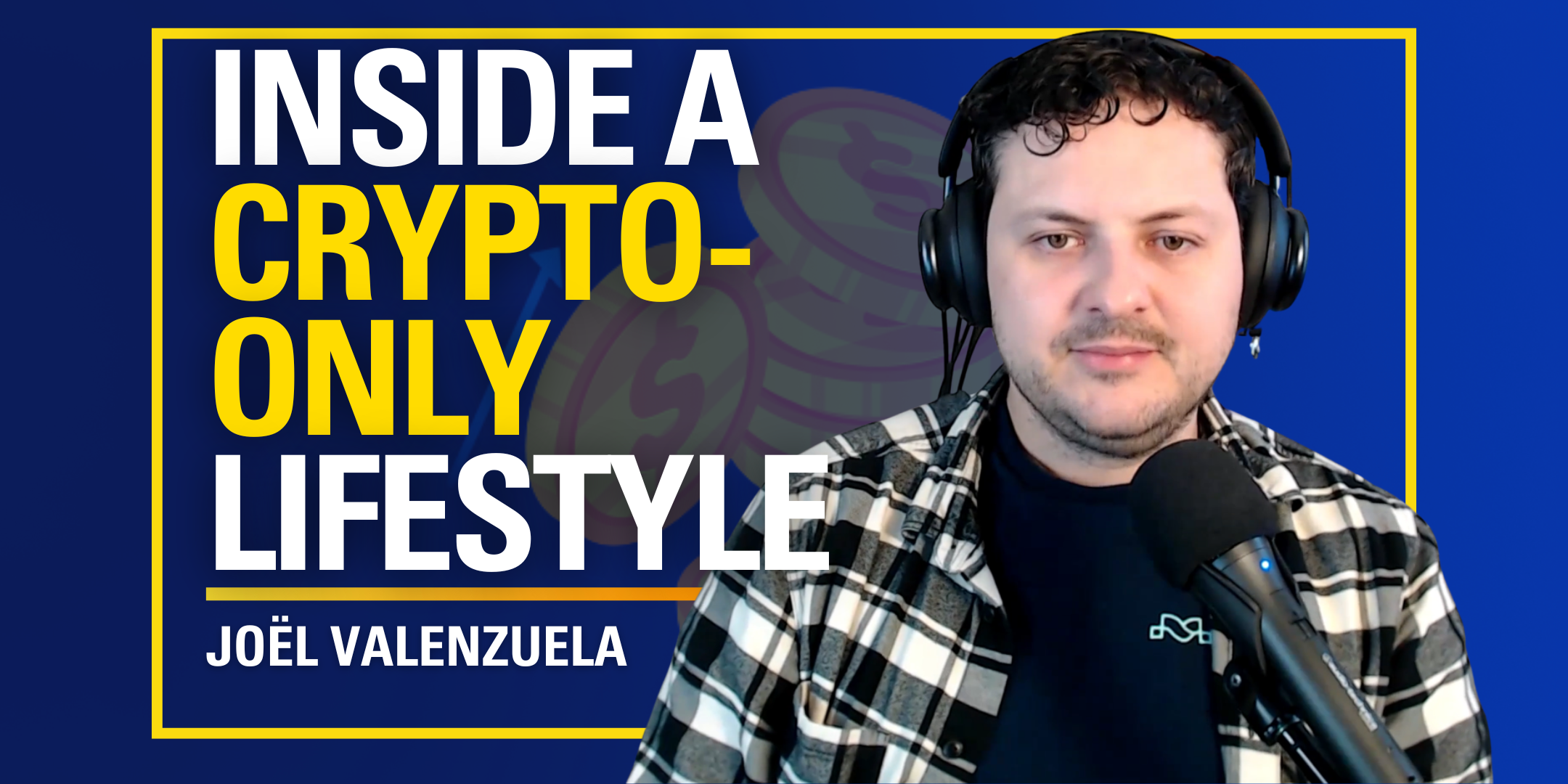
Inside a Crypto-Only Lifestyle - Joel Valenzuela | ATC #590
Join host Stephen Sargeant on the Around The Coin podcast as he interviews cryptocurrency pioneer Joël Valenzuela, a core member of the Dash DAO. Joël has been living unbanked off of cryptocurrency for almost 10 years, most of that time using Dash as his primary tool.
Host: Stephen Sargeant
Guests: Joël Valenzuela
We are also available via:
Buzzsprout • YouTube • Quora • Medium • X • Facebook • LinkedIn • Soundcloud • Apple Podcast • Spotify • Player FM
Check out http://deepca.st/around-the-coin on DeepCast to delve into episode transcripts, key insights, discussed topics, and more!
Episode Transcript
Stephen: This is your host, Stephen Sargeant, Around The Coin podcast. We have one of the OG Gees of the space, the original Joel Valenzuela. He's a Dash DAO core member. He's gonna take us all the way back to the early days of crypto, and he is been on crypto only lifestyle, only using crypto no more. Fiat closed his bank accounts over the last decade.
He's gonna talk us about some of the challenges. Some of the things that he's seeing in this space. He's gonna tell us a lot about Dash and the recent bump in privacy coins, especially when it's come to prices. What he thinks the reasons for this huge evolution in the crypto is what his thoughts are on stable coins over the next couple years, and even the crypto industry as a whole.
He's gonna talk a lot about the hype. The transparency of the industry and why privacy is gonna be an important element going forward. It's gonna talk a lot about adoption, about some of the cool things that Dash is working on, and of course we get into regulation and what the US and what's happening in the us.
The impact it will have all around the world. It is always a fan favorite episode when we get someone that's been hugely early in the space, especially 13 years. He's seen a lot, he's done a lot. He's only using crypto and he is explaining why the last two years has changed from what he's done over a decade ago.
This is one of the best episodes, and we get deep into what he thinks about crypto and where it's going and where it's been. Feel free to reach out to us if you have any questions. This is gonna be a fun episode for everyone.
Stephen: This is your host, Stephen Sargeant, Around The Coin podcast, fresh off of our money 2020 episode, where we talk with defense and Clarice and all things wallets. And now we're here with Joel, you know, Dash, Dow core member. You've been like, I don't know, the poster child for using crypto in the wild, I feel. Uh, and we're gonna obviously talk about, you know, the almost decade that you've been using specifically and exclusively crypto on your day-to-day operations.
But give us a little bit of your background, then we're gonna go deep into what it's been like with living pretty much outside of the traditional financial ecosystem.
Joel: Yeah, absolutely. And thanks so much for having me. Always a pleasure to be on these things. Um, so yeah, as you mentioned, my name is Joel and thanks for getting that right. You'd be surprised at how many people call me, all kinds of different things. So that works out. Uh, yeah. So I've been involved in crypto for a, a while, like, um, a. 13 years about probably since like 20 12, 20 13. Um, definitely got, uh, crypto UNC status here and, um, since about the end of 2015, I started trying to only use crypto as bunny to live this grand experiment because back then there was a lot of like, you know, headiness of, as far as, oh, Bitcoin's gonna change everything.
Everyone's going to, the dollar is gonna collapse, the banks are over all this stuff. And so I wanted to see if it works. So I said, you know what? I need to stop hanging around the edges. I need to go all in and just stop earning fiat currency. So I started earning only Bitcoin and then mid. 2016, uh, I closed my bank account and like really kind of went all in. And then by the end of the year it was kind of trickier to use Bitcoin for all of this stuff. So I started to look to other things that I could do and Dash was one of the best alternatives out there at the time. And so that's been mostly what I've been using for the last, you know, what, it's been nine years since then, even though of course I stay up to date and use all kinds of different things.
Stephen: Was there a little group of you that tried that? Because I remember early on I got into crypto maybe around 20 15, 20 16 when I really started learning about it and I felt at that time there was a lot of people that are like just, you know, like a lot of publicity stunts, like living off of crypto. This one person was there like a small group, you know, similar how like the digital nomad kind of set set up around that time where it's a small group of people that traveled, worked at crypto exchanges, but they traveled the world.
Was there a small group of you and how many are still left from that group? If there's anyone
Joel: Yeah, so in my particular case there was not really anything like that. I think I've heard of people trying to use it as money and for other, more than just little kind of examples like trying to use it as a major thing. And I was into crypto and I.
saw some people were, some publications were paying in it, some people were, there was a, a few big things, like Overstock for example, at the time was, it was one of the first big retailers to take Bitcoin, for example. And so. I kinda wanted to, I do know a lot of people close local to me. Um, in the New Hampshire crypto scene was one of the earliest, um, kind of grassroots movements. It's kind of where you get a lot of really, um, a lot like a lot of the roots. So like Roger Vera, the Bitcoin, Jesus heard about Bitcoin for the first time listening to a New Hampshire based radio show. And then, um, Vitalik Butrin came up to our local meetups before he ever back at his Bitcoin magazine days before Ethereum and everything. Charlie Schrem, some other people like that. The first, uh, Bitcoin ATM was invented in Manchester, New Hampshire. The first public one, I, I have to give Canada credit for this was deployed in Vancouver, but as far as like the in private events, the first one was in New Hampshire. So there's a lot of this kind of, there was a lot of stuff like that going on. A lot of people like that. And um, but as far as I know, I was the first in my immediate group. I'm definitely not the first. I'm sure there's someone else who did his first, but in my immediate group to just decide to like completely swear off the Fiat.
Stephen: Was there a point in time when it came to like fiat? Was it more of like, Hey, I'm kind of skeptic, you know, skeptic that Bitcoin's gonna solve all of our problems, so let me try it. Or is it like you had a last straw with like traditional finance was like, okay, someone tried to send me a wire, they've blocked it, they've lost it.
I have to go into the bank to figure it out. Was there a last straw there or was it more of like curiosity of like, Hey, if this is as good as everyone says it is, let me try it out myself.
Joel: Yeah, so I've been always interested in sound money. Uh, I grew up in the north of Mexico and right after the peso crisis was over, I remember my grandmother had a bunch of old coins that just didn't work anymore because they, the, the fiat currency collapsed and they just had a, you know, new one. So I always understood that in, in the history of money and. Sound, money, et cetera. I like to joke that Peter Schiff got me into crypto just because it's kind of funny to say, but it's semi true because Peter Schiff did have his former bank, which is high profile, that got sort of taken down, um, had a gold backed debit card where you could own a, a gold balance and then just spend it. And for me that was the coolest thing ever. And I wanted to learn how to live all on gold and, uh, which sounds hilarious in, in modern context maybe. But, so it was during, while I was exploring how to get this handled, um, that I found out about Bitcoin, I started using it. Um, and I was, uh, meeting with a friend in Chicago.
We had a pizza or a deep dish as one does over there. And he paid me back for his part in Bitcoin and Bitcoin pizza. Everyone has a Bitcoin pizza story, I guess. And after that just, and I moved to New Hampshire not long after that, and transacting with a local people in a peer-to-peer method with Bitcoin that kind of like. The light bulb went off of this is, it's light gold, but it's also super peer-to-peer. And I can send anyone any amount anywhere in the world for, you know, th th I thought this was really cool. So I started using this wherever I could. Um, I started, you know, any time someone would give, do an odd job or whatever, I had, you know, other work as well, but like someone said, Hey, can you help, uh, work on my barn for, you know, over the weekend?
And I, 'cause I'll pay Bitcoin, I'll just, anything I, that will let me earn that. And it wasn't until just the end of 2015 when I was like this, if this is good and I, I should find a way to do more of this. If earning real money is good, then I should just go all in. So that wasn't born out of frustration at all.
The de banking part kind of was, I didn't intend to get rid of my bank account, but some, there was a fraud case where someone, I don't know, found a way to. Overdraft my account by a massive amount, and I was on the phone with a bank for several days trying to get it rectified. Thankfully for me, it did get rectified.
It turns out some random person had found some deposit slip or whatever and just done some random chicken scratch on it. It didn't even resemble my name or anything like that. And they're just, yeah, sure, let's give this random person all his money. And so they said, for security purposes, we have to close your account and then we'll reopen a new one.
And I said, okay, just hold off on the reopening one. And then I just walked away and I just, just never ended up coming back. It wasn't like a decision of like, yeah, I'm gonna be, I'm gonna be hardcore, man. I'm gonna not have a bank. I just, they closed my bank account and I was just thinking maybe I should go with a different bank.
Maybe I should do something different. And I just never got back around to it. So maybe laziness de banked me. I don't know.
Stephen: That's such an interesting story. What were some of the hardest challenges, like when that is like, was it taxes related? Was it, you know, when the stimulus checks, you're like, Hey, how am I gonna get my stimulus check, uh, payments to, you know, especially across border, the regulations that sometimes are a little harder on crypto than other times.
Or was it just kind of like one of those things where your family's like, I remember during the pandemic when people didn't wanna wear a mask and you know, they wanted to go into a restaurant with their mom, they're like, okay, fine, I'll put on a, like, there was just like this inconvenience thing that you finally just like, oh gosh, I'm just becoming an inconvenience to the people around me.
What were the biggest challenges, do you think?
Joel: Yeah, so definitely what I would say as far as like the biggest part of the, of life, like the biggest challenge has always been up until the last couple years especially, has been bill payments, specifically not paying for things, but is in paying your electricity bill, your whatever else. Um, back in the day there was very few, um, crypto cards of any kind, and the ones that did didn't work well. There also, um, were. No real good bill pay solutions. And every once in a while one would come up and then it would get shut down. And so, uh, that was kind of the mo more difficult one. I tended to have to either have arrangements where the rent and everything with the landlord, it was all paid for in like one piece.
So it's
not like I didn't have to deal with all these different utility companies. In some cases I had a, a case where like a roommate would pay the utility bill and I would just pay them crypto
for that. Those kinds of peer-to-peer arrangements. Um, that's not been since about 2021 or so. That's not been an issue anymore at all.
It's actually gotten really a lot better. Um, the other thing it, it, that's a lot of people don't, so you can get, whether it's through local arrangements, whatever else, you can buy gift cards, whether what stuff off Amazon, it's. For a long time, been feasible to buy just about everything you need. The flexibility is the challenge where, um, for example, if you just want to go at the, the hardest part is going out with people
where if you have a group of friends and you go out with them, uh, how are you gonna pay for, you know, food or drinks wherever you go?
Because you can't always be like, oh, this place takes crypto
directly. There were a few places, or this place, I could buy a gift card. It could be some place where I couldn't. And that's just some challenges. If you're with a group of crypto people, like at a crypto conference, that's super easy because someone will always take it on your behalf.
But other than that, it's just those little, like the, the social awkwardness.
I guess. If you, if you're antisocial, it's super, no, no problem at all. But it's just, if you do have any kind of a social life outside of your bubble, then it just becomes a little more tricky.
Stephen: I am assuming there's a few years there where, you know, really people don't know about, like, we're not accepting your Bitcoin, Joel, like, give us, I need cash. I'm, I can't pay. You know, you get into those situations where people are like enough with the Bitcoin, um, and I'm assuming it's so much easier now, as you said in the last two years, so much easier to like, live off of crypto.
Was there any, you know, big things that you had to sacrifice, like, like a lot of people that have been crypto for this long, you know, obviously you're using some maybe payment service as you said, payment service providers are here today, kind of gone tomorrow. Did you lose any amounts of crypto just due to like the port infrastructure that was in place and you needing to use that infrastructure in order to kind of continue living off the grid?
Joel: Yeah. So I would say the, to my knowledge, I haven't ever lost any crypto to like personal loss or theft or anything like that. The. I have sort of had to make trade-offs in, in lifestyle and things. And so for example, that's, that's the one thing, and it actually, it's actually convenient for me to talk about this now that everyone assumes whatever year you're in crypto means you must be absolutely like overrun with money, which I absolutely am not. Uh, even though I've been since, you know, Bitcoin is a $130, when I first got some, like, uh, I had to, for example, in order to only accept payment in, in Bitcoin and then other cryptos I had to take whatever would pay for that at whatever rates would pay for that. And
so being like chronically underpaid for that stuff and then sometimes going out of your way to us, a lot of, especially more recently, a lot of ways I've actually managed to save over year. Using fiat currency by using crypto. There's a lot of things that give discounts for crypto, for example,
but for the most part, just the inconvenience of having to only do whatever you could actually get to, you know, accept your crypto or whatever else you got. That's kind of been the biggest thing. Now I, as far as like, that's as far as like monetary, like loss, like as
far as not having as many, um, opportunities now.
And to be fair also in, especially in the early years, I tried to do things kind of hardcore where I just wanted to give you paid straight crypto. Um, I, and I did not want to use any KYC services as far as, and nothing that would accept that would require a government ID or anything like that. And that. Has traditionally it's always been more challenging, but it's, especially in the early days, and, uh, it wasn't, I didn't really change that until the last couple of years because I wanted to, um, basically try out some other things that would allow, so I had a better knowledge of how to get more normal people right.
To, to use this. And so I kind of expanded out of that. But, so for many years, just being that kind of like living, like a, living, like a, um, non-person or an
undocumented immigrant or something like that, like living that experience is had some trade offs and, and, um, I have to say though, it's, it's, it's a investment that I think is paid off because, I mean, I wouldn't be, if I didn't do that, I wouldn't have any of the knowledge to talk to someone like you today, for example.
So, yeah.
Stephen: And I think what people fail to realize is like, they think that you're loaded. I know this, we went through this on Twitter with Andreas Antonopoulos, like, oh, you were so early, you must be low. Well, no, they're, they're using, they're facilitating crypto payments. They're the reason why crypto's at the price it is, is because in the early days we had people like you using it like it was fiat currency.
And that's why we can tell the stories we can today without people like you doing that. It doesn't get the adoption it needs to get to the, you know, price levels that we see today. So it's very interesting that you think it's not about the richness, it's like the contribution you've had to the industry as a whole.
Uh, although maybe not all financial, you didn't reap all the financial benefits of it. You're the, you know, one of the core reasons why the industry is where it is today.
Joel: Yeah. And I have to kind of mention it's not necessarily like people like me made a sacrifice so other people could be rich. Uh, we, first of all, as I mentioned, got paid with knowledge. We basically, you know. I have a full-time career in this, in, in this industry that did not exist at all when I started, kind of got there on the ground floor, but also a lot of people have invested in things that just did not work out in crypto. And I think that a lot of Bitcoiners especially, were lucky that they, the, the one thing, the first thing there was a thing that did really well, but it, otherwise it could be 50 50 if you're not on the ground floor, actually experiencing what works and what doesn't in the, in the real world. So I just wanna, you know, before people try to think that like, oh, I'm Mr.
Mr. Martyr over here. It's like,
you know,
Stephen: up your Dash account for tips and people start flooding.
Joel: yeah, definitely repost me on X though, 'cause then I could get paid with that. And that does end up as crypto.
Stephen: I think the majority of our listeners have heard of Dash, right. But maybe not as infamous as like Manero, which is like usually associated, usually the first thing that's mentioned out of people's mouth when they're talking about privacy coins, illicit activity, you know, a non, what's the new word that they, a EC, like an anonymity.
Enhanced
Joel: Enhanced
Stephen: is, yeah. Um, what is Dash like tell me what is Dash? What's the core mission? How did you get involved with it? You talked about that transition from Bitcoin to Dash, gimme the story around Dash and maybe from your thoughts, in your opinion, why it hasn't reached maybe the attention that, you know, maybe some of the other privacy coins or, you know, some of the other like hype tokens have.
Joel: Yeah, so the Port Monto, the Dash is name is a Port Monto of digital cash. So that is kind of like the super short way of saying what it is and what it's trying to be. It's trying to be kind of the best money and payment system in the world, just. Instant scalable. The thing is, a lot of these things that you get kind of a pigeonholed thing about like, oh, this is the fast one, this is the private one, this is the easy to use one, and this is the, all of those ones kind of thing. And so, uh, Dash was created in 2014. Uh, the first feature was a privacy feature that in the first name was Dark Coin, which, you know, thankfully got got some sort of migrated away from that because, you know, that has, that would present plenty of, plenty of challenges. Um, pioneered the master node system as well as the decentralized autonomous organization or dao. Uh, I, it's arguable that that was the first Dao. It's certainly the longest running one. And so, um, Dash has been focused on that mission of kind of, uh, being. Hardcore and safer punk and whatever else, all the other stuff that you kind of, uh, crypto hardcore would, um, come to expect as far as like full decentralization, like privacy, all the other stuff. But to have that in a package that actually works for the average normie who doesn't necessarily care about any of this stuff. And so, you know, just has to work with a good user experience. And so like Dash pioneered, um, instant transaction settlement, which now is starting to become more common, but in 2014 it was not common at all where you don't have to wait around to see if there's going to be a confirmation.
You can just hit the send button and it's just done. And so, um, over the years, um, I think that has quite the interesting life cycle as far as, um, who else has had hype, et cetera. In 2017 Dash got to what, $1,600 a Coin? Something like that? It was in the top three of Coin market cap. I, I not for very long, it was more a top five or 10 for much longer than, than that.
But still, uh, the whole world knew about it. It's not like it didn't have, its, its moment in the sun. And then, uh, I think that there's a, a combination of a couple things. First of all, there was some mismanagement that then laid it, the people involved with that ended up being, um, thankfully when you have a Dao you don't have an entrenched team that can't go anywhere.
They got sort of voted off the island in like 20, 22 about, and now we've had quite the resurgence since then. Um, and it's also just crypto's had an interesting life cycle for. How hype has turned. Hype and utility have been sort of priced in the
beginning. Of course. It's like all these like
cool cipher punk projects are doing well and then kind of everything sort of peters out over a while and then you have all the other, you know, the big VC chains coming in and then the beam coins and then there's all these cycles. And I think what we've seen in the last few months has been, um, a kind of return to fundamentals
where it's been a lot of privacy coins as far as like Zcash was probably the big star of that. Dash did really well as well. Obviously Minero's always been doing well in that conversation. Things like Firo that also have good privacy, um, decreed other ones, but then you have things like also Bitcoin Cash has been doing very well these last couple years and it's not necessarily known for its privacy like Coin, which does have some decent privacy functions, but still is much more of an OG Coin than a privacy Coin. Um, it's kind of been funny to see. Even though, you know, Dash has been doing pretty well these last few months, but even before then, has been consistently falling up the market cap rankings as far as like maybe not doing super great in price, but everything else is doing worse. So
just like moving up as like the, the 11 plus year old projects kind of hang around and prove that they're still, you know, they're, the fundamentals really matter.
So, um, I would say there's definitely been a communication issue when you come around to trying to communicate, um, something that's built for. A specific purpose rather than built for like hype. So for example, it, it's easy to say, oh, this one is super private. This one's like, you know, that's what it does.
This one you can do all kinds of smart contracts on this one. This, it's, it's not as like easy to package in. Like what does this one do? Oh, it's silver to Bitcoin's gold. Okay, well what does this one do? Oh, this one is instant. The other one's instant too, but this one's instant. But this one's also private and this one also has high scalability and by the way, easy to use usernames and contactless at the blockchain level.
And it was also the first, you know, Dao, you get master and state and let's, the narrative starts to get a little bit lost.
Stephen: Yep.
Joel: Digital cash is kind of what it is. And there's a lot of people who have been competing for this and I don't think there's been a lot that have been doing it super well. And that's kind of where we're at today, is people have been throwing money at stuff based on narratives, not based on utility. I think that that's starting to change now, and over the next few years it's gonna be pure utility.
Stephen: Do you find that a lot of these projects that do, you know, we've had a lot on the podcast, crypto payments, you know, instant settlements, still have a lot of Web two infrastructure in it, where I feel like Dash is more on the Web3 side of this kind of infrastructure and has the fundamentals based on the last decade of, you know, operating this d.
Joel: Yeah, I would say so. Um, I would say in the early days, um, with crypto, a lot of things, there wasn't much real world public commercial use of anything. And so if you're trying to be the crypto that does, that resonates with the, the every man. It doesn't really trade super well, maybe. And then we're also, at the time now when it's swung very far in the opposite direction, where now it's like, uh, it's the stable Coin era I made, I made some jokes about, um, the Consensus Conference in Toronto this year being stable con because of just how many stable Coin projects there were there and things like that. And it does seem like, uh, kind of a new way of doing banking and neobank is sort of taking a lot of the shine. That being said, at the same time, I think that in the next few years we're gonna see kind of a re correction where it was too far. One way, it's too far the other way. Now it's hopefully gonna get right in the middle to right where we we're looking for as we start to see the wild west of stable coins be over.
Where right now you still have. Hackers demanding ransoms in tether, for example, which
is fully like freezable and
you know, traceable and all this. And you still have, you know, you've got illicit markets doing this kind of stuff. You still have all kinds of, basically, for the most part, if you use any kind of a fully centralized, regulated, stable Coin, you're not gonna receive, you're not gonna have any kinds of restrictions on that whatsoever right now.
And I think that's going to change. And when it changes as well as when inflation, in my opinion around the world, fiat currencies are not getting any better. I think that people are going to start realizing that there's a disadvantage in having their money go down every single year. And they're gonna be like, how? You know, enough of the stable coins, let's get into, let's try to use some up coins for
money.
Stephen: yeah, it is funny. What was the joke? The fact that they actually came out with a stable con conference like a few months after you made that tweet.
Joel: Was there actually one I, I
Stephen: I think there is, there's definitely a stable con conference. I can, I can almost bet. I've seen that come up on LinkedIn, which made it funny. Probably someone probably read that tweet like, yo, perfect another conference we can come up with and charge $3,000 for entrance.
I'm curious because you know, Dash has always had this more transparent than Bitcoin, but with an extra layer of privacy, who are your main use case? When you think of your customers and you know, as you said, the upswing of people coming to you, what's the main use case and maybe in the last couple months now that the price has gone up a little, are there some and stable coins?
Obviously there's some emerging use cases you see people are reaching out to Dash about.
Joel: Yeah. So the main use case has always kind of been the same is, uh, money and payments. Just, it's, it's, kind of crazy to think about that. It's, in some ways one of the most boring and unimaginative use cases you can imagine, because that's literally what Bitcoin has created to be a peer-to-peer
electronic cash system. And now. How often do you see Bitcoin being used in a peer-to-peer cash-Like way how many people use what percentage of Bitcoin holders hold it because they use it as peer-to-peer electronic cash and same thing. Go, you go down the list to just almost anything else. There's plenty that have some sort of a thing like that.
Like for example, Monero has a lot of overlap with that, but it's much more you would deal with some annoyances and use your experience and lack of actual like integration into, into a lot of payment services and stuff in order to use this peer-to-peer kind of way. And so I Dash, like for anyone who's ever wanted to use. Decentralized sound money, um, actually use it, which from my, anytime I go around and I ask people about it, everyone seems super interested. There's a a lot of demand. Um, that's kind of the use case that no one else comes close to. I mean, light Coin is, I have to give light Coin as flowers because Leco has been doing, is the most dominant crypto for payments right now as far as volumes of something that isn't a stable Coin. And there's clearly a lot of demand for that. And Leco again on not to. Remove the flowers I just gave, but like also does not have that, that smooth of user experience does not have instant transaction. Settlement does not have quite the number of integrations and partnerships that allow it to be used exclusively if you're using it as an unbanked person, as a replacement for money. And so there's a lot of like, demand all over. And once people actually start to use Dash the way it's meant there's, it's hard to get your hooked. It's hard to get off that. It's hard to be like, yeah, I'm gonna switch back to this other thing because the experience is just unmatched. The ability to do this is unmatched. There's spending tools that are built into the wallets that'll let you save like five to 10% or more on everyday purchases. There's like a lot of really cool things that just make it, uh, kind of the best in class for that. And so I think that it's a, right now, anyone who cares about the cipher punk values of crypto, of sound money, those kinds of things, um. 99% aren't using it and the 1% are probably using something that's annoying and clunky. And so that's a, that's the addressable market there as far as the rest of the world, once we get a little bit more clarity, which I think we're getting with regulations, et cetera, but also once we're getting a little bit less volatility, uh, I think that the, the world needs a digital cash and I think that the world will be more than happy to use something that does not constantly go down in value, does not have annoying gas fee things to deal with, does not have, uh, regulations to say, oh, you're, you sent to some random person in another country.
We need to make sure we verify that that person's on our verified list who need actual privacy when using these things. No one wants their entire balance and their financial history to be public knowledge and. Not to steal man banks at all, but banks, uh, at least keep that information private until they sell it out to government data brokers or whatever.
With the blockchain, it's there, it's public info for anyone, and there's a massive increase in wrench attacks, uh, over the last few years of like people getting targeted for this. And so, yeah, I think that all, all in all this, this package is going to prove a winning combo.
Stephen: You know, you talked about, you know, eventually, you know, going to KYC service providers, a ML, you know, those collecting. You just mentioned that there were the banks, like how do you position yourself in this constant debate of like decentralization, but privacy, but we also have these compliance requirements.
Like this is always a debate. Everyone has their own side to it based on maybe what their business model is. But is it a situation where, yeah, you can have these cipher, punk fuse, but you're still not gonna build a big business. You're gonna have to go down the line of compliance requirements, and it seems that Dash is doing exactly that, but still keeping some of those privacy features available.
How do you balance all that if you're a business looking to get into Dash or even cryptocurrencies in general?
Joel: Yeah, so there's something, uh, a friend of mine who runs, um, the Maya Protocol. As it turns out, I happen to be wearing their, their shirt today. Uh, it's a cross chain decks and a team out of Mexico that does that. Um, described, uh, I feel like, describe the decentralization, censorship resistant kind of thing.
The best in calling it a neutral infrastructure. It's just like a road. You don't get mad at the road because a bank robber drove away on it. And I think there's a massive value in having neutral networks, neutral financial infrastructure, et cetera. That just works. And so that's kind of what, in my opinion, all crypto should be doing.
I don't think any crypto should be built structurally because of, for example, regulations or other kind of. Present day business needs, they should be built in a timeless way. And it's something that just works for everyone everywhere in the world for whatever reason. And so that's the, the foundation.
You build the f the foundation, and then it's the job of people like me to sort of figure out how does that, how do we fit, um, modern day use cases into this timeless, valuable, uh, infrastructure. And so, for example, um, a good, I would say a third of our user base, uh, is in the CIS region, the general Russian speaking region. And this has happened over the last several, it's not been most of Dash history, it's been relatively recent. There has been no, as far as I know, explicit outreach to, uh, users in this region. It's just been, because it's a decentralized protocol. Anyone can show up and use it and no one can stop them. And so I think that we, the needs of someone in, say, a region like that, and Venezuela is another very strong region for Dash adoption, and then versus the US and versus the eu, those are the specifics of their, their unique situations are very different. But the underlying thing is everyone needs a network that will just work, that is not inflated away, that has privacy if you want it, that is reliable and easy to use. All that stuff is the same, and then it's something like. For people like me to figure out, okay, what are the applicable EU regulations to this?
What can I, which companies can I approach that will be able to reasonably work with, um, with Dash for their use cases there? What are the kind of, uh, restrictions behind that? How can I figure that on a paperwork level that doesn't have anything to do with the protocol? Of course. How do I figure all that out?
What are some kind of like arbitrage opportunities, et cetera? Like all that stuff gets kind, how Dash fits into things is, is kind of like my job at that point. But as far as like, it should work for everyone everywhere, and it should not necessarily change on a protocol level because some whims have kind of come and gone.
Stephen: There's more, like you mentioned a couple of areas that, obviously geopolitical hotspots, but to your point, there's still about like 40, 50% of those communities that still need access to, to make payments and their, their fiat currency is not that strong. And also there's, you know, international restrictions now on how money flows.
It would be very similar to like, hey, if you voted for Trump and, and when Biden won, or vice versa, you vote for Biden. Like you're gonna be cut off from the system now because of the way that, you know, you know, countries prime minister or president has now acted. Is that kind of what you're supporting?
Is there's people there that still need to have access to the financial ecosystem, but now it's hard for them to do so because, as you said, these whims that come and go, whether that's political unrest, unstableness in their fiat ecosystem, that they need this, you know, they need this di digital cash to now transact every day.
Joel: Yes. So it's kind of interesting how the way you could view a role in this sort of world, this ecosystem, it's kinda like a hybrid between like a head of business or something. Like you're running a payments company and you're kind of running like a human rights initiative. Because if you think about it, people all over the world need to eat, they need clean water, they need all kinds of stuff. A lot of these regions where people are doing, who have a lot of needs, uh, also have a lot of angry people with guns that might be preventing them in some cases from having access to these things. And like for example, if you're sending aid trucks into a, a, a war torn country, you're not necessarily checking with everyone ahead of time to be like, Hey, just so you know, you, you're, can we just give you the money so they can, you can feed them.
Sometimes you just gotta help people and of course you don't want to. Run afoul of like regulators or militias or whatever you're dealing with in, in the region. But like this is, uh, what we, I found out what we've kind of seen time and time again is there's a narrative of what is legal and then what, and then illegal criminal elements.
And I would say that the, uh, the hugely unaddressed market of decentralized tech is the in-between the people that get shaken out when things happen. So, like for example, um, the example of the CIS region, for example, it's not so much, oh, there's people who are trying to either steal money or people who are trying to evade their country's like capital flight, um, restrictions to do this. That's not necessarily it. It's someone escapes Russia and you know, before the war starts, moves to. Whatever other country is trying to get banking services, but because there's like a Russian passport there or there's some kind of thing, there's some high, their views is high risk. They get kind of dropped by here.
There's a lot of people who are completely not involved in sanctioned countries directly, but are just caught up in the milieu of this whole situation that you just get just dropped that don't have access to basic financial services. And so I think that there's a lot of, that, there's a lot of, you know, people who have had paperwork snafus that according to the law are not at all have, don't have any problems using money, but
according to, oh, I like, I, I knew a woman who got divorced and her permanent address in the US changed and. She was not able to get a bank account because she didn't have a permanent address at that time. And then how do you get an apartment without a bank account to get a permanent address and just get caught in this weird, you know, Kafkaesque paperwork issue. And of course she started using crypto entirely.
So there's a lot of these cases. And so the, the point of neutral infrastructure is it's a beautiful public good for the entire planet. You maintain it, you have it out there, everyone can use it if they want to. You help people to use it. You help, especially people to use it in the most legal way they can. And when people, you discourage illegal use, but if it's neutral, it's just neutral. It's just out there. People can use it.
Stephen: And you know, I think you came up with a really great scenario. This is how people, a lot of people I knew who got into cryptos, 'cause they were moving to Canada, they didn't have a permanent address. They needed to send funds over, but they couldn't open up a bank account 'cause they didn't have a permanent address.
In order for them to get a permanent address, they need money in the Canadian ecosystem in order to pay for things like rent. Right? So as you said, you're caught into this kind of like limbo where you can't do the thing that you need to do by law in order to get the thing that would allow you to bring money over.
I'm curious though, we've seen a huge spike in privacy coins Dash surge, I think 150% at one point. Uh, you know, huge volumes in the privacy coins like Minero and Zcash. What is the reason you think is a sudden surge is happening now? Uh, and why is it so, you know, formulated around privacy centric tokens that something happened that, you know, we've seen in the US has sparked huge interest in stable coins, but there wasn't anything specific I saw that would lead people to need to move over the privacy coins or privacy centric coins.
What do you think was the reason for this huge shift?
Joel: Um, it's always to, it's always tricky to say. What I've sort of observed is, um. You see the building happen over many years, the buildup, and then it ha like the market movement or a massive adoption event or something happens like overnight. There's, there tends to be that kind of thing. What I have seen is, um, first of all, there's been a great buildup in the amount of, I guess, surveillance of cryptocurrencies.
There's been a lot of, um, just on that, there's been this in the early days of Bitcoin and as I'm sure you remember it very well, people assumed it was fully private. And that's just because no one knew how to track it yet. And there was a lot of legal gray area for the usage of cryptocurrencies. In some countries that's meant you got banned or blocked from using it or something like that.
And a lot of ones that just meant it's uh, it's kind of like in. It's almost like everything is permissible because there's no, there's no clear rulemaking around it. And so the people were just sort of left alone. Now you have a case where, this is a great example. For example, uh, a lot of people, there's still a lot of marketing copy out there that talks about like, have all your money in Bitcoin in case you have like a divorce, and then you get to keep all your money and don't have to. At the same time as it is, there's a record number of like crypto liquidations in divorce events because it's, it's not like, you know, you sign up on Coinbase, you buy some crypto, it's not like you're, the lawyer's not gonna figure that out in a trial, like in divorce proceedings. So there's this whole, like as crypto starts to become mainstream, people are paying a lot more taxes on it, all of that kind of stuff. There's this sort of, um, recognition, I think building that they're. Is no real privacy and that there are some consequences in not having it. And so there's also just a lot of global uncertainty and it's been interesting to see where a couple big things have happened over the last year. And I would say even though the world is a very big place, uh, the way US policy hits does kind of have ripples elsewhere. So after the US election, for example, the US administration became very, uh, procr, I would say very permissible in that way. And so the risk from privacy developers especially tended to go way down, even
though there are still some, including like friends of mine who have gotten, you know, issues with that. Um. At the same time, whether you say it's good for crypto or not, the whole world has been in a certain state of uncertainty, let's just say for the last year or so, right? There's been a lot of upheaval, a lot of uncertainty. When there's uncertainty, people tend to want a, a nest egg or some kind of a, a backup plan.
Some kind of in case of emergency break, open treasure, that kind of vibe.
And so for people that used to be Bitcoin, just buy some Bitcoin, have a nest egg of Bitcoin, and it'll be there for you. And now people are looking, oh, well we need some private Bitcoin. We need something that we, it, it really feels like our gold squirreled away in the corner of our, you know. You know, under the bed or whatever. It really feels like that. And so I think that's been building, I think that combined with a few key things that Zcash in particular did, uh, kind of were the spark that ignited a big, you know, push. And I think that this is sort of the tip of the iceberg in that next bull cycle.
I do think that, I don't know if explicitly privacy coins or whatever are going to be the, the dominant ones, but I think that anything with privacy will do well. Anything that doesn't have it will not do well.
Stephen: How do you explain, you mentioned, you know, the regulations changing. How do you explain to regulators? I'm not sure how often you talk to 'em or you know, people that are very skeptics, similar to regulators. This optionality for privacy, especially when they're so cautious around consumer protection in the digital asset space.
Joel: Yes. So there's two things to explain to people and, um. There is no such thing as not optional privacy, by the way. There's always a way you can either screw up and ruin your privacy even on the most robust networks or voluntarily screw up and just disclose transaction details. But so I think that there's two things that are very, there are very important on the opposite sides of this.
Number one is people will not at scale use things where they don't have a basic level of confidentiality around their assets. They just won't. And there's very good reasons for that. They could be exposed to all kinds of harm, theft, whatever. If everyone knows how much you make, uh, you can be treated differently as far as how much you're charged, different, different businesses, for example, or different people.
You can be targeted by all kinds of different, you know, malicious behavior. Of course you can be a target of like theft and kidnapping and all kinds of bad things. People just are not gonna do that. And I think that, um. While it's easy for, from a law enforcement perspective to just be like, well, we want all the tools we we can to do our job.
At the same time, you kind of have to see that no one is going to use a system that doesn't protect them, that law enforcement can't protect people in a complete way if they have all their information just out there. Just too many targets out there.
So you kind of need this on the other side of things, I think that understanding the tech does let you explain the way you can use it in a way where ev, whatever someone's requirements are, can be all crossed off.
Like, can I make sure that I know who this person is depositing this money? Can I show where it came from? Can and to a certain extent can I know where the funds came from. However far back, and there are ways of doing that without saying, we need to just see out every transaction for every purpose that has ever existed across the whole planet.
Stephen: I am curious, like looking at the Dash website now, I think I looked at it a few years ago, but it feels like. You've launched so many new features, so many new products, the Dash platform, Dash wallet, Dash pay. Can you kind of walk us through at a high level some of the features and products and solutions and why this is like very aligned to Dash's digital cash narrative?
I.
Joel: Yeah. So many years ago, there was a, a, a project started by Dash's founder that was kind of code named Evolution, which basically the idea is crypto is super clunky to use, like there's long, ugly addresses. It's not intuitive at all. It's, it just, we need to do better. And so when, even, even if you have a fully decentralized network, uh. If the way you'd use it is by using centralized web two style infrastructure, that will always be like a choke point for censorship. And so, uh, for example, the, so one of the very first ideas in this whole initiative, which then we've since launched in the last year or so, uh, is that you should be able to easily transact privately with whoever you want to and without risks of fraud, theft, or mistakes, for example.
And so a big part of that, usernames and contact lists. Now there's all kinds of usernames on the in crypto right now, or most of them are sort of very simple resolvers, where you put in, you know, uh, Around The Coin at Around The Coin, Around The Coin s or whatever. It just shows you all the money you have and everything. Again, as a, as far as a privacy thing, it's just not gonna work. But so Dash as usernames, you can register. As well as contact lists. So we can actually friend someone on this evolution chain that, that handles the data side of things and so that whenever you pay them, it's just completely private. But then you have that in your contact list, someone smashes your phone, you restore your wallet somewhere, and all your contacts and who you paid to whom is all just still in there.
So like solving the data layer to make it feel like web two, but not have to give away data or control of your data to any kind of company. It's just all in the network, just all, all in one. It's kind of the encapsulation of everything. The Dash Pay wallet has these features, um, as well as like encrypted metadata.
So like you pay rent and you just say 20 whatever for rent, and then that's on the chain. So again, you lose everything. It's all just still there, but it's not in a way where the whole blockchain sees what you paid for. It's all encrypted. And so the evolution chain or the the platform side of things is basically a decentralized data platform for all these kinds of things.
Of course, the first thing imagined was the payments use case. How can we make payments easier by doing usernames, doing contact lists, doing this encrypted metadata, all that kind of stuff, but also has things like. Tokens, NFTs. And you can like run a, there's a prototype of a social media site, like an X clone that runs with no backend server whatsoever.
It just runs red on the Dash network and all this kind of stuff. And so, um, I've done a few presentations about this, about the digital cash economy, about how one of the missing things in getting the mass adoption cryptocurrencies is all our world is on fiat rails. And how can we expect to just migrate to crypto, just dip into it, just to hold it and then have to dip back out of it. That what we really get mass adoption is, is when you have, let's just say you pay for your website hosting. You don't pay a company, you pay the Dash network. You, when people do whatever on your online business, they do booking and all that. That's through the network itself. You get that and then you have a circular economy of just decentralized assets and just decentralized rails.
And that's kind of how we really get to that next, you know, evolution of the adoption of crypto.
Stephen: And you know, it's funny that you walked away from nutritional financial ecosystem, but there's many people that were never there. They were either bank or underbanked. And you know, when I got into crypto 20 16, 20 17 ish, it was all this conversation about banking done bank or being your own bank. It doesn't appear that crypto is solving really that problem.
It feels like even in the US I think 5% of people are under bank or bank, which is a huge number considering, you know, it being a huge economy around when it comes to finance. What is missing that, you know, why can't we get to that scale? Is it regulations? Is it that KYC aspect? Is it culture, infrastructure, ux, still being some, like, why can't we get to the point where we're banking those on their bank?
Or do you feel that Dash has the best, you know, methodology or typology to get us there?
Joel: Yeah, I think, I mean obviously with a certain, um, a certain bit of bias, I obviously think Dash is way farther than almost anyone else I would say, than anyone else in this thing. Uh, if I were to get like a few big things, number one has been regulations and regulatory clarity, where if you're un completely unbanked or whatever, that's very different because you don't have options.
But for people who do have options, they prefer something they know is safe and they don't feel like they wanna go to prison. And so the fact that there have been, you know, stablecoin regulations of course, but in like Europe has had Mika there in the us, uh, the Clarity Act is not yet, or whatever version of that is going to be signed into law is not quite yet. Out. Uh, once that's done, I think that that's gonna open up a lot of things for people. That's number one. Number two is, um, people have just been, um, for lack of a better, like, I'm trying to find the most polite way of saying it, but people have been promoting a lot of just stuff that's not, doesn't work very well.
Like there's a lot of people that say, oh, I think Bitcoin's great. Of course it was. And then, oh well let's just promote the Lightning Network. The Lightning Network is a kind of a ni, a technical nightmare in a lot of ways. And the only way it works is works smoothly is when you pretty much ossify and centralize it around a few big liquidity hubs as we're kind of seeing recently. And people just push that, or they push whatever else.
Stephen: They pushed the Lightning Network pretty hard, I think. I think they pushed that extremely hard during that time. It was gonna crush everything, if I remember correctly.
Joel: Yes, of course. And so I think that making, like pushing the wrong tech and it doesn't mean, you know, my bags versus your bags. It's like there's a lot of one of things that just actually work that people haven't been pushed, have gotten so many side quests. There's been so many, you know, weird things push that just they don't work and they say, well, the world isn't ready for crypto payments.
Well maybe not those ones. And then I would say one of the biggest things is, uh, crypto backups are just not quite there yet. It's still very intimidating for people to just self custody and then just
lose all their money and they don't know how to back it up. And the seed phrase is a great start, but it's still very unintuitive.
People record it the wrong way, they screenshot it and oh, someone can steal that. It's terrible. There's a lot of really good solutions. Um, there's a lot of really good solutions for. This kind of thing, but they're all very new as far as some hardware wallets, like Tanem have just three plastic cards that you get to use and then that works.
But again, that's just one wallet. There's other ones that have like a recovery NFC card that works for a seed phrase that you can just do that. That's good. But then again, it's only compatible. This one, there's a lot of those things. There's a really cool wallet called Volti Cig, which basically allows you to shard your key off on several devices.
So you log in on your phone and your tablet and your computer and you need two outta three to sign a transaction. So like you can't just get your meta mask hacked and then you lose all your money. You have to authenticate on a different device, you lose your phone. Doesn't matter. You use the other two to anoint a new device. But again, that's just one small ecosystem. There's all these things that where once, once we get it to intuitive to where people are like, okay, I got locked outta my bank account. What do I do? I call someone.
Then there's some sort of a number. Or like, you know, your government ID or something, you're not gonna lose.
You can provide and if you lose your government id, how do you get it back? All these things, it has to be as intuitive with as many like physical backups as we can that are universal for people to feel comfortable with crypto. And I think a big part of this is, uh, social recovery. I think that if you get to say, Hey, I have my secret, you know, short password, I won't forget. And then if I lose everything, I get to ask my friend, my brother and my accountant, Hey, can you all sign this Yes message when I try to get my account back and then it just recovers it. Something like that, that makes it so people are not scared that they're gonna lose their money forever. I think that's the last big thing.
When that becomes universal, I think you'll have a lot of new people coming in.
Stephen: I like that social recovery. I also think our culture's not prepared to be our own banks. I think we value convenience over anything else. And we've seen even some of the OGs in the space with wallet drainers. It was like copying and pasting addresses, you know, clipboard hijacking. It's the convenience that kills us, right?
We're wi we're all about privacy and then we're willing to give over all of our information to save 10% at Bed Bath and Beyond, or
Joel: Mm-hmm.
Stephen: to the latest app. We're willing to like give away all of our Google contacts in order to proceed faster than remembering another password. So I think the Society thing is very interesting as well, because I think that impacts exactly what you're saying.
That could be the, the unlock, um, that we need for mass adoption.
Joel: Mm-hmm. Yeah, for sure.
Stephen: Sorry. I'm curious here, as we, you know, you have some pretty hot takes on crypto. Is there anything that's either controversial or contrarian? I, you've had some really good blog posts about your being, your Europe, meaning us, are the victim of the scam, the biggest scam in the financial history, which is around, I believe fiat, uh, El Salvador adopting Bitcoin may be losing market dominance.
Can you talk about some of those ideas at a high level?
Joel: Yeah, I definitely think, uh, first of all with the legacy fiat system, um, there, I, there's no real better way of saying it than it's just massively scammy. And we've all sort of been, we, um, we've all sort of been, you know, pushed into accepting a system that otherwise if it came from the ground up, it would never end up accepting. And so, for example, um, just the fact that in order to use your money, you have to give it all away to a third party. For me, that is number one, pretty number crazy. Second, the third party in most of the world, I would, I would say definitely in the US has a zero, or the US now, as far as I'm aware, has a 0% fractional reserve requirement to where, like they have, they don't have to have any of your money, they just have to. Service, whatever withdrawals they decide to do. So you're giving away to someone who immediately doesn't have it, is just like lending it out or doing whatever else with, and you just are restricted from accessing your own money. Um, based on what people are able, able to provide back. The fact that we have to get into this situation where you do that, the fact that in order to transact basically you have to become, you have to give into a honeypot for your personal data and identity theft.
You have to give over your, your ID that people can use and then make financial obligations in your name when they invariably get hacked cuts. They all do. There's all these insanities that we have to deal with in the day-to-day basis, and there's a central bank usually completely unaccountable to voters.
I mean, I'm sure with varies country to country that. Decides what your money is worth, basically. And kind of, I wouldn't even say on a whim, but maybe on a whim, like not necessarily with a thorough vetted democratic process or a prescribed inflation schedule over 10 years or whatever. Just now, let's print some more this year.
It, it's very, the fact that people have accepted this as insanity. And then on the other side of things, when I talk about like El Salvador, um, formerly of course, and then MicroStrategy and other things like that, there's a lot of, um, I think that a, there's a lot of, as we find happens with people, with humans, there's a lot of cases where people kind of go with the flow.
They don't wanna rock the boat because say, you know, crypto and Bitcoin is a thing that is viewed as good, therefore we want it to succeed, therefore we have to be quiet about some of the most, um. I would say, you know, unethical elements of the space. And so for example, the, the most recent thing I've been ranting about for the last four years, I should point out, so it's not that recent, has been the whole strategy situation or MicroStrategy, Michael Saylor. And um, most recently he's been raising 1.4 billion in cash to pay very high dividend yields to people. And in a pretty textbook, almost like a pyramid scheme type of an example, which two I get, you know. People in the more legacy financial world are looking at this like, this is not great. Um, people in the crypto world are turning too much of a blind eye to, uh, the person headline.
Like when the person who's headlining the biggest crypto conferences in the entire space, who is the single most recognizable face in all of the crypto world and putting up there, the packed arenas walking around, and when this person is running essentially a pyramid scheme in front of our eyes, that should not happen. Like, in my opinion, that that shouldn't be controversial. That you could say this is a little sketchy, that this guy has his company, that the only thing it's supposed to do is buy Bitcoin, which you could do yourself. It's not bought low, it's not bought low and sold high. It's just only buy only. It goes up.
He buys the tops. Now we're having this, this, um, tumultuous situation where now he's. Getting a, he's taking new investor money to pay off old investors with no actual profit mechanism in there whatsoever. It's just literally like a pyramid. He's putting out graphics that show a pyramid as far as where the investors go, and he put out a rocket ship diagram that's also a pyramid just turned on its side.
Like the fact that this is the headliner of all cryptos should be, you know, I, I think that we cannot be blinded by greed and think that this is a good idea. We have to be able to self-police because just because we have a great open time of like better regulations in the crypto world right now doesn't mean that in a couple years if there's a big crash, we don't have other people come into other administrations in the US but also beyond, who don't start saying, look at this crazy thing you allowed to happen. You've proved why you can't be responsible for yourselves. We need to regulate the new system, the same as the old system, and then we erase like decades of hard work. So that's my latest ramp that hopefully I'll be vindicate. Well, I should say hopefully I'm proven completely wrong on
this and we don't have a blow up, but we'll see.
Stephen: But, and I'm not comparing Michael strategy or strategy and Michael Sailor in any way to sand bankman freed. But what I've noticed
Joel: Go ahead, do it.
Stephen: uh, with like, with Celsius and everything else, is when there's a lot of money flowing in, everyone's just going around with their bucket trying to catch their share of the money.
Nobody's asking questions around where the money's coming from. It's only when there's these blips in the market, to your point where it starts going down. When people start losing money, now the questions are being asked. Now they're, you know, scrutinizing where the money was coming from. But I think when, you know, it's hard, when you know everything is good, everyone's just worrying about their bucket and how much money they can collect in their bucket.
It's funny the way you present things though, because when you even talk about the third party and we're giving them all of our money and information and identity, it's like. That third party is known for being probably the least responsible party with our money. That's a time and time after, again, we've seen them just give away the same money that we're so concerned about giving them to hold onto.
They're probably the least responsible party, uh, to be giving any kind of money to, uh, to your point, right. When you talk about this, I'm curious as we end the conversation, you know, we can name off names, but I think it's one interesting thing is around crypto influencers and journalists, and it's funny that you mentioned earlier in the conversation is that people are promoting things that might not have been the best technology or the best time for that technology, but there was these huge incentives to promote it.
They would, you know, call either be deemed influencers or pundits or journalists. Now you've been a pretty prominent journalist in this space. What makes, you know, you've seen a lot of people come and go. What makes someone that's just a great influencer or journalist in your opinion, and what have you seen that, like what are the characteristics of the fly by night?
People that have come in kind of, you know, done a rug pull and kept it moving into AI or cannabis or another industry.
Joel: Yeah, I would say, um, it's hard to stay in the space for a very long period of time. Uh, and unless you have some sort of fundamentals and integrity, and I would say, um, the, the space does not, I'm sure this happens with a lot of things. The space does not, um, deal kindly to the someone pointing out to the emper as no clothes. Um, sometimes, uh, the, the people who have made it the longest are never the, are never like the stars of the show. And so like, there's some like, um. Andrea Antonopoulos is kind of one of the big examples of someone who was, um, a very great objective educator who just, uh, understands the tech fundamentally very well, is very good at, at distilling these complex concepts and putting 'em out there and kind of goes in in depth on everything. And during the 2017 era, block size war, et cetera, things became, so he and political, he kind of just stepped away a little bit. He kind of, he's still around, but he kind of moved away and didn't, he got out of the public, uh, limelight because a lot of that was, he was being pushed to take sides and things like that.
And, uh, I think that that's, um, I dunno if I'd say it's admirable, but it's, it's kind of necessary at that point to take a step back. I think that, um, I sort of, I struggle to find good influencers who've been here the entire time because usually they're either something. Bad happens is in terms of like, they compromise or they just lose their influence by being too, um, too specific, too act, too honest. And what, uh, a couple of people, I would point out that I am just thinking about like all the people who've been of some kind of influence that's relatively significant in this space, um, that are. Sort of similar in some ways. Uh, Roger Vere is one of the big ones. Roger Vere was known as Bitcoin. Jesus, the one of the first angel investors in Bitcoin startups In the early days, he was basically, there would be no crypto industry without his early work and invested in stuff during the block size war.
He. Was not one of the earlier ones, but he did become sort of the boogeyman from the, uh, the small block side at least, and became very strongly associated with Bitcoin cash and some other things. He sort of stepped in and outta the limelight. He wrote a great book called Hijacking Bitcoin, which of course you could see on the shelf up there. He's taken a lot of personal risk, um, with, uh, the, the tax settlement case that he had recently, and he's been very consistent in his advocate advocacy for the fundamental principles of crypto, which is freedom and sovereignty overall. And I think that we've sort of seen his reputation take all kinds of a whirlwind of damage during this, this time. And unfortunately that's just. What happens when you are like that? Another person who maybe it's too early to, to tell a hundred percent on this. Uh, a friend of mine, Justin Bonds, who runs, uh, cyber Capital, which is Europe's oldest crypto hedge fund, is has that characteristic of Dutch bluntness of just, this is the way things are. And he's sort of become a little bit of a boogeyman in some people's circles, but has been, um, one of those people who has not been afraid to change his minds.
And so that's one of the biggest things. He was a huge, uh, Solana critic for example, or first I've used a huge Ethereum supporter and when Ethereum Pi pivoted away from their on chain scaling roadmap and went to a, uh, went to a kind of layer two solution, um, thing, he changed his opinion on Ethereum.
Again, presented by new facts, was a huge Solano critic for a lot of very good reasons in my opinion, and then did a lot more research and the tech got. Kind of born out over time in a since then I was, you know, my opinions have changed now based on X, Y, Z, et cetera. And someone who's never afraid to express a very well researched and very clear opinion and not afraid to change that when the situation changes, I think is something that's, that's kind of admirable. And, um, I would say that, you know, it's good to have some North Stars thing that, that neither, uh, Roger Vera nor Justin Bonds has been particularly known for, has been tacked. And even though I like to be a little spicy sometimes with some of my takes, I would try to hopefully take their, um, their intellectual approach and integrity approach and try to distill it into something a little more tactful that maybe doesn't sound as hyperbolic when it comes out. But, um, ultimately if tact has to go out the window to speak the truth, sometimes you have to do that.
Stephen: I think what's interesting, you made a couple good points. I think what's interesting when you've been long in this space, when you've been in so long that people want to offer you a lot of money. So you have to like, I think what I've seen is the people that have done well are the people that are financially capable without needing to, you know, their monetary value isn't directly tied to their influence necessarily, where they have money, they don't need to make more money.
So they're not influenced by opinions because if they said a certain thing, and I think that happens a lot when you stand, you know, for yourself, I'm sure people are like, Hey, if I can get this person that has credibility that's been in this space for 10 years, just to say this specific thing about my blockchain or about my company, you know, I would pay a lot of money for that.
And I think the longer you're in this space, and as you said, you've dealt with a lot of arrows to the back, eventually you're like, yo, this, it is just easier to take a little bit of money and just go relax somewhere. 'cause it's a lot of hard.
Joel: Yeah.
I, I should also point out on that real quick, that, um, the the market is speaking, uh, I deal with a lot of marketing things for the day job, and I. The value of these big, huge follower count KOLs is not very high. The, the, the gems are like the small, the micro KOLs where you have all kinds of, um, you, you have an actual, like hardcore, uh, small audience that actually trusts them. And the big ones, I think that we're starting to have a swing away from where now it's like the small ones who have been this way are now the ones people trust. The, the large voices who sell out to anyone are just not being trusted anymore, and it's not being a good ROI to like work with them.
Stephen: And usually to get those large audiences, obviously there are outliers. You have to do certain things that would trend towards those audience. And it's like, it's like a club, right? Do you want the most people at the club or do you want the best looking, the best vibe, the good energy people at the club?
It's like in order to get everyone, you can do some things to get everyone, but the quality of people that come might not be exactly who's the audience that you need to move the needle. To your point, any exciting announcements regarding Dash as a whole, especially as we go into 2026? Anything that you're excited about or just even the industry as a whole?
Joel: Yeah, it starting at the industry in general, I do think that. This cycle has been the early majority adoption cycle where almost everyone will have known of someone who has crypto or someone who uses it in some kind of a way, in a lot of like the more saturated markets like the west. And that's cool. I think that next cycle will be the early mass adoption cycle where you will, it's kinda like the early days of like Apple Pay where you will see a couple people tap in their phone and whoa, what is he doing there?
When they're paying, you will start to see, like in your friend, in everyone's friend group or family or whatever, there will be at least one or two people who uses crypto on a regular ish basis. Uh, and I've been waiting well over a decade for this time to come and I'm very excited that we're getting there. I do think that we will see, we will go from pretty much no one is using crypto as money to. Pretty much, a lot of people are like a good 10% of the population is going to start using it over the next few years, and it's, it's gonna be cool to see. Uh, that's the thing I'm most excited about. Um, for the Dash side of things, of course.
Um, I would encourage anyone to download the Dash Pay wallet and try it out. There's a lot of really cool features coming in there. Uh, spending, of course, you spend discounts in a lot of places, but also like a Dash to anything feature. We've been sort of working on anything to Dash Dash to anything. And, uh, we are going to have a conference in Amsterdam, um, June 11th of next year. So if you're able to make it to that one, that's gonna be fun. We haven't had a conference in a few years. This is gonna be a good one. So that's just what I would say. This is Al I would say this is Alpha, depending on when this gets released, it's going to be one of the first few to have mentioned this.
Mm-hmm.
Stephen: That's awesome. Uh, super excited. What was the reason for a conference now versus over the last couple of years?
Joel: Yeah, so, uh, there have been a few high profile Dash conferences in the past. Uh, there was, the last major one was late 2019 in Zurich. Um, that was a, a, that was a great one. And then there was just a lot of heads down building kind of going on.
And, uh, finally it's, I really feel like it's time to do like a coming out party again, of like showing all the cool things we've been building for the last while, but also we found some really good partners to work with on the conference.
Um, crypto Canal is a fantastic group that already holds a lot of really good conferences, and so working with them, I think we're gonna be able to get something really, really cool done. And so just everything lined up, the answer to everything is always like, working on everything. As soon as it's out, we we're,
we're ready to really send it.
And so it's, you know, it's time it.
Stephen: I love it. Where's the best place for people to find you? Obviously, we're gonna include all the Dash websites and Twitters in our show notes, but where's the best place for people to find you or your blog on the Dash kind of website has been really interesting. You have some really spicy things in those free articles.
Joel: Yeah, so my cell, my personal, um, I go by the desert links on X and that's probably where there's not a lot that I put out elsewhere that you could need to find. So that's kind of there. I run a podcast called The Digital Cash Network. You can definitely look that up. I also post it on X, so great place to see. Um, yeah, follow the Dash x account @Dashpay dash.org at website. Um, and yeah, just try out the Dash pay wallet and just hit me up if you do just I'm, you know, obviously got a lot of stuff going on, but also very open book on just about everything and, um, yeah, I definitely not, not shy to, you know, share what I'm thinking, et cetera.
So, uh, I would encourage people to try to. Use crypto as money. It doesn't, I mean, I think that you're ending up in Dash as a great place and logical conclusion, but just anything, use anything, pay one bill or one expense regularly, every single month, and I think you're gonna be rewarded for it. It's, it's as one of the pioneers in learning how to actually use digital cash.
Stephen: That's super cool. Joel, thank you so much for joining us today. I know we went over time, but we had so much to talk about. Uh, it's always great, you know, conversing with someone that's been so early in this space and has a really spectrum of what's taken place and just an honest view of like what they're seeing in this space.
So we really appreciate you joining us today.
Joel: Yeah. Sounds good.
.png)