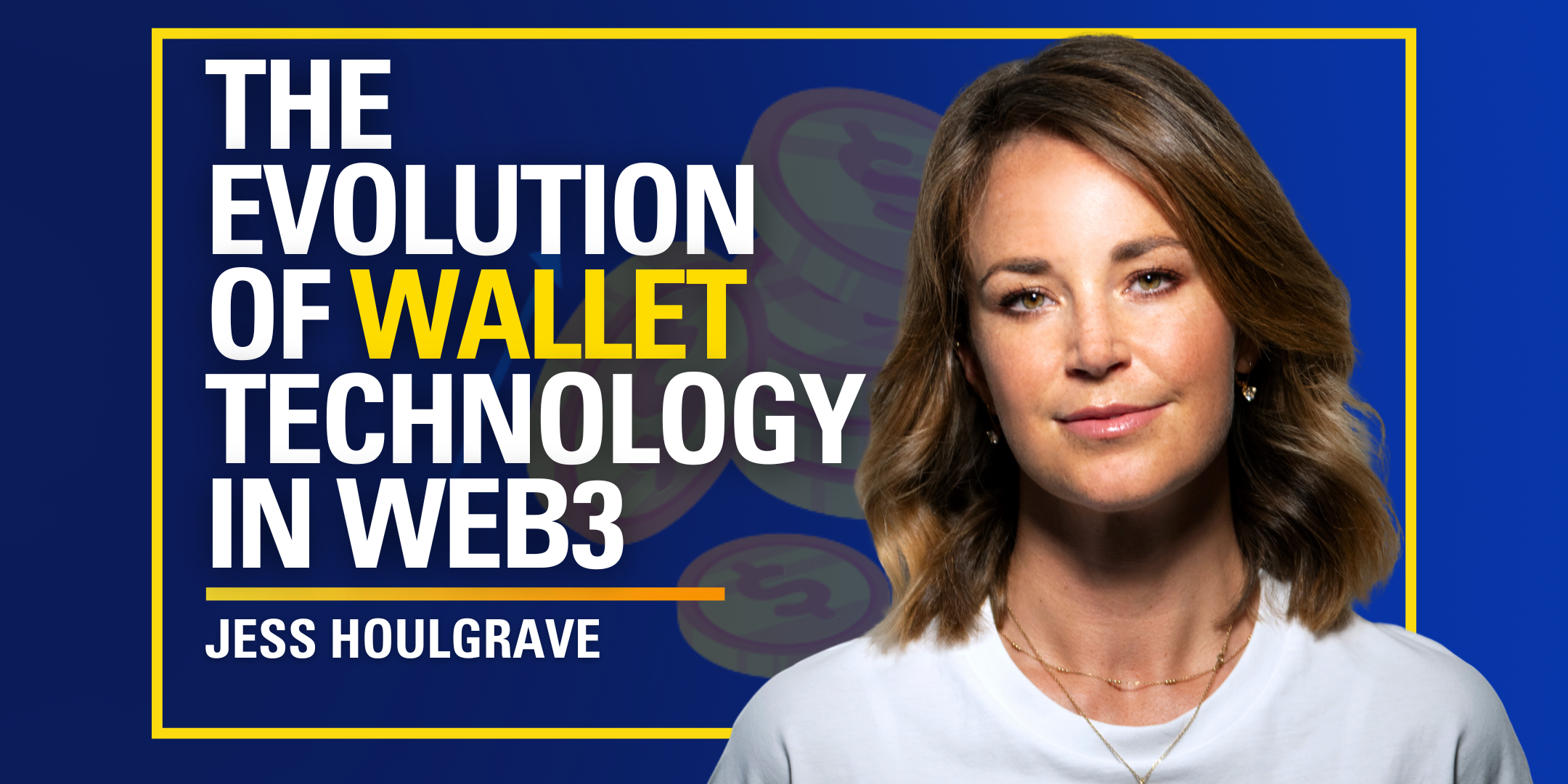
The Evolution of Wallet Infrastructure in Web3 - Jess Houlgrave | ATC #589
Join host Stephen Sargeant on this episode of the Around The Coin podcast as he sits down with Jess Houlgrave, the CEO of WalletConnect, the onchain UX platform. Previously she led Crypto at Checkout.com, a global fintech company. Jess was also a member of the Bank of England CBDC Engagement Forum and a member of UK Finance New Digital Money Steering Group.
Host: Stephen Sargeant
Guests: Jess Houlgrave
We are also available via:
Buzzsprout • YouTube • Quora • Medium • X • Facebook • LinkedIn • Soundcloud • Apple Podcast • Spotify • Player FM
Check out http://deepca.st/around-the-coin on DeepCast to delve into episode transcripts, key insights, discussed topics, and more!
Episode Transcript
Stephen: This is your host, Stephen Sargeant, the Around The Coin podcast. We have Jess Houlgrave. She is the CEO of WalletConnect. They are the infrastructure, the ecosystem plugging in hundreds of wallets, thousands of applications, bringing them all together. We talk all about embedded finance. What the future of AI agent wallets is going to be, and she covers so much ground of how WalletConnect is building the ecosystem.
Almost like Visa when you use credit cards. Everyone knows and uses them, but they're not the center of attention. They're working in the background. They're even coming up with POS systems. We talk about stable coins payments. This is one of the best episodes. For our target audience of people in FinTech, crypto payments, crypto technology, this is such a great episode.
Listen to Jess learn so much about what's gonna be happening and she even gives us a few predictions of what she sees in 2026. This is a must listen to episode and then go follow her on x. Talk to you soon
Stephen: This is your host, Stephen Sargeant, Around The Coin podcast. We have the CEO of WalletConnect, Jess Houlgrave. Jess, tell us a little bit about, I'm gonna dive deep into your background 'cause you have a very interesting background, but I want you to give us, you know, your three minute elevator pitch of who you are and how you got into crypto.
Jess: Well, firstly, thank you very much for having me. Um, I'm Jess Houlgrave. I'm the CEO at WalletConnect. I've been with the company for about two years now. Um, and we're the kind of connectivity layer between apps and wallets in crypto. Um, I've had a long and kind. Often winding career. Um, but I got into crypto.
more than 10 years ago now.
Um, originally sparked by a kind of interest in, in economics. Um, and I've been working full-time in the space for the last 10 years in different things like payments, uh, NFTs and, and now WalletConnect.
Stephen: Yeah, I was looking at your resume and you created Codex, which was like a decentralized registry for valuable collectibles. I'm sure like that would be rebranded as NFT NF T Marketplace, I think if 2021, but this was back in 2017, so this was even before the hype of NFTs in 20 20, 21. What were like you working on then, and can you take us through the timeline maybe of NFTs from the way you've seen it from back then to all the way where we are now?
Jess: Yeah, so in like 2016 I wrote a master's thesis on the applications of blockchain for the art world. Um, I was studying at Sotheby's. I had left my, I'd spent like six years in traditional finance, in banking and private equity. And I was really interested in art and I was really interested in crypto. So I wrote a, uh, a master's thesis about where these two worlds collided, um, and how this technology could be used in, in the art market.
Um, and the outcome of that was this concept which ended up becoming codex where blockchain, as we kind of all know, is a really interesting. Tool to help us track provenance and track information. Because in the art world, a lot of the fakes and forgeries that you see is not just like the piece of art has been faked, but it's actually like the documentation.
So you get these forged receipts, you get lies about where it's been exhibited, where it's been imported, where it's been exported. Um, and so with Codex, the idea was you could create. Almost like a passport for the piece of art that could be issued by the artist, or it could be issued by a trusted party, like an auction house, for example.
And over time, that record could build up information from insurers, from, uh, galleries, exhibitions, imports, exports, all this stuff to create a kind of, um, you know, provable record of what that art piece was and where it had come from. Um, and we did a lot of work at the time with auction houses, with, with other people.
Um, we were very, very early in terms of the technology. This was like before the ERC 7 21 standard had been, had been written, um, crypto kitties, which was like the first big implementation of that came out, um, around, you know, like around the time that we were launching as well. Um, and you know, ultimately.
The, the project Was like, doesn't, doesn't exist quite in the same form today. The technology, uh, still does, it was acquired by, uh, by another software company. Um, but for me it was a really interesting journey of like how this technology could, uh, could play in, in the world at large.
Stephen: Was the bee pull sale, like something that like resonated with you as like, oh man, like we've been doing this for many years and now it's like everyone's interested. It's kinda like the crypto moment when people have been talking about it since 20 13, 20 15, and then, you know, 2017 happens and even now like it, it seems like a full circle moment.
Did you kind of feel that during the bee sale?
Jess: Yeah, look, I mean, I think I, I would very much differentiate between like artworks that are on an NFT and then like how this technology is used in like the more traditional art world. Um, so for sure, I think we've seen these cycles come and go of, uh, of. NFTs themselves being the artwork. Um, back when we were working on Codex was the launch of Crypto Punks, um, of, uh, you know, there were all sorts of things being launched at the time.
Then a lot of like rare Pepe NFT artworks. Um, and, and. Then some like more unique items. Like This artist Kevin Abo was producing really interesting conceptual work there. Um, so, so I think that there is, um, there is these sort of like, you can use an NFT to create a piece of art, but you can also apply it in the more like traditional artwork just because of the technology and.
The piece of art itself can exist not on the blockchain. Um, I think that, you know, when it comes to something like be super interesting, um, very much like at the top of the NFT cycle, um, and, uh, and a lot of hype around it, I think we're now seeing, you know, there's a, a really great project I love called Verse, where they're working with more traditional artists.
To issue work on the blockchain. So I think that that, um, we're almost gonna see the adoption of NFTs by the more traditional art world over the next little while. And I, I, you know, I think that NFTs may come back in that form rather than just like in this like NFT concept form. But we'll see.
Stephen: NFT craze where, you know, you spend, you have to explain to your wife for me, that I had to explain why we didn't go to Greece. But we have a, a black and white hedgehog image in my digital wallet. It's the same thing. Trust me. Uh, I'm curious, you then spent three years at checkout. You were leading their go to market team.
You know, huge infrastructure over there when it comes to online payments, what were some of the things that you were doing? How did you leverage some of your skills that you picked up creating and building in the blockchain space already?
Jess: Yeah, so at at checkout, which is a, a traditional payments company, so, um, uh, much more like established market in terms of payments. But one of the things that we really wanted to innovate around was in crypto, I think, um, we believe that blockchains provided really fast rails for moving value. Um, and we were doing payment processing for a lot of the leading pay, uh, leading crypto companies at the time.
So we. You know, really started to look at how we could build products that would be a additive in terms of value for our crypto customers specifically, but actually using stable coins themselves. So, um, we launched, uh, the kind of first. Solution for, um, a payments company to settle their, uh, settle their acquired funds in stable coins, which meant that we reduced the time and the cost that it costs to, uh, you know, get the funds from Visa, MasterCard, all the way through to the the end.
A customer of ours in this case, like crypto exchanges. Um, and it was a really like innovative use of using blockchain as part of the traditional payments value flow. Um. And obviously having worked in crypto for a long time, I understood, uh, that space well and then could apply that to how we were building, uh, building in the payments world.
Um, and, and, uh, I think it was really, it was a really, uh, great, great point of innovation. And, and now of course, and that was three or four years ago. Now, of course, like every payments company out there is, is doing something, uh, in crypto, which is very cool to see.
Stephen: Every payments company is now a stablecoin company, by definition. I think if they want funding. If they want funding. Anyway, I'm curious before we jump into what you're working on, that WalletConnect. It, it's really interesting you went from, you know, go to market leader to the CEO role there at WalletConnect.
Can you tell me a little bit about that transition mindset wise, leading people, because it, for many people, that's a huge jump to go from more of the, the market and growth side into like the CEO where you're kind of running operationally the entire.
Jess: Yeah, I mean when my first role at checkout was I was the chief of staff, and that was through a period just after the Series A where we were growing from, uh, 250 people to over two and a half thousand people. So in my capacity in that role, I had done a lot. Different things throughout the checkout.com organization from, um, being involved in the product to working with engineering teams, to people, to op ops.
So I'd sort of seen quite a broad spectrum of, of how that company operated. And I worked very closely with gm, who is the CEO at, at checkout, CEO, and founder of Checkout. Um, so I had had the privilege of like seeing one of the world's greatest FinTech companies operate. From kind of like right next door to the, to the CEO, which was an incredible learning journey.
Um, and you know, I think throughout my career I've been a real generalist. I think in traditional finance I was obviously working in the finance space, so I understand accounts and how to build a spreadsheet. And then I've worked on go to market things I'd like innovated around a product when I was.
Building Codex. So I, I think I have a pretty broad skillset in any case. Um, and then one of the things that I just get the most joy from is building and, and leading great teams. Um, if, if I have to like go all the way back to like my university days, I was captain of the boat club. Um, and uh, and then it was, uh, you know, probably my first experience of like leading a team, motivating a team.
Um, and that's one of the. Things I'm most proud of at at WalletConnect now is having built a team that I think is really world class, although maybe I'm a bit biased, um, but I think of like really excellent individuals and I think the best CEOs, um, are actually often the ones who just find. Great people.
Um, I am definitely worse at marketing than my CMO. I'm worse at product than my, than my head of product, and that's kind of how it should be. Um, you know, find people who are better than you has always been my, my leadership mentality. Um, and really I'm just here to try and be the glue that brings everyone together and, and makes sure we're heading in the right direction.
Stephen: Can you talk about the transition? I think there's a lot of people in traditional companies, or you know, companies that look a lot similar to checkout.com than they do at WalletConnect. What was the transition like going to a startup, even though you know the space? How did you kind of assess and make a decision like that versus, you know, at a company like checkout.com, which is only gonna get more and more deeper into the blockchain space and it kind of has a lot of clout when it comes to the traditional industry.
Jess: Yeah, I mean, I, when I left checkout, I really wanted to go somewhere small again. I get great pleasure in, um, in like small teams that work really effectively together and can move really, really fast. Um, because. Even the best large organizations often end up slowing down a little bit. Um, and so it was for me a really exciting opportunity to go somewhere that a, was like pure crypto and really, really deep in the infrastructure of crypto.
I mean, we work on standards that like are implemented at the blockchain level all the way through to the wallet and user experience level. So for me, being able to focus 100% on crypto and as part of like a small and very agile. Organization was, was really interesting. The other thing was WalletConnect.
I've used as an end user. Countless times. Um, when I was building Codex, for example, we had an integration with Meta Mask, but that was kind of the only wallet that you could use at the time, easily with a desktop. And of course, WalletConnect, uh, which was established like a bit later, kind of solved that problem that we had.
Um, so I kind of had a lot of, um. You know, a lot of touch points with the product anyway, from having tried to build with it, having used it as an end user. And I could also just see a lot of value in this pretty unique offering that we have. There's nobody else really like us within the space. Um, it's a, it's a really interesting and organic network that's now over 700 wallets, 70,000 different applications.
Um. So it was when I met Pedro and I was introduced through, uh, through some of our investors, Pedro, who'd founded the company in 2018. Um, you know, I was just incredibly impressed by, by what he had built. So the opportunity to join the team, uh, and, you know, grow the, grow the organization, grow the management team and, and lead the next phase was, was really exciting for me.
Stephen: And you know, I feel like, you know, from 2023 until now, we had kind of like a wallet wars. It felt like there was wallets popping up. You know, exchanges were creating their own wallets. You know, a lot of the protocols used their own wallets. Tell me a little bit about what it means to be the connectivity layer, because I think that's a term we hear a lot.
We've had DFNS, our defense dynamic, big cat wallet on the podcast. We've had a lot of companies here that are, you know, building in the wallet infrastructure space. Can you kind of identify where you are compared to these other companies where they plug into your ecosystem? Because I think it'll be helpful for the audience.
Jess: Yeah, so, um, everyone that you just mentioned is a partner of ours. Um, and what does that mean? Today, you can think of the WalletConnect Network as this two-sided network. So on one side we have about 700 different wallets. Um, that could be a mobile wallet. Uh, token Pocket Safe Pal. Uh, OKX Wallet, Kraken, all of the, all of those that you mentioned.
Meta Mask, um, it could be a hardware wallet, like, like Ledger or Treasure. Uh, it can be institutional wallets like fire blocks or dynamics, wallets. It can be, uh, like cus real custodial solutions like Bitco or Hex Trust, for example. Um, so no matter what kind of user you are, your wallet. Probably connects into the WalletConnect network.
Um, and then on the other side we have about 70,000 different applications. And those applications can be an NFT marketplace, a DeFi protocol. It can be like a real world payment in store. Um, it can be all anywhere that, like you wanna be able to use your wallet. Um. And so we're in this like very unique and exciting position.
We work, it's fully chain agnostic, so we work with all different chains, the Bitcoin ecosystem, EVM, Solana, uh, you name it. Um, WalletConnect is Is probably there And really we view our role as making it easy for developers. So if you are building an application. You don't wanna have to go and make 700 different integrations just so that all of those people can use your app.
Um, you want a single entry point. That means that any crypto user, regardless of what their wallet is, can, can use your application. Um, and similarly, if you are building a wallet, um, you don't wanna have to go and build lots of integrations or partnerships too. You just want a really easy way that your end users can transact in, in Web3.
And so we've really become this layer. That connects those two. But beyond just the connectivity, we really focus on how do we make those experiences delightful. Um, you know, back in the day you had to like click probably like three clicks, connect your wallet, then confirm these transactions, and that would be slow.
And so we've, we've really been working on how do we make these interactions between apps and wallet. Seamless really fast. Um, super low latency and, and really secure. Um, and today you can literally like scan a QR code and make an end-to-end payment like in a shop, um, with your wallet. And that's a really cool evolution of, of the tech.
And I think we'll over the long run make crypto much more usable than it used to be.
Stephen: Is there anything scarier than that 45 seconds when you're purchasing an NFT where you don't know, you know where you are in the abyss until it's confirmed? Is that, is that what you're trying to solve for that 45 seconds of terror, whether or not you're paying the gas fee and still end up with no NFT?
Jess: Well, we can't change block times on blockchains. Um, like that's not, uh, that's not where we get to. But we can in, in kind of impact the, uh, the experience from a wallet perspective. So things like not having to pay gas. Um, innovating around security. Do I know what transaction I'm signing? Is it written in like human readable language or is it just a, a string of, of text?
Um, so initiatives like clear signing we're working on with the Ethereum Foundation. We have an offering called Verify, which means like, you know, that you're not interacting with a malicious domain, for example. Um, so we can't fix the, the block time issue, um, or, or the speed of the actual underlying blockchain, but we can impact a lot of the things that go around that.
Stephen: You mentioned this kind of like POS Stablecoin payment system, assuming now with stable coins and everything that's happening in the US with the Genius Act, uh, tell me a little bit about like what that POS kind of looks like from your domain and. What are your thoughts about stable coins? I'm assuming that a lot of your applications, a lot of the wallets have seen an increase of usage over the last six months, which has to, you know, thrive when they all come to you to kind of, you know, instead of they can flip up something I'm assuming really quick, build an application through, re own within a few minutes and be able to now leverage that to wallets across the board.
How impactful has Stablecoin has been that to that use case?
Jess: Yeah.
I mean, I think if you look just at the payments companies that use the WalletConnect Network, about 72% of the transactions are in stable coins. Um, and uh, and so it's. Definitely the preferred way for people to transact. Not exclusively. I think especially at the higher end of the spectrum in terms of transaction value.
We still see Ethereum and Bitcoin as being, uh, like popular currencies to buy goods and services with. Um, but I think stable coins definitely are gonna be the everyday thing that people use, obviously. It avoids volatility risk. It's super compatible with a way that a lot of like commerce works today and there's a lot of appetite for it.
Um, we look at data and, and um, you know, we try to promote crypto native payments rather than using the existing, existing financial rails, but like crypto wallets using, uh, like. Crypto backed cards, for example, reach about $400 million of transaction value in, in, uh, in October. So there's definitely consumer appetite to, to pay with crypto.
Um, we recently launched this point of sale, uh, SDK, and we have similar SDKs that are available for e-commerce payments companies as well. Um, so that means it can be used on any point of sale. Like I have One here actually that you can see. Like a point of, uh, points of sale like this, you can, you can now put our technology on them, um, and use them to accept crypto payments from, from any wallet.
Um, we launched with a, a company called DTC Pay in Singapore in September, and so that's now live in some stores there. Um, we have another company, uh, going live in January, so very soon I think, um, people will be able to actually use their crypto. Uh, for real payments. Um, whereas I think most of the time if you go to a coffee shop today, probably they're not gonna accept crypto.
So a lot of what we're working on at the moment is how we make that really easy, both for the end user. Um, so it's a super fast, you know, transaction. Ultimately, we're, we're very used today to, um, just like a tap right with Apple Pay. The user experience in web2 payments is really great. We want to make Web3 payments as good as that, maybe even better.
Um, and we wanna make it really easy for the merchant who doesn't have to deal with the crypto or anything they can just accept, uh, accept fiat at the back end.
Stephen: One thing that, look, you mentioned E-commerce. One thing that looks to be exploding over the last six months has been live social shopping. We're seeing, you know, the, the Pokemon packs and whatnot, and TikTok live. What are your thoughts and TikTok shop, what are your thoughts about how you can integrate Web3 into what seems to be a furious, you know, need for people to just buy things while they're watching people live?
Jess: Yeah, I mean, I think, look, that's one trend. Ag agentic commerce is the other big trend in in crypto or in payments more broadly. Um, I think that like the way that we interact with value and the way that we spend money is gonna continue to evolve. Ultimately, um, you know, whether you call it embedded finance or anything else, it's like how do you bring those experiences as close to your everyday experience as possible?
So, um. That makes it faster, it makes it more likely people buy, it, makes it less likely that they, that there's friction and that, that they turn away. So all of the questions is like, how do you make a a great payments experience ultimately? 'cause if you create a good payments experience that's close to the source, um, you make more.
You make more revenue. Um, and I think Web3 will, will definitely be a part of that. It's, uh, it completely makes sense. You can do a, you can do micro transactions much more cost effectively than you can, uh, with card payments, for example. Um, and b, you can, the, the speed of settlement is, is super fast. C it's way cheaper.
Um, so it's no surprise to me that like almost every payments company out there right now is figuring out how to, how to deal with crypto and stablecoins
Stephen: So we, obviously this podcast is very FinTech crypto payments focused. It seems like your ecosystem is exact target market. What if someone's building in this space, can you go through maybe some of the common use cases that they can like reach out to your company about? And are there some unique use cases kind of popping up just based on, you know, whether it's meme coins or to your point, agent, agent AI payments being made.
Can you give us some of the most common use cases in a unique one?
Jess: Yes. So, um, the, I mean, there's such a, such broad use of our tech. For me, it's actually kind of funny. Sometimes I see it in use and I'm like, wow, I didn't even think about that. Um, in terms of the common ones, um, definitely payments is one, whether that's online or e or in store, like the, the QR code that you see to make a payment.
Uh, it's live with a number of. Of payments companies with Stripe, with shift four, uh, with BofI, with with many others. Um, that's one?
Uh, it's used often in compliance use cases. So, um, uh, when the travel rule came in with Amika legislation in Europe at the beginning of This year, the question was like, how do I prove that I own a self custodial wallet?
And the best way to do that is of course, to sign a transaction with that wallet. Um, but not necessarily to like, move funds on chain and do all this satoshi testing or things like that. So, um, with the WalletConnect network, you can sign a travel rule message or like an identity verification. Um, so we have a lot of partners in the, like crypto exchange or FinTech or asset management space that use it for, for these kind of compliance use cases.
Um, of course it's, it's. Traditionally used to like log in to Web3 applications, whether those are, uh, marketplaces, DeFi protocols or other things. Um. And then from time to time I see it, uh, in these like much more unusual use cases, whether that's like topping up, uh, on chain gift cards, um, whether that's like how uh, an end user like creates an identity within a game, for example.
Um, how people manage their data. Um, a lot of like. It's a lot of experimentation. Not so much in the wild yet, but a lot of experimentation about like digital identity, like storing, uh, my credentials on chain and being able to share them with people. Of course, you need to be able to connect your wallet into that kind of infrastructure.
Um, so it's very varied.
Stephen: This is super interesting. Obviously my background is in crypto compliance. Our company works with Noa Benet in regards to the travel rules, so that's very interesting. The signing of transaction, that's, you know, I remember back in like 2018, you'd have to go to like some weird website and you have to like type in your address and you know, it was a weird way to do that.
Um, but you also mentioned a little bit about the UX of like connecting your wallet. That has always been, I feel clunky for the average user. Uh, what can fix this? What do you think, what are you implementing that you're, what did you see that was like, Hey, this is still kind of clunky. Let's try something Now that we have all these wallets connected into our interface, how do you fix this problem of clunky ui?
Jess: Yeah, and, and I think the answer is like, it's not an easy one to fix because of the way that wallets and blockchains work. Um, there are things that You can do. One thing we did over the last couple of years was introduce some standards around something called One Click Auth. Um, which means it separates the two messages of like, connect your wallet and then sign.
Uh, into one. So that's, that's a much more pleasant experience. That's what enables like a one click pay experience, for example. Um, the other thing that I think is horrible in crypto is like, you're asked to sign a message and it's just a random string, and you're like, I don't even know, what this means.
Like, how do I, how do I know if I'm doing something securely? So the clear signing initiatives that we're working on with the Ethereum Foundation, with fire blocks, with ledger. Um, so that when I sign a transaction, I can, it doesn't just say, you know, like A, B, C, D, E, FG, it says you're buying a coffee at prep.
Uh, like much, much better user experience, much more secure. Um, uh, so a lot of the focus for us is around like secure and safe interactions. 'cause I think that's a really big, uh, big part of user experience.
Stephen: You know, you're talking about security we have to ask. There's so much access and approval. Phishing attacks, wallet, drainers. We even saw a couple years ago, the Ledger Connect. I believe their SDK had some malware. So when people were connecting their wallets, their wallets were getting drained. How do you protect users, you know, from being victims of these attacks that only seemed to be rising, especially in DeFi and Web3.
Jess: Yeah, so we try to keep our surface area within a wallet, like very, very limited, which, um, and, and we, all of our code is, uh, is open source. Anybody can review it. It's, uh, we, we get security audits a lot. So in terms of our code base, we really try to, to make the attack surface area very minimal. Um. For wallets.
Um, obviously they have a much broader surface area and you know, we try to encourage them with some of the best practices. We also try and innovate in our products so that some things like this don't happen. So one example is our verify, API. What that does is it verifies the domain and soon it will also verify the actual smart contract.
Itself on the side of the application, we have about 15,000 of our apps have gone through the domain verification process so far, and that means when your wallet. Can, and, and your wallet can like read the other side of that API. So, um, when you then connect with your wallet to that application, it will either say, yes, confirming this is a verified domain, it's safe to interact with, or it will say, Hey, you think you're interacting, you know, you, you're interacting with a malicious domain.
Um, and that's often the case in crypto. Somebody thinks that they're interacting with Uniswap, actually they're interacting with like Uniswap or something completely different. Um, and so this like domain verification feature is a way that we can help signal to end users when they're doing something that might be dangerous for them.
Stephen: You know, um, when I think about WalletConnect, you're connecting everything. It's all coming into like one hub. You are that hub. Do you foresee WalletConnect being something like the Super apps, like what we see Kareem in Dubai or WeChat and China, where it's like you're connecting to all these applications anyway.
People just literally pull up their phone, they open up the WalletConnect app and they can do everything from that app because you have all the payment infrastructure and WalletConnectivity. Is that like a goal? Is that possible? Is the backend infrastructure able to support something like that?
Jess: So, so rather than thinking of us as a super app, I actually think they're like, we are really valuable because we work with all of the other apps and wallets. So, um, people know the WalletConnect brand, um, less because they are a customer of WalletConnect, but more because they know they can use this functionality.
I think like a, an analogy that?
I often use is like Visa. Um, so if you take your Visa card that's in your, in your wallet, you're not actually an end customer of Visa. You, you get your Visa card through your bank. Um, but you know that wherever you take that card, you can use it. Um, and it signals this element of like trust of confidence.
You walk past the coffee shop in a country that you've never been to before, but you know you can pay with Visa and you know that like your money's gonna get there and that it's safe. And, um, excuse me, I have a second.
Um, and with WalletConnect, it's kind of similar. Um, so you have your own wallet That could be Trust Wallet. Okay. X Wallet. Sorry. Now my throat's
Stephen: Take your, yeah, take your time. I'm marking it anyway, so I know my team will delete this.
Jess: I have to delete this out, this.
section. I spent too much time talking today. Okay. I think we're, I think we're good. Um, and it's the same with WalletConnect. Um, you're not actually like a customer of WalletConnect. You don't have a WalletConnect app. Um, you are a customer of Meta Mask or you're a customer of okay, X Wallet. But you know that when you see the WalletConnect logo, you can pay with your wallet, you can connect that wallet into an application really, really easily.
So I think really our focus is on. Making sure that anybody can use any crypto anywhere with any wallet, and that's really what, um, brings true digital asset adoption.
Stephen: I'd have to ask 'cause you're plugging into so many different wallets and applications from all around the world. What are your regulatory obligations? Are there hurdles you have to go through when certain wallets or certain applications are based outta certain countries? I'd love to know like what's your responsibility there and how challenging it is to keep up with the emerging regulations coming outta Singapore, the eu, um, where they don't technically cover self-hosted wallets or DeFi, but there's a lot of, you know, they're definitely covering the on and off ramps, which could still make interacting with those and having a connectivity later.
I'm assuming still challenging.
Jess: So, um, really what we provide when you kind of analyze it from a regulatory perspective is like messaging layer. Uh, and that means that like, we're not involved in the movement of value. We don't touch, we don't ever touch the end user's funds. Those all move on chain. We Are really just the technology that enables the wallet and the app to understand how to interact with each other.
So that means that we fall outside of the, of, of any regulatory requirements. Um, we of course, are like very conscious of, of making sure that, that that continues to be the case and that we're always compliant everywhere we are. Um, but more often than not actually, like. Regulation is often a driver for people to use our technology, uh, in these like travel rule compliance type use cases, uh, and, and other things.
So, um, for us it's, it's purely just the messaging layer and, and, uh, and so we don't have any, um, regulatory registration requirements.
Stephen: Are you seeing some wallets get a little bit more towards like KYC? We're seeing a lot more traditional financial institutions get into DeFi close to it. Uh, staking on Solana, for instance. We had the marinade team with their, there's, uh, product that does the KYC, uh, of the validators. Are you seeing more like we've seen meta mask.
You know, do things like restrict certain IP addresses. Are we seeing more focus on compliance KYC as we move further and further into the industry?
Jess: I think so. So I think the answer is like, yes, but also we're seeing things go the other way too. Um, so what do I mean by that? I think that the wallet landscape is evolving, um, to. Cater for a broader set of use cases. Um, and each wallet is thinking about how they differentiate themselves, who their customers really are.
And I think that there's a hundred percent room for a big variety of wallets in this space. Um, if ev we, in kind of like 2017, every wallet was kind of the same except for Ledger. They were just like, had a different color. Um, and so as an end user. It didn't really matter what you used. The same thing was you had the kind of the same experience.
Now you have much more choice. So I can use, uh, you know, trust wallet because it's super easy. I can use it every single day. It just always works. I use Ledger for high amounts 'cause it has a bit more friction and a bit more security. But like, I don't wanna be buying my coffee and having to like. Use my ledger to do that.
Um, and similarly for like my retirement fund, maybe I actually want that in like some multisig wallet that's like super, super secure. Um, and like has a lot of friction, but I definitely don't want a multisig to buy my coffee. So like even for an a single end user. actually want different kinds of wallets that do different things.
Um, and you can also look at that and, and I just gave you the example on this like security friction spectrum, but you can also apply that to this kind of KYC non KYC spectrum. So yes, we're seeing some wallets that say, Hey, I wanna provide my end users with like a fully KYC solution. It means that it's really easy to interact.
With that wallet and the traditional financial world, um, you know, from a regulatory compliance perspective, I can enter these like KY seed, DeFi pools, keep myself safe, et cetera, et cetera. Um, at the other end of the spectrum, we're also seeing a big rise in Z cash and in like privacy technology and people who want their transactions to be even more private than they are today.
Um, and. So there's a, there's a whole spectrum and I think that we, yes, we're definitely seeing more KYC wallet type solutions coming online. Um, but at the same time, crypto has always had, um, you know, one of the great things about crypto is that it gives people the opportunity to exist outside of the traditional financial system if that's what they need to do, because, um, it's very easy to convince ourselves that like.
KYC is good. Institutions are good. Um, because, you know, I'm lucky enough to have grown up in, uh, you know, western developed markets where actually, like KY Cing myself gives me great things because it means that I can do things with my bank account. There are definitely places in the world where those.
Institutions are failing people. Um, and where KYC is not good. Um, and where actually people want to be able to hold their assets in self custody outside of the, the view of their governments for whatever reason. And, um, I think it's really important that crypto maintains that offering, um, to allow people to, to escape institutions that aren't serving them well.
Stephen: And I think I'm based in Canada. And you know, I think when people hear you say that they're thinking like maybe third World or emerging countries. But here in Canada we had something called the Freedom Convoy. And if you donated money via GoFundMe, like the government was able to intervene and make sure those funds didn't get to that organization.
So then people started going to crypto. And once again, the government who has never interacted probably with the crypto exchange in their life, had all of a sudden started messaging the crypto exchanges asking for KYC. And you know, it comes to find out that after you know a few years, you realize that they may have overstepped their power and authority.
And now you realize why people may not want to have all of their transactions visible to everyone as transparent. And as much as we love the blockchain, there are use cases in Western countries where, hey, like sometimes you have to wait until the smoke clears and you wanna have control of your money.
'cause I guarantee if you donated to the Freedom Convoy and they knew exactly where your bank accounts were, a lot of accounts were being frozen at the time, which is extremely scary.
Jess: Yeah.
Stephen: You mentioned embedded finance and we have so many different fintechs and payments companies. I feel everyone uses that word in their own terminology as it, as it regards to the service offering and the solutions offering that they have.
Can you explain what embedded finance means to you when it comes from like a, a WalletConnect perspective?
Jess: Yeah, I mean, I think, you know, embedded finance for me is like the direction that finance has been heading in for a really long time. Historically like. Our, like financial lives, our cards and our bank, for example, sat really far away from almost everything else that we did. Um, aside from like when we went into a store to buy things, um, you know, I had a relationship with my bank, but that kind of like didn't touch most of the rest of the world.
That I kind of exist in. Now, that's not the case. My neobank is also where I can like trade stocks and shares. It's also where I can buy things. Um, I can like do a one click checkout. Um, my like Uber, my even Starbucks like offers me kind of this embedded finance experience. 'cause I Can just top up my.
Starbucks card and like use that everywhere. And so it's this like financial ification of, it's probably not a word, but I'm gonna use it, um, uh, of, of our like lives and of, of our experiences. Um, and crypto is one of them. You know, I think it's gonna be very, uh, it's not gonna be very long before, like I can ask my, uh, my like chat GPT to just pay for something from my crypto wallet for me.
Um, it's not gonna be long before. Um, you know, my bank, my traditional bank account can talk easily with my crypto wallet. Um, and I can move funds between the two really, really easily. And I may not even need to be like in one of those interfaces to do it. I might be able to actually do that from chat GPT as well.
Um, and so as all of these pieces connect, I think what WalletConnect is there to do is to make this like really seamless for, for wallet.
Stephen: Can we double click on the AI agents paying for stuff like, and even your example, I was looking for flights yesterday on Luxembourg. You know, Expedia was giving me certain flights. Air Canada had, didn't have those flights, but they had better opposite options. And I, I was even thinking in my head like, it would just be great to, I even Googled like, when can I fly to Luxembourg where it's not a 24 hour duration?
Because like everyone was giving me different information. Are we close to the point where I just put in JGPT, like, Hey, I want to go to Luxembourg between this and this day. I need the best flights. You know, the most reasonable, the best accommodations, are we closer to that and that they just pay for it one time?
Or at least put it on hold. You know, it knows that I can do, I can refund it if I need to. Like, where, how close are we to that? Like a agentic AI world that's taking care of the, the work that I just did yesterday, spending an hour going through different sites.
Jess: You know, like, I hope it's soon because I use chat GBT all the time to look for things like, you know, I was researching uh, speakers the other day. I am like, hey, like suggest to me like the best speakers. 'cause it's also Black Friday, so like maybe I can get a discount and like. What would be a good setup?
Um, and I would love if at the end of that conversation with chat GBTI could have been like, okay, great, yeah, buy it. Um, and just like, press the button and instead I then had to like go and find somewhere that, that would actually like, be able to sell me those things. So, um, you know, there's definitely a demand for.
The, the, the kind of the interoperation of those two things. I think protocols like X 4 0 2, um, and, and other, other things that people are working on. Um, you know, I, I think I'm optimistic that that will be a reality, certainly within like a year and, and not, maybe not for everyone, maybe not for everything, but, uh, I think we're gonna get that pretty soon.
Stephen: Do you think there's concerns of AI agents using your own crypto and you know, obviously hackers out there trying to manipulate these agents like give away all your crypto in your wallet. What are your concerns there?
Jess: Yeah, for sure. Um, and you know, that's where I think like. Whilst it may be possible within the year, like how we actually implement it still needs to have kind of very careful consideration. So, um, you know, when it comes to your crypto, do you wanna connect your, uh, like your retirement account to those things?
Probably not, but like, would I connect my meta mast that has a hundred dollars in just so that I could like buy some stuff? Possibly because then, um, you know, if I, if it, if something did go wrong, I'm not gonna lose my retirement funds. Um, I think there are some standards within crypto, uh, within crypto that also are gonna make these like policies and permissions much better.
So when you look at like smart accounts 7 7 0 2 4 3 3 7, um, I can set much more customized, um, like. Uh, interactions with my wallet now. So I could set a permission that says chat GBT can spend money from my wallet, but it can only spend up to a hundred dollars a week. Um, or it can only interact with these six websites that I've already approved.
Um, or it can only spend over a hundred dollars if I do a two, two factor authentication and I actually click yes in my wallet. So, um, I think that there are. Um, there are things that we can build and a lot of these already exist, by the way, um, that are gonna make those experiences still safe beyond just like giving my chatty beauty like full reign and full access to all my crypto.
Stephen: I need that to, you know, work for my wife right now. Like, Hey, ACHI Pizza. He is like, Hey, you can only spend this much a week. It's funny when you mentioned speakers, I thought you meant like speakers going on stage. Not, I'm like, you're, you think you're gonna get a discount on speakers on Black Friday?
Jess: No, I want another sauna.
Stephen: Uh, I'm curious as we look ahead, like if you can maybe just give us the predictions for 2026. You can even use like, Hey, this is a summary that you saw in 2025 and this is how it's gonna change or continue on in 2026. I love a good prediction as we go into the new year.
Jess: So I think like the two big trends that we saw in 20 25, 1 was payments. Um, like everybody is talking about how to make crypto payments a reality, and I think that's long overdue. Um, so I'm very excited for that to continue in, in 2026. Um, and certainly for WalletConnect, it's a big part of our strategy for, for the coming year.
Um, how do we make crypto payments just. Work. Um, the second thing that we saw a lot of this year.
um, is like more interest from institutions in engaging with crypto. So if you go back like three or four years ago, um, if you were a custodian, typically people just wanted to like, hold their crypto. They didn't wanna do that much more.
Now we see almost all of the custodians also joining the WalletConnect network so that their institutional clients can access DeFi, they can trade, they can vote in governance things. Um, so I think this like institutional drive is gonna continue also in 2026. I.
think RWA or like real world assets is gonna be, uh, a big theme as we see tokenized stocks, tokenized equities, and, and other assets.
Uh, kind of growing as well. So those, um, no big surprises 'cause there's things that we've started to see the beginning of, but I think 2026 is gonna continue that theme very much.
Stephen: Tell us something else about WalletConnect as we end the conversation. I'm assuming there's a token ons there, your own tokens of kind of like, you know. Facilitate a lot of these internal transactions that are happening between the wallets and the applications or anything else that you find interesting about what you're building on your side.
Jess: Yeah, so the WalletConnect Token today exists really as like the governance mechanism and the rewards mechanism for stakeholders and infrastructure providers in the ecosystem. So if you're a wallet or you are running a WalletConnect node, then you're getting rewarded in, in WalletConnect tokens. Um, and you know, we have very active community there.
Um, high participation in voting and, and in other things related to the intellectual, like technical side of. Of the WalletConnect Network. A lot of people who run infrastructure for us are our, like core partners, people like Fire Blocks, ledger, uh, kiln, many others. So, um, I think that will, that will continue, which is, I'm really grateful for all of their partnerships.
Um, and then I think the other thing for WalletConnect is like we will continue to evolve where the space needs us. Um, and I think a lot of that is gonna be in that traditional financial segment. World and the crypto world are converging at super high speed. Um, and so as we start to work more with banks, with asset managers, with like more traditional payments companies, um, our hope is that like we can preserve, uh, the ability to use self custodial, self custodied assets, the ability to use your wallet everywhere, uh, is, is really gonna continue.
Stephen: I am curious, what's the most demanded feature or, you know, application that you're seeing? Because we all know that anytime you're building an ecosystem and you're, you know, playing both sides of the market, there's always like, can you do this? Can you add this? Can you modify this? There anything that, is there anything that your product team is trying to duck now because the demand is so high?
Jess: Um, I don't know if we're trying to duck it. I think it's always, um, our, our hardest thing is like where we prioritize. Um, you know, we have SDKs that run in unity for gaming companies. We have point of sale SDKs for in-store devices. Um, we have like more premium. Uh, support for particular chains. And so we do that for Bitcoin Solana to Tron, EBM, but always there's another chain that we could, we could pro provide better support for.
So a lot of the work that we do is just like where we, where, where do we prioritize? Um, and at the moment, that is definitely like in payments and, and in security and in institutional, uh, funds.
Stephen: Any exciting announcements for 2026? Any juice you want, any tea you wanna spill on the podcast, anything that you're interested in, even if it's not within the wallet, connect the real platform. Just interested in general that you're like, Hey, this is kind of cool. I wanna try it out.
Jess: Yeah, I mean like one area that we haven't done a lot in so far is in the privacy space. Um, and, uh, you know, we have some really important partners in that world that we work very closely with, and WalletConnect can be used, but I do think that's also gonna be a really big theme, not just for. Um, you know, people who wanna stay outside of the traditional financial system, but actually also within it, like, um, not everybody wants their transactions, especially if you're like a hedge fund.
You don't want everything to be visible necessarily. Um, and so I think that that's gonna be another big thing. So I'm, I'm excited to, to spend more time thinking about that next year as well.
Stephen: I think it's pronounced Lio. We had them on the podcast. That seems to be quite popular these days. I'm curious maybe as you entered the role of CEO or just in general, is there any books. Podcasts that you listen to on the regular ideas or concepts, that's kind of helped shape your thinking now that you're in this unique position of a wallet ecosystem.
Jess: Yeah, look, I think, um, I love reading like different books, different podcasts. Um, some of my favorite podcasts, leaders in Payments, I think is a great podcast. Again, a bit more like traditional finance, but, um, kind of, uh, a good history of, um, all sorts of different payments. 'cause payments is a really, really broad space.
Um, I, uh, I love reading like. I love reading, like biographies of, of different leaders. Um, so, um, you know, whether that's like thinking about Steve Jobs or others, I think you can learn a lot from like, observing other people's management styles. Doesn't necessarily mean you want them to be yours, but you can definitely learn a lot from like, oh.
That's an interesting way of approaching things. Um, I'm also really lucky to have a great group of friends and like mentors, board members, investors, um, who, who I go to often for advice and, um, you know, my, I guess my advice. For anybody who's like starting out on that CEO journey or who's building their own company is to like build your own little board of advisors from like around your network.
Um, people who've seen it before, people who've come from completely different industries. People who've never seen crypto and aren't interested in it. Um, sometimes those people are actually like, give you the best insight 'cause they're not in the like echo chamber that we exist in, uh, in this, in this industry.
They have a much more. Whole world experience and can say actually like, that doesn't really make sense out here. Um, so I think, uh, yeah, as well as like books and, and content and stuff. And you can see I'm like a, an avid reader. Um, but uh, but I think just nothing beats like contact with people talking through ideas with really smart people.
So building a, building your own little advisory board of smart people is, is definitely the way forward.
Stephen: That's amazing. Do you listen to the podcast Founders that goes through the biography of some of the ba, the best founders?
Jess: I don't actually, I must, I must try that one. Um.
Stephen: it goes through everyone that they have a, he has a new podcast where he talks about like current founders, uh, but they go through all the, like, past some of the best founders in the world. It's really, really cool.
Jess: I like Lex Friedman's podcast often when he intro, when he interviews people. I, I, I listened to the Jeff Bezos one the other day that I thought was like, really fascinating. Um, and, uh, so yeah, so, so definitely just like listening to to smart people is, is great.
Stephen: And when people wanna listen to someone like yourself, who's smart, where's the best place they can find you? Are you gonna be on Twitter? Do you dabble in LinkedIn? A little starting your own podcast, maybe.
Jess: No, no, uh, not my own podcast just yet. Um, I think, uh, I need to be a little less, uh, less embedded in WalletConnect before I have the time to do that. Especially to do it well. 'cause I think, uh, you will know this for sure. Preparing great podcast questions. Is take some time and investment. So I'm not launching a podcast, but people can find me on X.
Um, I my handle is @houlgrave. Um, and also I am on LinkedIn as well. Um, so tho those two places, and of course like the Wallach Connect, uh, socials as well, both on X, LinkedIn and, and elsewhere are great places to stay up to date with. With what we are doing. Um, and if people are building in the space, they're in payments or they're building in crypto and they're using WalletConnect, um, please like reach out.
I, as I said, I love hearing innovative use cases of our tech. Um, and also keen to get feedback if there's things that we can do better.
Stephen: I love it. This was such a great conversation, Jess. I could talk to you all day, but we're gonna hope we have you back at the end of 2026 and maybe we could do some more predictions that.
Jess: For sure. Stephen, Thanks, so much for having me.
Stephen: Thanks, Jess.
Jess: Thanks.
.png)