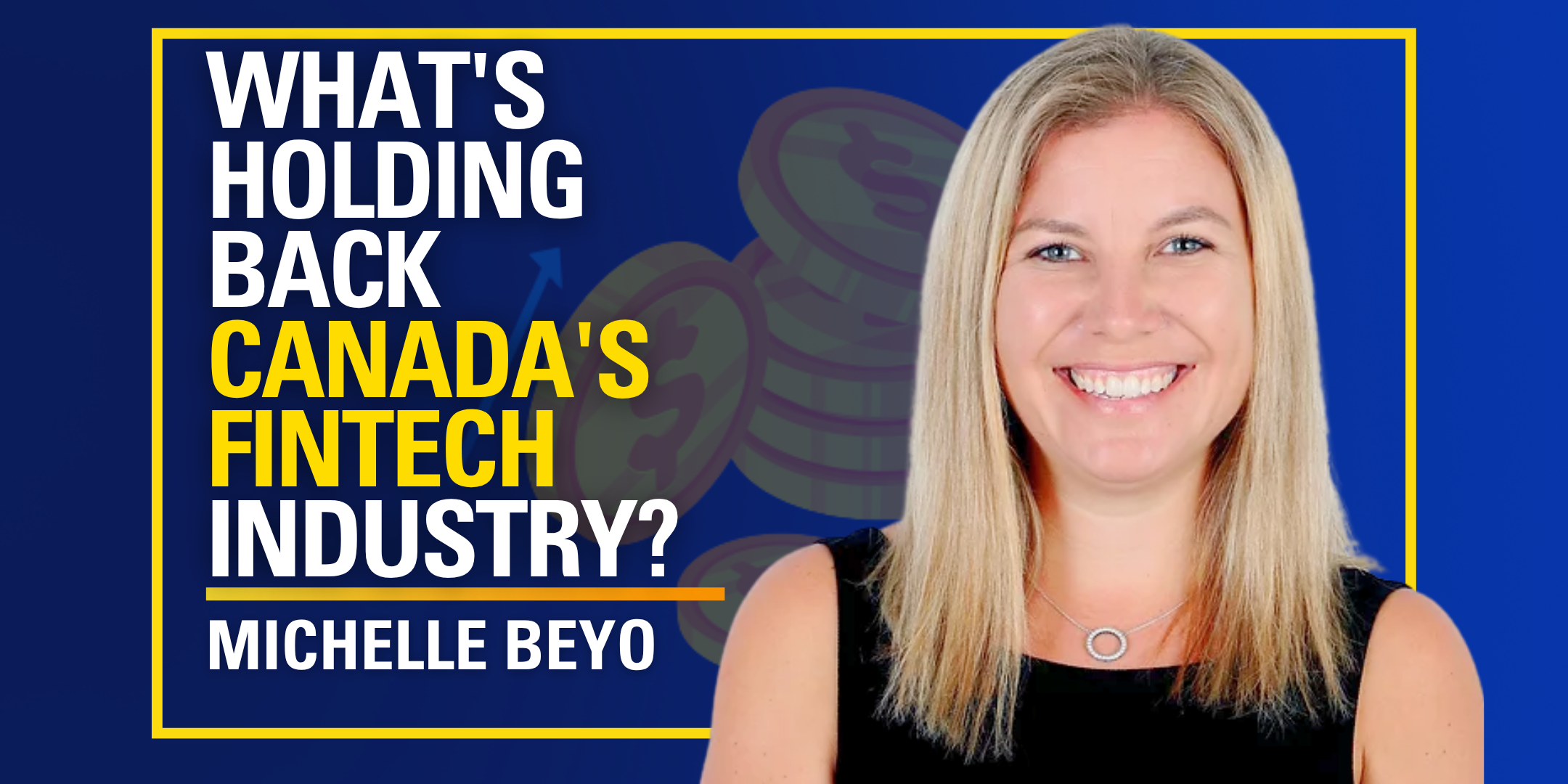
What's Holding Back Canada's Fintech Industry? - Michelle Beyo | ATC #633
On the Around The Coin podcast, host Stephen Sargeant interviews fintech leader Michelle Beyo, CEO and Founder of Finavator, about why open banking, open finance, and open data have advanced globally while North America, particularly Canada, continues to lag behind due to a lack of consumer data rights, clear timelines, and mandated implementation. Beyo explains how consent-driven data sharing could increase competition, lower costs, improve lending and mortgage processes, and potentially drive GDP growth, citing McKinsey's estimate of a 1–5% GDP impact from open data and Brazil's reduced interest rates for small and medium-sized businesses. They also discuss digital identity, Denmark's efforts to protect consumers' rights over their voices and likenesses against AI deepfakes, stablecoin innovation shifting toward the U.S., Canada's productivity and funding challenges, and the importance of retaining intellectual property and entrepreneurial talent. Beyo also shares insights into Finavator's work, its new Venture Studios initiative, and practical advice on building partnerships, preventing burnout, and standing out through thought leadership.
Host: Stephen Sargeant
Guest: Michelle Beyo
We are also available via:
Buzzsprout • YouTube • Quora • Medium • X • Facebook • LinkedIn • Soundcloud • Apple Podcast • Spotify • Player FM
Episode Transcript
Michelle: You can't fix the world, but you could definitely try and make it a little bit of a better place. And that might be through innovation, that might be through training someone else, that might be through partnership. But at the end of the day, fear and blaming is definitely not the answer. There was a study done by McKinsey that stated that open data in any one country can actually drive GDP 1 to 5%.
That means open data could actually be a growth mechanism if- Revenue generator. Yeah, if we looked at this properly, and I think we need to seriously look at that. I would call this a human data right. Like, I'm trying to get human data rights to trend, 'cause I, I believe that every country should enable a right for data for their citizens, from their cellphone number ownership, to their financial data, to their face, their voice.
That's why I built the masterclass. I really want people to not be fearful of the future of finance, and to actually see the through line that if they understand the future of finance, they could be part of the innovation that builds it, versus just sitting here thinking, "Well, I can't do anything about it."
Stephen: This is your host, Stephen Sargeant, the Around The Coin podcast, and we are bringing you the third and final installment of our amazing in-person recordings that we did last year in 2025. And lo and behold, we have one of the best Canadians that I know,
Michelle Beyo. And you've probably seen anything to do with payments, open banking, open finance, open data. She is one of the industry leaders. You see her on stage at Money 20/20, or a plethora of the best and biggest payments, crypto, digital assets, open banking conferences around the world.
And she just released her book, "Mastering the Future of Finance," where she talks all about data tech and trust most importantly
and she goes through some of the nine elements that she created during her masterclass that we had that opportunity to help craft for her.
She's an industry thought leader. She keeps it real.
And at the time, open banking and data was still a little bit of nuance in 2025, so you get to see how much the industry's progressed since we last spoke to her, especially here in North America, specifically Canada.
This is one of the best episodes.
Michelle's one of the most genuine professionals that you'll meet, and she's always open to talk, and hopefully you get to see her maybe on her next book signing. Stay tuned. Check out her website. This is gonna be a blast.
So we recorded your course, your masterclass, which is now on the future of finance, which feels like maybe two and a half years. I feel like it was February 2023. I could be wrong. Maybe I, I- It was, it was last
Michelle: year ...
Stephen: I think it was a couple y- Was it last year, 2024? Yeah,
Michelle: yeah.
Stephen: It feels like a couple years ago.
What's changed with open banking? Give us an update of, like, the last three years of where we are in open banking.
Michelle: Yeah, so open banking in North America has definitely lagged from a global perspective. So 98 countries have formal open banking. 43 of them have open finance, which means they've moved beyond just banking and have incorporated some type of wealth or insurance into the fold of giving consumers power, right?
Open banking really is your data and empowering you to utilize that data to drive forth better financial services for yourself. Just like having your cellphone number being owned by you allows you to move different telcos, this is like having the banking information be owned by you so that you could move from one bank to another bank, or from one bank to a fintech, or to a mortgage, with insights that validate where you should receive better offers.
Um, so in North America we've been a little slow to the dance in the sense that Canada hasn't exactly finished regulating open finance or open banking. Uh, we're still waiting for a BIA2 to come into fruition, hopefully this fall. Um, but $43 million has been allocated to the FCAC, which is the Financial Consumer Protection Agency in Canada.
Uh, and they're hiring up so that they could be the oversight body for open finance in Canada. So that is one step towards the future, though we haven't done a couple things. Uh, we haven't given consumer data rights like Australia did, which is, uh, something they legislated across five industries: open banking, open finance, open energy, open telco, and open data, meaning consumers actually own their data.
In Denmark, actually, this incredible thing just happened two weeks ago where the Danish government just gave IP rights, uh, to consumers for their face, their voice, and their likeness so that they could combat fraud, uh, AI deepfakes, and actually, just like a music writer own- their likeness, own their identity, not in the sense of holding their identity in their hands, but having the protection rights to state that this is my voice.
I did not sign off, uh, for it to be used in this way or my video to be used in this way. So they're, they're actually at the forefront of trying to give consumers And citizens back their identity, uh, and empowering them to utilize that properly. And I, I think it correlates with open banking because you really need to have digital identity or some type of ownership of who you are to be able to empower yourself in the future.
Um-
Stephen: Can you tell me what's the, like what's a good scenario for that? Is there an example that they're using like, "Hey, if we don't put this regulation, this is what's gonna be happening"? Is it like, hey, AI deepfake? Is it, you know, AI companies using all of the content me and you are putting out to, you know, train their models and make profits off of that?
Michelle: Yeah, everything. So when we look at AI and I look at open finance or open data, open data, the name doesn't really give it the right concept. So really open data is meaning to give consumers the rights to their data, meaning you own it. You might not be the one holding it, 'cause it might be held by a protective bank who knows how to hold your data, but you should have the right to move it or port it for it to empower a new service for you.
When you think of AI, if there was some type of consumer data right or that is across all of my data, then maybe I could protect myself from deepfakes or from, let's say, Meta using my data to train their models.
Stephen: Um-
Michelle: They would never
Stephen: do that. Meta would never do- use your information. That, I find that hard to believe.
Michelle: So I, I think the thing is, is like we live in Canada. We seemingly believe in human rights, um, or I believe we do. I hope to believe we do. I would call this a human data right. Like, I'm trying to get human data rights to trend, 'cause I, I believe that every country should enable a right for data for their citizens, from their cell phone number ownership to their financial data to their face, their voice, and the use of, you know, any likeness of them, so that we could empower our children.
Like think, we might be out there, Stephen- Yeah ... from our voices and being in the world and, and things being public, but how do we protect our kids in a world that is seemingly becoming more driven by AI and AI-generated models if there's no data rights living with a consumer?
Stephen: You know, in two to four years we're not gonna believe any video we see.
Like, even right now you're kinda like, "Eh." Like, even if it looks quality, you're like, "Mm, not 100% sure." Um, you know, a lot of the conversations around data were about like, you know, own your data, you know, monetize your da- Is anyone making money off their own data? Or is it one of these things where it's like these larger organizations that have all this data and information will then sell licenses to OpenAI to be able to use it in their training?
Is this like individuals are gonna make money off of their own data, but as a collective maybe or as a community we might be able to, you know, make money off our own data if we're part of a school database or a university database and they need to leverage all that information?
Michelle: I think a couple things.
In Brazil, they're actually quite far ahead in open banking, so they've moved They actually launched open banking in 2021, uh, and they did it in 12 months. Canada's on year 10, and we haven't launched yet. Um, so to show that the pace can grow. Uh, and then they launched open, uh, finance t- 12 months later. So in 24 months, they went from nothing to open banking to open finance.
And actually, in Brazil, there's an organization, um, that I'm still looking into, but it looks like they've built something to have consumers own their data within a data wallet, and then that data wallet could be pinged and financial, uh, retribution could happen if data is utilized for this use case or this use case.
So it's like empowering consumers through a data wallet similar to your Let's say Apple Wallet, um, so that we could empower ourselves instead of all of our data living with big organizations eventually.
Stephen: If Canada did change the rules that would be beneficial for open banking, what do you think would happen tomorrow?
They change it today, what's happening tomorrow? What's gonna be the positive impact of that happening?
Michelle: So I think, I, I'm the president of the Open Finance Network as well- ... in
Stephen: my spare time. I, I didn't want you to be too humble. No. I was trying to lead you into- Yeah ... explaining who you be.
Michelle: Yeah. So, so yes, I'm the, the CEO and founder of Finnovator, but I'm also the president of the Open Finance Network.
It's a non-for-profit, largely focused, uh, since 2019, trying to help Canadians, consumers, and business owners have the benefits of open banking, open finance. And really we're just advocates and educators on the reason that this is so important. Um, open banking needs to have a date and a mandate, not just some framework of an infrastructure.
'Cause in Canada we're good at innovation, but only when it's a force. Um, so when you look back to number portability, it took about two years, but it had a date and a mandate. So the telcos didn't wanna do it, but they did it 'cause they had to hit the date and the mandate. When we think of num- uh, chip and PIN on credit cards, it costs an extra dollar for every credit card to actually print that chip or have that chip embedded out in it so that they could tap.
But it was actually forced across, a- across the entire country that all credit cards had to have this chip. The banks didn't wanna do it because it was them reprinting every card that they had in consumers' hands, so it was a cost associated to it. But there was a date and a mandate, and Canada implemented it.
Coast to coast, everyone could tap to pay. It's more secure. It's better for consumers. In the US, they didn't have a date and a mandate, so it's not coast to coast tap to pay. It's like tap and sign, and some machines don't work. Canada's really good at doing things in a, like, really regulated way, but open banking has...
doesn't have a date and a mandate. So I'm concerned that unless it has its purpose of being competition and driving out better services for consumers with a date and a mandate to have these APIs open for banks to have to have APIs available for fintechs, um, credit unions, as well as Other services and insurance for those API data to come in and give better services to consumers, that we're gonna end up in this consistent situation where things are too expensive.
We have the most expensive telco in the count- like, in the world. Uh, we have one of the most expensive banking infrastructures for consumer payment in the world. We need to have better, more cost-effective services in this country, and to do that, we need to have more competition. And open banking is kind of a catalyst, uh, to have better competition as data can flow and give more personalized services that are hopefully cheaper and, and more effective.
Stephen: I was a- you, you mentioned competition. Do you think that's part of the problem, is that we have very few, you know, banking institutions here? You go to the US, they have all these smaller bank, chartered banks, like the smaller... I forgot what they call them, neighborhood banks.
Michelle: Yeah.
Stephen: Um-
Michelle: Community banks.
Stephen: Community banks. Canada has, like, five, six big banks, couple tier two banks. Um, then is that why we're a little bit slower to move? Because obviously they have a lot of the po- poli- I would say political power, lobbying power in this country, and we don't have very many options when it comes to either bank A or bank B.
There's really only a few of them, and if they all decide like, "Hey, we're not gonna move this forward," then there's- we're gonna be very, very late to the game.
Michelle: We are very, very late to the game, and, and a lot of that is true. So when you look at the UK, they were the first to launch open banking 2017, and that was largely after the 2008 bad behavior occurred.
So bad behavior occurred in the US and the UK. They were kind of forced into better competition law in the UK through open banking. That's why it actually came about. So the CMA9, which is the big nine in, in the UK, actually paid to move to open banking, n- not by choice, but it brought more competition to the UK environment.
It actually, when you think about it, the amount of VC dollars, the amount of fintech kickoffs that happened in the UK and in Europe is massive. The, the amount of acquisitions, uh, the growth, the access to become a bank through fintech, you know, banking licenses and partnerships. You see companies like Revolut, uh, taking over the world in competition.
Uh, you see companies like Tink that got bought by Visa. All of this happened out of Europe and the UK. Um, and because Canada doesn't have this regulation, we actually have less VC dollars. We have less innovation. How many of our fintechs do you know that have gone global in comparison to fintechs that are American or that are from the UK?
We have a couple, like Paysafe and Nuvei But Canadian fintechs don't normally expand because we just have really stringent regulatory environment, and because we're kind of like an oligopoly. We've got these five big banks, and I call it future-proofing. Open banking is future-proofing banks' infrastructures to force them to have data in and data out in a way that is really, um, technology-forward.
And by not forcing our banks, we're one of the only countries in the G7 who haven't forced our banks into an open banking regime, meaning they haven't modernized their tech stacks to have data in and data out, and that's now hurting them in AI. So the banks might not want to do this, but the banks that were forced to do this in other countries have made them more modern and have allowed them to partner with fintechs faster, be able to use their data and AI models in a better fashion because they've had to clean up their data.
So to me, Canada is behind by not forcing our banks into a future-proofing exercise. But there is companies like Wealthsimple finding ways to still be extremely innovative, and you could see the growth happening at a Wealthsimple right now. The amount of deposits that are moving from core banks to something like a Wealthsimple, like I really respect what they're doing and who they are and how they're trying to drive new innovation within Canada that is kind of stagnating on the innovation front.
Stephen: And we did invite Hannah from Wealthsimple today, but she's too busy for... She's too big time for us, uh, to make it. But I was gonna ask you, will eventually-- 'cause that growth is from consumer, it's consumer-driven. If the banks don't decide to drive that demand, consumers, like I don't rem- I don't know if my kids are gonna walk into a bank to like open an account when they can just do that from the, an app on their phone.
So do you think eventually the... Is that what the banks are worried about? Like, "Hey, if we open up these, this legislation, then the, like Wealthsimple's already growing, you know, within the confines of the, of the regulatory requirements. If we open up this floodgate, we're not gonna be able to, like we're not gonna be able to plug that back," 'cause consumers are going to Wealthsimple.
It's easy when you wanna buy crypto and you want to invest in GameStop 'cause your friends are talking about GameStop 'cause it was on TikTok, and now you're like, "Hey, let me..." Like, and I have friends that are like, "Hey, I invested a little in Bl- in BlackBerry and Games..." It's like, "You invest?" They're like, "Yeah, it's so easy.
I just transferred funds from my Wealthsimple." I was like, "Oh, that's super interesting."
Michelle: I love that. Yeah, Hannah's, uh, one of my favorite speakers. And as a chief compliance officer of Wealthsimple, she has pushed the narrative to really be there for consumers in different things like crypto and, and I think even their, their new product ratio.
They're really trying to be with the times, and I think consumers vote with their money. Um, I kind of see The, the example of Kodak. Um, I launched WeChat in North America at a test pilot in Vancouver in 2017. That was the catalyst moment for me when I saw QR payments being, like, tap-to-pay before we had a full-out, you know, tap-to-pay infrastructure, um, from a QR payment.
I was like, "This is the future of finance, and it's living elsewhere." Um, so I left to go work at a blockchain company focused on digital identity, spent a year with them as a chief client officer, and then I started Finnovator, realizing that the future of finance was living elsewhere. And, like, we were kind of acting like Kodak, like just holding to better film instead of realizing we needed a digital camera.
And I think we're still in that kind of moment of not realizing the digital camera is here. It is being utilized in so many countries like Nigeria, India, Singapore, Australia, Brazil. There's so many examples, but we're still living with, like, a 1980s, 1990s infrastructure set, and our kids are gonna choose to work with the cool thing, the fast thing, and the most affordable thing.
And, um, I still think Canadian banks have a huge part in the future of finance, but I, I do think they need to modernize so that we can have an ecosystem of fintechs and banks working together. 'Cause banks can totally have a mass trajectory growth, but if they did open banking and partnered with a fintech and then the fintech was using the backer bank infrastructure, there could be additional volume they're not realizing today.
Stephen: Yeah. So when you were talking, you were talking about, like, banks leveraging fintechs. Like, that's, as if they... Someone that took your master class realized that's a banking as a service, Baas, that is a new feature that we've seen in the US. Why can't Canada replicate? If they're able to do it in the US, is there a reason why Canada can't replicate that?
Michelle: So we actually do have Baas here in Canada as well. There's been some challenging perspectives on, uh, in the US on Baas actually since we did the course. There's a company called Evolve and Synaptic, and there were some major challenges with the compliance, uh, and how they were Let's say governed, uh, and some, some consumer money was lost.
Um, so there was some bad behavior, let's say, in the US. Um, and I think they've tried to paint that brush here in Canada, but we have a lot more stringent regulation from that perspective. BaaS is really just a, a partnership where the bank is the backer bank or the BIN, and the fintech is the consumer-facing front end, but the regulatory requirements are the same because there's a bank behind it.
Um, so BaaS is just a, an easy way for fintechs and banks to partner. Not all banks in Canada work as a BIN sponsor bank. There's actually People's Trust, EQ Bank are probably the two biggest, um, that are helping fintechs, um, by working alongside them, and that's actually a really fast way to innovate, is through a BaaS infrastructure.
But not every bank is willing to put their name on the line to partner with a fintech, but the ones that do have seen, you know, mass growth in that perspective.
Stephen: And I'm not in depth of what happened in those cases in the States, but a lot of it was, like, you know, customers didn't know who was holding the actual account that their money was in.
Seems like the customers weren't the only one that didn't know where the account was, where the money was. Is that, you know, always gonna be an issue when you're adding in multiple intermediaries, uh, funds are going back and forth, different accounts have to be held, and there's, like, maybe sweeping accounts where they're holding all the deposits and they transfer to certain accounts?
Michelle: Well, this is a bank's everyday life. They're supposed to be experts at this. Uh, so that's why I say there was bad behavior in the US. There's actually, uh, twin ledgers, uh, or organizations that offer twin ledger, uh, so that they could monitor all of this infrastructure of the subledgers, but this is their magic.
This is what they're supposed to be really good at. So I would just say there was bad behavior that caused a situation that sh- there should be regulatory oversight in the US to cover that, and I think there will be. Um, but in Canada, I, I don't foresee that issue occurring. We have CDIC insurance, uh, up to 100,000.
Uh, most of the fintechs offer it within their program set. I am not aware of any situation where the same thing has happened here in Canada.
Stephen: What are people saying? So you're on the panel with two people that agree with you about open banking, but there's also two people that are like, "Hey, we need to hold our horses."
What's their argument? What's their debate? What, like, what BaaS compliance issues that we've seen in the US, what are their equivalent that they're bringing up and kind of, like, debating you on whether or not, you know, we should be bringing open banking into Canada?
Michelle: Yeah, I would say Canada's gone through an evolution.
I've been advocating for open banking- -for six or seven years
Stephen: now. When do you give... My better question is, when do you give up on this fight and just be like, "Closed banking is good," and just start a new organization that has a lot more traction?
Michelle: No, I can't give up. I, I think that there's too many countries who have seen benefit from a, a regime where there is data flow with consumer at the core of that consent, right?
Like, if I wanna do a mortgage, I don't wanna go find 15 PDFs from different parts of my financial life to go fax that or email that to a mortgage broker for them three weeks from now to tell me if I qualify for a mortgage. I wanna be able to have open finance that allows me to say, "Hey, Bank X, and hey, uh, Insurance B, uh, I wanna connect directly so that my mortgage application is done in 30 minutes, and then hopefully I have an approval within an hour, and it's giving me five to six different rates and different partners to choose from at the best rate possible for my family."
Like, that's open finance at its magic, and we're not there. Like, we, we need kind of all of these infrastructure sets to work together, and that means more mortgages. That means banks give out more loans, makes more interest. Insurance companies make more h- having better rates, and, uh, consumers save money.
So to me, it's, it's kind of like a, a force of good, uh, on the sense of open making, so I can't give up on open banking, open data, open finance. Um, you know, if you don't align to your social media platform, if I wanna leave, I wanna move my data. It's not just about moving banks. I want to own my digital life, uh, and therefore, I would like a consumer data right or a human data right To protect me, to allow me to benefit from who I am individually and get the best life insurance, get the best banking infrastructure.
Um, and that shouldn't be a bank decision if we move forward or not. This should be a government initiative to digitize the economy and give empowerment back to the consumer. So I think it's a lifelong mission for me, and I hope Canada is not the last to the table as we run forth towards this.
Stephen: You know, you mentioned something I'm actually c- fairly interested.
When you talk about countries, you know, you mention a lot of emerging countries. I wouldn't say it's third world, but they're definitely emerging, LATAM, Africa. Do people think, "Hey, we're Canada, it's working," right? Is that kind of the argument again? Well, it's working, why do we need to implement all these other things?
Or do you point them to some of the larger countries like the UK, like in Australia, and say, "Yes, it's also working for com, uh, countries that have always done well, but we need to get further." Like w- we're, at some point, like the innovation is g- uh, we're not gonna be keeping up with innovation, it's gonna be a problem.
Michelle: Well, we already have this challenge, right? Canada has a huge productivity challenge that is being, uh, earmarked. We're missing about 115,000 entrepreneurs from 10 years ago, meaning entrepreneurs are either not starting businesses or have left, uh- ... due to our tax ratio, uh, due to that moment where we almost had, uh, our capital gains go from 50% to 67%.
I had a lot of friends who left the country in that debacle, which thankfully we're still back to 50%, but there's many countries who don't charge 50% on, um, capital gains, and taxes aren't as high. And I think a lot of entrepreneurs have chosen other countries, unfortunately. Canada has a problem, uh, in the sense of we, we are not looking at KPIs of like how do we ensure that we have GDP growth for our kids.
Uh, and, and I think when we look at the economy, if we realize that actually there was a study done by McKenzie, um, that stated that open data in any one country can actually drive GDP one to 5%. That means open data could actually be a growth mechanism if- Revenue generator ... yeah, if we looked at this properly.
And I think we need to seriously look at that in the sense of if we implemented an open data regime with a consumer data right, with a date and a mandate to go from open banking to open finance, to open energy, to open telco, to open data, that, A, consumers would be empowered, and B, it could drive out new revenues.
And this is already happening in Brazil. What you're seeing is by them now moving to open finance, uh, we actually did, like, a white paper trying to look at who's the biggest benefactor of an open finance regime, and it's actually SMEs. So small to medium-sized business owners actually had reduced interest rates by about 2% in Brazil because there was more data to make better decisioning to reduce risk.
And it actually had some, like, credit union increase of about 17% in deposits, um, as well as more lending. So it, it, it incurred a high- higher amount of lending going out, um, which meant that they were making more money, but they also reduced the interest rate so that businesses had, A, more money to play with, and B, were able to innovate and grow.
So this could be a catalyst for, like, growth for the country if we did it properly and if we looked at it from, like, a bigger lens than just open banking. This is, like, open data. What about open health? Like, I had to fax... I had to get s- some doctor to fax a record to another doctor. I'm like, this is the
Stephen: most- You found a doctor?
Michelle: unsecure-
Stephen: That's a, that's a better question. How'd you find a doctor in Canada that's not, you know, filled with patients and-
Michelle: It's, it's crazy ... has an H1C? Well, I honestly, I go to the walk-in with my kids- Yeah. ... more than I go to their doctor 'cause it's so hard to get in even if you have a doctor. Right. But we shouldn't be faxing records.
There should be some digitized, secure system similar to me moving my telco number from one telco to the next without me having to p- personally move this or send it through a fax machine. There's like an API pipe, uh, for this telco to move my number to this telco. That infrastructure should exist for every industry, and that's what open banking, open finance, and open data is.
It's consent-driven data sharing.
Stephen: I love it. And you mentioned that, you know, so many v- entrepreneurs are missing. They're not missing, they're just here and broke, right? And I think what you realize, and maybe I, you know, for me personally, it's like you're in Canada, but the majority of our clients are abroad because that's who's spending the money, that's who's investing in the services and the expertise.
So you're almost like, "Okay, I'm only receiving 20% of my revenue from being in Canada, but I'm getting taxed so heavily on all the other income coming in. Why am I staying?" And there's no real benefit to staying here, especially when Dubai's opening up zero, you know, zero interest or zero taxes on certain things.
I'm sure they tax you in other ways. And especially since the pandemic, people are like, "I could live anywhere around the world. Most of this stuff is remote." So I think that's another thing that entrepreneurs. Talk to me, you can't talk about payments right now without talking about stablecoins, and it seems like Canada's really shot ourselves in the foot with the stablecoin legislation.
I'm not sure if that's your area of expertise, but let maybe your thoughts on the stablecoin regulation, treating it as a security, which has kept, you know, some of the top companies, I know Ledn and other companies that were here trying to build, it's pretty much excluded them from being a, a viable business model here in Canada.
Michelle: Yeah. I'm, I won't say I'm an expert- Yeah ... on stablecoins, but I definitely understand its functionality, and I understand what's happening in the US. So with the current administration and the Genius Act and enabling stablecoins to be a friendly stablecoin environment south of the border, it has spurred up innovation.
It has spurred up, uh, companies, banks, uh, talking about creating their own stablecoin, talking about how they're going to do cross-border payments with stablecoin infrastructures, and how this is really gonna change the game of deposits and who holds the money, um, and where it's represented. And if this token could be utilized within one organization, then they're not settling with fiat constantly.
They're just moving this token around. It's gonna change the environment drastically. Uh, and I think of it back to the regulation of open banking for a second. Because there was strong open banking regulation in the UK and because there was also access to banking licenses, innovation occurred there. So in the same concept of the US right now with stablecoins, because there is friendly stablecoin, uh, regulatory ruling, innovation is gonna happen there.
And when Canada doesn't place itself in a way that innovation can happen here, it won't. Uh, so I won't say I'm an expert on stablecoins or where the future of stablecoins are going, but unfortunately we're just not playing in it. And when you don't play in it, you can't learn from it So, you know, I just wish we would learn from the past.
Like, we were the first BlackBerry infrastructure, but yet BlackBerry doesn't exist. Ethereum launched here, yet it doesn't live here anymore. Um, so Canada's great at innovation. We're actually called the godfathers of AI, yet we don't have, uh, an OpenAI that was born in Canada. We don't have a DeepSeek that was born in Canada.
So we're the innovators, but unfortunately, our innovation is profit for another country, 'cause we don't seem to Figure out the best way to ensure that Canada has, like, the next Shopify- Right ... uh, which is probably one of our biggest tech companies, live here. Um, so we need to figure this methodology out.
Stephen: What do you think the bottleneck here, maybe outside of, like, regulation, do you think there's other bottlenecks, like lack of funding from the government programs, lack of, you know, innovation hubs where people are getting together? I know we're close by MaRS here, uh, which is, you know, a bunch of startups that I believe are in, uh, you know, close proximity to each other.
I wouldn't call it as much as Silicon Valley, but it's, uh, probably the closest thing that we have. Is that... What are we missing that, that you see? You've been all around the world talking with entrepreneurs, working with entrepreneurs. What do you see in places like San Francisco, Atlanta, Chicago, uh, abroad that you're not really seeing in Canada?
Michelle: Yeah. It's a really interesting question. I actually had a panel on this and the missing entrepreneurs, um, with VCs, um, like C100, the Holtz Accelerator, um, and actually someone from National Bank. Um, and there's a lot of rationale, like reasoning to why we're having challenges here. One is VC dollars are not easy to come by.
Uh, it's not easy to get grants from the government in the sense of new startups, and the scale isn't largely here. Um, Power Corp is a phenomenal place to get funding. I would say if, like, while Simple, EQ Bank, uh, and others are part of their portfolio, but without them, there isn't a lot of other funding, uh, let's say, within the ecosystem.
So when you don't have funding, and you have really stringent regulatory ruling, like you're aware of MSBs and the fact that, um, we made 2,300 fintechs, um, become MSBs about two and a half years ago, and now we're also making them RPAA, uh, certified, which means, like, so that they could touch a real-time rail, but real-time rail still doesn't exist, where 98 countries have real-time rails.
Canada's 10 years behind and, and may be launching next year to a real-time rail infrastructure. So we're just adding compliance cost, uh, to our fintechs and our startups, but we're not adding innovation, uh, to their fold of what they can then offer. Um, so I think it's causing fintechs to have kind of this running out of room runway, um, where they're hitting this regulatory bar, and then they're hitting the next regulatory bar.
But we don't have the ecosystem to have the scale that they might need to recover the costs, so we become a really hard market to grow in. I know a lot of fintechs that have started here have used Shred to create their infrastructure innovation- Right ... and then get purchased and move the business operations to the US for strategic growth.
And I don't know too much about Shred, but I do know that we don't recover Shred. So if somebody starts a company and sells it There goes that SR&ED. Um-
Stephen: Interesting So- And SR&ED is like, those are, um, grants are given for utilizing technology or investing your business in technology, right?
Michelle: Um, when you have a business and you're building tech stacks, you can, um, use some of the SR&ED grant to offset costs, which I think is amazing, and I think we should totally continue to do things like that.
Stephen: But- There's a startup here that focuses on that. Yes Is it Boost? Is that one of the ones? I,
Michelle: I
Stephen: can't remember
Michelle: the- Uh, I'm not sure of that one.
Stephen: Oh, okay. My-
Michelle: But, but I, there's definitely, like, great grants that are accessible, but then I don't think we follow through by giving them a path to then get funding and stay here in Canada or, or say, "Oh, if you have X amount of SR&ED, you have to pay X back if you get sold, uh, outside of country," so that we could then go fund the next, uh, Canadian- So they're
Stephen: taking it, utilizing it, leveraging, which is great to build their product, but now we're not keeping the IP in Canada anyway.
We've even seen in crypto, Robinhood comes in from the US after Wonderfi spent probably the better part of the last three years purchasing, acquiring all these other crypto exchanges and derivatives of crypto exchanges, and then we have a US company that just buys the whole lot. Um, it really leaves very fragmented Canadian operations left in Canada.
Michelle: Yeah, and I think that that's the challenge. Like, when we're thinking about our kids to have a GDP growth, and we both have kids, um, it's very difficult to think what is our strategy plan as a country to have long-term growth if our big companies are getting purchased, like TD just sold their merchant services business, I think, to Fiserv a month ago.
Um, so that's another Canadian business line going off to a US company. Um, and US and Canada, like, I know we have some challenges at the moment, but we're- We're neighbors. We're, we do a lot of business together. Fully understand that companies' profitability could be needed by being purchased by a US company or growth through the US, but we also have to figure out how we then have tax dollars still come into Canada, um, on, on a long-term sense.
'Cause we... Why don't we have an AI company? Like, OpenAI is in the US. If DeepSeek is in China and we realize AI is the future, and the Canadian government has just done some AI funding announcement, I, I don't know exactly where it went, but why don't we have a company that we're using-
Stephen: Was that the announcement or the money that they said they were gonna
Michelle: The money they said that
Stephen: they- Usually, usually that money goes far.
It, it doesn't go exactly where it's supposed to go. We've seen that happen a couple of times.
Michelle: I don't disagree, but we should have a plan, where... Like, I've worked for organizations. I believe in Six Sigma. I believe in figuring out what are the KPIs and how do we align to them. What are Canada's KPIs and how do we align to them as business owners and as Canadians?
And I don't feel like we have a plan, uh, for the sense of entrepreneurship has built this country. It builds most countries. But I just don't know where we're, we're going.
Stephen: I think it's hard to as a society when things are so expensive and jobs are hard to come by. Like, I think Pierre Poilievre was, you know, bringing in that crypto aspect, kinda going down the Trump route about being pro-crypto, and we saw as the election, you know, cycle was going through, he dropped it, never brought up the discussion again.
Because, like, the counterpoint to that is, like, you're talking about meme coins when people can barely afford... You know, when people are using food banks more than they ever have. Is it, like, a situation where where do we have to be as a society to be ready to, like, embrace this innovation to get us to the next level?
Michelle: Such a hard question, um, because I, I think the end of the day, we need to figure out what are the core values. Like, what do we need for growth in this country? And I think we need entrepreneurs that are excited to go build. Uh, I think we need grants that are accessible, uh, to grow businesses and have the IP stay here.
I think Senator Deacon speaks really often about our IP challenges within Canada, and I think it's a really important issue. We have a competition challenge within the country, um, where we're not focused enough. Like, should Loblaws have been able to buy Shoppers? Um, should RBC ha- should have been able to buy HSBC?
Like, we are just concentrating the wealth and, and it's not Of spurring out innovation for growth. Like, while Simple is inspiring a generation, and I think EQ Bank is as well, and I think that there are some trailblazers trying to push the innovation, and I think that's why I built the masterclass. I really want people to s- to not be fearful of the future of finance, and to actually see the through line that if they understand the future of finance, they could be part of the innovation that builds it, versus just sitting here thinking, "Well, I can't do anything about it, so I won't."
Like, we need to have the next generation say, "Oh my gosh, AI is the future. How am I gonna understand AI and embed AI and figure out how I innovate with AI, and then keep my IP here in Canada and have my kids grow up here?" So I, I think that there's, like, this passion and this need for us as creators and business owners to come together and say, "Hey, how do we inspire and, like, move forward this next generation?"
Stephen: Do you think that's hard to do? Because, like, so few, what we mentioned, so few companies make it here, and the ones that do have to kind of sell to the US, and, like, as we collaborate, we're like, "Hey, only a few of us are gonna be making it." Do you get that kind of crabs in the bucket? You see that in, you know, African American communities as well, right?
Yeah. If only one or two are gonna make it, those one or two are trying to draw as much, you know, value as they can from the others in order to make it, but there's not a lot of, like, look back and, like, let's help everybody move forward. Do you feel that we have that competitive nature, or is it just, like, we just don't have that many people coming together?
There's not enough of us to come together to affect change.
Michelle: I think, like, the people that I know that are Canadian or American, like, we're all in payments. We're all coming together. I, I don't think there's any, like, there's a small, uh, a small win here. I think we're all trying to figure out how do we win together.
Uh, I think there's a lot of camaraderie, uh, within the crypto community- Right ... within the payments community, within the digital identity community. I think we all have to realize that we're all part of the future of finance, and as we work closer together, this can, like, build the right path. I don't know how to fix Canada specifically, um, but I can say that Finovator is just launching Finovator Venture Studios.
We're actually partnering with the AI division of Rothman and having some financial services companies do, um, a complex project that they're having trouble with in how AI could help them, and having students work on it from basically September until December and see how the students could, A, figure out financial services issues, and then help figure out what an I- AI solution could be.
And I'm just gonna try and not give up on Canada and see how we can help these organizations find some through lines and see where that ends up. Maybe these students get, you know, some internships, and maybe we can keep some talent here in Canada.
Stephen: Breaking news, everyone. Breaking news. I did not know about, that's awesome.
Yeah. Well, like how does, like for people that are entrepreneurs, for people that wanna affect change, like how does that partnership happen? What are the conversations that happen before you get to something like this launch?
Michelle: So I, I feel like we've been talking for a, a long time, and-
Stephen: Today or in general?
Michelle: It, I think
Stephen: it- Today, me and you?
Michelle: Or you- I think, you know, in general- ... for me, I am always open to take a phone call. Like as long as you're open to constantly be learning-
Stephen: You are willy-nilly with your Calendly link. You are the only person that I know that's like, "Here you go. Throw in a time." Everyone else is like, "I don't wanna give this out.
They're gonna book a 9:00 when I have an 11:00. I'm gonna have this two-hour break." You are the most open person, I think, when it comes to giving out your calendar.
Michelle: I think at the end of the day, growth happens when you're, A, excited and, B, open for it, and I think everyone comes with a different perspective.
And if we're open and willing to just talk to each other, get on a call, see what you're up to, see if I can help you with what you're up to and vice versa, that's how you create innovation. Uh, and that's how this AI Venture Studios for Finnovator came about, and it's literally brand new. I think it's the first time I'm talking about it.
Uh, we've signed a couple companies that are gonna test pilot with us and, and we'll see how big we can make this. But- I think if you wake up every day and you just wanna see what you could do, what you could innovate, who you could partner with, like, just be excited. Like, be ready for innovation. And I think if we sit down and we're fearful, and we look down and we're like, "I can't affect change, so I'm not gonna try," that's when we're, we have a challenge.
Like, I think if we all just kind of have this through line of hope that we could try and do something that's gonna make somebody's life better, then that's what we're meant to get up and do every day.
Stephen: Why do you think the bigger organizations, Finnovator, although a mighty organization, is fairly small, why do you think the bigger organizations aren't like, "Hey, we see the problem and we see the, how difficult it is to get talent here, and and now we're gonna..."
Why aren't they like, "Hey, let's do a partnership like this"? Or is this better, that you s- kind of start, you spur it with your innovation, your entrepreneurial chops, and now they can just kind of, they have the platform now you've created with the partnership that they can just joi- they can just, you know, opt in, they can just plug into it now.
Is that a better path?
Michelle: I, I think every- like, there's so many universities in this country. I, and there's so much talent in this country. I think there should just be more of it.
Stephen: Yeah.
Michelle: Um, and I think it's about using it properly as well, um, because I think there's a lot of potential programs that just aren't...
They don't have a mission. The mission here is innovation, um, and try and ensure that we have talent hired here. So that's kind of my mission aspect of it, and I think as long as there's that passion behind it, there's hopefully success for it. I don't know. Some of the bigger companies have so many initiatives, they're not thinking outside of their core, uh, on what could be.
Um, and I think there's, you know, sometimes innovation theater, where they just want the PR from it but not the action. Um, my goal isn't the announcement, 'cause we haven't announced it. My goal is to see the, the infrastructure that we help change.
Stephen: Tell me about your book. You have a big book deal coming up.
I'm not... Have you talked about it publicly yet? The book? Okay, that's... I'm always very careful when I, like- Yes ... put things on LinkedIn. I'm like, "She told me." Like, I, like, have to scroll through your page, make sure, have you announced this? Uh, since we're producing this earlier- Yeah ... tell me about the book, and we can launch this whenever you want to.
Tell me about the book.
Michelle: Yeah, so the book is, uh, a work in progress. Um, also been, uh, talking about it for a little while. After building the master class, which we did, uh, and launched last July, um, it took me nine months. I kind of call the master class my, um, my third child. It's kind of everything I've ever learned, tried to simplify the future of finance.
Um, but I realize everyone learns in a different path, right? So some people, video is, like, the way that excites them, and they could really ingest. Um, but I also realize that reading is, is definitely a path of, like, how people see and understand the future. So I am more of a speaker. I think that that's kind of how I enjoy communicating.
Um, but I'm excited to challenge myself to, to write a book. Uh, it's gonna be coming out next year, um, around this time, so we've got a long path. I can't announce the title yet, 'cause I'm waiting for publisher approval. Um, but really, it's, it's trying to help people understand Every aspect of the future of finance and how they all kind of come together and hopefully inspire some people to go start their own company or go work for some innovative organization or take an older organization and help them innovate, because the future is really in front of us, and putting your head down and not looking at it isn't gonna help us get there.
Stephen: Now, I know you can't tell us what the book name could be. Is there any names that you had in mind and you're like, "This is definitely not gonna make it," but you liked it anyway?
Michelle: Um, I honestly spent a lot of time trying to figure out the name of this book. Um, yeah, I realized that I can't just name it the name of the masterclass-
which is The, The Future of Finance. Um, but yeah. We've played around with some names. My kids have helped, my husband's helped, my parents, um, and some, some Finovator employees as well, so it's-
Stephen: Or ChatGPT, you're not prompting AI to give you a couple hint, like?
Michelle: So you know what's really interesting about writing a book, because, you know, as creators- Yeah
we definitely touch and use AI. Um, but I, I turn off feed the algorithm. I'm, I'm not into, you know, fill, feeding the big machine. But when you write a book, th- you know, there's AI rules, and you're not actually allowed to use AI, and if you do use AI, you have to be explicit where you used it. So, um, very much trying not to use AI.
We built the masterclass without AI because le- let's be honest, last year was not mainstream AI use. Yeah. So that whole masterclass is basically my brain.
Stephen: Yeah.
Michelle: Um-
Stephen: I didn't see one delve in that presentation. There was no delves or identifying word, like words like that. I don't know who, no one's ever used the word delve, but yet the AI just loves it.
Loves it? Like, where is it getting that training from where everything is, we, as we delve. Delve. Yeah. Have you not seen that in all AI?
Michelle: No.
Stephen: If you look at any, uh, summary, any summary, you'll know it's a summary from AI.
Michelle: Delved in.
Stephen: Delve. We delve. Every, any podcast show, check out the podcast show notes or when people, uh, do summaries, and you see the word delve a lot.
Wow. And that's where it's coming from, AI.
Michelle: Yeah. Yeah.
Stephen: That's hilarious. I thought you, I thought that was kinda like the funniest word that AI uses. No. I've never heard before, but yeah, every AI. That's
Michelle: such a funny call-out. Yeah. I'm unaware of it. Um, I, I do use AI, but I use it largely when I'm trying to summarize, um, something that I'm about to talk about because I, I wanna make sure I haven't missed anything.
Right. And AI does a really good job of highlighting. Um, but yeah, this masterclass is largely my brain. Uh, not to say that there probably won't be some touch points of AI that we'll explicitly share, but really it's me trying to old school this, uh, this book.
Stephen: What was missing from the masterclass? Because we didn't talk a lot about AI in the masterclass.
Is there any other topics maybe other than AI from the masterclass that you want to make sure you incorporate in the book?
Michelle: 100%. Like, you totally caught me on where I'm at right now. Uh, AI was mentioned throughout the masterclass, but we didn't have a actual module focused on AI, and let's be honest, can have an entire module talking about AI and digital identity, AI and, like, finance, and AI and lending, and it, it could go on forever.
Uh, so really making sure that the through line of how AI is transforming the future of finance, as well as stablecoins and what that might mean, uh, for future financial infrastructures, um, was not touched upon in the book. We touched on digital identity and digital currencies, uh, CBDCs, uh, in crypto. But yeah, didn't dive directly into the stablecoin aspect, so that's obviously top of the list.
Um, and also when I talk about AI, talking about Denmark, uh, and let's see how many other countries follow suit to actually give likeness and your voice and your face as part of your identity embedded into a ruling. So that's really what's intriguing me as I'm writing this book.
Stephen: Is there anything that you think when you, you know, f- when the ink dries on the book that you're like, "Ah, we're gonna have to..."
Like, there has to be an update to it, or I have to write it by this time, but there's, like, maybe pending legislation, there's conversations going on. Is there anything that's on the fringes right now that you're probably gonna highlight in the book, but you can't have a definitive answer until a later time?
Michelle: 100%. Like, uh, I, I realize that even the masterclass is a constant work in progress, right? Because things change constantly. And I'd have to say July in America has been mass changing between 1033 on open banking, um, being potentially up in the air where it was, like, a legislated US moving to open banking, uh, for April 2026, and now it's completely up in the air, and JPMorgan might be charging for data versus having open banking.
So things are changing on the fly super fast. And what I'm gonna try and do with the book is give a history, give a current, and give a high-level vision of where we might go. But obviously caveat that the, the world is changing fast, and that's why you should really try and take the time to understand what the current and future finance might look like.
But it's, it's always gonna be like, "Oh, I wish, like, we printed on this date-" Yeah ... "so I could've got that reg in here."
Stephen: So we saw in the US, Trump, a lot of momentum around stablecoins, and you said a little bit about open banking. But it seems like we've regressed when it comes to diversity, equity, and inclusion.
And it seems like it's hard to do both at the same time. We're seeing a lot of tech companies now, like those reconciliation days, those days of reconc- They're moving tho- away from that, and they're like, "Back to business, guys. We're on AI now. You know, s- reduce headcount." Do you see this shift with a lot of the, you know, you work in a lot of these arenas.
Are you seeing a shift? And how does that impact you obviously as a woman in fintech, woman in payment, entrepreneur? Do you see any, do you see any change in the way people are having those conversations now?
Michelle: Yeah. Unfortunately, I was, uh, there was a conference that was meant to happen and, and obviously funding, um, couldn't facilitate for it in 2025.
I'm, I'm a huge advocate. Uh, my, my TEDx was actually on 50/50 boards and how having diversity at the top can drive out revenues. So I, I'm, I believe that in general, when you're building a product, you should build it with the people that you want to sell it to so that you actually understand the people you're selling to, regardless of the, the moment.
Um- More diverse thought drives better visibility on what you wanna build, and I think you should just stick to your core values, uh, regardless of what's happening around you. 'Cause let's be honest, the world's kind of doing a lot of interesting, weird things at the moment. As an entrepreneur, you have to center down.
Um, I know that there's a lot of entrepreneurs that, like, wear the same thing every day, um, to just try and declutter the noise.
Stephen: Right.
Michelle: As entrepreneurs, our job is to be positive and innovative. So no matter what's happening around you, that's your job, and it-- You don't have to be an entrepreneur for that to be your job.
You could be a parent and that to be your job, right? No matter what's happening around you, the circle that you live in is, is the energy you give off. So I'm just trying to ensure I focus on Uh, innovation, good people, and, and try and drive out what I believe can grow out, um, better consumer products.
Stephen: I love it.
You talk about good people, Alex Pielin, you know, the Financial Club. You're now the head curator for North America. Can you talk a little bit about another partnership you have? And then we're gonna talk about how you keep up with all these partnerships, but maybe let's just focus. Basically, you know, it's probably one of the best, you know, small conferences, intimate boutique conferences to have really curated conversations and content.
What's it like working with Alex and, you know, bringing those same type of conversations maybe a little bit north of the border?
Michelle: Yeah, it's such a pleasure working with Alex. I love that his mission is to try and do, you know, fintech retreats and bring together different voices from the political sense, um, as well as from the industry, and really, like, important discussions on hot topics.
So I've known Alex for, for a while. I've been following the Financial Club. Uh, love that he's brought so much passion and so many phenomenal speakers together. They've just partnered with Money20/20 to be, uh, kind of the curator of bringing different groups, um, around the world to different Money20/20 events, um, kind of like cohorts essentially.
So they have 15 people, uh, signing up for the cohort for Vegas this year, and honored when Alex asked me to be the head curator for North America. They haven't done a lot of things within Canada, and I definitely travel quite a bit to New York and Miami, uh, and Vegas, and so it just made a, a lot of sense to say yes to Alex, uh, to be able to hang out with him and have these monthly discussions, which is really what I'm set up to do there.
So every month, we're gonna have a, a virtual or in-person, uh, discussion about the hottest topics that's happening, and the way that we've kind of structured it is we're gonna do 15 minutes of spitfire of what's happening, 'cause so many things are happening, and then do a half an hour discussion, uh, with some experts, and then leave 15 minutes for the crowd to just ask away.
Uh, so we could try and take an hour every month and try and ground the community on what's happening, and I'm really excited to be a part of it.
Stephen: You travel a lot, um, and you have a thriving business and a lot of stakeholders and clients that you're working with, and now a lot of partnerships that you're also doing.
How do you balance it all? Uh, and then we're gonna ask you a little bit about burnout.
Michelle: Yeah, I, I have to say, I worked for a corporation where I ran three departments, and I feel like, uh, both my parents were entrepreneurs. I've kind of learnt this path of, uh, balance a, a long time ago, uh, but I got really good at it as an entrepreneur.
Uh, I meditate twice a day, like in the morning for at least five minutes, before I go to bed, the last five minutes. I think that that's something that keeps me super grounded. Um, I have two kids, um, so I, I very much like I'm huge on text and calling, and when I'm home, I am absolutely home and present, uh, and going to the gym or going to, you know, different activities with the kids and soccer and so on.
Uh, so I think presence is super important as an entrepreneur, and I do travel a lot, but I try and bring my kids and my husband where possible. I love travel at the same time, so I kind of thrive off of it, and I've been very lucky that my travel has, you know, been Fintech Island in Barbados and Fintech South in Atlanta, and Nativia, one of my clients, has an event in Miami, uh, Vegas for Money 2020.
Uh, all great places to go travel. All
Stephen: great locations, all great weather.
Michelle: And I, I work from my phone, right? So if I'm waiting in an airport, um, I feel like I could review a report or write a summary. Um, I'm very-- I have a laptop, but I don't use it as often as many others do. So I'm kind of on the fly. I like working wherever I'm at.
Stephen: Man, I need two screens, I need a setup, I need, you know, crumbs from cookie. I need a, I need my home field advantage. Tell me a little bit about what does Finnovator do? Like, what do you do? I think everyone knows you as, like, this fintech speaker, thought leader, but, like, what are the top three core offerings that Finnovator provides to its clients?
Michelle: Absolutely. So Finnovator helps with strategic growth in North America. Uh, live in Canada, at 20 conferences a year, speaking at most of them. I hel- I've helped a couple companies from the UK come into the US, uh, figure out who their banking partners are, who their, uh, BaaS partners are, um, who they should be working with in the sense of, uh, strategic growth, uh, as well as what events should they go to, helping them get on stage, um, helping them use their voice as thought leaders to try and drive out visibility of what they're up to.
So I really love kind of helping organizations take that step for growth, and that could either be marketing or that could be product innovation, who they should work with as a fintech to layer up what they're already doing, or strategic sales, uh, if I truly believe in what they're up to and, and I could use my network to help them grow, and they're a part of the future of finance.
Stephen: That's a lot of work it seems like. And, but it's, I think that's where you shine the most. Like, just speaking to you, it's like you have a good pulse to industry, and I think when you're dealing with financial technology, you're dealing with payments, you're dealing with banking institutions, like, there's no real trust pilot to use because each of those are very nuanced, especially in North America where a lot of the payment rails are a little siloed.
You have to know exactly what's right for you, and it's almost a customized approach. I'm assuming that's what they're coming to you for, is, like, customize is something that's working for our specific business. There's no real one-size-fits-all, I don't think. I could be wrong, but what are your thoughts?
Michelle: No, I think it's really figuring out what their use case is, um, who they're trying to sell to, and what partners would be the best fit to build out their product in the US. And then how do they get this message out there and be authentic and, and talk about what they're up to and what they're, what they're bringing to the market, and how we could help them kind of make that grow.
Stephen: 'Cause you're dealing with entrepreneurs, especially those that are a little bit more innovative, is there any challenges with them trying to take the, you know, easy route? They have access to the technology. They're like, "Hey, I'll just use, you know, Copilot and send a bunch of automated messages on LinkedIn," or "I'll, I'll get them into this funnel and they'll click through here."
Like, do you see a lot more of that kind of innovation where you're kind of like telling them like, "Hey, we need to holistically get this idea out there and share your message." Like, people are buying, you know, probably five, six-figured technology, uh, or utilizing that technology. Like, you're not gonna get them 'cause they clicked on TikTok.
Michelle: Yeah, I think it's, it's getting people to realize, like, who was the real target market. Right. Um, and yeah, you can make a lot of noise, and yes, AI is a great help point if you figure out what you're actually selling and, and what makes you unique and how do we kind of drive out that messaging, and then your marketing team's gonna do some of the other aspects.
But I'm kind of high-level strategy.
Stephen: And do they, like, come to you because of that niche expertise? Like, there's not that many people that are in payments, fintech, you know, have a pretty good understanding of compliance based on the Masterclass. You really understand compliance and banking relationships.
If you had to look around and see, like, who else are they having conversations with other than you, is there a lot of options do you find in the industry?
Michelle: Uh, I feel obviously that we have some unique value- Right ... because of being in digital identity, cybersecurity, uh, and being in telco and payments, and to kind of see this, this run-through of how do we get there on the future of finance.
But yeah, there's other experts out there, and we work with some of them at the same time. I am not, uh, running out tech infrastructures and doing, you know, high, uh, breakdowns of what their tech infrastructure are gonna look like. So we partner with a lot of, uh, organizations as well, and it-- The point is to get there together.
Right. Like, when I look at other markets, they've got there. We need to get there together.
Stephen: AMA, what do you think Is the best way to avoid burnout
Michelle: So I think you have to surround yourself with people that you love. Like, I think as entrepreneurs, A, even entrepreneurs, you have to have something you look forward to every week.
Like, I have Monday nights, uh, with a friend of mine. Uh, my husband has jam night on Sundays, and we're always home for dinner on Fridays. Like, this is kind of like our structure. So I think there's ensuring that you fit into your week things that you really enjoy. Like, I try and go to hot yoga once a week.
Um, I try and go for walks, uh, with my husband or my kids, like, once every other day if we can't do every day. Like, there's just certain things that you have to embed that keep you grounded. And when things are crazy and you have a lot going on, for me, I don't know how everyone else does this, but I love check boxes.
Like, I feel like that's the only way I could ensure that I remembered, and I'm like, "Okay, I didn't get it done today," but it's, like, kind of moving to my next day. And before I go to bed, I text myself. Uh, so I'll text myself, like, the three major things I have to get done the next day, and then I'm like, "Okay."
Stephen: The power list.
Michelle: Yeah.
Stephen: And just to confirm, it's musical jam. Your husband's not making strawberry jam. You know- No ... we don't want to take anything away from him just in case this podcast or this clip goes viral, and everyone- No, he's a drummer ... sees him in, like, this apron, like, stirring together strawberry jam.
Michelle: No, my husband's the drummer in a, in a dad band, so he has to show up or they can't play.
Stephen: How do you get yourself noticed by leaders or recruiters? They're asking about the crypto space, but fintech, payments, it's all the same. How do you get... And how do you maybe, yeah, how do you get yourself as a candidate looking to get a job- Yeah
how do you think people can stand out now, especially now we're in 2025?
Michelle: Yeah. In 2025 with AI, it's very hard to stand out. I would say, you know, for anybody I'm talking to that's just in a job transition, I try and tell them, "You know, the way that I utilize LinkedIn is, A, I like other people's contact, content that resonates with me.
I write articles. That's not everybody's thing, but you could even just write a post or reshare somebody else's post with your perspective." I think we both utilize LinkedIn pretty efficiently in the sense that it's trying to help you stand out. It's, like, kind of your opportunity here. These are people who have followed you from your last job, from, you know, jobs five years ago.
Um, it's kind of you're curating your own community. These are the people who know you best, and it's your best opportunity to potentially get a job with someone you've met before or who, who already knows you. But to get their attention, you kind of have to figure out what's happening in today's market, uh, from open banking to stablecoins to digital identity or even something really personal, like a, a run for cancer or something that really aligns to you that you're being authentic about and that you're trying to bring more visibility to that through your voice will help you get your voice out there.
Stephen: You see a lot of marketing with the companies that you work with in payment and fintech. What are some strategies from a marketing perspective that seem to be work best for them?
Michelle: I think getting on stage is obviously important because I think it It's brand alignment between you, the conference, and the topic that you're discussing.
Writing articles that kind of give your opinion on current regulation or things that are changing is also really important, 'cause there's so much noise out there, that when someone actually aligns to the way that you describe something, they come back to you for the next time you're gonna describe it, 'cause you simplify it.
So I think utilizing, you know, the way you see things is actually helping people not have to go down five rabbit holes to maybe understand the same perspective. So I think it's taking time to help the industry kind of understand what's in your head.
Stephen: You've been in the industry for almost a decade.
What's gone through the hype cycle that everyone was excited about that's fizzled out over the last decade?
Michelle: I think there's always a hype cycle, right? Like, I was in blockchain when it was in its first hype, and I was also there for crypto winter. Um, and then, you know, digital identity had its peak, uh, fintech had its moment, and now it's AI.
I think in any cycle, take the good and focus on that, because there's always gonna be noise. So in blockchain, to me, there's so many different aspects of what could be phenomenal about it. Focus on that, like how it could actually solve tracing, uh, seeds from one country's farm all the way to table to ensure that, you know, different aspects followed regulation or whatever you want to look at. So I, I think the thing is
Blockchain is more than just crypto. It's actually a new layer that can have traceability. So don't just focus on the hype, and putting blockchain in a presentation back in 2018 was definitely hype. Uh, don't just put AI in your presentation today because it's hype. There's great aspects of AI, um, but there's also, place it where it's needed.
Uh, don't just say it to say it. Um, and don't just put it everywhere. Like, still use your brain and still, um, come up with ideas yourself. You don't have to always rely on AI. There's different use cases for it. But I don't know, hype cycles are constant. Uh, focus on that one good piece that excites you instead of the whole thing.
Stephen: From an entrepreneurial lens, do you have one core offer that your company offers, or is it, like, is everything customized in your business?
Michelle: No, our core offer is strategic growth in North America. Uh, so that strategic growth will change based on what you are looking for, what you're selling. Um, but largely, we focus on the future of finance.
So that could mean anything from digital identity to cybersecurity to payments innovation to, you know, uh, different aspects of of the future of finance.
Stephen: How do you balance revenue when you're so well-connected in the industry and so many people wanna work with you? How do you balance like, "Hey, we have this offer.
This is how much we charge," and, "Hey, this is kind of a cool person with a cool project, and we wanna be a part of that, but we also have to balance it 'cause we have customers that are..." Like, how do you balance that? I think that's the toughest thing that I have to do, especially when you're doing something creative, right, and strategic.
It's like, it's not like, okay, you're working a certain amount of hours for the most part, I'm assuming. It's more of like, "Hey, I'm gonna launch this. This is our initiative. This is our campaign." How do you balance it as like, "Hey, I really wanna work on this with you, but, like, I also need to get paid for this"?
Michelle: Yeah, I think it's really important to try and figure out a structure as a company. Like, we like to do six-month or one-year contracts, uh, so that- Same. Yeah. Keep
Stephen: it for as long as you can, and pay us for it. No, I'm joking.
Michelle: Well, I think it's like the focus. Yeah. Like, the way that I describe it when people come to us is, we're a smaller team.
Uh, we have a lot of connections. We've seen a lot of things, but we wanna help you. And to help you, we kinda need to see six months down the road and figure out, how can we help you? How do we execute, and how do we show value? And then hopefully we extend and work together for years. But having a small, short project is really difficult 'cause it takes a lot of manpower to figure out what you need and what you're up to.
And then if we can't be there to help with the long-term growth, it might not be a benefit on both sides of the fence 'cause we're, you know, not using, utilizing our resources in the right way.
Stephen: You have really great people that have worked with you that I've met. How do you balance, like how do you get that acquired top talent?
How do you keep them and maintain them and, you know, re-retain them? Uh, and is that a bad thing even if they do go on? 'Cause it seems like you have a lot of young talent coming to your team. They grow with you as an organization, but they're also growing as a person, and you seem okay with, like, letting them go out and go into the world and try new things and have to come back to you 'cause they realize it's sweet over here though.
Michelle: Um, I've definitely trained a lot of people, uh, that have gone off into other, uh, realms and, and for me, it's a growth path. Like, Finnovator is not gonna be the destination for everyone, um, but I'm happy to be there for part of their journey. I've always been kind of part of a training team, uh, at every corporation that I've worked at, so I'm so used to nurturing and helping people grow, um, and then seeing that their growth path is beyond us, uh, at, at the current stage and, and happy to see that and say I helped kind of with their vision of how they wanna go innovate, and that's, I think, why we built the masterclass in the first place.
Stephen: Awesome. Last couple questions. Six years into business, any lessons that you learned very early on in business that you're like, "Oh, okay, now that if I know that going forward, I would've been a little bit better off," or, yeah, any lessons that you've learned?
Michelle: Yeah, I would say bet on yourself. Uh, it's always a good bet as long as you're willing to kind of dig deep.
And if you hit the ground because you kind of might have made the wrong choice, that's called failing forward, and it's actually a methodology. There's actually books on it. Uh, the best way to grow, the best way to succeed is to fail forward, but you have to be able to take the risk to fail forward, and that will just help you grow.
Like, I didn't know how to build a masterclass till I built a masterclass, and thankfully, I got to meet you, and it all kind of played out, um, from, you know, we've known each other for years, but you asked me for an interview at a conference in the back room, and we finished that video, and I went, "Oh my God," like, "Stephen, you wanna be my masterclass-"
like, production team." Everything kind of can happen for a reason if you're willing to put yourself out there.
Stephen: And you also had no prep, too. Like, there's very few people that are gonna be like, "Hey, you're here. Oh, yeah, do you wanna come back for an interview? Oh, yeah, I'll speak on any sub..." Like, there's no pr- there's no pre-questions, there's no discussion topics, there's no prep meeting.
It's like, "Hey, I'm just gonna ask you a bunch of things." And I think you do really well in staying in your wheelhouse. If you don't know something, you're like, "Hey, this is not really my area of expertise." But, like, when you do know something, like for you, I feel like you have so much knowledge and expertise, but you also have so much context.
So I think people can read the headlines like, "Oh, this company is doing so great in Brazil," and they can read the headlines. But you know why they're doing, you know why they're doing well, you know what challenges they had, and you know where they stack up compared to other countries that tried to implement the exact same playbook, and I think that's the difference with the subject matter expertise.
Like, you have that deep knowledge that gives you context, and you also have all the stories, right? That, that's one thing AI can't do. They can give you the information, but they can't give you the real-life stories that people thrive on. We're storytellers. People love storytelling.
Michelle: Yeah, and I feel like the only reason I have that is 'cause I go to a lot of conferences.
I listen to a lot of audiobooks. Uh, and actually the thing I use ChatGPT the most for is, is telling me, like, what are the hot topics, uh, for today? 'Cause you cannot literally follow up. I don't, I try not to read the regular news, but I try and go deep- ... on, uh, industry news.
Stephen: Yeah, try not to watch the TV, but you also need, you know, Instagram and Six Buzz can't be your only source of information of what's happening in social media.
Michelle: I actually don't have Instagram or Facebook personally anymore, but, uh, you can definitely figure out what's happening via quick ChatGPT update. Um- The world's changing so quickly. Focus your energy on what you want to create, and I think your best chances are betting on yourself.
Stephen: I think people have to watch what they consume.
It's not just social media, it's, to your point, it's eating, what you're putting into your head, meditation. I think we start focusing on all the things that are outside of our control. And to your point, just like in business, that's what makes you the most frustrated, 'cause there's so many things, you don't know where to start.
You don't know what to complete first. And I think that's where a lot of the frustration around the world's coming from, and the fact that we just wanna blame other people. Nobody's saying, "Hey, you know what? I dropped the ball here. I haven't lived up to my potential." And we're like, "Oh, look at Trump. Look at this person.
Look at this group. Look at this ethnicity." And we're so quick to blame because we don't wanna turn the thumb on ourselves and say, "Hey, w- I'm not holding up my end of the bargain here. Let's just blame everyone else and maybe they'll focus on them and realize that I'm not, like, sucking at, you know, being my best self."
Michelle: Yeah, I think at the end of the day, the only person we're responsible for is ourselves. And so focus your energy on, on trying to... You can't fix the world, but you can definitely try and make it a little bit of a better place, and that might be through innovation, that might be through training someone else, uh, that might be through partnership.
But at the end of the day, fear and blaming is definitely not the answer. It- Failing forward is an, is, is a try at trying to get better.
Stephen: Last question. Do you feel people are trying enough? Do you feel like now it's like people can talk about doing things, they don't actually have to do it and still get that validation that you feel when you actually, like, try to do a master class and try to sell a master class and, you know, turn those ideas into a book?
Do you feel people aren't trying enough? They're kinda just using the headline, "Oh yeah, AI's gonna take over, so I'm not gonna do this, that, and the other." You see a lot of people taking action or non-action in the industry. What do you think? Are we reaching a place where people are trying more or less than what you remember six years ago when you started Finovator?
Michelle: I feel like people are fearful. And when you live in fear, you're kind of paralyzed. Uh, I know in COVID is when I started Finovator, or just before COVID, and though I was fearful that I was starting a company and, like, relying 100% on myself, I had a lot of friends that were just fearful they would be fired, and they were living in that fear on a daily basis.
And I think at the end of the day, we're not in control. So you make your choices and surround yourself with good people. Make sure you get to have, like, dinners and lunches and times with your friends. Um, travel is something I really enjoy. Like, do what you love, and then try and take the energy of fear and focus on, like, something you could affect.
'Cause you can't fix the world, but you can, like, try and build something, make something, change something more local.
Stephen: I love it. That's it.
Michelle: Cool.
Stephen: Hey, that's
Michelle: perfect.
This is your host, Stephen Sargeant, the Around The Coin podcast, and we are bringing you the final... This is your host, Stephen Sargeant, the Around The Coin podcast, and we are bringing you the third and final installment of our amazing in-person recordings that we did last year in 2025. And lo and behold, we have one of the best Canadians that I know, Michelle Beyo And you've probably seen anything to do with payments, open banking, open finance, open data. She is one of the industry leaders. You see her on stage at Money 20/20, whether it's up north or a plethora of other, uh, or a plethora of the best and biggest payments, crypto, digital assets, open banking conferences around the world.
Stephen: And she just released her book, and she just released her book, Mastering... And she just released her book, Mastering... And she just released her book, "Mastering the Future of Finance," where she talks all about data, tech, and trust, most importantly, and she goes through some of the nine elements that she created during her masterclass that we had that opportunity to help craft for her.
She's an industry thought leader. She keeps it real. And at the time, open banking and data was still a little bit of nuance in 2025, so you get to see how much the industry's progressed since we last spoke to her, especially here in North America, specifically Canada. This is one of the best episodes.
Michelle's one of the most genuine professionals that you'll meet, and she's always open to talk, and hopefully you get to see her maybe on her next book signing. Stay tuned. Check out her website. This is gonna be a blast.
.png)